Windy Tales
a review by Zoester
a review by Zoester
So, to let the (wind) cat out of the bag: this show is an episodic slice-of-life iyashikei with a weird art-style. If you don't like episodic shows, slice-of-life makes you snooze or the art is a huge turn off, that's all valid, but this show just isn't for you. With that disclaimer out of the way, allow me to gush about one of my favorite shows for the next ~800 words.
Let's start with the story, or rather, the lack thereof. As mentioned above, Windy Tales is primarily an episodic show, with the vast majority of episodes being mostly unrelated to the others. I say 'mostly' because there is some continuity, sometimes more subtle, sometimes more explicit, it's just not the core focus of most episodes. What really carries the show's story isn't the plot, but rather the characters. One of the most impressive feats Windy Tales manages to pull off, in my opinion, is creating a cast of characters that are simultaneously very grounded yet still interesting to watch and very memorable. None of them fall into the roles of traditional anime-tropes, nor do any of them get dramatic backstories, they're just ordinary people whose lives we get to peek into, yet they stick with you. The chemistry between each member of the main cast is great, and while humor in this show is somewhat rare and understated, the banter between them occasionally leads to some organic comedy.
Another thing the anime excels at, and maybe even its main draw, is its sense of atmosphere. This is by far the hardest part of the show to describe, yet also its most powerful feature. An unfamiliar city on a hot summer day, a serene night in an abandoned building, the dark of the seating-area of a movie theater, a snowy day as well as the cold and gray day before it, this show gives each of these moments, these points in time and space, a simultaneous feeling of realism and exaggeration. The best way I can describe it is that it's like riding a bike against a moderately strong wind. What you're literally doing isn't all too impressive or special, but when you're on that bike, it sure feels like you're battling the god of wind himself. It's that subjective experience of time and place, not necessarily how it actually is but rather how it feels, that Windy Tales manages to portray so vividly. It manages to evoke these feelings primarily through its visuals. Changes in color-pallete, interesting framing, backgrounds that move in interesting and weird ways, and many, many unique ways of animating various weather phenomena are all used and tied together by the already pretty abstract art-style. I really can't overstate how much I love how creative this show gets in depicting its story.
The music is no slouch either when it comes to setting the tone. The opening is a gentle song that instantly puts you in the mood for the relaxing episode to come, whereas the ending is an upbeat jam capturing the excitement of youth. The main attraction, however, is the OST written by none other than Kenji Kawai, with a bunch of catchy little tunes that I find myself involuntarily humming a little too often. It manages to both capture the energy and fun of the more down to earth segments as well as the dreamlike magic of the more surreal, ethereal segments, all while keeping the core palette of instruments relatively consistent.
All of this is still just surface level stuff, however. At heart, this show is about growing up, each episode showing us a new angle on this central theme. 'Wind', the primary concept the show is built around, is really a metaphor for the fleetingness and restlessness of youth (and is also possibly related to the role of wind in Japanese Buddhism), which gives the anime a slightly melancholic aftertaste.
All these aspects being individually strong is already plenty impressive, but the final strength this show has that I want to mention is just how well everything fits together. It's very holistic, a trait I look for in all the media I consume. Nothing about this show feels like it was simply taking convention for granted, each part feels deliberate. I imagine the creative process for Windy Tales started with the central themes of 'wind' and 'growing up', then expanded outward and made every subsequent decision, from character design to music, based around these concepts. Even things that at first glance may seem like tropes, like for example the main characters being high school students, are there for a purpose. In the end, all of these different aspects come clashing together in the finale, providing a beautiful and satisfying end.
If I had to critique one aspect of the show, it would be episodes 3 and 4. They are the weakest of the series, and them being right after the two introductory episodes means that first time watchers coming into the anime may be turned off quickly. Still, this show is a deeply atmospheric coming-of-age story, filled with grounded characters and presented with stellar visuals and music.
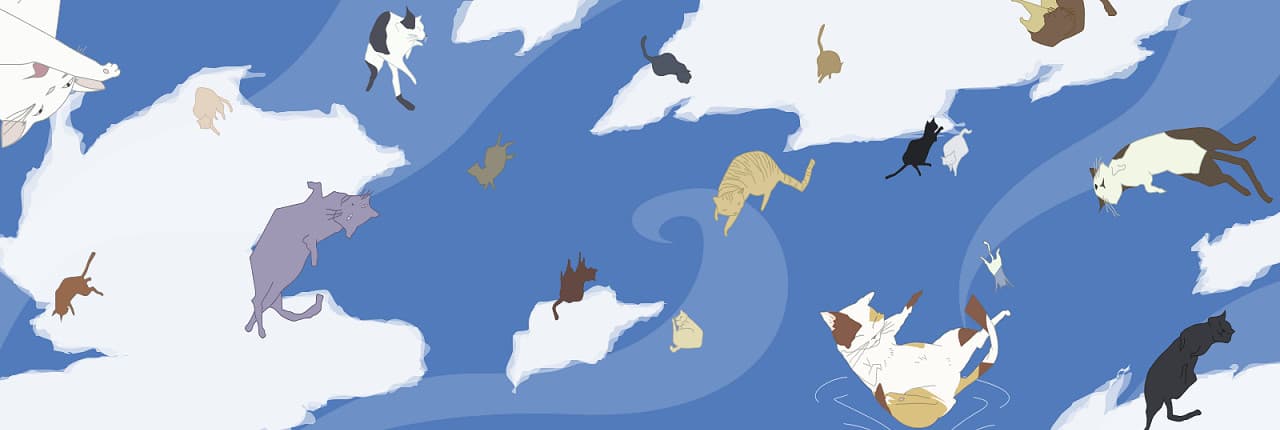
Also it has flying cats. What more do you want?
11.5 out of 12 users liked this review
