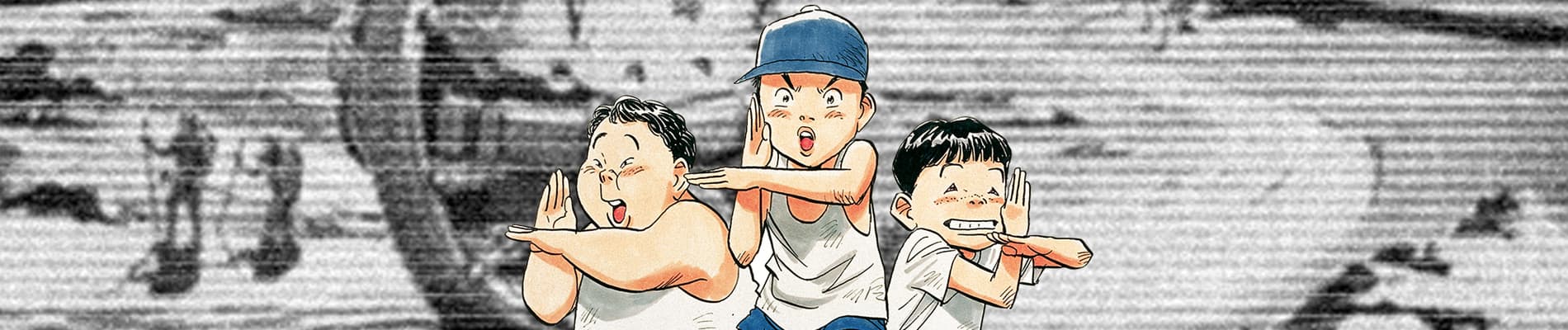
I love Urusawa’s work. It’s unique, from artstyle to storytelling. It always feels grounded in reality. It's immersive, personal and flawed in a very familiar, endearing way. I had honestly put off 20th century boys for a long time because I was terrified - Monster had been my favorite animanga for so long that I didn't want it to be replaced. I was so certain this 250-chapter monolith with the incredibly cool cover would be IT.
20th century boys (yes, I read the epilogue-sequel as well) was indeed an indescribable experience. But I struggle to give it more than a 7/10, because it was not a good one. Those endearing flaws I knew were amplified, stretched out, and in the end, It didn't feel like a thrilling cat-and-mouse chase. It felt like a will-they-won't-they, with all the frustration those kinds of romcoms bring. It's unpredictability had somehow made it predictable.
In a good mystery, some questions get resolved, which leads to more questions, which need to be solved again until the main one is reached. Here, nothing gets resolved until you stop caring. At that point, it has zero bearing on the plot whether anyone knows it or not, because the relevant plotline has already been resolved. It's frustrating.
Moving on from the mystery aspects to the characters... I loved Kenji, Kanna and Otcho in the first arcs. After that, Kanna became a more two-dimensional version of Anna (I just realized they're one letter apart, boy am I slow), the other two became impersonal symbols and the rest didn't end up with much better treatment. Kaminaga-sama was the only recurring character that made me feel anything when he showed up in a scene at that point. I'm not going to comment on Friend with a capital F since the question of his identity was shoved in my face so much that I stopped caring after the 5th fakeout.
Urusawa's characters are a special type you can rarely get anywhere else - which is why it's sad to see them get just barely not enough pagetime. The switch to a completely different cast and world through the timeskip felt jarring, since I had almost zero attachment to any of the characters or goals presented, and there was not enough time to build it up before the plot started rolling. On top of that, when the old cast reappeared, they were unrecognisable - and not in a good way. They felt... flat, corny, like the vibrant, human personalities have been replaced with classic-grimdark-seinen-brooding-protag. They kept saying the same sorts of things over and over, all reduced to gimmicks and monologues.
Also, one feature of this work that differentiates it a lot from Monster is that if people die off screen, they are never dead, but the story assumes that we don’t realise that. The setting is meant to turn into an everyone-will-die, super-dangerous dystopia, but the only people who die had very little pagetime in the first place, and in a few cases even if we did “see” someone die, they’re alive anyways. It’d almost say it’s treating us like we’re stupid, except the plot armor is the actual stupid thing in this case. A few death-fakeouts I can stand, but when it happens over ten times over, there is no tension left at all.
There is also something I'd begun calling the "tokyo revengers effect", but will now have to switch to "20th century effect" since Urusawa apparently got to it first. You know the person you just met in the present? They are actually connected to everyone's backstory, even though they've been conveniently left out in every flashback so far instead of being treated as side characters and having their relevance revealed later. This sort of retconning over and over, adding more and more characters... It just feels cheap, especially when it would've been really easy to acknowledge their existence and set up a Chekhov's gun instead.
It’s especially bad in this case, since it's like starting a "who dun it" story and only knowing about half the cast at the start - it makes zero sense from a storytelling perspective, and every addition feels like you've been lied to. The author is not on equal ground with you - he's cheating. What reason do you have to continue playing, then? It stops being fun, since you lose any personal investment in figuring out the story alongside the characters. When you're not trying to predict things, the story is no longer unpredictable. When you lose the suspension of disbelief, you're ready for anything, because you're not fully immersed or taking the plot seriously.
I love the concept behind the story. When I finished reading it and put everything together about it, it made me feel really happy to think about. On the other hand, reading the manga was... not interesting or enjoyable at all, besides a few fun moments.
I think this is a pitfall a lot of stories fall into. The thing you need to know in order to like the story will only be figured out by the 1% on their first read, or even at all. A deeper layer can be exciting, I enjoy underlying mysteries as well. However, there needs to be something else on top of that, something for the 99% to make reading it feel enjoyable, to get them to read it again and want to dive deeper. I don’t think 20th century boys has that.
Stories are meant to be an immersive experience. Something you feel is your own. Reading 10k word explanations on the internet is not that - especially when it's necessary to enjoy the story at all, or to have any kind of closure. Stories that can be dissected endlessly is great, but the first thing you feel upon finishing a good story shouldn't be emptiness and confusion, but curiosity and the feeling of having gained something important. At least in my opinion.
The initial set-up and the overall idea and lore behind the story is going to be something I will always remember, because it truly is amazing. However, it will never feel mine like other great stories did. As if I were there, as if I knew the characters, as if I had also been solving the mystery as it unravelled. I didn't enjoy the execution at all, but I’m sure many others did.
34.5 out of 48 users liked this review