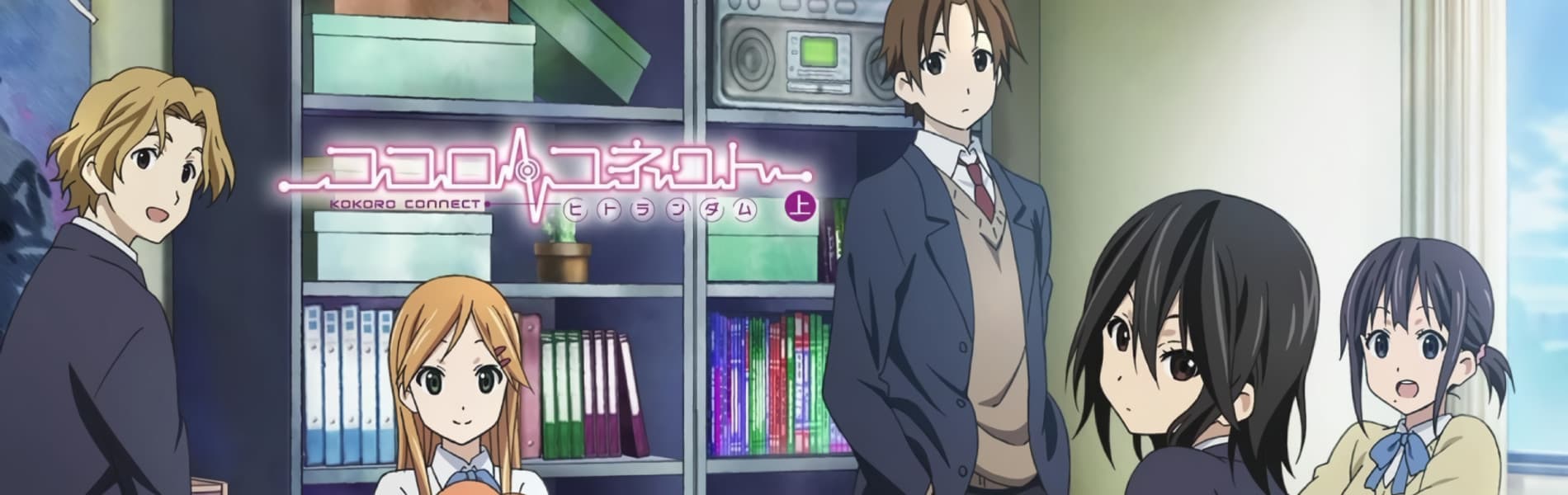
Kokoro Connect
a review by Renchaw
a review by Renchaw
"Kokoro Connect" was one of those unusual shows for me that I ended up watching because of a particular scene (Okay-- maybe I shouldn't say what scene it is, but it's all over YouTube, I swear). "Kokoro Connect" aired in 2012, a period when character-driven dramas in anime were gaining popularity. Its premise, involving supernatural phenomena affecting high school students, wasn't entirely novel but offered a fresh take on exploring the complexities of teenage life and relationships. Kokoro Connect is probably aimed at teens and young adults who enjoy character-driven dramas with a mix of supernatural elements. While adults can appreciate the depth of the characters' emotional struggles, the target audience is likely high school and college students who can relate directly to the anxieties, insecurities, and relationship dynamics portrayed in the series.
The storyline is pretty standard. Five students in a club experiencing strange events like swapping bodies, hearing voices that make them act on their deepest desires, and reverting to their younger selves. We never get the full details of what’s happening or why, but all we know is there’s someone behind it all and those events are caused by a mysterious person (?) called "Heartseed" pushing them to face their fears and making them learn to trust each other more (or maybe lose trust in each other more--lol). In this series, the odd phenomena puts the characters in each others shoes (like literally), forcing them to open up in unexpected ways. Since my love for character-driven dramas like "Snafu" and "Clannad" this series had a lot to live up to. I was looking for a good character drama and hoped this show would deliver by exploring characters' psyches through these supernatural events, and it delivered.
Despite the lack of explanation for the show's events, the story is engaging due to the character development. The main characters, initially one-dimensional, quickly become more complex. The show serves as a metaphor for puberty and high school life, tackling emotional issues like anxieties, bullying, and depression honestly without being too graphic. Initially, I dreaded the idea of this show, expecting it to be heavy and dragging. Thankfully, this wasn’t the case. The body-switching arc was only five episodes long, which I appreciated. While the show can get heavy, the changing issues they face keep the plot from being too depressing.
My favorite arc was definitely Michi Random cause it sort of stood out because it delved deep into the characters' psychological landscapes, revealing their vulnerabilities and sorts.This situation creates a raw, unfiltered connection between them, leading to intense and heartfelt moments. One of the most poignant elements of this arc is the development of Himeko Inaba's character. Her struggles with trust and emotional vulnerability come to the forefront, providing a rich, emotional depth to the story. The arc also beautifully addresses the theme of acceptance and understanding. As the characters' innermost thoughts and feelings are laid bare, they must learn to accept each other's flaws and past traumas. This forced transparency brings the. Although the pacing was quite inconsistent; some conflicts, like with Iori, were resolved quickly, while others took longer. I also felt the stakes could have been higher, especially after the Iori death scare.
Aside these issues, it was a unique take on the high school supernatural genre. The show makes viewers question what they would do in the characters' situations. It focuses on how these phenomena affect the friends' dynamics and how their relationships evolve. The characters fit different stereotypes but are well-developed. The voice acting is phenomenal, with each actor bringing depth and life to their roles, The art style, I was actually 100% certain this was from Kyoto Animation, which is surprisingly not and instead from Silver Link but eh that shouldn't be a bad thing since KyoAni's Artysyle is pretty clean and expressive so its easy to like (I'm still stuck that this isn't from KyoAni).
So yes, while the story does lacks some details and feels a bit lengthy, I found myself deeply invested in the characters. Watching the subsequent arcs felt like a treat to see them again and their everlasting relationships. It's worth watching. One of my favorite quotes is when she says, "There’s no such thing as an absolute good or an absolute evil," It emphasizes that everyone has both good and bad qualities, and understanding this complexity is essential for personal development and empathy towards others. It reflects the idea that people and their actions can't be easily classified into black-and-white categories. Another memorable moment is when Taichi tells Iori, "We’re not alone. We’re all connected." it underscores the theme of interconnectedness and mutual support among them. It also suggests that by leaning on each other and recognizing their shared experiences, the characters can navigate their challenges more effectively and grow stronger together.
17.5 out of 19 users liked this review
