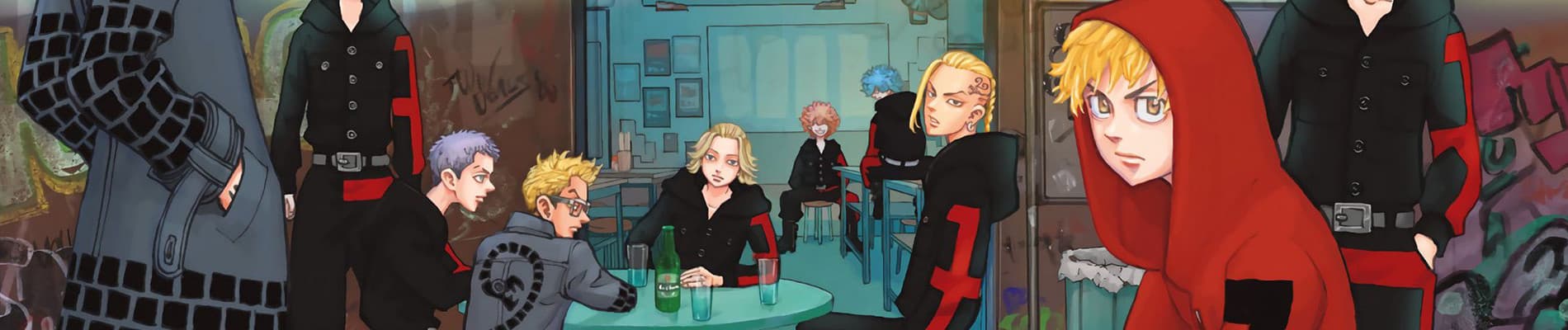
When I consume art, it's for the beauty of its creation. The way everyone is capable of putting feelings of their choosing into a media format expressed in whatever way they choose and to put that out for other people to experience and connect with for the wide variety of reasons why this could appeal to them is truly something magical. Whether it be for simple entertainment purposes or a discussion piece on a topic that couldn't be expressed through simple words. In a lot of cases, it could accomplish being both of those, and all the better for it. Manga is one of those art forms that's used as an outlook for expression, and in my experience of consuming manga, I've come across a lot of stories that speak to me, and for extremely unique reasons.
In the animanga scene, I've been watching quite a few highly acclaimed things these past few months. I've consumed every piece of Trigun-related media, the final episode of Link click season 2 aired, I've been rewatching Fullmetal alchemist: Brotherhood, revisiting my childhood through Yu-gi-oh: Duel monsters and I'm a decent chunk into Fruits basket. All good series, I assure you, but there's something missing from the experience of all these things. When reading, I can't shake the thought off of my mind that no matter how competently it may be created or how impressed I am by aspects of it, I can't deny the obvious any longer. Something's missing. All I can think of is the following: "This isn't Tokyo revengers."
When I first read Tokyo revengers, I wasn't particularly blown away at first. Sure, my expectations were subverted quite a bit as they went against the perception I had given the reception of this series, but it wasn't until I was around the 90 chapter mark that I realized I was truly reading something special. Something that can't be experienced the same way through any other piece of media. When I heard people saying negative things about the final arc, I was shocked. They would say that the series had a dip in quality and that the ending ruins the series. I was getting progressively more and more worried for what was in store for me as the negative reactions piled on from fans. What was I in for? However, when I reached the end, I was once again surprised. The writing of the final arc was extremely consistent with the rest of the package. After reading the final chapter, I didn't even need to think things over because it was already clear what my thoughts on it were. Any further thought I gave the series recontextualized things further in a way that cemented my thoughts on the series and how unlikely it is I'll be able to have this sort of experience ever again. Yup. This is one of the worst things I've ever read.
Story
Our journey begins with a boy named Hanagaki Takemichi, a 26-year-old grieving not-incelbait protagonist created for only the finest of men to relate to and connect with. After gaining the ability to travel back in time to his 14-year-old self, he vows to uncover the truth of the murder of the love of his life by joining a delinquent gang which he grows a close bond with, making his failed efforts to affect the future all the more tragic. Will he be able to stop the dangerous master manipulator, Tetta Kiseki(14) alongside many other fierce opponents(also 14)? I sure hope so. What I just described is the basic skeletal structure of the premise. I didn't even go over the aspects that truly encapsulate the writing style you're in for such as Hina's brother insisting to Takemichi to not tell Hina about the attempt on her life or his time travel powers because "SHE WILL NOT BELIEVE YOU AND THEN HATE YOU" only for them to reveal Hina's a conspiracy nut on top of being an extremely sweet and patient girl with feelings for Takemichi so there's no reason to think she'd even attempt to distance herself from him afterward, let alone not believe him. Now, if this was a part of Takemichi's insecurities, this would be perfectly fine. I can deal with contrivances like this if it's for a piece of character writing, but nope. It's Naoto who insists on this. Apparently, he doesn't know his sister very well at all. This is definitely not a plot point solely invented to get her out of the plot because 1. There would be actual progression in Takemichi's mission if she found out. 2. We'd have enough respect for a female character for her to have an actual role in the story beyond motivation for our main character and we can't have that.
Ignore that her personality is infinitely more charming than any trait Takemichi has. Spoiler, click to viewclick to hideI'm sorry, what's this? Takemichi tells some guy later who has way less likelihood than Hina believing him about his powers and he's like "yeah I suspected as much all along" and becomes his ally? Fantastic. Wakui, I kneel.
Of course, almost every story ever made has some sort of contrivance involved. Nothing's perfect. And even if a series is full of them to a detrimental point, there are plenty of other writing aspects that can potentially make up for the flaws depending on the delivery and the impact it provides. So what does Tokyo revengers provide alongside its barrage of forced plot points and baffling character decisions? Quite a few things, actually. Spoiler, click to viewclick to hideHere, we're provided with hollow melodrama almost always devoid of themes or character work, disturbingly uncomfortable sexualization and objectification of 14-year-old girls, mishandled themes of familial abuse and LGBT+ relationships(yes, I'm serious,) shock value that always without fail pulls its punches so it can't even be effective in any sort of way, cartoonishly over-the-top antagonists with plot armor, unexplained lore on top of unsatisfying characterization and an infinite supply of blood packs for our main characters that conveniently disappear whenever the plot demands it, apparently.
Truly, Tokyo revengers has it all. To the manga's credit, as I said previously, the story is extremely consistent in quality. From start to end, they find a new way to impress you with plot twists and character writing that makes you question how we got to this point, and almost every instance of these twists goes unexplained to the end. All this culminates in a final chapter that fits the manga it belongs to perfectly. Spoiler, click to viewclick to hideThis manga has repeatedly consisted of Takemichi making horrible decisions specifically so the plot can hit a corner and the conflict can take longer to solve, so it's only natural that the story concludes with Takemichi getting himself killed and being rewarded for it with the most mickey mouse clubhouse-esque ending of all time. And on top of that, there's no moral conflict involved. Characters like Kisaki didn't turn out a murderer so it's okay to not only forgive him instantly off-screen but become besties with him! Now every character including him can come back to life via redeeming everyone off-screen when they were children so they didn't have to die or kill others in the first place. You spent over 200 chapters reading a manga that never happened, and honestly, erasing the manga from existence is kind of perfect and I wouldn't have it any other way. Unfortunately for me, I'm not like Takemichi and don't suffer from bad writing that makes me conveniently move on and forget my experience going through this so I have to deal with this burden without him.
Art
Real talk: Of course, a manga can't be complete without its art style and Tokyo revengers is surely distinct and unique. The art style may not be for me but I respect it and it all comes down to personal preference. I think judging art solely by the choice of style is incredibly unfair and I will not be doing that here. I will, however, say that the strengths of the art could have gone to other aspects. In particular, the character designs make it difficult to tell who is who, and while a lot of manga have this issue, I've never come across it as much as I have with my experience reading this. The hairstyles and minor details are genuinely the only way I can tell some of these guys apart. The only exceptions to this are the ones with a bigger build(16) who rarely appear in the story, and given that most of their contributions to the plot are an active detriment, maybe it's better that way.
Another waste of talent goes to the shocking amount of fanservice present in this via scenarios that really shouldn't have it. Hina is relatively unscathed from this, thankfully, although she's still treated like Takemichi's trophy wife throughout the story despite how she clearly has her own agency the plot is ignoring. The other girls, however, are introduced via panty shots and their visible lingerie, and while it's not to the extent of a lot of other series, it's enough to notice on top of the strange portrayal of how the writing treats women. On top of that, these girls are always in the 14-16 age range and there isn't a single instance of its inclusion in the plot that's beneficial to the narrative so all it does is make me uncomfortable to read through. Spoiler, click to viewclick to hideThe closest the narrative has to a compelling character is Yuzuha who is admittedly a fleshed-out character, especially among the girls. Her story, however, is undermined by them showing panty shots of her while her brother is throwing her around like a sack of potatoes when the arc is about the abuse this man inflicted on her and her family. Needless to say, this manga isn't very tasteful.
On top of all of this, there are just some panels of moments that are clearly supposed to be important given their framing and paneling that just look bad. Characters' proportions will not look like the previously established anatomy, the action scenes are incredibly samey after a while, and a lot of impactful moments are undercooked by how underwhelming the actual presentation is. Maybe this is intentional but it definitely factored into me not being able to take this manga as seriously as it wanted me to.
Characters
Now this was the part I was most excited for. Tokyo revengers has the cast of all time. Ken Wakui created devices within the plot to cause things to happen which in itself made it become a story. You could even call these devices characters. They moved, talked, and did things. Some of them even got to have personality traits. To go over characters I think are relatively fine but I still have problems with, I mentioned Yuzuha already but I didn't dislike Chifuyu, Draken, or Emma either. Granted, all three of these characters I have massive writing issues with to the point where I couldn't call any of them good characters by any stretch, but I think it's important to note the characters that didn't actively annoy me with their presence on screen. This story has many other fascinating characters from Koko to Sanzu who certainly have a lot to talk about but I'd like to talk about three characters in particular for this piece cause they truly are something.
Starting with our protagonist, Takemichi sure is a character! Why did Light vs Lelouch debates exist in the first place when this guy has them beat in intelligence? He makes such clever choices throughout the series I'm shocked it doesn't end sooner. Spoiler, click to viewclick to hideMy favorite Takemichi moment is when he meets Kisaki in the present and immediately accepts his drink knowing that he just witnessed him cause someone's death, knows he rules Tokyo, killed his love interest and actively dislikes him by this point. What do you mean it was drugged and he watches Chifuyu get shot in the face cause of it? The most common defense I've seen for Takemichi is "he's 14" which is kinda funny cause the first chapter makes it incredibly clear that he is, in fact, not 14. Regardless, I have no issue with Takemichi being emotional over watching a bunch of kids that were once his friends or lover suffering like many others seem to. My issue lies with how he essentially doesn't do a single thing right in this manga and just gets repeatedly rewarded for it. He gives up at the slightest inconvenience only for Hina to teleport into the manga again and go "hi ily" and suddenly motivate him to do something again before she disappears from the manga again. Spoiler, click to viewclick to hideNow, I know someone is gonna address my gripes with Hina's writing so I'd like to mention that I actually quite like Hina in the early chapters well enough. Despite how little I could stand Takemichi, they did an okay job at showing Hina contributing to the narrative without being in on the fights or gang stuff and they were showing more endearing traits she had naturally throughout the early chapters. However, the further the manga goes on, the less interested it becomes in making you like Hina as a character. Instead, it focuses more on you wanting Takemichi to have his girlfriend back and that's where it loses me, and when Takemichi gets particularly bad.
Characters can exist to serve other characters, and that's fine, but when the entire premise of the story revolves around saving this girl and we have little to no reason to root for Takemichi in the first place, it gets obnoxiously obvious the writing is prioritizing Takemichi's feelings over Hina's life. And given how the plot progresses, the story no longer becomes about saving Hina by the end, and not in a good way. Instead, the story is about Takemichi and Mikey's dynamic which was barely established beforehand to the point where Takemichi walks in on Hina in her wedding dress and runs off cause of Mikey. I'm not kidding, this is a real goddamn scene. And in spite of forgetting about her and straight up abandoning her, he still gets his happy wedding with her after a final arc where I don't even think she was mentioned, let alone appeared. Takemichi does nothing but screw up only to get everything he ever wanted + the girl in the end.
It's worth noting that Takemichi throughout this manga gets into compromising situations with the girls in this series for "comedy"(he's 26 btw) and actively gets upset when finding out Senju is a girl cause "WOMEN FIGHT??" And I assure you his casual sexism is an incredibly endearing character trait on top of his stupidity and virtually no likable character traits.
Moving on, we have Mikey who sure is interesting. This character starts out pretty cool, actually. His demeanor and childish traits on top of his relationship with Draken manage to make him likable. However, as this manga went on, I realized something. "No one ever has the right to complain about Gojo Satoru ever again." Mikey's superhuman strength is handled alright, at first. A lot of the early stuff is to establish his strength whilst also acknowledging him being able to beat everyone in the room isn't gonna be enough to protect everyone. However, beyond an incredibly early arc, Mikey just becomes the MacGuffin to get everyone out of trouble. Even in the arcs he has very little involvement in, he just straight up shows up at the end, beats up the antagonist of the arc, and then leaves. The worst examples I can think of are so anti-climactic that it's almost comedy. Spoiler, click to viewclick to hideOn top of that, his characterization leaves a lot to be desired. A lot of his character moments amount to "I'm 14 and this is deep" as the manga goes on including an amazing scene where he compares his suicidal thoughts to a fish cracker. I assure you it's very emotional. Then the story takes an "interesting" direction where Mikey becomes the villain but also not really. With little buildup of their bond or relationship, Takemichi's goal shifts from saving Hina to stopping Mikey from being evil and taking his own life. This would be fine if this manga didn't shift focus away from Mikey beyond a plot device early on considering they've developed Takemichi's friendship with Chifuyu more, if anything.
But don't worry, he gets even better. The entire final arc has events pile up further and further until Mikey's completely lost it and even taken lives over his feelings getting the better of him. And in spite of the belief that this is due to his inner turmoil, it's actually not. Oh no. Basically, his brother was the original time looper after killing the previous one to save Mikey, and for no reason whatsoever, that made a weird darkness cloud amplify Mikey emotions and just... Make him be violent and evil. And all of his characterization to this point is a result of the random plot device cloud. In fact, this unexplained cloud is the entire focus of the final conflict. And just as its origin has little to no explanation, neither does its defeat. Once again, Wakui, you've done it again.
In conclusion, Mikey might be the greatest character ever created.
...Is what I would say if Tetta Kisaki didn't exist! Kisaki is the central antagonist of the series and trust me, he is truly one of the characters ever created. Never before have I met a character this entertainingly bad in a while. Not only is his supposed master manipulation(14) a result of either the other characters being dumbed down to an absurd degree or straight-up plot armor they treat as a trick he planned out the whole time, but the story builds up to his potential depth as a character, given his strange behavior towards Takemichi, only for the pay off to be the greatest piece of writing ever made. Spoiler, click to viewclick to hideSo it turns out Kisaki was in love with Hina but she had feelings for Takemichi instead, causing him to resent him and feel jealous of him. Sure, makes sense, but then he overhears that Takemichi wants to become a delinquent and figures Hina must be into those so he just. Plans to take over Tokyo thinking she'd like him back now. And he continues this plan into adulthood. And then he's genuinely shocked when he's rejected and kills her. All this is revealed at the very last minute before he randomly gets hit by a truck and dies, by the way. That sounds like a joke but nope, the villain gets taken out by a convenient truck cause he wasn't look at the road. And on top of that, the story keeps going after he dies cause we have to deal with Mikey's evil cloud making him do evil things.
On top of that, the story tries to explain his inexplicable plot armor through him also having a time-traveling ability like Takemichi does. And to be honest, despite being predictable, that'd be clever and makes perfect sense. I wouldn't be here complaining about how he pulled all this off on his own for almost 200 chapters only to be taken out by a truck after revealing he was stupid enough to think taking over Tokyo was gonna get him a girlfriend. However, right before he dies, they have to throw in another out-of-pocket plot twist that nope. He didn't have any powers. It was all just bad writing. I love this series so much.
All this is told within a single chapter, by the way. I think through these shining examples, I've highlighted the amazing character work on display in this series that continues through a good majority of the cast. I'd like to talk about the others but I think I'd be here all day so I just talked about the ones that stand out to me as particularly memorable.
Enjoyment I'm gonna be perfectly honest. This series is way more enjoyable to talk about than it is to actually read cause it's biggest flaw is not even having so bad it's good appeal outside of Kisaki's writing. From the bland and unlikable cast that feel like inserts for the target audience rather than characters to the mishandling of heavy subject matter thrown in with no rhyme or reason, I think I'd rather read Subahibi again than experience this. Not cause Subahibi is less uncomfortable, but cause there are still things to salvage out from that experience which I can't say here(unless if we're talking about Kisaki to which I say peak character, up there with Duke Cayenne and the Rain code villains.) So to top it all off, allow me to share the exact panel that made me reflect on just how bad this manga was. It may surprise you! Spoiler, click to viewclick to hide
Overall Tokyo revengers is a 2017-2022 biopic developed by Martin Scorcese based on the Rokkenjima murders of 1986. If not for my experience with this manga, I feel like I'd lead a different life entirely and my worldview would be different. When I watched madoka magica for the first time at the age of 14, I realized what I truly wanted in fiction and raised my standards and tastes into thinking about what I was looking for when consuming media. The same could be said in this case 9 years later, for Tokyo revengers has changed my perspective on the very things I don't ever want to see again and what I should actively avoid, actually, so it's basically just as influential to me. This is truly the manga of all time...