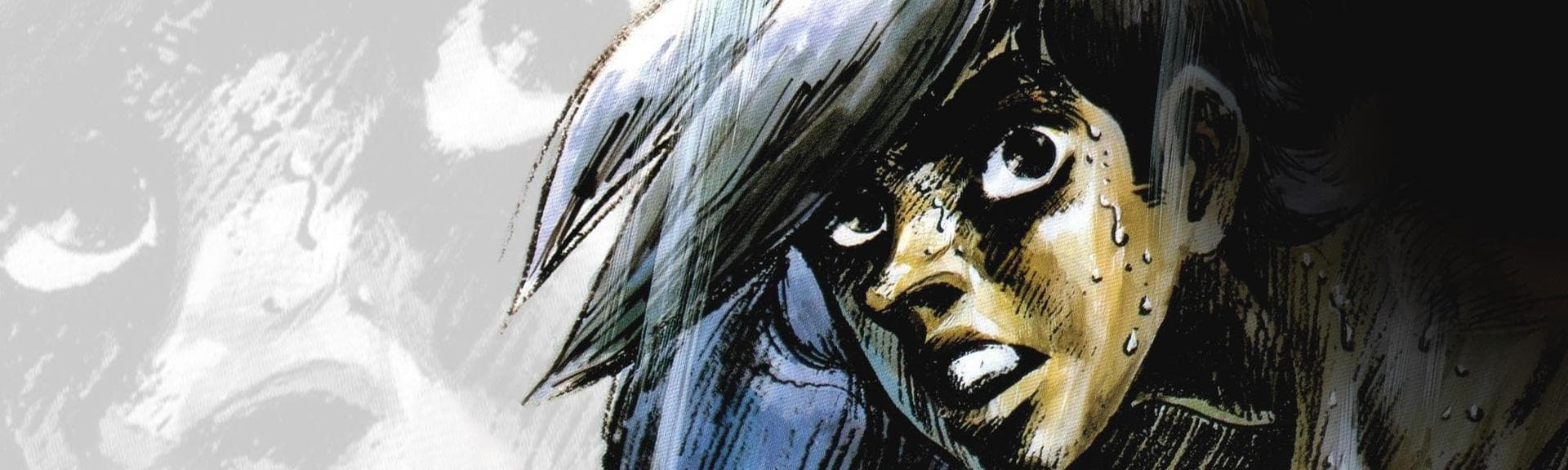
"The father of manga", "The symbol of rebellion", "The first shonen nekketsu" or "The icon of the leftist anti-vietnam war movements"

Ashita no Joe is a legendary story that obtained many titles and that was once considered the greatest manga of all time. This manga was so subversive and revolutionary that a whole subgenre called nekketsu, which is now the most popular division of shonen (DB, Big 3, Gintama, FT, MHA, JJK, KNY etc), was invented just for this piece of work to fit somewhere. Paradoxically, it also simulteanously popularized and coded a complete different demographic we now call seinen. Its influence was so broad on a social and political scale that the japanese governement considered the manga as a threat, causing the premature end of the story at the peak of its popularity.
I'll borrow a silly non factual metaphor a french youtuber made to make you visualize Ashita no Joe's impact: "Let's say the manga industry is a planet. In this planet there's disonaurs like Tezuka and Gō Nagai, well, Ashita no Joe would be the meteorite that burned everything and destroyed life as it was, allowing us to live in our current world as we know it."
In this review, we'll see the impact of Ashita no Joe as well as its qualities as a story.
____
THE STORYNekketsu: Literally means "boiling blood", it is a sub-category of shonen. In these works, we follow the hero's initiatory journey of self-transcendence. He will brave all the obstacles to reach his goal or become the best in his field.
Ashita no Joe: Tomorrow's Joe is a manga written by Asao Takamori and drawn by Tetsuya Chiba. It got serialized by Kodansha in 1968 and ended in 1973. Because of the lack of seinen magazines at the time, Ashita no Joe was considered as a shonen. However I'm pretty sure eveyobdy who has read/watch it, including me, initially thought of it as a seinen due to its mature and serious themes as well as its depicition of violence. Now we might have considered it as a Gekiga, litteraly dramatical drawings, which are manga that deal with more somber topics.
Ironically enough, Ashita no Joe contributed to both the Seinen and Shonen demographics and to understand how, we have to dive into the story.

Joe Yabuki is a teenage orphan who wanders in the San'ya slums. After the Olympics that took place in Japan, the country is going through a development as big as the inequalities it creates between the higher and lower working class. Seen as a insignificant taint, rejected by society and left with no parental figure: under Joe's confident attitude lies deep feelings of incapacity and hatred against the world surrounding him. He is vile, arrogant, egoistical, intolerable and detestable. He respects no one or nothing and uses other as he pleases at his own advantage. This is where Ashita no Joe separates itself with the nekketsu genre that always portray glorious heroes with high moral standards and who are part of the "lovable idiot" trope. Joe steals, manipulates and scams: anything for money and a life of leasure!
Born from dirt and always covered in it, he knows no one will ever see him in a different light nor will ever someone excpect anything from him. Thus, it's the only way he can lead his life. He can't become anybody else so the only way for him to truly exist is in violence, agressiveness and wrongdoings.
Until the day he meets Danpei his future coach.

He sees potential in Joe's fighting style and gives him a home, food and money to teach him how to box. Joe, having no intention of actually becoming a boxer, uses the old man's money and organize greater and greater scams until evenutally, he scams the wrong person and end up in jail. Violence, which was the only thing he had, lead him to his own downfall and if that wasn't enough it even gets outclasses by Rikkishi, an inmate capable of beating Joe.

Joe, finding his anew rival, develops something he never had in his entire life: a goal. This is where the nekketsu shonen "part" comes in. In order to beat Rikishi, Joe has to use his negative feelings and energy for something positive. His destructivness, into something constructive. Boxing is the only way he can use make good use of the only things he ever knew: violence and hatred and eventually they'll grow into something much better. The particularity of Joe is that he always gets up from punches. He might be losing, he might be coughing up blood, he might feel terrified but what's sure is that he'll never give up in a fight. You could say this is where the shonen trope comes from. This might sound horribly cliché but since Joe is a character with admitted flaws in the narrative, and that his "never giving up" spirit is not always acclaimed as something good in the story, it's actually done in a refreshing way. Joe always get up, not for the good reasons, not with a healthy mindset, but he always get up, for the better or for the worst. Him fighting is like a scream proving his existence to the society that rejected him. From the moment he was born in poverty, his fate was sealed but thanks to boxing, he is able to fight fatality with his own two hands and pave by himself his own tomorrow.
By incorporing serious and mature themes in its story, Ashita No Joe popularized the writting of manga in dark tones, which later on popularized the seinen demographic. By showcasing a teenager that came from nothing stand against authority and his fate, never backing down, Ashita no Joe created the nekketsu subcategory that gave birth to, as mentionned before, the BIG 3 etc, changing manga forever. The inspiring message of believing in yourself and your dreams combined with the realistical and somber worlds we're used to have in seinen manga makes Ashita no Joe especially unique.
THE JAPANESE RED ARMY INCIDENT

The Japanese Red Army was a militant communist organization active from 1971 to 2001. It was designated a terrorist organization by Japan and the United States. After the Lod Airport massacre, it sometimes called itself the Arab-JRA. The group was also variously known as the Anti-Imperialist International Brigade, the Holy War Brigade, and the Anti-War Democratic Front. The JRA's stated goals were to overthrow the Japanese government and the monarchy, as well as to start a world revolution.
Joe Yabuki became an important image of rebelling against authority and an icon for japanese people who were against the Vietnam war. Many leftists movements used pictures of him for their ralliement. The influence of the character as a symbol was so huge that the JRA associated themselves with the manga and reverred Joe Yabuki as the representation of their struggles against the government that didn't care about the lower classes. They hijacked the Japan Air Lines Flight 351 plane as a tribute to the manga and when japanese and north korean forces tried to negociate, the JRA members responded: "We are Ashita no Joe".
The manga being associated with a menace for japan territory, the authors were pressured into ending the story prematurly right at the moment it was still an absolute phenomenon.
____
THE FATHER OF MANGA
Ashita no Joe is a revolutionary masterpiece ahead of it's time, so convincing and touching that it had real impacts on historical events and japanese culture. Light spoilers:
Spoiler, click to view
At some point in the manga, one character dies, causing the making of a real life burial as well as a real funeral ceremony with the two authors and less than one thousand people present.
There's also 3 real life statues of Joe in Tokyo.


Megalo Box is an anime that was created to celebrate Ashita no Joe's 50th anniversary

Gurren Lagann was heavily inspired by Ashita no Joe, especially for Kamina, and the two authors are huge Ashita No Joe fan.

The staff members of the Naruto anime were inspired by the Ashita no Joe anime, which they were all fans of and were glad to adapt the manga due to Naruto the character that felt like a character similar to Joe in many ways.
The Ashita no Joe manga has been an inspirations anime studio such as for The End Of EVA
 ▶
▶
Countless of anime and made references of the iconic cross counter and the Joe pose and some used these scenes as actual inspirations for key moments


The obssession around Ashita No Joe truly is fascinating and I wonder how much more known it would be now if it weren't for the "cancellation". I'm not disatissfied with the ending at all though. I think anyone who has already read or watch Ashita No Joe would agree that it's one of the most beautiful ending of all anime and manga.
____
To conclude, I think any anime and manga fan should give Ashita no Joe a chance, it clearly left a huge impact on various things and the story itself is incredible. In my opinion, Joe Yabuki is one of the most well written character in fiction and his journey is worth experiencing.
The drawings might be a bit of a rebutal at the beginning but they clearly improve along the story and despite the goofy/cartoony style, clearly Tetsuya Chiba knows what he's doing when it comes to shadows and lining, giving "surface" to his drawings, making the art look alive and impactful.
Spoiler, click to view