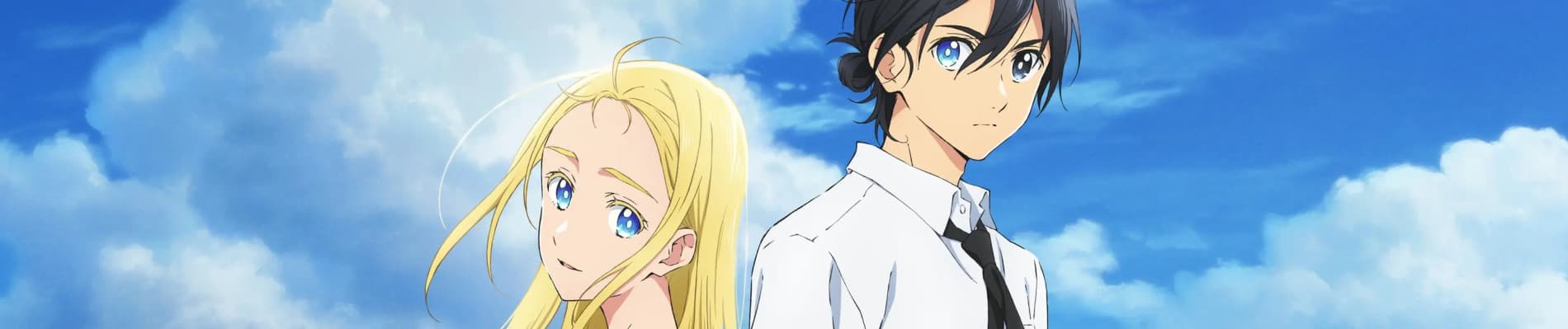

This is my first-ever review on this site, so it might be structured differently than what's standard here. Additionally, this review is going to be very spoiler-heavy, but as my spoiler-free disclaimer, I adore this show. It had me riveted for the three days across which I binged it. Its premise is unique, and it thrusts many fun, memorable characters into it. I would recommend it for anyone who wants a suspenseful, memorable watch! However, in this review, I aim to discuss how the show's unique premise both created memorable characters and left others in the dust.
Summer Time Rendering suffers from an identity crisis, as it feels like two congruent narratives overlaid on top of one another. On one hand, this anime is a psychological thriller mystery, think Higurashi. It opens up with an eerie premise, this vague idea of people seeing their own shadows and not being able to trust the people you see. This is the brilliant hook that drags you into the meat of the show, its second identity: a battle shounen, with high-intensity fights and a fleshed-out power system.
Now, on one hand, this blending of identities is genuinely fun, it felt like a very cool (and importantly, well-earned) bait-and-switch. The show's main sci-fi elements--Shinpei's time-travelling abilities and shadows--work in both narratives, as they create a suspenseful, mysterious air of distrust for the mystery side of things and act as exciting, high-stakes setpieces for the show's battle shounen identity. In fact, I'd like to highlight my favorite characters in this show, who I believe emphasize the strengths of this double identity:


Nezu, the grizzled hunter, is a character of a tried and true archetype. I don't have too much to say about him, because he's simple and effective--he knows things others don't, his connection to shadows is immediately apparent and believable, and he's consistently reliable. His skepticism is a valuable perspective, as it provides a human contrast to the grandiosity of Shinpei's time-traveling "godly" perspective. His sniper rifle is used effectively as a battle shounen setpiece as well, creating many tense scenes where heroes and villains alike need to be wary of who can see them.
Now, lastly, our main character himself is a truly interesting case. Shinpei is, as expected, the character around whom the psychological mystery revolves, with his mind and perspective being the main one explored. I do have some issues with his writing, but they're mainly an extension of other characters whom I believe were left at the wayside (Mio, Sou, and even Ushio). What's uniquely important about Shinpei, being the protagonist the story thoroughly focuses on, is that he NEEDS to make both of this anime's narratives work. Shinpei has to be the glue that holds both the mystery and the battle shounen together, and I believe he does so phenomenally. As an "outsider" of two years from the show's setting, Shinpei is forced to acclimate to a familiar-yet-distant environment amidst the grief of Ushio's death and the strange mystery brewing surrounding it--this is an extremely fitting protagonist for this sort of mystery. Then, as a battle shounen setpiece, Shinpei excels, and not just for the badassery he gets up to in the latter episodes of the anime. Shinpei's goal in a fight is often the opposite of a standard protagonist's--he wants, or often needs to die. This fact, especially considering how it conflicts with his life's clock growing ever shorter with each loop, positions him quite uniquely in each intense encounter as someone who is simultaneously a vulnerable human being and the most powerful character in the room. His powers are complex, they're cool, and they tie this anime's identities together quite nicely.
Now, these are the main characters I can thoroughly praise for their roles in the story. Others were fun, had powerful moments, and contributed greatly to other characters' characterization, but here's where we get into my primary gripe with this anime--one that truly detached me from its last few episodes and left me feeling disappointed after watching an anime I loved. As much as some characters beautifully tied together this anime's two narratives, some failed to find a footing in one or the other, or worse, actively detracted from the story as a whole due to only working in one narrative or the other. First, I'd like to look at two characters who got me excited for this show's mystery but who quickly became disappointing as the battle shounen narrative came into view.


Not a good look when your protagonist's two best friends both drop out of meaningful plot relevance.
Sou, the lovable goofball best friend character, fills that role perfectly... but that's it. This sort of character has lots of potential in a psychological mystery--the best friend character is someone you want to be able to trust unconditionally, but in an environment where nobody can truly be trusted and characters are littered with hidden motivations, a goofy best friend can be a brilliantly tragic character. Unfortunately for Sou, the show moves away from just being that mystery, and it becomes a narrative where the lines of who can and can't be trusted become set in stone for the audience. As a battle shounen character, Sou is utterly disappointing--sure, he has his moments, but they're less about him as a character and more about the show's good fight choreography; Sou being the one to trap Haine was cool, but it wasn't his plan, it wasn't a moment about Sou. His character is dumbed down to "just a reliable guy" and that really saddened me as someone who wanted to see his relationship with Shinpei evolve under difficult circumstances.
Mio is potentially the most disappointing character in the show, it's hard for me to say definitively. Sure, her start wasn't perfect--I wish Mio wasn't sexualized in any capacity as a 15-year-old, but the minor iffy moments with her were things I was able to ultimately overlook, because I saw her character as having immense potential (and Shinpei's COMPLETELY out-of-pocket question about her underwear had me laughing my ass off as much as I was cringing). In theory, Mio, as an emotionally wounded younger sibling with multiple direct ties to the show's central mystery, could be a major player. Ushio's primary message of "protect Mio" at the beginning set her up as someone truly crucial to the show's plot and Shinpei's character, especially considering the fact that her shadow is one of the most notable. Her love for Shinpei was part of an extremely ugly love triangle (that I will get into) but in a vacuum, it could've created unique decision points for her. Mio's character is filled with "could". She could've been so much--she could've been someone who Shinpei is driven to commit himself to, but Ushio monopolizes that position so thoroughly. She could've been a player in the battle shounen action, but she's sidelined in favor of her shadow, who provides an interesting lens through which we can view her character but ultimately wasn't used in any truly stand-out ways. Mio is a damsel in distress, but she's barely even a part of the show's battle shounen identity, so she merely fades into the background.
Now, conversely, there are characters on the opposite end of the spectrum--truly amazing battle shounen set pieces, monsters and monster fighters with distinct skills to bring to the table. However, they suffer due to not feeling present enough in the show's mystery, and thus feel disconnected from the narrative as a whole.
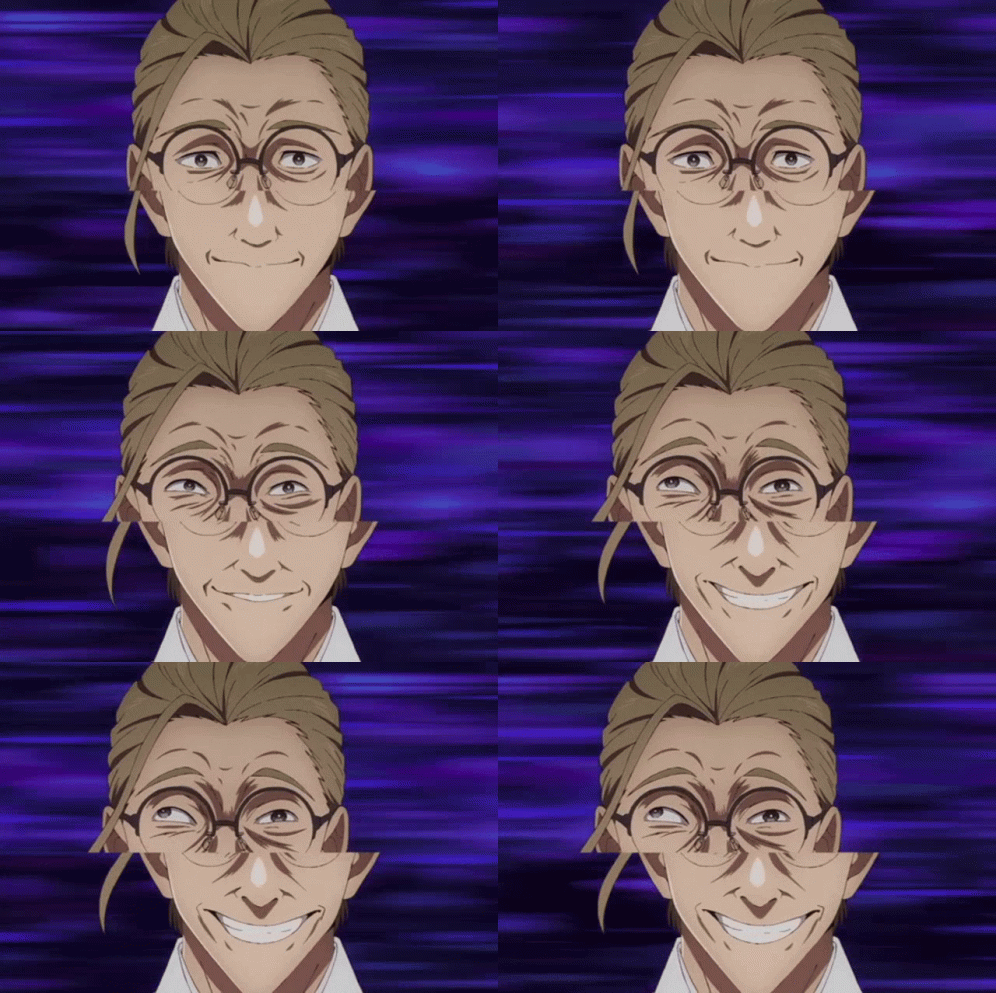

Karikiri, Shide, whatever the hell this man is--he was awesome, and I did find him to be a fitting main antagonist. I did genuinely really love him as an action setpiece in the show's second half, and Shide was nicely introduced early on in the show as a truly mysterious villain. The fight choreography with this character was consistently stellar, and he had some truly stand-out moments, especially with his two bodies. However, as much as he was a well-executed "final boss fight", he did not truly feel like a well-realized antagonist, and that largely comes down to his lack of presence in the show's mystery. I wish we saw ANYTHING from him in the show's first half besides bland, one-off moments of minor characterization. All of his characterization is derived from a single conversation with Shinpei, and I liked that conversation, but I wish we'd gotten ANY of that beforehand. I found him being the twist villain to be far too obvious, which didn't feel earned because he wasn't a meaningful character at all in the show's psychological mystery narrative. Shide was to an extent, but the man behind the mask wasn't.
Truthfully, I don't have much to say about Tokiko. Sure, the reveal that humans were working with shadows was cool. Sure, being able to summon/control giant shadow babies is cool. Tokiko set up some really fun battle shounen scenarios, but she's by far the character I was least invested in, because she received no meaningful characterization at all before her short-lived moment as a twist villain of sorts. Even once the show's battle shounen narrative came into full swing as its primary identity, Tokiko was little more than a shadow-summoning plot device. (Also, unrelated to this and unrelated to the show's love triangle problems--I genuinely can't tell if Tokiko was lesbian-coded or not. If she was, geez, that feels like queerbaiting, and I wish they'd done literally ANYTHING between her and Mio. If she wasn't... it still feels like queerbaiting. Thankfully, I don't care about her character enough for this to matter much.)
So, we've got characters who function well in tying these two congruent narratives together, and characters that suffer due to feeling like their lack of presence in one narrative strips them of important characterization or plot relevance. I have thoughts on characters like Haine, Sou's father, and Ryuunosuke, but no particularly strong opinions on them--I think they generally contribute well enough to the narrative and don't feel like they have missed potential. There are a few nothing-characters like Tetsu and Alan, but that's fine. The last character I want to talk about is so thoroughly ingrained in my central problems with this anime that I don't think most of my gripes with the rest of the cast would exist if not for her.
In dual narrative fashion, she is simultaneously the glue that holds this anime together and the blade slicing it in half. She's a character I love and a character I hate. She's a shadow and a human.
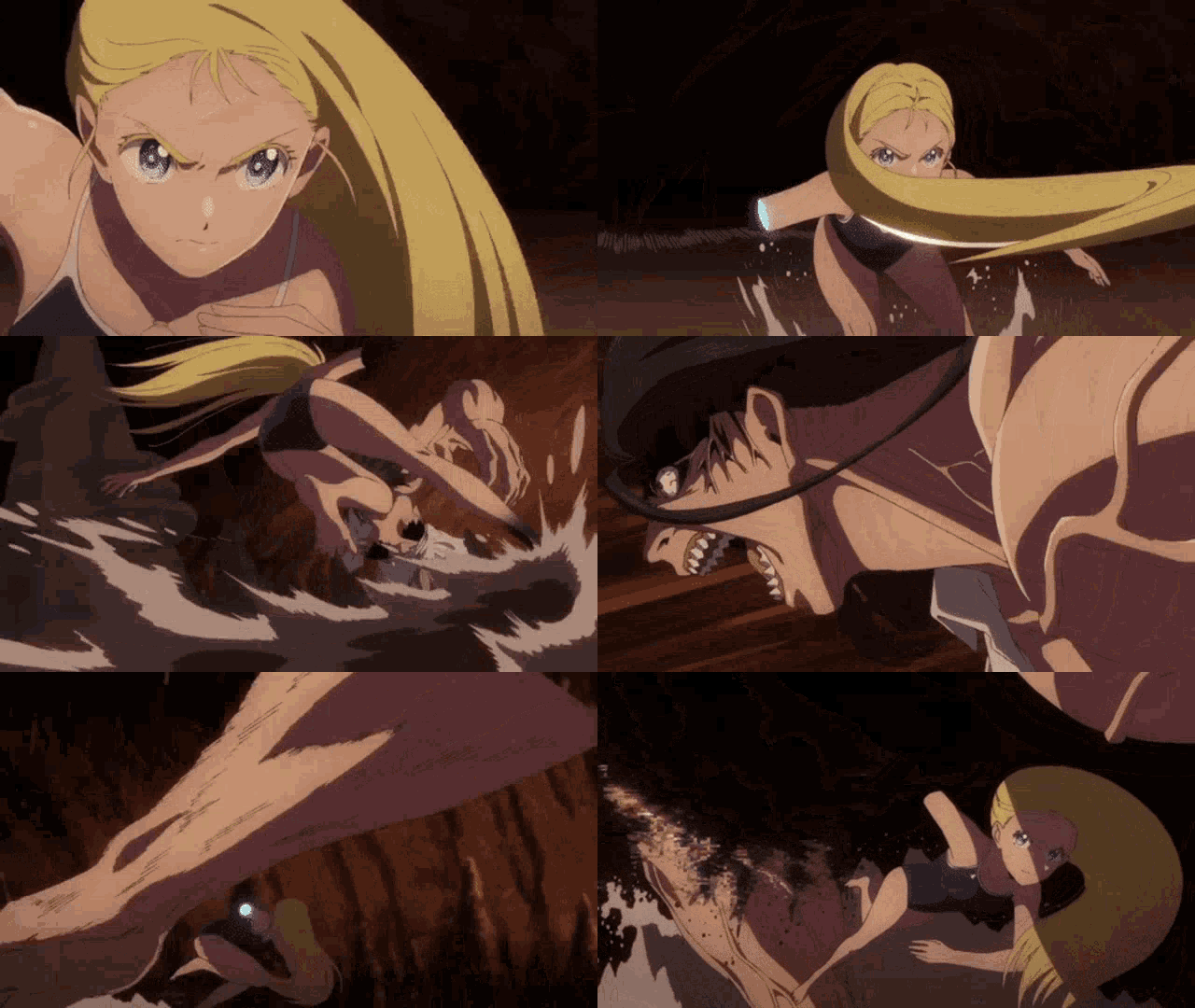
Ushio Kofune is a character who, in theory, is a brilliant centerpiece to both of this anime's identities. She's the catalyst for the mystery, she creates the coolest fight scenes (besides Hizuru) and she feels like the sole focus of this show's well-realized protagonist. She functions in both narratives, she is INTEGRAL to both narratives. However, how she's woven into each narrative causes immense problems for the anime's other characters, and even undermines the show's themes.
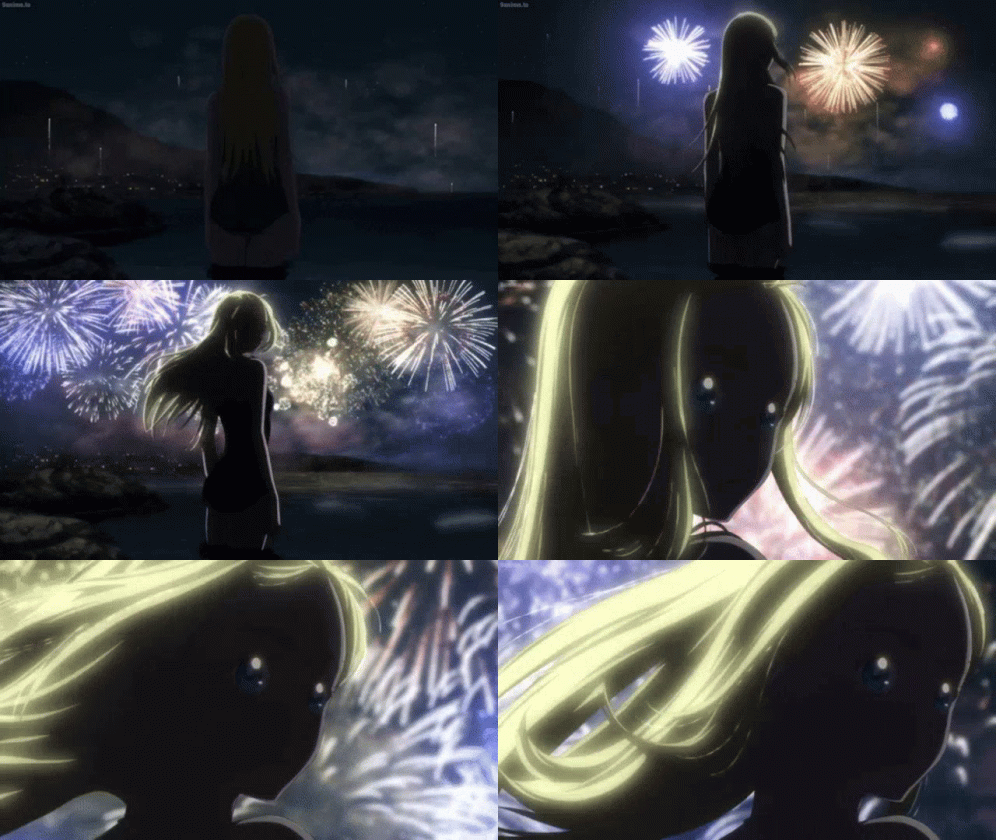
At first, I thought Ushio appearing on the festival night was some sort of glitch in the system, an oversight in whatever force governed this strange time loop, and that felt really fucking cool. She was a ghost, the entire story revolved around her death--but the battle shounen nature of the show is established by undoing that death, by making her a human shadow. Ushio is not a fleeting, mysterious catalyst for the show's events--she's an ever-present centerpiece who is treated as essential to the plot at all times, at all costs. Her words of "protect Mio" become a distant memory, with the stakes being so far beyond her (or anyone else Shinpei is close to) that the only thing that actually matters to him is Ushio.
Speaking of Mio, what do she, Ushio, Shinpei and Sou have in common? They make up the messiest, most unnecessary, most character-destroying love triangle (love quadrilateral?) I've ever seen. Sou is stupidly in love with Mio, Mio is stupidly in love with Shinpei, and Shinpei is stupidly in love with Ushio. Sou's love for Mio is a half-baked accessory to his character that ultimately just serves to add an annoying element to him. Mio's love for Shinpei is something that I think could have been written better, but as it exists, it's another accessory that barely informs her choices, isn't explored in any interesting capacity by her shadow, and is impossible to get invested in due to Shinpei's immense love for Ushio. The relationship between Shinpei and Ushio is crucial to the show's dual narratives, so it is unbreakable, and the audience understands this. As such, Mio's love--while something that can be well-written as foolish--ends up being pointless, and worse, FEELING pointless.
As she exists, Ushio necessitates congruent, overlapping narratives; Ushio must be both the centerpiece of the psychological mystery and a central setpiece of the battle shounen. Not only do these narratives harm the writing of numerous other characters in the anime, but they in turn necessitate the unflinching nature of Ushio's relationship with Shinpei, completely destroying the weight of an already silly and benign love triangle that had become the central focus of two important characters. All of this is bad enough, but Ushio in a vacuum and her relationship with Shinpei are well-written, right? If Ushio's character intrinsically derails so many other characters, we get something meaningful out of that, right? Well, yes and no.
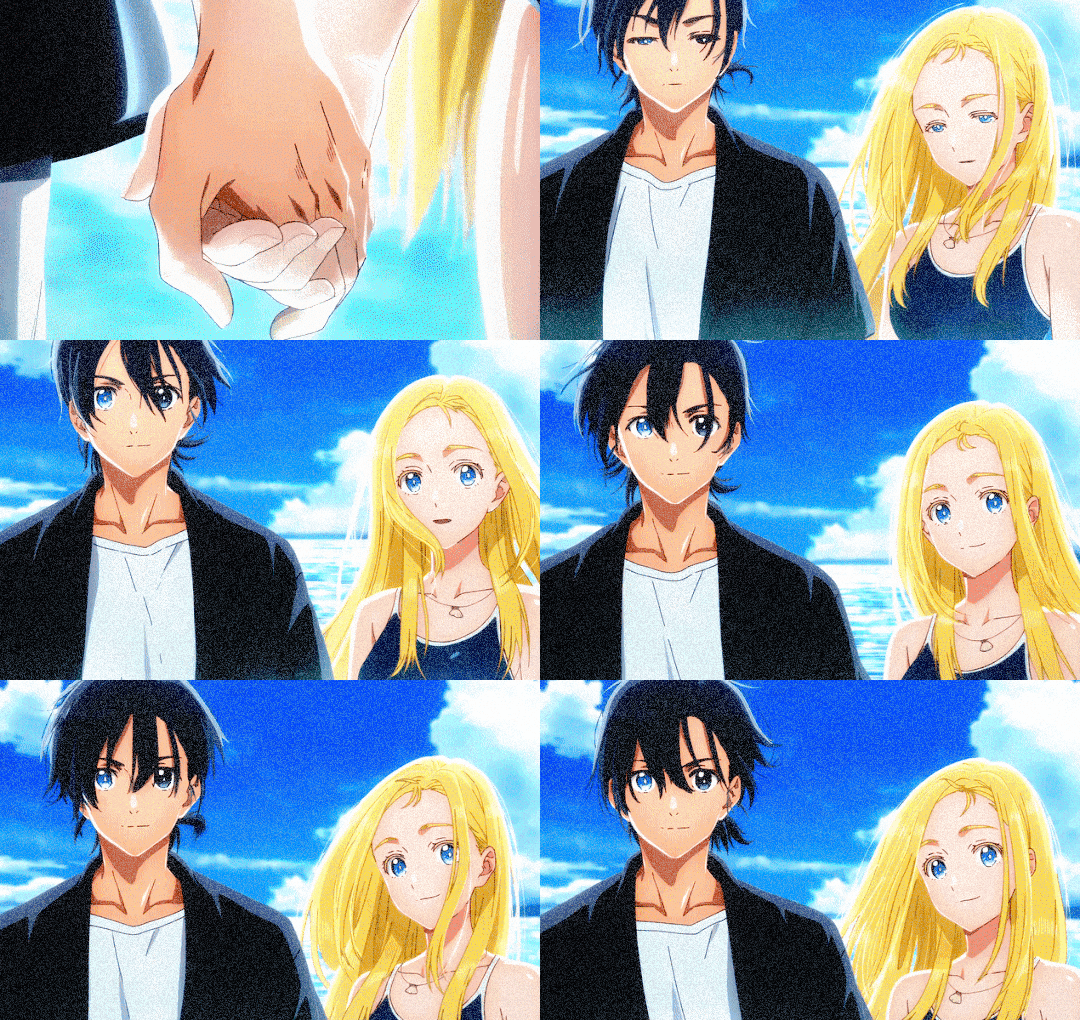
Ushio's writing destroys the primary themes of Summer Time Rendering.
Regret is a powerful force. It gnaws at you, eats at your confidence and leads you to worse decisions down the line. Shinpei is someone who wants to live without regrets--he takes time to analyze situations rationally so he doesn't regret his decisions. However, the tragedy of his character is that he does have regrets, ones he struggles to acknowledge or consciously deal with. Shinpei, as the audience comes to know him, is a character that needs to learn how to deal with regret. Shinpei needs to learn how to grieve, he needs to learn how to make up for unsaid words.
Ushio's seemingly fleeting reintroduction in the middle of the series is, in a vacuum, perfect. Shinpei has the opportunity to reconnect with her, to make things right--but there's always that underlying air of temporary bliss, the knowledge that Ushio isn't there to stay. That lets us cling onto ideas like "maybe the heavier psychological narrative will resurface, bringing Sou and Mio back into relevance and allowing Shide and Tokiko to be explored further", or "maybe the love triangle actually has weight, and Mio and Shinpei will have to have a real, painful conversation about why things won't work out", or even just "maybe Ushio's dying wish for Shinpei to "protect Mio" could have some weight." (If it weren't clear already, I do think Mio is the character most betrayed by this anime's narrative.)
However, it becomes apparent far before the climax of the show that Ushio is not temporary, she is not fleeting. Her death at Shide's hands has no weight beyond the following five minutes, which sucks, because it's the first time a character was ever truly gone, seemingly with no hope of returning. The psychological mystery does not resurface--the hyped-up battle shounen immediately resumes. The love triangle is not resolved meaningfully--Sou and Mio give half-assed "welp, I still love you, I guess this sucks" to their respective crushes. Mio is thoroughly pushed out of relevance. Ushio, from that point on, is here to stay. Everyone else can be brought back, but not Ushio--until she CAN be brought back. The central focus of Shinpei's regrets, the reason he couldn't move on, will never leave him.
So, Summer Time Rendering, what am I supposed to take away from you? Am I supposed to learn how to deal with regret, how to rectify my mistakes? Or am I supposed to fight for a world where those mistakes had no consequences?
Did Shinpei have an opportunity to grow from grief? Did Mio, did Sou?
Shinpei faced his regrets by moving backwards. When we're overburdened by regrets we can't directly rectify, how do we move forwards? When the fleeting blessing of Ushio's gone, what's left for Shinpei? Is it Mio?


I love this anime--the good, the bad, and the ugly of it. I've been told I'm generous with scoring things, so I think calling this anime a 9/10 after all I've said might genuinely sound ridiculous, but I'll stand by it. There's a reason why this is the first anime I've been passionate enough about to write a review. From Shinpei to Karikiri, from Hizuru to Tokiko, every major character had a place in the story, and I loved that. Mio and Sou disappointed me tremendously, but they wouldn't have done so if they weren't established as characters I loved. Even Ushio, as much as I think her writing diminished this excellent story, was a joy to have on-screen. I wouldn't trade her comedy, action, and soulful moments for anything--I just wish there was more. This anime's incredible presentation and unique, thrilling plot beats filled in the gaps for the most part--so I'm calling it a 9/10, because I feel like it, and the only thing holding it back from a perfect score is that it could've been so, so much more.