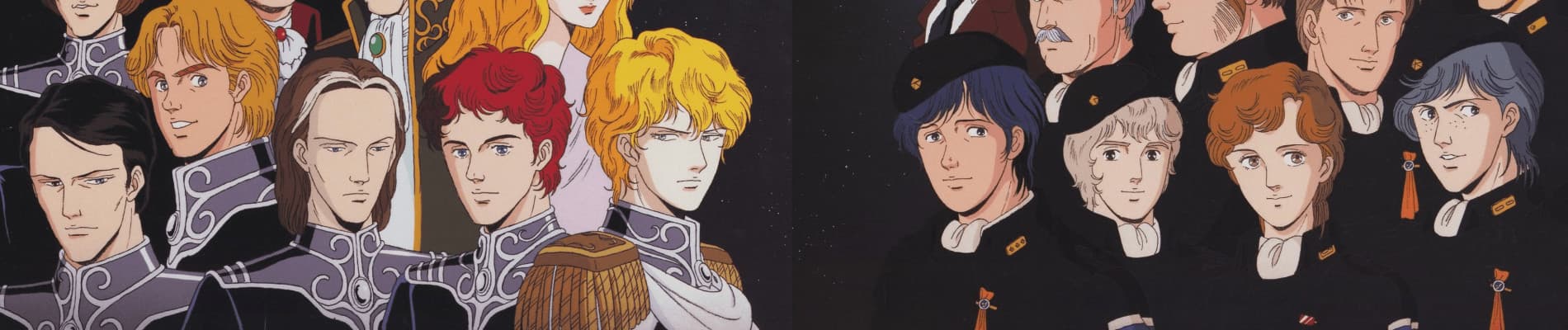
While Legend of the Galactic Heroes is primarily a narrative of a long political conflict, and in some part a character study of its main two rivals, the narrative “shifts goalposts” at several points to reflect the intentions of the story. This is noticeable by the climax of the first season, which is best characterised by its condescension towards most people in leadership, ascending Yang and Reinhard to heroic moral superiority in their respective places, purely based on their skill amidst incompetent rulers. The nobility of the Empire are comically foolish and presented at this stage with little to no nuance, and this sharp contrast places the spotlight so vastly on these two characters that even their comrades fade somewhat. This all changes at the death of Kircheis, causing Reinhard to expand his own view of the Empire, at which point more interpersonal dynamics are revealed, names are put to the faces of commanders in the Empire, and their own personal lives are explored.
Another major shift in focus happens at the end of the second season, where the history of the Empire and Alliance is revealed. At this point Reinhard’s dominance over the Empire is certain, and Yang is fast approaching a similar position out of necessity. This increased focus on history reflects Yang’s growing anxiety over repeating the mistakes of the past with an autocracy under Reinhard, and growing awareness that he will be a name remembered in the future for shaping history. Yang’s death, under this presentation, marks the point where his influence is no longer unwritten. Yang’s story is set as the tragedy of a peerless man who tried to pave the way for history ahead of him, and that future now depends on the individuals around him at the time of his death. Reinhard steadily grows, from the brightest young leader in the Empire into a true ruler, and anxiety steadily builds over what might come of his rule. Yet Reinhard’s own dreams never fail, even as the web he spun around him in the Empire begins to collapse, he perseveres into the opportunity for true communication with those that came after Yang.
The most striking change as the show progresses is the gradual process of fleshing out secondary characters, whose influence is not yet guaranteed as it was for Yang and Reinhard. Suspicion around Oberstein grows since the first season, and little is ever known about him or his true goals until the very end, when his death reveals a dedication to Reinhard and his goals that never faded, even as his methods were questioned for years, and many at his status had already thought to rebel. Julian is a character defined by his dedication to Yang and affection for Frederica, until the event of Yang’s death forces him to follow in his footsteps, and take charge, coming into at least a facsimile of Yang’s ability to lead and make decisions. Although in the present reality of the show, Julian seemed to live in Yang’s shadow, in the narrative’s “history books”, he may be the one responsible for finally negotiating the democracy Yang tried to build.
Legend of the Galactic Heroes is often described as a depiction of the theory of “great men of history”, but where the show stands out is in gradually revealing the influence of people surrounding these men, building nuance where only a simplistic reading could be found before, even as the most powerful individuals are considering what their place in history will be. Yang realised that he did not want the responsibility that came with his dreams, only to live a simpler life as a family, but a role in determining the future was thrust on him again and again, yet he was able to die knowing he never made the mistakes he dreaded. At the end of the day, everyone in this story is aware of the way the future will be written - the books will justify those who were successful, and someone like Julian can accept the responsibility of carrying forward the dreams of Yang and those that rallied behind him, towards the beginning of history.
42 out of 45 users liked this review