
Misty morals in a desert land,
Dreams escape until the ends of time,
Till the child of the past's uphill climb
I am reminded of the somber signs of sunsets,
The brief hope of an ending day,
Through the ranges of the years,
And how its hues are mixed with red

SPOILER REVIEW!!!
Now and Then, Here and There is a frightening display, frightening due to its explicit gunshot realism without warning as if we're Shu suddenly thrown away from the usual comfort brought by routine and into one of the more darker sides of human experience. This collapse from the generic anime setup at the very beginning of the show, with the rushing eater accented by the comedy-iconic food storm, the free-flow movements tolerably inconsequential, and the periodic negation of the laws of physics, among others, with solely the suggestive quote at the start hinting something bigger than it makes of itself--this stark contrast, it only served to be a shrewd mechanism prolonging my drift in this sea of brooding-overs.
And I begin to wonder perhaps with patronizing concern: can a victim of violence, with all heart say, that life is beautiful? And how even, for people at the bedside of the ill, is it humanly possible to feel it to be true, with or without guilt, despite its acknowledgment albeit from a distance? What happiness can't be swallowed by knowledge of inescapable suffering, what societal despair can be saved by a work of art so holy?
I am foremost a patient with ails from the mental space and spirit, capable of experiencing green pasture despite the crackles of the fiery fields over, under, and behind me. But can victims of war and harassment ever feel the same beams of light even just for salient moments?
Graveyard signs of unsolvable pain viscerally coursing with loud pulsations is a torment established inside this privileged soul. Now and Then, Here and There is a vivid reminder of my standing while not necessarily undermining what I'm stricken with.
"History repeats itself", a maxim clothing civilization indicating that greed and wrath share permanent residence within humankind.

I do not need to mention the cruelties laden throughout the show, it speaks for itself. It speaks to the unchanging selfishness most prominent in leading superpowers despite a global catastrophe which should, in a better world, prompt people to salve each other rather than grind into the wounds.
In the series, Hamdo is representative of the wickedness of monopoly. His insinuated tactical brilliance coupled with his depiction as a dictator of infantile behavior is an unsubtle jab against power creeps with crappy morals. Why, in a dried-up world in shambles, would one even think about sucking resources up further? There is no method nor logic to his madness. The static characterization of the king is key to presenting the consistency of societal evil. His disruption of peace further extends beyond the plot's confines, as every time the lovely ED song ends, he chimes in with his man-child outbursts. The heavenly music could have been a deserved respite after the usual tragedies every episode, but Hamdo's always there breaking the sleep. It's such a nice detail.
Abelia is a manifestation of a spoiling mother encouraging her kid to go run in freedom road as a child, but in a very skewed way. I guess the reason why there is not much to her character other than this (regrettably so if I may say), and King Hamdo too, is due to the conjecture that political leaders are believed to have no profound rationale for their actions that were corrupt. Well, maybe other that than there's no writing space for considerably fleshing these two out in 13 episodes. They're just there to infuriate the audience and it works well just like that. Why else, in Abelia's case, would a character such as her who observes Hamdo as a subject does to an object, who possesses envy rather than her king's insanity, be created in that way? I do not wish to think it sloppy writing because there is undeniable impact in her animation when thought of in a certain way.
NTHT captures the twin pillars of Hellywood as the primary drivers of terror on Earth ten billion years later. Their atrocities spread downward and flooded the lands with blood, planting vengeance instead of greenery. Through their acts we witness one-sided cruelties that can even transfer the blood and grime into the victims' hands (Nabuca, Tabool, Elamba). And all are compelled to join in the violation of the Mother Planet.
Lala Ru is an overt personification of the Earth, the progenitor of Nature sprung by the blessing of the waters. Everything she is can therefore be directly connected to Earth: its silenced state, void of hope; its defeated spirit, surrendering to the throw-arounds; its dry expression just as the place is; its defilement at the hands of bloodseekers and narcissists; its loneliness and its capability to be birthed anew from the palms of the kind.
I'm realizing how the characters are more of conceptual vehicles rather than person-characters themselves, but there is benefit in that portrayal. It highly closes the gulf of understanding the author's intent.
Now that that comparison is established, it is easier to comprehend her relationship with Shu and appreciate our protagonist.

"History repeats itself" is what was mentioned earlier. With Shu, alongside Sara, travelers from the past, history was able to change its course. This complete reversal of a deeply-rooted adage was nothing short of beautiful. The layers added by the generation the play's cast belongs to cannot be undermined. I bring with me another popular quote which goes, "Children are our future". Lala Ru is shocked at how she is constantly saved by a little child who doesn't even know her. Children are generally not expected to have ample knowledge on the planet, but someone as young as Shu was able to stick true to his kind instincts and go on a straight stride on that perilous road that leads to the salvation of a distressed girl, all the while bringing with him the optimism nurtured by the environment of his time period.
All this to say, neglecting the world is neglecting the children that are harbingers of space and time exponentially more illuminating than ever experienced before.
See, deconstructing Now and Then, Here and There's conceptual ideas grounded in reality's context really do not make it profound in itself. What makes it an engaging quality turbulence is its exhibitive storyboard design on human philosophies regarding the sanctity of life being challenged by the primordial force of ugly human thoughts played over the support of S-tier music. There is nowhere else more nude to an unfiltered reality than the farmlands of human rights violation. People die and get raped throughout the soul, what's more gut-churning than that?
Sara...She, is strong. That is enough to encapsulate the greatness of her character. There is nothing more to be said from someone who has experienced hell and back for such a silly mishap from the oppressors, trapped to bloody her hands once, didn't take revenge on Abelia when she could, stayed in the world that has wrecked her, powered by her inheritance of Sis's philosophy, and chose to keep the growing life that was forced into her by that sick world. I honestly just wanted to finish the series so that at least I could give Sara a break.
And on the topic of the impact of Hellywood's reign of terror, there's Elamba, a vengeful spirit of Zari Bars. Retaliation is not a unique topic by any means. And yet, it's just so easy to be overwhelmed by seeing a showcase of one party's convictions. The cycle of intensely physical projections of pain will always be sorrowful to know. In Elamba's case, he was too drowned in the hurt of loss that he even turned against his own neighbors that so much as attempt to prevent him from releasing the gripping of his heart.
I will not forget to mention Nabuca and his position in the story as a clash against the optimistic pacifist Shu. What directly comes to mind is his decline of Shu's offer to escape as the turning point of his character arc. That was a mournful sight.
It is hard to accept and believe there's an alternative solution when you're already too far gone with hardened resolve, and hardened guilt. Couple that with his ignorance of the fact that Hamdo bombs every village right after annihilating opposing individuals and the subjugation of needed residents, Nabuca just cannot help but pine on a pipe dream without realizing that it's a pipe dream. Just imagine the dread that he feels, and we can visibly see his anguish every time he needs to carry out orders to kill, which he inevitably complies with. That episode where he sees himself in the child he was going to bring away from his home, the icicle stare of the same boy towards him as they return, and the pouring out of his distress towards his own fate in the last episodes which is followed by his loss of Boo and his shooting of Soon, I honestly cannot begin to fathom the ache he was enslaved in because of living in that world.

And he cannot be like Shu, such a dark person in a dark world compared to Shu. Being who he is, Nabuca's dying words to Shu were utterly perfect, and they gave a great deal of gravity when we reach the very last moments of NTHT.
But before touching upon that it is necessary to talk about the flooding of Hellywood.

Lala Ru is known to show complete control over her powers. When she first used her pendant in the show, she and Shu were unscathed and were able to escape Hellywood. When Shu was going to fall in the last episode, she was able to jet out Tabool away while bubbling Shu to safety. She can also adjust its intensity as seen in the desert, giving water to drink in droplets.
With all that said, the flooding of Hellywood is a Noah's Ark retelling. In other words, it is an expungement of undesirable elements for a reborn world. That was honestly a dangerous and haphazard move that put me on the edge of my seat, because everyone inside Hellywood, even the innocents, was at risk of either drowning or being washed away to fall to their deaths like Tabool. It damaged infrastructure so much that one child fell from their steps and would have been flushed to death were it not for that soldier.
And so even if it, well, removed the imminent threats of that time period, she still did effect collateral damage, and she still did kill. I brought that to notice because Shu would never kill. I wonder how he took all of that from Lala Ru's actions. It made the scene off-putting despite the victorious background music, such an intriguing mix.
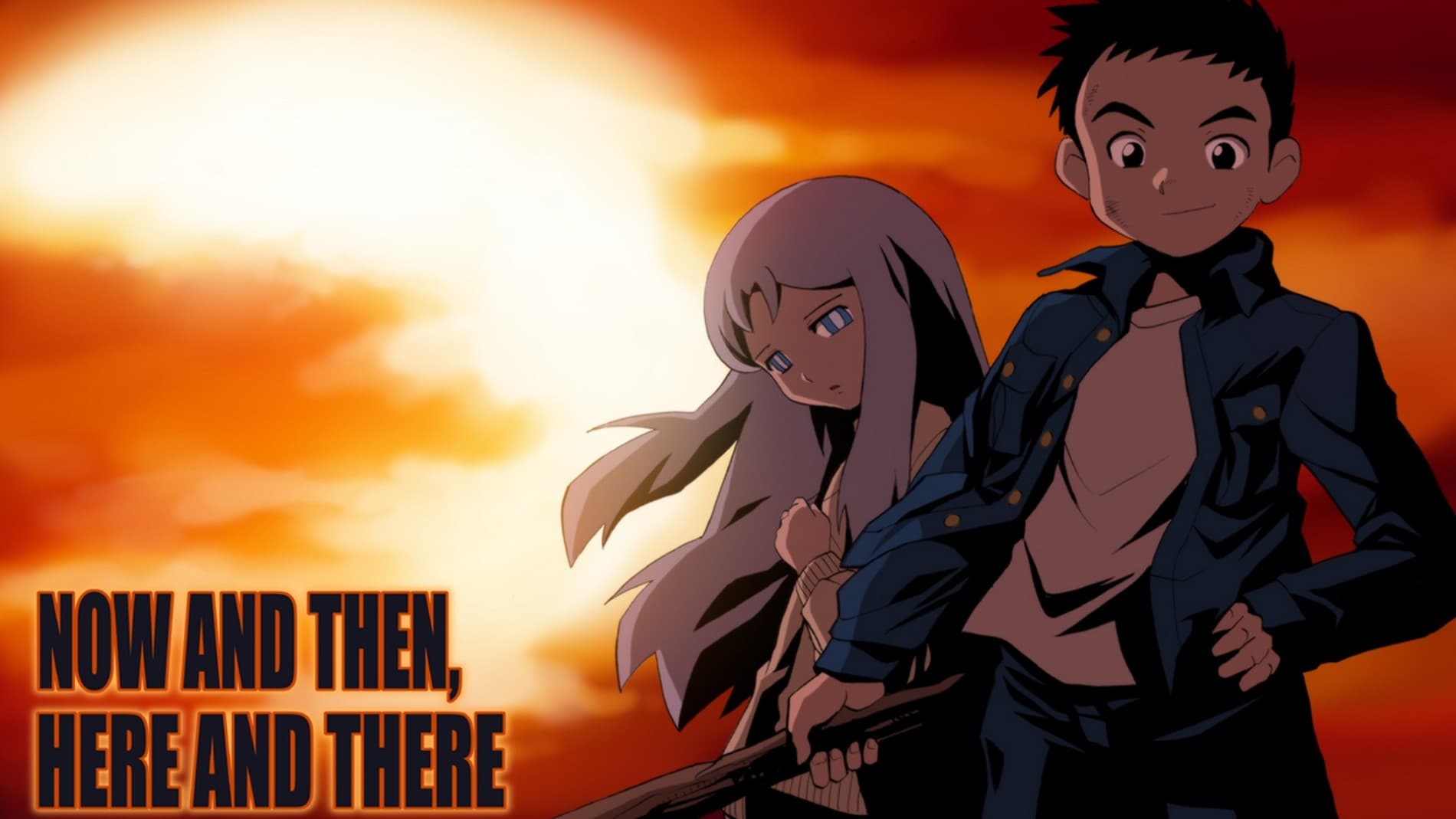
But as he sat in the sunset glow embracing Lala Ru, in the end it provides not much of a lasting spark against their relationship, or maybe none at all, much like when he still interacts with Nabuca regardless of witnessing first-hand his killings and captivities. As a man of ironclad values, the lack of effects on the moral challenge is definitely a foremost room for improvement. It is a very touchy subject, especially since it is a contextualization of reality, but the author already went ham with the politic, so I guess, what's more right?
What was more brought to light was Shu's idealistic preaches even after the horrific events. Until the end, he stands by what he said to Sara, that no matter what happens in this world, something will happen that will turn her life around and make up for the terrors she's experienced.

Such a wonderful thing to hear for people at the cusp of a brighter future, something so tangible to be worn like a blanket, to be felt at the hearth during winter.
But when one looks around and sees the casualties lying around, although they are covered by the revenant sea brought by the last sacrifice of the Mother Planet as she finally saw hope in humanity and reason for its continuation, those people who never had remediation from persevering injustice and the swooping scythe of Death, it tugs the strings of the aware and creates a distorted tune.
Has Shu indeed lied? It ultimately depends on one's relative truth, i.e., their subjective life. Sara, for one, is on her way to believing it to be true. Those who are able to have hope should grasp hope, and those who can't, if there really, truly, are those who can't, which to my grief I think there are (for so long I thought I was a part of that population), then that's what societal change via the collective consciousness is for.
Life on Earth is much too arbitrary for our own good. That's why we need to cherish our lives as much as we can, and that includes others' as well, to the availability of our might. I don't know if there's any answer to our worldwide dread apart from the balm of spiritual faith promising different kinds of paradise, but there will still always exist happiness for someone somewhere, and solidarity will always remain a possibility. Because if there's one thing that Shu said is completely true, it's that there are good people in this world. And I believe that they far outnumber the dedicated evils.
I think the same sort of universal dread has been weighing down on Shu at the very end of Now and Then, Here and There. The tone was a flush of melancholia in his blank stares and the destroyed pillars backdropped by the sunsets Lala Ru always loved. Shu doesn't have a brimming look reminiscent of protagonists like him, there is no victory, only moving onwards. Despite his preaches, the awareness of a reality separate from his everyday life showed a significant degree of impact deep inside--that life can be heavy indeed, but just like Sis believes, it is meant to be lived.
Cue the lullaby for the weary souls.
I will be watching over you
So put your mind at ease and go to sleep
This world, where we've grown accustomed to hurting each other
This is where we were born and grew up
No justification. This is the only world for us.
