(Spoiler warning)
Consuming media can seem like a hopeless endeavor. Emotionally investing so as to live through the characters or reading into an author's intentions can seem pointless. After all, it's fiction and it's not my life. But I'd like to believe that, in some shape or form, I take with me a part of every book or manga I read, anime or movie I watch, or game I play. That in some way, I can affirm a belief, change a belief or develop as a person. Perhaps a single piece of media on its own may not have the power to do that, but over time I think it has an effect on me. Three Days of Happiness, without a doubt, had an impact on me. And more than anything else recently, makes me sure that consuming media isn't such a hopeless endeavor after all.
Before I go into the details, I'd like to mention a few things. Firstly, I've read the manga before. The manga is actually how I learned about the book and is what made me want to read it. But I read it a long time ago. Years ago, in fact. So I hadn't actually remembered much from it when reading this book. It surprisingly had the opposite effect of spoiling me. There were some plot points that I misremembered, making me more surprised when I read them. For example, I thought I remembered Miyagi and Himeno being the same person, for whatever reason. Another thing to mention is that I somewhat re-read this book. I read through roughly 85% of it but before I could finish it, I got busy. And I had put it off for so long that I didn't want to dive back into it from where I left off. So, I decided to read it again from the beginning. I think it was more enjoyable the second time around because I paid much more attention to the little details. Anyway, I just thought I'd give some context, for what it's worth.
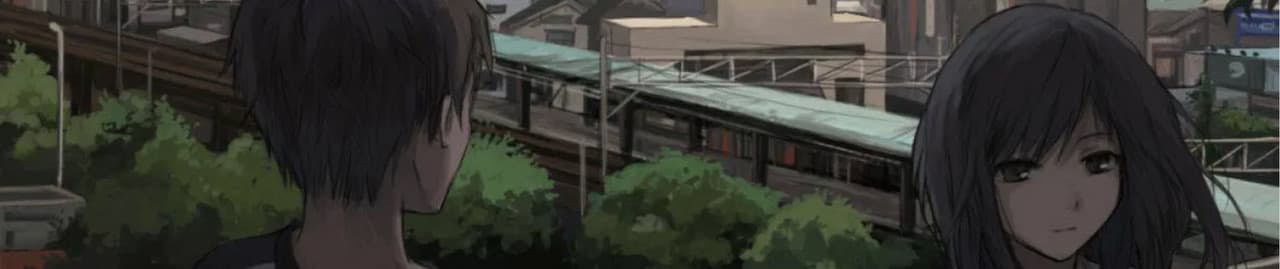
Three Days of Happiness is about a 20-year-old, Kusunoki, who isn't doing so well. He was a gifted child and had high hopes for himself, but now he was going to an average university, collapsing at work and was dirt-poor. While selling his belongings to make ends meet, he learns of a place where he can sell his lifespan. Curiosity leads him to inquire how much his life would sell for. And in doing so, he learns that his entire life ultimately amounts to a laughably pathetic 300,000 yen - meaning he wouldn't be happy and wouldn't make anyone happy and wouldn't achieve any dreams and wouldn't contribute to society. With this realization, he sells his entire life away, except from 3 months. To supervise his remaining time on earth, he is given an observer, Miyagi. She's similar to him in demeanor and also seems unhappy. The book covers these two's interactions up until death. It's depressing, gloomy and bleak. But over time, Kusunoki develops by confronting his past and his beliefs, changing his perspective of the world and transforms his life. Slowly, but surely, he breaks out of his hell and becomes a new person. Until finally, passing away after three days of happiness.
The initial premise is certainly powerful. Not only is it philosophical in nature, asking the question of how a person's value can be determined. But its also inherently poignant, as it confronts heavy themes such as mortality and depression. The concept of selling your life is written to have quite a few varying mechanics, which all play a significant role at points in the book. Although it's existence is never explained, it's not the focus of the book so you never feel like wanting to know why it's there anyway. The kind of despair that's brought by knowing the rest of your life will never be fulfilling is hard to capture without such a creative concept. And the situation of knowing you're going to die soon is also very unique. The premise is a powerful vehicle for setting the stage for an emotional and sentimental roller-coaster.
Despite the supernatural premise, the story itself is grounded in reality. Although there are fictional elements, such as Miyagi not being perceivable or knowing future events, the bulk of the book involves just walking and talking. Outside of those elements fueling some plot points and guiding the story on the right track, the real drive for the plot comes from the interactions of the main two characters and their development. Other characters serve to nourish that development, making it the core of the book.
It starts off very slow. And remains slow until the end of the book. The pacing is consistent and doesn't grip you at all. Yet, it pulls you in a different way. The experience of reading fittingly feels like accompanying the final months of someone's life. It's uneventful, calm and composed. There is mostly no rush from the mystery or thrill from wanting the best for the characters. Instead, it has the allure of a rainy day. There's a sentimental sombre to the story. However, as it progresses, it evokes a completely different feeling. Closer to the end, I found myself wearing a warm smile, as if I was genuinely proud of the characters. They are vulnerable, realistic and strikingly relatable. I was able to empathize with them very strongly, Kusunoki in particular. It's written from his perspective and greatly explores his thoughts and feelings, which is a very powerful way to add depth to the protagonist. Seeing the similarities between me and Kusunoki through a detailed glimpse into his mind is one of the biggest reasons why I feel the book deeply resonates with me.
The story is very intentional with it's scenes. Every character has a purpose in affecting the main characters or conveying a particular theme. Many of the thoughts of our protagonist and the behaviours of Miyagi are also strongly connected to the themes. Because of this, the focus of the book is clear, every component is relevant and it all feels very purposeful.
The foreshadowing is also very purposefully placed. As I mentioned, I re-read the book, so early foreshadowing was much more noticeable during the second read. The author plants many seeds from the outset, making you doubt characters, motivations and what you've been told. A lot of the foreshadowing comes from Kusunoki's retrospective narration or Miyagi's behaviour and dialogue. Kusunoki will allude to a 'big mistake' he's made or notice a certain look in Miyagi's eyes, suggesting that she's hiding something. Pretty early on, Miyagi will say that she understands the feeling of wanting to give all her money away to someone, referring to the revelation of the childhood friend that she loved or how she gave him the 300,000 yen. Small and seemingly insignificant details like this add more depth to the characters. They become people who don't say exactly how they feel and make the reader think more carefully about who to trust and what to think about them.
The book is precisely what I look for in a book. In my opinion, the advantage books have over other mediums is the ability to go into depth with interactions, dialogue and characters. Other mediums, such as anime, manga and movies have advantages in regards to audio and visual stimulus. I think because of that I prefer many genres, such as action, in those forms. But with books, mostly dialogue and characters' thoughts are easier to sit through and the detail given through narration is more insightful. What I look for in books are solid character writing, dialogue and meticulous detail. This book absolutely has that, with it's plot as a backdrop for it's superb characterization and witty and meaningful interactions. It uses the medium of books to it's fullest.
The book is Japanese and I read a translated version, so take this with a grain of salt. The prose is simple, very simple. The sentences are short and straight to the point. It doesn't make an attempt to get you to read faster or slower with varying sentence structure, it doesn't awe you with pretty words and descriptions. It's matter of fact and direct. The book actually explains this, as it's supposed to be a journal written by the protagonist and not for others to read, and even says that it's far from beautiful prose. Despite this, I think it's brilliant. I'm not a very proficient reader and find difficulty reading older or 'fancily-worded' books. That's why I'm very glad that the writing is easy to understand, making it very accessible. The amount of times I had to search up a word I didn't know can be counted on two hands. In fact, I think I had to search up a food or Japanese term I didn't know more often. Rather than profound and imaginative descriptive writing, it fills your mind with details of the surroundings instead. Never dwelling on one particular thing, but instead painting a vivid picture in your mind by giving you as many pieces of information as possible. The narration comes across as earnest, like an unfiltered stream of thoughts. In spite of it's simplicity - or perhaps because of it - the writing has a precise accuracy to it. It conveys such specific thoughts and emotions through such short sentence in a way that's hard to describe how it's achieved.
In regards to the dialogue, it feels natural and realistic. Characters aren't force-fed a 'personality', but are characterized carefully through the words they say. It has low energy and mature conversations, similar to how many people actually speak, whilst also maintaining a witty and entertaining flair. Alongside the rest of the writing, it is also made very purposeful, with layers of subtext, mystery and foreshadowing mixed into it. The dialogue goes a long way in evoking empathy for the characters and making the relationships feel genuine.
Though the real selling point of the book is the themes. As mentioned, every scene is meaningful and purposeful, connecting it all to the themes and messages. With a story about a man confronting mortality and completely changing his perspective on life and love, of course there's a lot to dig into. The themes are thoroughly explored and, at least for me, highly relatable.
I think the main themes relate to life and love. Ironically, the author says in the afterword that he did not intent to focus on those and I will get into that later. But, regardless, I still think that's what I took from the book.
Starting with love, this is portrayed through most of the main characters. One of the things conveyed is the distinction between true love and fake love - empathetic love and manipulative love. Kusunoki's love for Himeno is fake whilst his love for Miyagi is true. And Miyagi's love for her childhood friend is fake whilst her love for Kusunoki is true.
Let me explain the 'fake' part. Kusunoki thinks he's in love with Himeno. He describes how she's the only person he's ever cared about, clings onto their promise even after 10 years and she is constantly on his mind even after having one foot in the coffin. Near the start of the book, he has a dream where he speaks to Himeno, telling her how he thinks he enjoyed their time together more than he realized. When he meets her again after 10 years, he describes her as unimaginably beautiful. He even pushed away other girls, like Wakana his only university friend, because of how convinced he was that he loved Himeno. But then, of course, Himeno confesses that she always hated him. She had planned to make him witness her suicide. However, despite such a revelation, he moves on surprisingly quickly. Of course, he is destroyed at first, giving away all his money and walking in the rain. But the next day he moves on, vowing to stay alone, and goes on his vending machine tour. He never truly loved Himeno, but put her on a pedestal as somewhat of a crush. Perhaps as a defense mechanism to cope with his unfulfilling life.
At the beginning, he describes his opinion of her as neutral and maybe even negative, because of the competition she brought. But what is fairly clear is that he never loved her back then. Only when she left and he realized that there was no-one else, he viewed her as the greatest thing to ever happen to him. He only "loved" her as it was convenient for him, thinking she would save him. That's why he was able to move on surprisingly easily when he realized she couldn't anymore. And that goes both ways. Himeno sent a letter to him when they were 17, as a cry for help. She also only "loved" him as a means to help herself. But when he didn't save her, she gave up on him, actually wanting to ruin his life and for him to die. Something that stands out to me is how there is no care or empathy for one another. Kusunoki explicitly mentions how he was happy that Himeno was bullied or when she was unhappy, because it meant that she would be with him. Even with Miyagi, she mentions how she wanted to see that her childhood friend couldn't live without her and to see him suffer on his own. There is no genuine empathy and care for the other's well-being, wanting the best for them. It's a manipulative love that simply uses the other person.
Kusunoki and Miyagi don't particularly get along for the first half of the book. But the turning point for that is when Miyagi explains her story. She tells him of her struggles and tragic situation. And here, Kusunoki begins to genuinely empathize. Before he would not pay her much mind but afterwards, he starts to be more considerate. For example, letting her sleep on the bed instead of sitting in the corner of the room and deciding to be the easiest subject she's ever had. Instead of using someone else as it's convenient for him, he begins to genuinely care about them. And that's the distinction that allows this to turn into a true love, in my opinion.
It may sound corny, but the book conveys the power of this 'true love'. It shows that through loving and being loved, you can have confidence and happiness. Kusunoki did not care how other people thought of him, because he had his love for Miyagi. The reason why seeing him talking to a ghost made people happy was because 'he looked like he was having the time of his life'. And he says how the final three days of his life were better than the worthless 30 years he could of lived, or the valuable 30 days of creating art, because he had her.
Now the next theme is probably more prevalent in the book than the one I just talked about. It's about how to find happiness in life. Kusunoki starts off as very unhappy. His basis for happiness is built upon accomplishments and approval. At a young age, he was a very smart kid so his self-worth came from that. This is actually something I deeply relate to as I was also a smart kid, making me think I was special and that I'd do truly great things, but over time realized that I was pretty average. The mindset of thinking you're blessed takes away your desire to put in effort, thinking you should be able to do it because you're smart enough and if you can't, you're just stupid. So, I can understand how destructive this would be to his happiness and ego on a personal level. Later on, he studied less and ended up in an average college, making him unhappy. He talks about his younger brother being more successful than him and even going to a better college. His parents giving his brother attention, instead of himself, made him believe your worth is determined by your accomplishments. There are plenty of signs that he cares about approval and compares himself to others throughout the book. Early on, he gets angry when he sees a guy walking past, his age, smiling to himself. His neighbours throw a party and he can hear them having fun through the walls, making him jealous. We can see he cares about how others see him too as he finds joy in the idea of shopping late at night with a girl. And he wanted Naruse, his friend, to think he and Miyagi were dating. Despite them not dating and the former example not having truth in its implication, he finds pleasure in this because people will view him better. Incidentally, Miyagi criticises his list of things to do before he dies, saying those are not what he actually wants but what he thinks he should want or what other people would want. His idea of happiness is fixated on other's views instead of his own. And he values his life based on how much others approve of him and his accomplishments. When he doesn't get these things and feels unhappy, he blames the world, wishing it would 'get nicer', turning him cynical and reclusive.
The impetus for the change within him comes from Miyagi. In a drunken fit, Kusunoki makes a bold claim that he's going to change his entire life in the three months he has remaining. Miyagi suggests that instead he should accumulate small, yet definite joys. She opens him up to the idea that it's the little things that matter. Hearing this, he ignores her and asks how his life would have ended up. But after, looking out the window, he realizes that he'd never stopped to look at fireworks. Something so simple, that has been there all along, he never took notice of. Miyagi then tells him that he would have lived those 30 years unable to let go of the idea that he was special and clinging to the shallow hope that something good will happen. She says he should have accepted reality back then. The problem was that Kusunoki never stopped to look around him, at the present, but instead idolized the past or dreamed about the future.
This relates to another theme: escapism and expectations. Kusunoki relies on escapism to cope, making him avoid the present and preventing him from taking action. He runs away into the world of music and books, so he doesn't have to deal with it all. Miyagi said that all he did in the 30 years before his death was pay bills, read and listen to music. He says himself that reading is for people who have nothing else to do and that music might be why he was never able to 'get accustomed to the world'. He also describes a habit he had of imagining a beautiful world, having everything he desired before he slept. Memories he never lived and scenes he's never seen. The characters in the book cling onto a false hope, described as a "devil's proof", that something good will happen eventually. Miyagi doesn't sell her lifespan, hoping something will happen; her mother extends her lifespan hoping her husband would come back; Kusunoki doesn't kill himself or ever take action in his life hoping something good will happen too. Even Himeno tells him that she was a 'ten-year old dreamer' and never felt the need to mature, leading her to never develop. Living with this delusion, they convince themselves that it's okay to sit by and do nothing - that good things will come if they simply wait long enough. Kusunoki says that he hoped the world would 'suddenly get nicer'. He curses the world for his situation, angry that 'something good' hasn't come and not with himself for not changing anything. By running away by dwelling on the past and dismissing responsibility with false hope, he is unable to ever accept reality.
What Miyagi was suggesting was that he should accept the world as it is. Rather than averting his eyes, placing his happiness in accomplishments and approval or cursing the world, he should appreciate its beauty and accept it. Instead of using music and books, for example, as a form of escapism, he should purely appreciate their beauty. And so, over time, he begins to take notice of the little things - the small yet definite joys. He takes notice of a rainbow, realizing how he forgot they even existed; he pays attention to the clouds; he explores his love for vending machines; he thinks a basic town still looks beautiful; he folds a thousand paper cranes; he buys food from every stand at a festival. Something I noticed is that the further into the book I read, the more visual descriptions there were. I'm unsure if this was intentional, but perhaps since its written as a journal, he never noticed the things around him at the beginning so there is no writing of them. But later on, he pays attention to them more, so there's more description. He says that he found the basic town beautiful because he 'no longer had a grudge with the world' - he accepts it the way it is. He also mentions how there are likely people who take better photos of vending machines but doesn't care, because it's no longer about approval or accomplishments for him, but he's doing what he wants. Moreover, he doesn't care that people see him as a weirdo for talking to 'air', because he's not looking for that approval anymore. He's found what truly makes him happy and what's important to him.
Miyagi changed his entire perspective on life or, as he describes, allowed him to 'make friends with the world' and accept it in all of its beauty. Better than the 30 years of clinging to a past hope and escapism and better than the 30 days of accomplishment and approval, through this and discovering that his love for Miyagi is what truly makes him happy, he could experience, for the first time in his life, three days of happiness.
Before I end the review and write the conclusion, I want to speak a little on the afterword. The author says how Kusunoki created his own 'hell', making it impossible to be happy. And we can definitely see that through his mindset. But, the author explains that his intention was to convey a very specific kind of beauty. He wanted to illustrate the view of someone looking at a hopelessly beautiful world. He thinks that the more regretful they are, realizing that they can't experience it anymore or that they'd been living in it all along, or the beauty of being able to throw all worries aside at death's door and truly appreciate it all, is what makes the world increasingly beautiful. I think I certainly understand that feeling, through reading the book. I can't say I experience that feeling, but the book conveyed to me what that would be like. And I think finding how to experience that feeling as soon as possible may be the key to happiness, or something like that.
Three Days of Happiness is a deeply personal book to me. It resonates with me through its relatability, messages and emotional story. Noticing how Kusunoki's situation doesn't necessarily change all that much, only his mindset and perspective do, really makes me think about how much our happiness is determined by ourselves. Seeing how someone is before dying, and getting a glimpse into that beauty the author speaks of, I want to appreciate the world around me more and take things slower. I won't say something corny like "this book changed my life" but I can be confident that its affected me in a profound way. I hope that I was somewhat able to convey the beauty of this book in this review.
44 out of 45 users liked this review