Hmm where to begin: I walked into JJK S1 expecting your standard shounen, and that's mostly what I got. An optimistic young protagonist finds himself in a previously unseen and unknown world of supernatural power and danger. He takes on the challenges presented to him with vigor and a youthful naivete; more characters are introduced to give this world depth; powerful battle scenes capture the viewer's attention and leave them excited to see how the characters grow in strength. All in all, standard fare shounen. I finished S1 thinking eh, this is all fine and good and I'm not too invested in these characters to really care if any of them die, but this world is interesting enough to immerse myself into at the end of the workday.
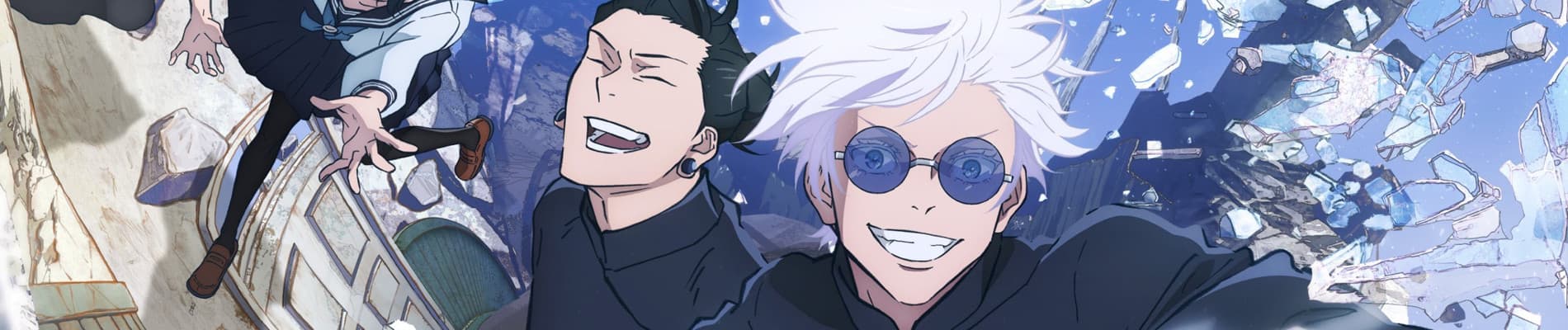
Fast forward to S2, and lol did my previous assumptions come back to bite me. The only comparison I can make to the emotional effect Hidden Inventory has had on me is to that of deeply and intensely falling in love with someone who had previously just been a regular acquaintance. Suddenly, characters who had barely made an impression on me in S1 leapt into life and light. Suddenly, I found myself returning to random episodes in S1 for additional tidbits into their motivations and personalities. Suddenly, all I could think about was the grief, sadness, and loneliness that would accompany someone as already solitary as Gojo at the loss and betrayal of his closest friend. What had previously been generic shounen now became a story that stood rank to rank with great novels.
And yet... it is hard, after all, to strike gold twice. The character work and writing in Hidden Inventory is so shockingly well done that it makes the rest of the season feel like an afterthought, a lengthy footnote to the high drama of Geto and Gojo's relationship. Nothing that happens in Shibuya is able to match the emotional ferocity of the KFC breakup, or of the Shakesperan tragedy of Riko's last words. It's actually almost jarring how completely the season diverges from its masterful beginning arc - in Shibuya, we are subject to unending battles that for the most part do not carry significant emotional stakes; almost no inter-character work; and random bouts of exposition as opposed to actual world-building. This is not to say that the Shibuya arc is in itself a bad story - it is just to point out that after experiencing Hidden Inventory, watching Shibuya is like checking into a 3-star hotel after you've spent two weeks at a 5-star.
Despite all that, it is impossible to think about anything other than Jujutsu Kaisen after this season. Having seen the heights the author and the anime storyboard writers and directors are able to reach in Hidden Inventory, I know they are capable of recreating that magic, of going beyond the formulaic conventions of the shounens on whose shoulders JJK stands on. Even if they never do, though, Hidden Inventory will always dazzle on its own.
30.5 out of 40 users liked this review