Tamako Market
a review by AnimeDweeb
a review by AnimeDweeb
Within Japan, the K-On phenomenon of the 2010's cannot be overstated. Believe me, I've tried to do just that. It was a sensation sweeping the nation, and its cessation after Season 2 still bewilders some HTT fans till this day. "Why not keep a good thing going?" Kyoto Animation confronted that very question, as they opened the door to a possible Season 3, and the bucket-loads of cash that were sure to follow.
Naoko Yamada saw things differently, perhaps she always did.
Fun things were fun while they lasted, but K-On marked the end of an era for KyoAni. Gone were the days of hunting down the next up-and-coming IP to emulate the success of works like CLANNAD or Haruhi . Moving forward, the studio would look inward for ways to leave their mark on the Japanese animation industry. Years after K-On S2 saw the release of Chuunibyou demo Koi ga Shitai and Kyoukai no Kanata — series that would mark the studio's shift towards adapting works either submitted in their annual awards programme or published under the KyoAni light novel label. This approach opened the door to original works as well, of which Yamada & Yoshida were happy to deliver. KyoAni now aimed to be more than a studio, but an animation style . They emphasized developing and retaining in-house talent, whilst richly imbuing their niche subject matter with regional culture, in order to curate a feel that is distinctly "Kyoto." And the figurehead of this movement would be none other than the studio's starlet director, who was given the green light to rework her early plans for K-On S3 and some of the studio's rough story outlines into an entirely new project of her own. This was effectively carte blanche — total creative freedom, a privilege often kept from even the best and brightest artists. Young Yamada's meteoric rise to success was no fluke; the Impossible Moe was no accident. Now that Yamada was given a whole sandbox to play around with, there was the feeling that audiences would surely repay that faith upon seeing the final product.
Eh, Tamako Market was kinda mid.
The numbers don't lie; there was no market for Market . Based on the little sales data I could gather, Market 's Blu-Ray sales in Japan likely failed to crack more than 3,000 copies a week — a big loss by the small studio's standards. For comparison, K-On 's first Blu-ray volume sold ten times that figure in its debut week. But hey, hindsight is twenty-twenty, and now that we're in the 2020s, perhaps audiences just missed out on a show that is easier to love now than it was over a decade ago? Personally, I think Market 's mixed reception has always made sense. Predictable plotlines, a somewhat disappointing ensemble cast, corny gag humor, and that damned bird — I get it. But I didn't really get Market in its entirety, at least not when I first watched it.
When first envisioning what this ongoing commentary series on Yamada's works would look like, I didn't start with either K-On or Liz . The first drafts that came to my mind for this project were iterations of the paragraphs you've just read here. For the longest time, Market has stood out to me as the one blemish on Yamada's track record, which is why I was most excited about the prospect of revisiting and reevaluating this show. I've now been able to reconcile my past criticisms with newfound insight and appreciation for Yamada's follow-up to K-On : a quirky, saccharine experiment that fruitfully expands on the director's approach to storytelling through playful ambition. I know I haven't really given the series the credit it deserves just yet, but we'll definitely get to that. Oide ! Sā, min'na ! Welcome to the sandbox, it's time to dig up this uncut gem and have plenty of spoiler-free fun along the way.
"いらっしゃいませ! Welcome to the Market. How may I help you?"
It's only right we begin talking about Market by first talking about, well, The Market. Kyoto's Demachi Masugata Shōtengai is a sheltered arcade established in the '70s. Decades later, the site was chosen to be the chief inspiration for Market 's Usagiyama Shopping District. Newfound fans in the KyoAni ranks were struck by the warm vibe of the shōtengai , which they sought to capture within its fictitious counterpart. With help from The Museum of Kyoto, Usagiyama was designed from the POV of these KyoAni animators , inviting splashes of bright colors and moe . Following in the footsteps of London backdrops in the K-On Movie , the spirit of Demachi lives on through the inspired ideas retained in its animated interpolation. To get a sense of what I mean, look no further than Market 's manic obsession with mochi , the Japanese chewy rice cakes often enjoyed as candy. With roots dating back to the turn of the 20th Century, Demachi Futaba has brought traditional confectionery and smiles to sweet-toothed patrons everywhere, just as Tamako does behind the counter of Tama-ya, the storefront of her family business. Homage and fun go hand-in-hand, as Market appropriates real-life tradition and stages a goofy rivalry between the mochi-making fathers of Tamako and Mochizou, à la the Montagues and Capulets. Setting informs the show in other unexpected ways too; after learning about how Demachi 's "Hana no Harukaze" florist shop receives their refrigerated stock of flowers, series composer Reiko Yoshida supposedly took this inspiration to pen Market 's inciting incident, which saw Dela being accidentally shipped in a package delivered to Usagiyama's "Florist Princess."
The real-life parallels continue, alongside loving anime additions that broaden the street's appeal to modern audiences. While it unfortunately appears to have closed its doors IRL, the "Hananami" café finds its lease of life in the show as "Hoshi to Piero", with the former having once served as a popular meeting spot for both locals and fans of Tamako pilgrimages due to its quirky aesthetic and cozy view above the shōtengai . Also finding their well-placed recreations in the show are neighborhood school, fish sellers, tofu shop and bath house; the latter of which is repurposed into a cramped meeting hall for endearing evening town meetings that (quite literally) showcases how tight-knit this Usagiyama community is. Market 's setting may be fictional, yet every part of this backdrop feels as real as the street that inspired it. That's not to say that Market is shooting for strict realism, but rather that the show deeply reveres the culture of Demachi, and intends on sharing that same love to audiences, with purposeful personal touches left along the way. In this regard, the bright vibes of Usagiyama make for a vibrant victory — the warm environment of Tamako Market is its most refined aspect. And yes, I unfortunately mean that both as a compliment and a complaint.
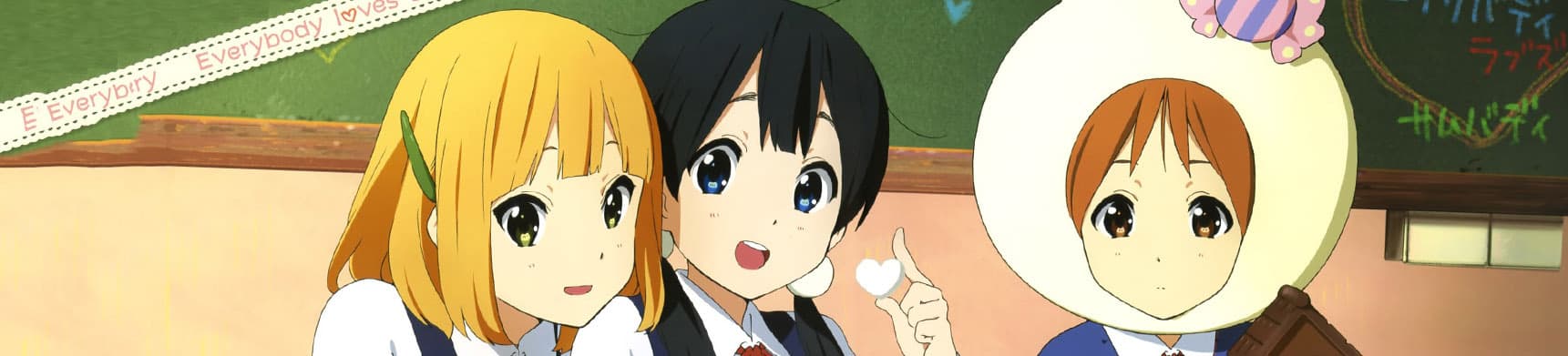
Market is a slice-of-life (SoL) that quite literally follows a "Flavor of the Month" series structure. Episodes are spaced roughly a month apart and take place across a full year in Usagiyama after a strange encounter with a talking bird and one special girl. Tamako Kitashirakawa is the eldest daughter of a mochi-making widower and has spent all her days growing up in the shopping district. Her innocent days of being the beating heart of her cheery community gets turned upside-down with the arrival of a feathery whirlwind! Usagiyama's newest patron is Dera, a pompous plump pheasant that can talk… and talks too much, really. Dera claims to be a royal bird on a mission for the prince of a far-off land, but finds himself stranded in Tamako's small world. Until he can make his way back to the prince again, Dera decides to reside with Tamako's family and observe the fascinating daily lives of the mochi girl and the other curious individuals that make Usagiyama come alive. Market is structured as a largely-episodic, almost-anthological series, featuring sitcom plotlines across a handful of key characters as they face what it's like growing up, having childhood crushes, or simply getting through each day with a bright smile on their face. Most importantly, Market attempts to capture community spirit through anime. This mission statement of Market is exemplified by its joyful OP: a musical number and parade led by Tamako as she brings the street together in whimsical song and dance. We've already seen how well Market fleshes out its world with an abundance of detail and homage, but how does it fare with the characters that call Usagiyama "home?"
Readers of my K-On reviews would have been briefly introduced to the idea of "atmosphere," a recurring area which Yamada & Yoshida have focused on in their past collaborations. On that note, I'd like to elaborate more on how this concept gradually evolves from K-On to Market . Although what I'm about to talk about might be partly conjecture, I think this reveals plenty of insight into what Market aspired to achieve, as well as Yamada's storytelling as a whole. Atmosphere in K-On S1 was largely dictated by the bubbly personalities of the Houkago Tea Time (HTT) quintet. More than mere Cute-Girls-Doing-Cute-Things (CGDCT), K-On used the daily experiences of the club members to showcase both their growth as individuals and their blossoming bonds as friends. The intimate group dynamic of the friends was the all-important atmosphere around which the entire series was built. However, laying out the groundwork for K-On came at a cost. S1 was largely limited to activities within the Light Music Club, such as band meetings or live performances. Yamada & Yoshida admit and regret that the team were largely unable to construct the show's atmosphere outside of the clubroom. Enter S2: an expansive sequel that fleshed out the school and larger world surrounding HTT. Through a two-cour follow-up, K-On S2 matches its larger scale with greater depth; this season never strayed from the core focus of the girls, contextualizing their friendship in everyday life experiences beyond the club setting.
With all this in mind, we can chart out a neat progression of Yamada & Yoshida's ideals. First came the clubroom of K-On S1, and the larger world of the HTT followed soon after in S2. Where can we go from here? In interviews, Yamada states that during Market 's pre-production, she developed a deep connection to the common, everyday environment of Demachi's working-class shopping district. At the same time, she also stressed the importance of human relationships, and sought to create a comfortable, easy-going show that showed "[the importance of Japanese people to be friendly inside… [by] depicting people's hearts](https://ultimatemegax.wordpress.com/2012/12/24/welcome-to-tamako-market-naoko-yamada-x-reiko-yoshida-conversation/#more-2895)." All these clues correlate with Market 's love of community spirit, and can help us better understand this ambitious follow-up to Yamada's work: "What if the intimate atmosphere of K-On could be re-created on the scale of an entire community?" What if viewers could be as immersed and invested in the charming life experiences of neighbors as they were in the everyday hijinks of 5 high-school girls? In theory, all the pieces were there: Tamako's no-nonsense and insecure imouto Anko, the headstrong girlboss Midori, the lovesick loser Mochizou, the soft-spoken and socially-anxious Shiori, the young-at-heart grandfather Nobuhiko, the easily-flustered tofu-seller Tomio, the dainty florist Kaoru, the prim and proper island girl Choi, the grumpy and old-school Mr. Kitashirakawa, the modernist mochi-man Gohei, the kind croquette tenant Fumiko, and Kanna, carpenting aficionado and comedy incarnate — just to name a few. However, there's one key difference separating the two series' respective approaches to crafting atmosphere. In K-On , characterization came first, but in Market , the priorities are flipped more often than not. Where K-On 's intimate atmosphere was an organic consequence borne from the detailed characterization of each of its lead girls, it is Market 's desired atmosphere that predominantly influences how the characters behave and interact. The staff behind Market intended to create a model community of friendly folks, and so this design mandate took utmost precedence over in-depth characterization. In the theme park (in no way related to Amagi ) of Tamako Market , the setting of Usagiyama is the main attraction, populated by animatronics straight out of Freddy Fazbear's Pizzeria. As much as I'd like to avoid more cynical interpretations of stories, here I just can't shake the sense that a majority of these characters share the same monotonous hivemind of good vibes, while occasionally losing their individuality in the process. I love the Keionbu members in tandem, as a fictional clique so fleshed out that it effectively invited me in with open arms. Despite the welcoming vibes of the Usagiyama community, I cannot connect with Market to the same extent.
Now, at the risk of overly repeating due praise later on in this review, I'll definitely acknowledge that some of the core cast characters are fleshed-out individuals with their own distinct plotlines and complete character arcs. Even certain side characters in the shopping district receive brief, yet effective moments to break away from their one-note characterization and showcase their individuality. But with so many people to account for and distinguish from one another, Market inevitably stretches itself thin. Kunio the café owner is an Elder Scrolls NPC whose main purpose in the show is to serve filtered espressos and speak exclusively in cryptic, poetic one-liners that are tangentially related to the weekly theme of each episode. He's a cool inclusion, and I certainly don't hate having that dude around. But there's just so many other people in the show just like him: likable, yet one-dimensional figures that can only contribute to the aesthetics and appearance of community, without actually immersing you in the well-characterized webs of intimate interpersonal ties that Yamada & Yoshida may have envisioned for the series. In this regard, Market aimed to accomplish much, but achieved quite a lot less. And this trend of going all-in on ambitious ideas persists in other areas of the show as well…
Ah, Mochidis Gusting. We have much to discuss. Inseparable from the version of Market that we have today is its birdbrained mascot, whose most notable accomplishments in the show are binge-eating himself into obesity and showering Shiori with L rizz. Before I ruffle any more feathers, I need to stress that I don't really have major issues with Dera as a character. While his rapid-fire comedic interjections are hit-or-miss, Dera's presence on our TV screens seems more polished and less obnoxious than, say, that of another fowl anime companion (both of whom happen to share the same voice actor, perhaps he's being typecast.) Plus, his smooth ruminating narrations complement the show pretty well, as does his unexpected-yet-timely advice towards other characters in need. The reason why I'm picking on this bird is because Dera happens to represent a massive problem with Market . Reading old interviews, I was baffled to learn that Market , an otherwise cozy SoL, had initially been conceived with a lot more fantasy elements in mind, to the point where Tamako would wield supernatural powers! Before the franchise could go full mahou shoujo , Yoshida eventually swooped in to streamline the show with grounded themes that play to Yamada's strengths. But to the show's detriment, underdeveloped remnants of these earlier drafts still found their way into the final cut of Market . One such example of this is none other than Dera. If I had to guess, the bird survived the cutting room floor because he made for a really fun mascot in the show's marketing. Where the bird's redundancy appears is in his role in the show's writing. It's quite clear that Dera was designed to be an alien outsider who observes the culture and spirit of the Usagiyama community… only to become quickly overshadowed by the introduction of Choi, Usagiyama's other notable guest who shares the same island home as Dera. Market still trudges forward with attempts at pushing both characters into the spotlight. But given Yamada's specialization in portraying grounded female perspectives — a talent that greatly enhanced Choi's arc and would only be extended to male figures later in her career — the braggadocious bird had little chance of being much more than comic relief. The only other significant way that fantasy comes into play happens in one of Market 's major storylines. I won't spoil details about the arc here, but it essentially boils down to a "Chosen One" narrative involving Tamako coming to terms with a prophecy outlining her destiny and calling in life. Again, this is an idea more adequate on-paper than in practice. On both of my Market binges, this plotline came across as undercooked, due to its predictable conclusion and a central conflict that always felt like it was resolved way before it ever got off the ground. Both of these fantasy tangents feeling so out-of-place make me question why Market didn't just harness its best traits by staying in its SoL lane. It's all just too much at times, and at the crux of Market 's ambition is none other than Tamako Kitashirakawa. Yet again taking the road less traveled, Yamada & Yoshida aimed to have the titular main character not be a character, at least in a traditional sense. Interviews highlight how Tamako was written as a symbol of the values promoted in the show, and how she was meant to be understood through the relationships she shares with the rest of her district. Personally I'd call this experiment a success, albeit only a partial one that is only fully realized very late into the series (i.e., the LAST episode). Nuggets of backstory and implications sprinkled throughout heartfelt interactions with the ensemble go a long way to helping the audience learn a little more about Tamako by the time Market wraps up. However, this "drip-feeding" approach to writing comes at the expense of seeing Tamako fully coming into her own. She's an ideal figure who neither learns a lot nor changes all that much after the span of this one year. She was written as a symbol, and the result is that she doesn't end up being that great of a character, and comes short on opportunities to resonate with audiences on a more intimate level. To make matters more dire, watching a show named "Tamako Market" only to discover that the titular character is absent for a sizable chunk of the series just sounds like a misleading decision — one that could possibly have played a part in putting audiences off from finishing the show after early episodes that felt quite directionless in the absence of a designated main character they could empathize with. Meanwhile, being a viewer who sat through this rough start, I can't bring myself to say that Market ever really finds its footing for long within its 12 episodes, due to all the missteps we've been talking about.
Early-on in this review, I likened Market to a sandbox, and now's the time to elaborate on that, in light of all the show's shortcomings. No, this show isn't a figurative desert, barren or bereft of creative ideas. If anything, this single-cour SoL is bursting at the seams with ideas and intent. Market isn't mediocre in the same way that your bog-standard seasonal isekai is. Rather, it's more like the kind of mess that arises whenever a show winds up all over the place in a playful manner, and I'd take inventive imperfections over blandness any day. That "sandbox play" approach is a big part of why I fully empathize with and respect what the show was going for. I just can't recall ever having an outright bad time with Market. Everyone involved succeeded in making Market a comfortable, pleasant show, and then some. This vibrant, warm canvas of Usagiyama is a joy to look at, and the show's visuals rarely show its double-digit age. The Yamada-directed series premiere is an unfairly well-shot episode of SoL television, showcasing effortless evolution of Yamada's visual storytelling since her work on the K-On Movie. Her use of realistic camera techniques feels more seamless and fitting than it's ever been in her career. While the busy Chief Director only had time to helm the first episode, she's still an integral influence over how well the rest of the season looks. My favorite aspect of Market 's visuals is its excellent storyboarding and shot composition. Scenes go hand-in-hand with the tongue-in-cheek tone of the script, and also uses foreground & background effectively in order to visually communicate different things at once. Most importantly, Market 's use of blocking informs us about the characters under the spotlight, and draws your eyes to the ideal subjects whenever the large ensemble takes up the screen. Market 's shots look both intentional and familiar, demonstrating an expert understanding of its cast and the places they call home. Further adding to the inviting aesthetics of this community district is the lively OST. It's a pleasant tracklist chock full of happy vibes, along with a handful of somber tracks that really creep up on you. Tamako Market 's soundtrack is composed by one Tomoko Kataoka, and it's a shame her tiny trail on the internet kinda goes cold after her work on this franchise. So, a quick shoutout to her, hopefully she's been well. Finally, there's just a whole bunch of inconsequential little details in this show that I can't for the life of me critique — I simply enjoy that they're there . I've grown a soft spot for all the mochi name puns, the impractical foam cup telephones Mochizou uses to talk to Tamako from across their shophouses, Naoko Yamada predicting the Blue Lobster jumpscare, how almost every episode plays a different vinyl record as a chill insert song, the goofy spooky entirety of the Halloween-themed Episode 6, the Sisyphean tragedy of a tone-deaf Tamako trying to discover a song her mother likes by humming the wrong tune, the way that Midori Tokiwa keeps dropping hints that go over Tamako's head, that one section in the track "放課後" (After School) that pulls my heart in 5 different directions every time I hear it… Okay, I think I'm getting rather carried away 😅 Market provides fun creativity to make up for its sometimes distracting lack of consistency. But for all of Market 's hairbrained ingenuity, it's Yamada's bread-and-butter that makes this series worth watching.
In setting out to promote the importance of community spirit, Market 's meager 12 episodes have a hard time mapping out complex character ties and interpersonal conflict. But I believe that Yamada and Yoshida still achieve the next best thing: proving to audiences that life can be more fulfilling by having people in it. Market 's unassuming array of fluffy "Flavors of the Month" can be thematically linked to the unpredictable ups-and-downs of daily life. After all, life is like an assorted box of mochi (Tamako should pay me royalties for that slogan.) The catalysts for these life changes come from other people, and damn , I'll be the first to admit that shit makes my heart race. Market 's best moments by far come from capturing that rush — the intimate experiences of its characters, as they respond to the presence of others in their lives. In shifting its emphasis away from the broadly happy aesthetics of Usagiyama, Yamada's otherwise competent and entertaining direction becomes essential, by accentuating our characters' emotions in key moments of their growth.
There's two halves to how Market thematically outlines the importance of having others around you. The first step is in showcasing the sweet joys of living with other people. Naturally, Market already achieves this end through its pleasant community aesthetics, but there's more to it than that. In the heartwarming Episode 3, we see Usagiyama through the eyes of Shiori. She struggles with expressing herself to those around her, but feels compelled to do just that after hanging out with Tamako and her family. A simple script in theory may betray just how triumphant this episode feels in execution, as Yamada painstakingly depicts Shiori confronting her social anxiety and being rewarded with newfound friendships. Another outsider exposed to the kindness of the community is Choi, the island girl. The longtime royal servant herself becomes a recipient of service offered freely by friendly folks and the peculiar mochi household. Choi has to gradually learn how to accept her own God-given right to experience happiness. As someone who habitually denies herself of personal needs and desires, Choi is shown to be navigating complex emotional terrain, such as her initial aversion to kindness and homesickness in a foreign city. Looking inwards, Market fans find further evidence of this joy in the life of its titular mochi merchant. Tamako radiates love and happiness throughout Usagiyama only because of all the support that she herself received from Usagiyama during a crucial period in her past. We come to learn what this homely market district means to this girl: home, family and joy; the three things Tamako seeks to preserve and showcase to newcomers through the street, be it through youthful themed celebrations in Usagiyama or her daily interactions. While I admittedly didn't relate to this lead character all that much, the same can't be said of the younger Kitashirakawa sibling, who's arguably Tamako's polar opposite. Anko is the young princess and uncut gem of Usagiyama that the community loves all the same, even if Anko doesn't necessarily share similar feelings. Episode 4 is her time to shine, and I thoroughly enjoyed this "rebellious" brat effectively calling her jovial-yet-silly neighbors out on their BS. Her relatable character arc is all about embracing cringe stemming from both her history as well as her goofy ahh loved ones. Anko learns to accept the past experiences that have defined her, so that she can better the lives of others. Self-actualization and acceptance also allows her to seize opportunities to express herself freely to people close to her — a far more fulfilling outcome than one of regret and loathing.
Life is made sweeter and richer by sharing this crazy existence with those we love. But just as one cannot value sweetness without also experiencing some bitterness along the way, Market takes special care to portray how its characters both live with and live for others. These are tender detours from the status quo that ground our characters in an emphatic way, thereby creating (much-needed) opportunities for characterization and fleshing out the series' overall thematics. Some standout scenes in Market are tucked away as the B-Plot of Episode 7. Sayuri Yumoto announces the bombshell of wedding bells, leaving her father and a secret admirer to deal with the fallout. It's humanizing to see Chouji Yumoto, the cheery bathhouse cashier, aptly drop his smile as he reels in the shock of letting his daughter leave home. While we're at it, let's also stop by Kaoru's shop in order to give Tomio Shimizu his flowers. His one-note characterization as an adorably-flustered tofu seller persists right up till the moment where he confronts his unrequited feelings for Sayuri. In this episode, his brief scene of closure is an atypically nuanced medley of emotions and the single most "gigachad" moment in the entire series, as he cheers on Sayuri from the stands despite not playing a bigger role in her story. Market 's characters certainly have range and depth beyond their regularly happy demeanors, and well-executed trademark Yamada™ showcases like these leave me craving for more. Moving on, we have Mamedai Kitashirakawa, the gruff single dad who is dedicated to upholding the tradition of mochi-making in Tama-ya. Like a sweet-filled ball of mame daifuku , his stern exterior occasionally gives way to the rich love he has for his two daughters, as well as the mother who left them behind. Bro is as strict as they come, but healthy portions of Irish coffee and/or embarrassing flashbacks would reveal just how deeply this father figure cares for the women in his life. On the note of characters who like women a lot, shoutout to Dela! Despite the bird slander earlier in this review, I definitely appreciate how he grows to care and look out for folks in the street. While he's not exactly the greatest source of advice or solace, it's safe to say his heart is in the right place. Last but not least, we need to discuss a piece of anime royalty. For a show dealing with faraway fantasy princes, there's only one Queen that matters (Fun fact: she has an actual shrine dedicated to her greatness here on AniList.) Midori Tokiwa is the popular girl in school and the shoo-in for Captain at the Baton Club in which Tamako and Kanna spend their after-class afternoons. Admired by many yet envious of few, Midori is a humble pal who looks out for the needs of her close friends whilst striving for excellence. She seems super selfless and put-together… except when she doesn't. In a heartwarming story about the importance of seeking help from others, Episode 10 brings Midori's people-pleasing tendencies into full view, in a standout showcase of characterization. You come for Midori's competent façade, and you stay to see said façade come undone. I relate to Midori the most out of Market 's ensemble. Her characterization, unlike others in the series, feels consistently emblematic of the life experiences Market sets out to explore: happy vibes and the uncertain tensions of being a teen, with just a tinge of melancholy. After all, you can't have ups without some downs along the way. Life, and by extension Market , needs some bitterness to make its sweetness that much sweeter.
In closing, I think we can all agree that there's a lot of soul poured into Market , even if it's rough around the edges at times. Yamada's sandbox was not always excellent, but it certainly delivered on fun. Market is arguably Yamada and Yoshida at their most creative, with the pair seizing the opportunity to sample all sorts of stylistic choices in the name of crafting a warm, cozy explosion of moe . I get the sense that Yamada let her hair down in emulating her personal influences, whilst refining her Yamada-isms in a detailed world beyond the walls of Sakuragaoka High. Ambition did sometimes get the better of her, and arguably continues to do so till this day; Yamada's intimate approach to method direction isn't as adept at dealing with breadth as it is depth , and a trend of struggles with large, broad ensemble casts can be seen beyond Market in later works like Koe no Katachi and Heike Monogatari . Furthermore, the Tamako franchise didn't exactly get off to the greatest of starts, with questionable creative choices making Market more difficult to appreciate. But when things do click — believe me, they click — Market emerges as a rare showcase of optimistic creativity and heartfelt storytelling potential. In an effort to portray the hearts of many people at once, Yamada discovers that her most effective moments stem from the detailed perspective of the individual. Evidently, Yamada demonstrates what she's learned by getting another shot at her Tamako IP: a sequel that finally allows its titular protagonist to grow from symbol to character, in a tale where both Tamako and Yamada come into their own in an experimental journey of self-discovery- But that's a story for another time, a love story , if you will.
When reflecting on what Market means as its own standalone piece of art, I realize that the series is about the things that change, of which there are plenty. Some things last shorter than others. Market is a year-long snapshot of transience amidst mundanity — fleeting, important moments for our growing teens as they navigate school and the comforts of a familiar street. People come, people go. In Market , the young main cast are riding the exciting highs of adolescence, while the older folks of Usagiyama cheer them on indefinitely, having too seen those same highs in their past lives, and knowing that these kids might eventually leave the old-timey street for new horizons. Seasons pass from one to the next, and aspects of ourselves morph in time, as do feelings — what we feel towards any number of things can change over time; heck, my feelings for Market weren't exactly this positive when I first watched it way back when.
"ああ、まわる、まわる、レコード
ふくれてはじけるの
でもね不思議なメロディー"
"Ah, turning, turning record.
It swells and pops open.
Oh, but it’s such a strange melody."
Age and experience does a number on us, for better and for worse. I'm just now discovering just how quickly memories as early as 10 years ago can warp with time. Round and round the record spins, and its fading grooves might change me for good. But as Dela once says in the show: "The years pass by, but there are some things that never change. They're invisible to the naked eye, but visible to the mind's eye." Some feelings are stronger than others, and act as the fuel to keep key memories alive. Mamedai might be a grumpy ol' mochi maker, but he's also a kid that wrote a love song to his future wife. That love sticks around, and may be what we need to cling to amidst the changes of our mundane days here. Maybe we can all end up like Tamako, after receiving love from those that matter. People go, but people come, and maybe the love we received when we were younger might be worth sharing wherever we go. 7/10~
"じゃあね! Thanks for stopping by the Market. Take care of yourselves, come back any time!"
Oh, and if you happen to like my verbose rants, feel free to check out my other reviews for seasons past and present. I also frequently post writeups under my list updates, so definitely take a peek if you'd like to see me mald over anime as they hit the airwaves. Peace~
29.5 out of 31 users liked this review
