
Spoilers for both Revue Starlight and Revue Starlight: The Movie !!
``
______________

If you're familiar with the seasonal (and you should be before watching this movie), then you'll remember its incredibly bizarre and unique presentation, how it blends symbolism, action, and story to explore the world of theatrics and the feelings of passion, envy, sorrow, and triumph well-associated with it, showcased through its cast of blossoming stage girls. The show, seemingly at the time, brought everything to a close. It wrapped up its loose ends and provided us, the audience, with a conclusive ending that brought together the themes the series was representing. Therefore, what could any sort of sequel hope to accomplish, when everything had already been set in stone?
Insert Revue Starlight: The Movie, an absolute feast for the eyes and the ears that goes well beyond anything I could've ever imagined. For me, this movie not only builds upon the seasonal but also completely elevates it. It's an utterly dazzling spectacle of pure awe that repurposes the themes presented in the seasonal, staying consistent with the elements of the original while also weaving a message of self-actualization and growth through Karen Aijo and the other stage girls.
If Revue Starlight was about the world of theatrics and the sacrifices the stage girls have made for their goals and ambitions, then Revue Starlight: The Movie is about the unseen side of these stage girls, how beyond all the dreams they pursue, they are human and have feelings of worry and regret just like anyone else. While the seasonal itself felt conclusive in its own right, the movie provided us with really great closure to the cast of characters, their arcs, and their interpersonal relationships with one another.

The revues, in my opinion, completely surpass the seasonal's. Every single one felt unique from one another. Zero complaints from me, all them felt very stunning at an audiovisual level. The flashy and unpredictable nature that defined the revues of the seasonal was only exemplified in the revues of the movie, and paired with the remarkable soundtrack, it just makes for a really great watch experience. But featured with these revues, as we all know, are the representations of the characters' arcs and their drama, and it continues to fantastically deliver on that front. I won't go into detail on every single revue (there are other reviews that do that very well), but it does a phenomenal job in not only further contextualizing the stage girls' arcs and interpersonal relationships, but also providing a fully-realized conclusion to these aforementioned arcs.
But even beyond that is an idea that permeates not only the revues but also the whole movie: the idea that life marches forward no matter what. After performing Starlight for the last time, what's next in line for these girls? What will they do now as they approach their next chapter in life? Indeed, it's these kinds of existential concerns that form the foundation of what this movie represents. To us, these girls are merely stage girls performing a role in a stage play, but to them they are the protagonists of their own, individual stories, facing the uncertainty of life. And beyond all the metaphors and symbolism that make up the bulk of the movie, the main message is clear for us to see. More than anything, holding onto their blazing passion for acting that still continues to burn, they've grown into self-actualized people that recognize and evolve past their doubts, showcased brilliantly through the aforementioned revues. It's a simple "break free of your shackles and become who you truly want to be" kind of message, but presented in such a creatively breathtaking manner that only Revue Starlight could really do.

Admittedly, I was not super sold on Karen's character in the seasonal, but the movie proved to me otherwise. I've seen a few people list Karen's flashback sequences throughout the movie's runtime as an element that somewhat detracts from the movie, but I would argue the complete opposite. To me it serves to not only humanize Karen more, building on the idea that these stage girls are ultimately just humans like us, but also further emphasize the bond between Karen and Hikari. Karen's main motivator for performing was to pursue Hikari and the promise they made to one another so long ago drove Karen to so passionately perform on the stage. So when they finally finish their performance together, Karen "dies". The stage girl Karen completely depended on Hikari, so when that purpose became void, that essentially became the same as her life being void. But as mentioned previously, the main purpose of the movie is about breaking your self-imposed shackles and becoming the person that you want to be. The stage girl Karen may have died, but as we see later, the new, self-defining Karen has been born anew, ready to face the stage for herself.
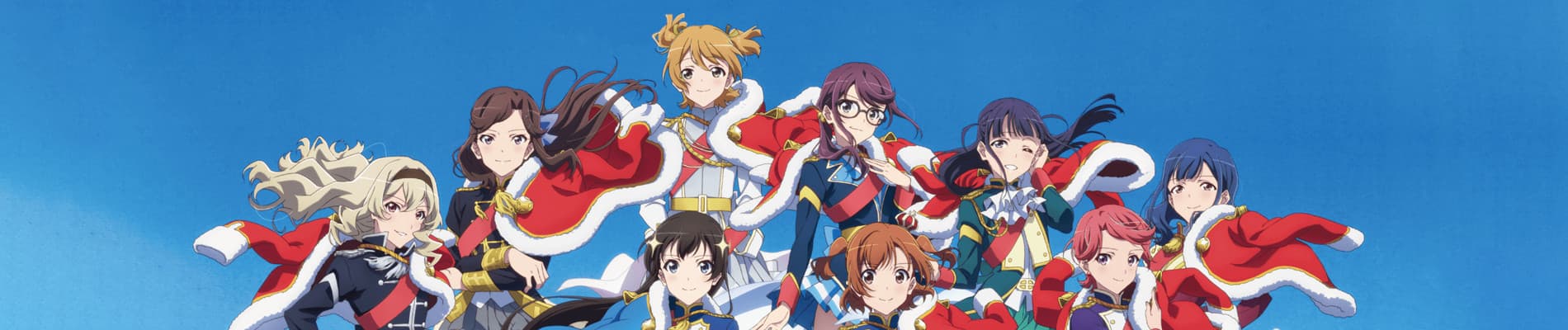
And that exactly is the idea that the movie is trying to convey. Whether it be Karen's complete dependence on Hikari, Nana's replays and her preoccupation with the past, or Claudine and Maya's rivalry, these are limiters that the stage girls must evolve beyond in order to discover themselves and their new paths in life. And in true Revue Starlight fashion, Karen and the other stage girls' developments are marked by the demolition of the Tokyo Tower, the symbol that initially defined Karen and her motivations, at the end of the movie. Discarding the capes that defined the revues, the girls have grown free of their old confines, ready to tackle the uncertainties of life and pave a new path for themselves, whether that be as stage girls or something else entirely.
