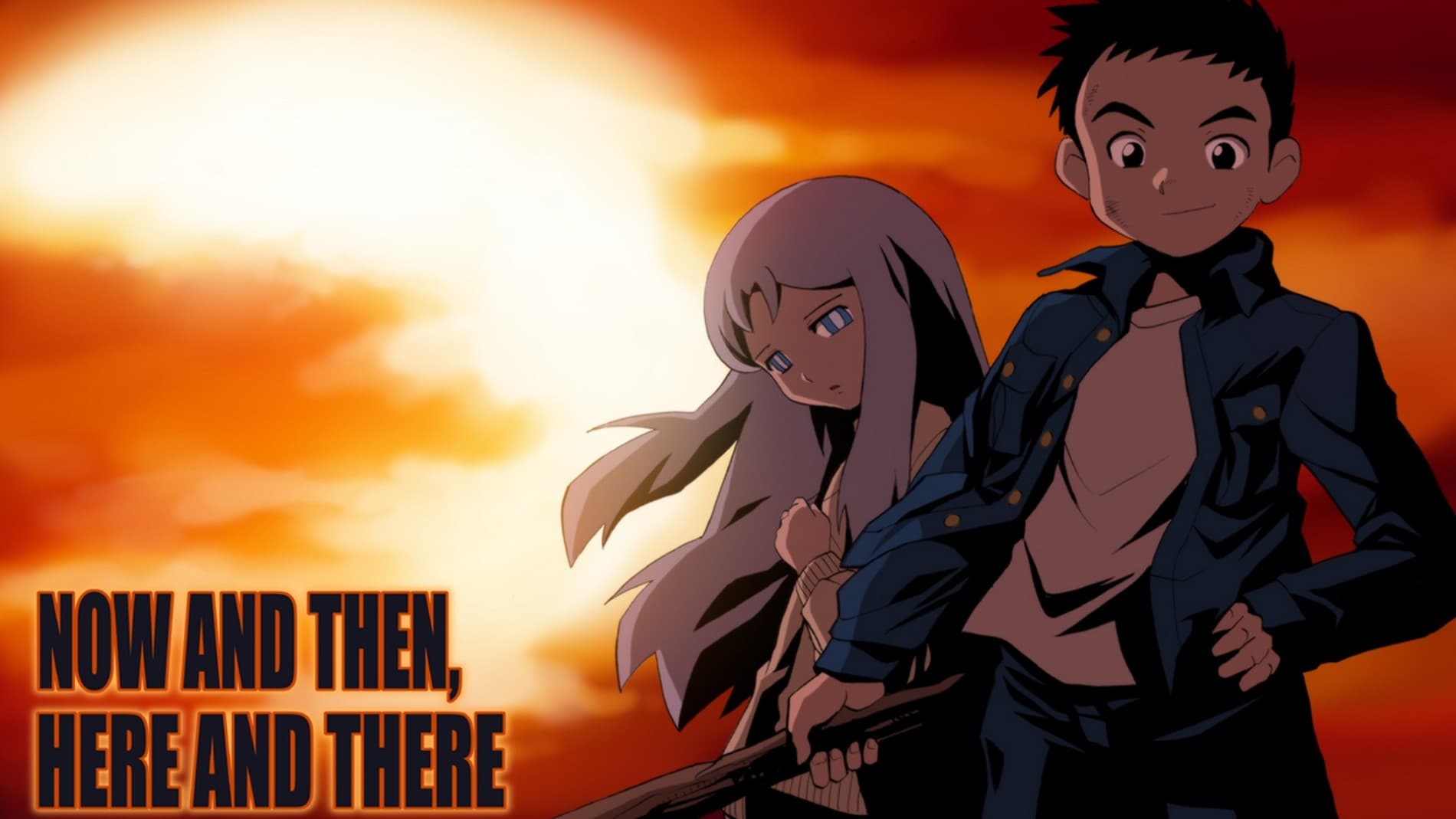

Hey guys, welcome to my first ever non-controversial review!! Yeah it’s crazy I know. This show was so good I don't really gaf if i bring anything new to the table or not with this one, I’ll just present to you guys my perspective and my thoughts and probably some of them will be unique or interesting.
This one is going to be really in depth, so obviously spoilers will be included. Even if you don’t care about spoilers before getting into a show, I highly recommend you still avoid them because there are some scenes on this motherfucker I was definitely glad I experienced without knowing beforehand what's going to happen. (For example, the entirety of Episode 6)
Lastly, I wrote this thing in the span of a few days. There might be a tonal change in the way I write between the paragraphs not just because I cover some serious ass topics and character moments in this review. Sorry about that.
With that being said, let’s get into this thing.
Akitarou Daichi is a director… I don’t give a shit about! And you can’t blame me, other than this anime the only notable thing this dude directed was the first Fruits Basket anime. And it seems that nothing in the sense of artistic direction can even compare to any of his other works. It feels like when he worked on this project, he was aware of his influences and knew he didn't want to make such an anime ever again. (Or he wasn’t given the artistic freedom to do so) The influences I’m talking about are pretty obvious if you have watched the show… Neon Genesis Evangelion… Is probably the work that inspired Daichi’s visuals on this one the most. The lighting, shot compositions and the way the shots are colored have a lot of Evangelion’s spirit I feel.

And I’m not saying that in a bad way, not at all! The show looks fucking amazing and it does its own thing here. I could even say Ima, Soko ni Iru Boku’s worldbuilding is better thanks to all of these things i mentioned earlier. Also, Evangelion probably has more influence on the writing as well than meets the eye, but I’ll get to all of these later.
I’ll start by saying that it’s really weird to me that they chose to present to us this quote at every start of an episode, while it’s pretty loosely connected to the philosophy of the anime, and the quote doesn’t really gain any new context after understanding what it’s trying to say after the second or third time their showing it to us. It’s a well written quote though. Note: After looking it up I saw someone bringing up that the quote just implies the world that Shu transported to is not a completely different world, but the far, far future. That could make sense, I guess, but the show doesn’t really explore how human nature is causing war, and how no matter how much time passes there will be people who thirst for power, try to expand and try to engage in violent conflicts, or something of the sort. It’s just not a theme / perspective the show is trying to explore, so it’s kinda weird putting that quote there at the start of every episode.

The show starts with Shu’s morning routine, and him getting to school and playing Kendo really badly. It seems like nothing special until i asked myself towards the end of the show: “Wait, why the fuck is this an isekai? The relevancy of Shu’s past life is completely nonexistent”. He or the story never brings up his life on earth or anything related to that. He just as well could be born in Hellywood and raised there but being a rebel, or being born in a random village, or something similar. The fact that they chose to start the story like this and make it an isekai is still not a major thing in the show, but an understandable choice by the writers. Shu being bad at kendo and doing the same move with no concern to timing, strategy, and his opponent entirely is an allegory to Shu’s severe lack of understanding conflict / war (in this case a kendo battle) between two parties. You can say it’s a stretch, but it seems pretty intuitive to me, it has literally no other explanation. While modern day isekai mostly also has no connection between MC’s and their past lives, I figured it’s just Isekai writers got lazy as time went on, and watching modern day isekai pretty much fits that narrative. But I feel like in older Isekai, for example Vision of Escaflowne, there is a good reason for the story to start on earth, and transport the MC to another world, and the MC being from earth still has relevance / impact on how they act. One thing I really enjoyed in the first episode is how funny it was. Shu is a funny kid. The jokes were Versatile and fresh, I found myself laughing out loud a few times in that episode. A good way to make a viewer connect with a main character is through comedy, so that worked really well for me in this show.

Now it’s a good time to address how good the shot compositions are, and how the entire anime is good looking in general, right off the bat and until the very last second. Whenever they want to capture a sense of hostility, grand scale, depression, etc. they just fucking nail it, every time. And the use of lighting in different colors makes for a unique atmosphere and memorable scenes. Oh, and the animation also has its moments.


The next thing I wanna address is a big thing for the show that made me connect to it so much. This is probably one of the most melodramatic, emotional and insane anime I have ever watched. There are so many character moments that made me gasp, tear up, and made my jaw drop to the fucking floor. If you watched the show you know who I am gonna bring up. King Hamdo, who is the main villain, is basically hitler. He wants to rule the world and destroy everyone in his path who doesn’t accept his ideas and consider him a god. What I like about him so much is how cartoonishly insane he acts. First thing first a huge fucking shoutout to his voice actor, his weird screeches and moans are just fucking amazing, honestly it was such a pleasure to see Hamdo on the screen everytime mostly thanks to his voice actor, couldn’t imagine experiencing this story in a manga format. Now the trope of a deranged and loud villain is not a new or a fresh one. I usually don’t really appreciate when stories have villains like these. But in Ima, Soko ni Iru Boku, The depressing and alien atmosphere, the constant feeling of despair and hopelessness, makes Hamdo’s behavior incredibly disturbing and believable. They don’t give us any background to Hamdo because he embodies all the horrible traits a leader like him should have. It's irrelevant what his upbringing was like, why he is so mentally ill, what are his opinions & thoughts except his incredibly twisted ideology… It doesn’t matter, any additional information would get us close even a little bit to his character. He should be this degenerate beast who only craves destruction. And it’s so good. Talking about destruction, Hamdo’s mass murders in episodes 3, 6 and 12 are genuinely terrifying, and not just these episodes, every episode almost there is something terrible happening and you can tie all of these cases to Hamdo. The anime is not showing you these things in a way that is exaggerated or non-realistic, it also doesn’t show it for shock value either. It realistically portrays what war does to people. No bullshit, no cheap shit. The combination of this realistic portrayal and Hamdo’s deranged character makes the viewer itself feel hopeless for how it’s gonna turn out for the main characters. I myself didn’t believe until the very end this story would end on a hopeful / positive note.
The next character I wanna talk about that made a huge impression on me is Sara Ringwalt. It’s natural for me to bring her up after Hamdo’s segment because her voice actress also put on an amazing performance. When it got intense in episode 6 and 10 I couldn't hold back the tears and her character completely pierced through my heart. She is probably my favorite character in the series. The trauma she went through, and her role as a character in this story as a whole, is not for nothing. This show explores through Sara a kind of trauma that doesn’t firstly come to mind when thinking about war. Sure, it’s still one of the main ones, but in the same fashion it displays all of the tragedies and horrible events in this show, it shows Sara’s whole process of getting traumatized, how she copes with it, her getting pushed to the absolute limit because of the beggage the trauma had on her, and then in the end getting to a point where she sees a light in the end of the tunnel and even takes responsibility of multiple children.

Now, a bit about the sound. One stretch I noticed the usage of music and sound design to be really intriguing is in the end of episode 5 and the beginning of episode 6. In episode 5 I really enjoyed the silence in the food court scene. Shu was forced to join the Hellywood army, he still doesn’t really understand what's going on and how did he get to the corps after they tried to kill him. He had a short conversation with Nabuca about how Shu fights and about Lala Ru, then after that all of the Hellywood soldiers prayed to Hamdo and then silently ate their meal. Shu’s alienation and shock from observing the situation and how everybody acts there was conveyed and amplified with silence. I found that scene pretty funny and actually really immersive. Now to a scene that wasn’t even a bit funny. The first shot of episode 6 is of Sara getting forced to get into a veteran soldier's room by two other Hellywood soldiers. The ambience is heavy and cold and horrifying… you are already in the mood for what’s going to happen next. What follows is probably the most emotionally intense anime episode I've ever seen. Even more than Penguindrum’s last episode probably. Those are just two little examples, the quality of the sound and its usage remains throughout the whole thing. The soundtrack is also really great and its placement within the episodes really enhances the experience and all.

Next I wanna talk about Lala Ru shortly. Her facial expressions impressed me immensely, even before it was revealed, I could see in her eyes thousands of years worth of sorrow and pain. In other anime you have the trope of the character that never smiles, or shows any emotions most of the time because the character has a certain trauma or something of the sort. Lala Ru’s facial expressions are far from being conventional or bland. It's hard to put into words how heartbreaking her reactions are sometimes.

I can’t write a review on this anime, or any anime at all without talking even a little bit about the main character, Shu. His role in the story is not the most complex one, but his role definitely ties with the bigger messages of the show. Shu is probably the most stubborn, optimistic and idiotic kid you’ll ever see, his intentions are always good, and his judgment is for him, absolute. His personality is hard as a rock, and the show ended on a positive note basically just because nothing that Shu saw until that point in his adventure could stop him, he powered through even in the bleakest of situations. The ending is not the most well paced, believable thing ever, but i’ll talk about that in a bit. That alone is something that no regular person, let alone kid could ever mentally be capable of. But that’s where the charm is. Such a pleasure seeing his decision making and dialogue in so many different situations the plot is putting him through.

One of the most unique things about this anime is how slow the story is paced and how it still maintains high emotional intensity throughout every single episode. In the first five episodes or so, there’s not a lot of plot points, but every single scene still hits so hard, it’s really impressive.
I told myself I'd stop talking about the characters after mentioning Shu but almost everyone feels so important to the story I can't help myself… Nabuca’s ideology matches the tone of the anime in the most of it, not coincidentally. He was taken from his village, telling himself that once the war is over he will be able go back. But in his actions you see the baggage that being a Hellywood soldier takes on him, it always feels like he’s on his edge. He kills people, recruits children from other villages... The trauma is brilliantly conveyed in the show. He’s like the complete opposite of Shu, he basically gave up on paving his own way to freedom. Whereas Shu will try his best no matter what. That is, before the very ending. Nabuca's gave Shu his stick and told him he should get back to where he belongs (In a good way lol), while Shu was feeling hopeless after watching Sis die, in this moment the roles reversed. It was really cute to see Nabuca helping Shu for first and last time.

In the second half of the series, Shu and Lala Ru escaped Hellywood and arrived at the Zari Bars village. There, they stayed with a single mother with alotta children called Sis. I thought that switch up in the environment is something that the show really needed. The village life has a relaxing and utopian atmosphere, it showed how beautiful life can be, after being shown only war and atrocities up to this point. But the main characters always know that this can’t be forever… As the story develops, cracks start to appear in the escape they found, and the Zari Bars village almost got entirely destroyed. Soon is a character much like Boo in the sense that they represent this fragile innocence you want to protect, but in the end both accidentally kill each other in a crossfire. It was truly a heartbreaking scene because Boo never intended to hurt anyone, and just wanted to protect his only friend. And Soon wanted to protect the group of kids she grew up with. These kids can't even comprehend the war. The unjust feeling the characters and viewers got in that scene, seeing Soon and Boo on the floor soaking with blood, is heart wrenching.

The ending of the show… Is a little bit rough, it should have another episode to breathe. Lala Ru apparently could flood the entire world using her pendant anytime she wanted. Aside from how biblical that shit is, my personal theory is the reason she hasn’t used it up to that point is because she didn't have a good reason to before. But she actually experienced human connection after Shu considered her a friend and Sis considering her one of her children. So she actually cared about saving Shu and everyone because Shu gave her hope and proved to her that there could be genuinely good willed people in this world. Before she disappears Lala Ru and Shu look at the sunset together, and Shu says that in their world there could be some beautiful sunsets too. LOVED that line, in the beginning of the show he said to Lala Ru he never stopped to appreciate the sunset (When they were on earth). Now after experiencing hell and finally having hope for the future, Shu appreciates a sunset for the first time, and even calls it beautiful… Now, I don't think that "Once experiencing true lows the true highs can be appreciated ", or something similar is a theme / message the show was trying to convey before, but that scene definitely added some spice it really needed.

I give Ima, Soko ni Iru Boku, a 9.5/10.