
Please note
#
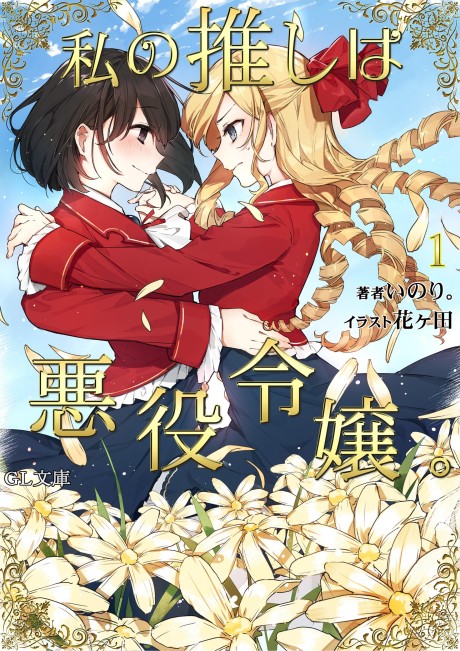
'I'm in Love with the Villainess' is a light novel series written by Inori and illustrated by Hanagata is an isekai Yuri (what a combination!) depicting the isekaied Rei Ohashi (now Rae Taylor) thrust into the world of her favourite otome game. However, instead of romancing the typical male love interests, she only has one unlikely target in mind, the villainess Claire François. Will Rae be successful in pursuing her true love interest, against all odds?
#
The plot of 'I'm in Love with the Villainess' has... a lot within it. From the cover, you may go into the novels with certain expectations. Perhaps it is one of those many villainess stores that you see on Webtoons. Or maybe it is some romance in a fantasy setting. The novel kind of has that. And more.
You see, you would be mistaken to think 'I'm in Love with the Villainess' is merely a Yuri story. Whilst the romance between Rae and Claire is obviously a large focal point of the tale, there is much more nested within the plot. On top of being a Yuri story, it is a fantasy tale sprinkled with action, politics, and philosophical moments all tied into the same story, only to name a few. You may be inclined to think that to stuff so many themes into the one series is too much, it would simply result in a mess of a story. And yet, Inori surprised me with how well she managed to weave and link all of these elements together.
The first arc (volumes 1 and 2) has a greater focus on the buildup of the relationship between Rae and Claire whilst also including side plots with other characters and an overarching obstacle for the cast to deal with. Typical of many romances, the story zooms in on how the main duo grow into a romantic relationship, however this one was quite different to the others I have read. Rae, absolutely infatuated with Claire, makes many advances towards Claire. Being the tsundere she is, that often results in being shot down, resulting in the comedic elements of the novel. The novel had moments that were able to make me laugh just with how ridiculous it was. The humour may not be to everyone's tastes, but it worked for me.
Throughout the whole novel but more so in the first arc, the story has its overarching plot and romance, and then it occasionally shifts between different side plots with complications other characters face, resulting in their own development. I really enjoyed these parts of the novel since it fleshed out the world and its inhabitants, making it livelier and easier to get engrossed in. Most of the cast gets their own development in tandem with the main two, to my great appreciation. A story is more than the leads, it is also comprised of those that support them to grow as people.
Moving onto the second arc (volumes 3-5), the plot changes pace and moves from being more focused on Yuri to other themes. Whilst this may seem sudden to some readers, I enjoyed the change. As Inori said in the afterword of Volume 5, she wanted to write about what she wanted after focusing on romance in the first arc. On top of this, this arc explores what I wish many more romances do, what happens after the coveted moment of the establishment in the romantic relationship. Many romance stories focus only on the buildup to a couple dating, but many omit what happens afterwards. This leaves me to desire more. After all, life does not end once you start to date someone. There is more to romance than that. The arguments whilst dating, living together, having a family, so much that can be explored in a story. And so, I was pleasantly surprised that the story of 'I'm in Love with the Villainess' did not end at arc 1.
That said, despite everything I enjoyed about the plot one thing I disliked was how antagonists were handled sometimes. There is a wide cast of villains that appear to throw a wrench in Rae's plans. Luckily most if not all of them were not shallow antagonists, but the problem lied in their resolution. After being established as 'evil', it quickly gets resolved with either there being a reason why the individual was acting in such a malevolent way or them not actually being themselves. I do like the idea of antagonists have complex motives behind their actions, but sometimes it felt overly idealistic that everyone was justified in their actions and/or was not a bad person. But I only felt this sometimes and overall, I enjoyed this approach to constructing antagonists. There was one villain I think was done well in this regard, but the execution could have been improved in my opinion. (Whole novel spoilers)
Spoiler, click to viewclick to hide
This antagonist is Sallas, who is painted to be the character to hate in the story. Inori does a good job in making you want to wish for his downfall, but after the first arc he sort of plays a background role, appearing from time to time with his antics. This is exemplified with his sudden reappearance in the final part, where it felt to me that he was shoved back in because there was not much time left for things to be resolved with him. The POV chapter is good as it gives a lot of backstory to him, but it falls victim to a problem I have seen in other media, dumping the villain's motives all at once right at the end. More buildup would have made him appear less as simply an evil individual.One writing technique I enjoyed was the shifting of POVs throughout the novel. I am a fan of this, as many of the novels I read when I was younger utilised this. It allows the story to remain fresh, adding new perspectives to change how the reader sees the events in the plot, reminding them that the world is not comprised of one perspective, but of many, differing ones.
This novel also had many plot twists in it, a large portion of which were completely unexpected for me. Luckily, there is a good amount of foreshadowing sprinkled throughout the novel, so the twists are not fully unfounded. Near the end,
Spoiler, click to viewclick to hide
the novel takes a complete twist and shakes the very foundation of the worldbuilding at its core. No longer is it mere a fantasy isekai, but one with science fiction elements thrown in, with a touch of a dystopian future. I was completely surprised by the direction the novel went, but I was not against it. Whilst I greatly enjoyed the previous parts of the novel, this too was engrossing in a different way. It became more philosophical (even if it was not trying to), making me question my own the existence and the world around me. I am not sure about other people, but when a piece of media starts to make me ask a lot of questions, I know it is good.The novel also often makes use of suspense leaving the reader in the dark in the truth behind mysteries of the plot. Think of dramatic irony (where the audience knows something the characters do not, often seen in Shakespeare's play 'Othello'), but the opposite. As the protagonist is an isekai protagonist, they possess knowledge of the world they are in that the readers are not privy to. This follows into the next section of my review...
#
To be honest, this is my first proper isekai media that I have ever consumed. Discounting Sword Art Online which is kind of an isekai (but not really???) this was my introduction to the infamous genre. In reality, I had poor expectations of the genre. It had become synonymous with the shovel ware equivalent of the anime/manga/light novel industry, with many titles being pumped out with varying quality. But given that it was Yuri and recommended to me I was willing to give it a shot. My expectations sure were shattered.
The isekai elements are one of the parts of the series that I really enjoyed. It made the world easily immersible and added intriguing aspects to the story that were previously unknown to me. Things like possessing knowledge on the future and transferring knowledge from one's past life to their new one, I never expected these parts of Rae's character to be really interesting for me.
#
If I am going to talk about this novel, I have to talk about one of the underlying parts of it.
'I'm in Love with the Villainess' is a queer novel. A very queer one.
"Queer? Of course it is queer, it is a story about a lesbian,", you may be inclined to say. And yes, this story is undoubtedly Yuri, containing lesbian themes, a lesbian protagonist, and a romantic relationship between two women.
But this novel goes much deeper than that.
Despite Yuri being a genre with links to being queer, many stories within the genre do not profoundly explore what it means to be queer and the many intricacies of it. Many Yuri simply contain a romance between two girls, there may be little to no questioning of one's sexuality and the obstacles it brings. That can be good sometimes, if an author wants to focus on a story which is more light-hearted.
But 'I'm in Love with the Villainess' takes it a step further, a step I very much appreciate. Throughout the story we gain an insight into Rae and her struggles with being homosexual in her previous life. Her past experiences allow her to confront the homophobia and misunderstandings towards queer people in a manner that very much relates to real life events. There are many scenes where it felt as if Inori was inserting her own voice into the character of Rae (a writing technique also seen in 'Pride and Prejudice') to voice her own thoughts about being queer. When I was reading these moments I could not help but feel that Inori really understood what it meant to be queer, and knew how to articulate her thoughts in a manner that many queer people can relate to and find solace in.
The novel also goes beyond lesbianism which was a pleasant surprise to me. Many other Yuri titles I have read only look into that particular aspect, but this story explored other aspects as well in a way with great understanding and it also acted as a way of breathing more life into the world and its characters.
As such, I think this novel has a pretty niche audience. For those not queer, these moments could seem to be confusing. For example, imagine you are reading a manga about shogi and all of a sudden they start explaining really complicated strategies used in a match. If you have never played shogi, it would probably go over your head. That is how these moments may be for a non-queer reader. That said, Inori explains it in a way that any reader could understand (hopefully). In fact, I think that is part of why Inori wrote this novel, to educate non-queer people about what being queer means (maybe I am reading into it too much, I do have a habit of doing that...). That said, I am not saying you have to be queer to enjoy this novel, rather for those who are, it can really pull you in.
#
With all of what was previously discussed, it can be easily said that 'I'm in Love with the Villainess' breathes new life into tropes and genres of generations past. In terms of the Yuri genre I touched upon this slightly beforehand. The genre does not have as long of a history to its counterpart BL as well as every other genre, but this novel has the potential to change things in the long run. Like I mentioned, this novel not only covers the buildup to a relationship but what happens afterwards. That is not to say that 'I'm in Love with the Villainess' is the first to do it, but to this extent is a first for me for sure. It is also revolutionary in the sense that it is a Yuri story that is not purely focused on romance. Whilst it has to be said that Yuri is a romance genre - and consequently many titles that fall under it only focus on romance - this novel goes beyond that by including many other genres that take centre stage. Sometimes the romance takes a back seat (which was more the case in act 2), but it is still integral to the story. It is clearly stated through the afterwords that Inori wished to write a Yuri that was not only about romance, and I would like to think she succeeded quite well.
Another way that this novel potentially subverts tropes is through Claire, who takes on the villainess archetype. Whilst I have not read any other typical villainess story (and thus feel free to correct me on this), 'I'm in Love with the Villainess' looks at this trope in a new light, revealing a hidden side to villainess. At first she appears to be a mere thorn to the side, but through Rae's persistence we realise that there is more than meets the eye. We - as people - are fallible to pushing individuals into stereotypes to make them easier to comprehend. But in reality there are many nuances to a person that make that conclusion simply untrue.
#
With its expansive world, 'I'm in Love with the Villainess' features a setting with a large scale and thus many characters residing within it. As such, I will not discuss them all, partly due to some containing spoilers for later segments of the novel.
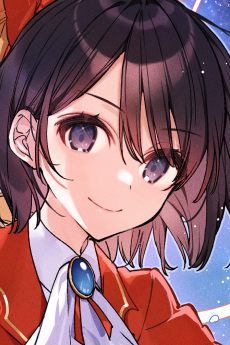
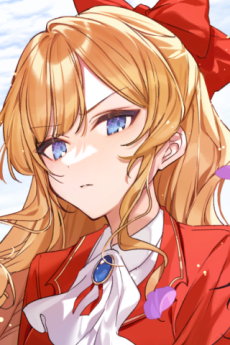
Indeed, the interactions between Claire and Rae are pivotal to the novel series. Their interactions are often of humorous nature, bearing similarities to the manzai comedy routine immensely popular in Japan. This involves the tsukkomi (the straight man) and the boke (the funny man) do skits to entice laughter in their audience. This usually involves the boke saying something stupid and then the tsukkomi admonishing the boke for it. This can be seen within Claire (the tsukkomi) and Rae's (the boke) many interactions. Further, their relationship goes through much growth to make it one easy to root for and want to see through to the end.
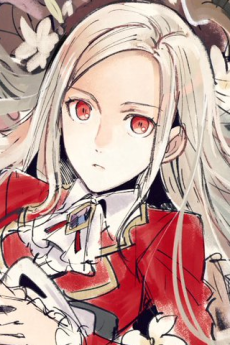
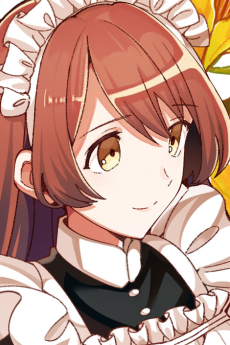
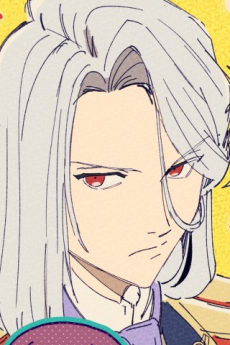
Although 'I'm in Love with the Villainess' features a predominantly female cast, unlike many others in the Yuri genre it features a wide cast of male characters as well.
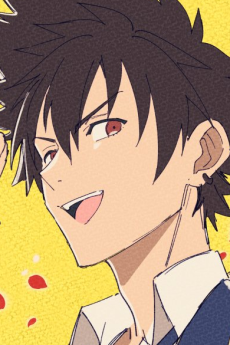
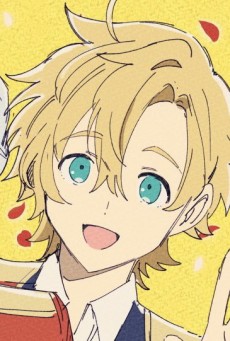
Beyond these characters are many more side characters that get introduced as the series play on. They all add extra life to the world building whilst also acting as means to carry more themes into the story.
#
There is not too much to say about the art, as being a light novel it does not have many illustrations compared to a manga. But I really enjoyed Hanagata's art style. It was visually appealing and portrayed the characters in a way that filled my imagination.

#
Wow, this sure turned into a rant. I just really like this novel; it is undoubtedly one of my favourites. This is an easy recommendation for any Yuri fan, hopefully you will get as much enjoyment out of it as I did. I am probably biased with my evaluation of this novel, but I do really think it is a good read. To summarise this review:
- The novel features a world rich with characters and concepts that make it all the more immersive.
- The romance between the two heroines are compelling and unique, full of development between the two.
- Antagonists have depth to them, but sometimes suffer from idealistic resolutions.
- 'I'm in Love with the Villainess' subverts many tropes and genres, focusing on being more than merely a Yuri romance.
- The queer elements of the plot are sure to attract queer readers.
If you have only seen the anime adaptation, then I would highly recommend picking up the light novels as well. I have not read the manga or Korean adaptation so I cannot attest to their quality. After finishing the main series, there are three more spin offs you can consume to satiate your desire for more. First is the retelling of the main series under Claire's perspective. I will begin reading this someday and (hopefully) review it to see whether it is a meaningful DLC or a soulless cash grab. Next is a cooking spin off manga. There is no official translation of it yet, but I managed to secure a copy from Japan, so I am looking forward to seeing how it is. Finally, there are the Pixiv FANBOX stories. Some are explicit side stories which do not add too much story wise, but one of particular interest is a sequel of sorts. Inori expressed interest in writing this in the afterword of volume 5. I have no idea if there are plans for this to be officially published, but for now you need to subscribe to her FANBOX to read it (the cheapest plan at 100 yen is enough to read it). It is translated into Chinese, Korean, and English, but they are possibly machine translated. It seems to be good enough to be able to read though.
This brings an end to my longest review so far. I am guessing many people will choose to skip over the wall of text (not that I blame you), but if you read the whole thing then you have my sincere thanks. Hopefully you were able to get something out of this review. If would like to send me feedback on my reviews, please post a comment on this thread or feel free to send me a message.