 > "The art of Rakugo is about creating empathy"
Descending Stories. The hook is the promise of a homage to an obscure artform. The content is a devastating character drama inflicted on all sides, throughout generations.
Rakugo Shinjuu has always been fascinating. There's no clear connotations you can attach it to, no description or definition you can box it into. It's an everchanging, sprawling tale about life and humanity. Encapsulating a fragment of emotional complexity and spiritual dexterity within the decaying art form of Rakugo. It presents a poignant case study of the burden of love—be it for art, family, or friendship.

Yotaru bring us back to where we left off, revealing that it has been, to his surprise, an entire year of bowing his head down, coinciding with the time it has been since I last watched Shinjuu Rakugo. The show is nice enough to present us a skilful recap in the form of a rakugo. But it expects us to be familiar with all the rakugo it introduced and the connections it had crafted beforehand. Every frame is purposeful, evoking a distinct emotion or a recollection, whether through the synchrony of Yota’s imitation to that of Sukeroku’s or the distinct bond between a performer and the performance. Every iota of information is intentional and builds off of the introductions we were given in the previous season.

Take the opening. It’s a quiet, dreadful meditation on what’s to come. The images subtly foreshadow an episode’s content. Notice Sukeroku’s eyes in Episode 5’s opening, or the CD disc with Miyokichi in the cover in Episode 7’s sequence and how they connect with the events pertaining to those episodes. It’s a bold, meticulous statement on how thoughtful, intricate and deliciously realised all of its components are to the point were a single missed frame means an important piece of information lost.

This isn’t to say Rakugo strives to confuse or overwhelm its viewers. In fact it does the opposite. The story takes a linear approach navigating a drama that is considerably less intense (for the first few episodes at least) than its predecessor. Which has confused many into thinking this is weaker or a less worthy sequel. But it's here where the overarching narrative of “Descending Stories” truly reaches its thematic climax, offering profound resolutions to its myriad threads. This is better, and better as in not-even-close better.

Yotaru’s task this season is extremely daunting. Where the previous season was navigating the shifting landscape and decaying interest in Rakugo, this one places the sole burden of revitalizing it on poor Yota, the jovial protégée of the cold and distant Yakumo, who has nothing in mind but to wither away with the art he has devoted his life to. (But… why?) There’s a great deal of emphasis on minor characters fleshing out and and influencing the mindset of both characters and audience alike. Higuchi is someone who is outwardly keen to preserving, or rather, evolving the trade of rakugo by writing new stories, which Yakumo is unsurprisingly against. Matsuda is sweet and an almost kindred spirit that has been a companion to our cast since the very beginning. Someone who has seen these lives unfold and lives to tell the tale to others. An intimate witness like us. I love that immortal old man.

Rakugo's minimalist presentation belies its complexity. It is necessary to note the difference between animation and cinematography, because despite boasting almost static animation, it is genuinely one of the most beautifully storyboarded shows out there. Tiniest of mannerisms are taken into consideration to craft holistically compelling performances. Which complements the core idea of rakugo, of evoking emotions through presentation and voice.


The voices carry an immense burden. Not only because they have to sell the emotions of a story, but because they have to sell the characters doing it too. And characters in this show are antonyms of static. Yotaru is perhaps the most striking example of voice acting being imperative to a character, because the same voice actor has to vocally paint his journey from a loud, coarse, naïve but ecstatic voice of rakugo to one that can transform into the colourful cast of the story he tells. Any semblance of progression absolutely hinges on the voice actors far more than it would in any other story, and they are beautifully captured by the unseen talent.
It’s incredible how deliveries, not just tone, can be so varied and still contain the essence of the same story. Jugemu’s comedy is told as a poem by Konatsu, whereas Yakumo’s approaches it with technical skill, Sukeroku with personal biases and Yotaru with sincerity.
Higuchi reveals that the stories themselves are products of modernity (the original ending for Jugemu is in fact gloomier than the revised text). He is right in his argument that any artform should be willing to accept change if it wants to remain relevant in a modern society.


I would love to dissect and present flaws from this show. But I’ve been thinking about it for a while and nothing about this feels wrong. Even the controversial hinting towards Shin’s father makes sense because rakugo or storytelling is, more than anything, a deception. For a brief duration you are susceptible to the whims of a storyteller. Futatabi-hen's shattering revelation was the unreliability of Yakumo’s narration. Who’s to say this doesn’t apply to Konatsu as well?

In the end, the knowledge Shin’s father doesn’t matter, because his actual father is Yotaru. Where Konatsu was conceived by Miyokichi as a rebellious act, Shin acts as a revitalization of Yakumo’s existence and by extension, Rakugo’s.
Shouwa Genroku Rakugo Shinjuu: Sukeroku Futatabi-hen is a mouthful. But the title is apt. A tradition descending through generations is bound to change. It’s the idea of change that makes Yakumo unwilling to let go his craft that has become almost unanimous with his existence. But it is also the difficulty of letting go a craft that has brought him so much despair, hope, lose, tragedy and ultimately, family. How can you trust something so deeply imbedded in your being to a world that is continually becoming disinterested? A world that considers it a relic?
Each character has a different relationship with Rakugo that is amplified through the generational mindset. Yakumo is tragically bound to it, Yotaru was given meaning through it, Konatsu as suffered through it but ultimately accepts it and Shinnuske is the incarnation of the hope of its succession for the foreseeable future.

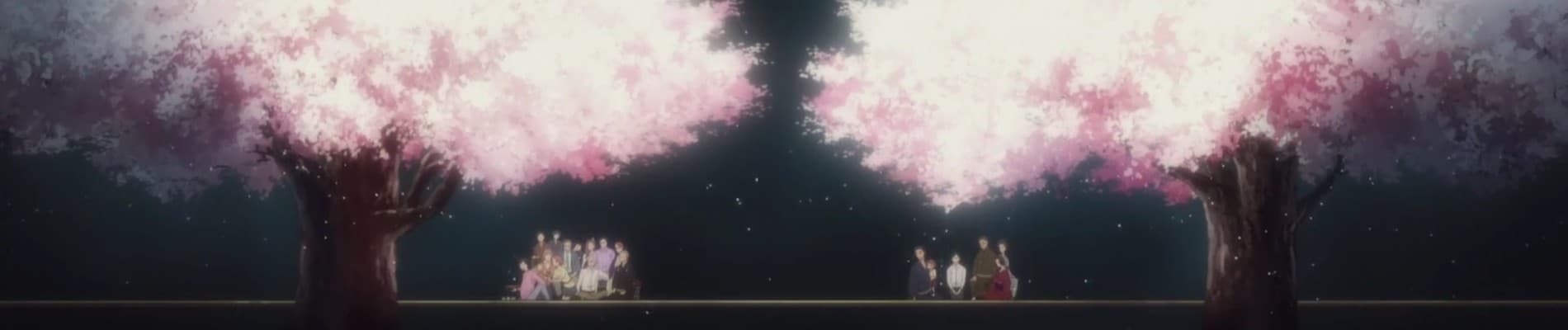
Death is not the end. Any spiritual thought will argue that death is but a bridge towards a destination. A beginning rather than an end. The death of Rakugo is not the death of memories, of the love it brought when it touched others, of the tragedy that was born of it. It is rather a rebirth.


Shouwa Genroku Rakugo Shinjuu is Yakumo’s story more than anyone else’s. He is the personification of his craft. A boy estranged from his dreams of being a dancer by his leg injury is given a chance with a “lesser” trade of verbal performance arts. Negotiating his talents and realising them all the same. His the idea of his loss is so monumental that is reverberates throughout the entire country. Eventually when he does pass away, we’re not given a traditional ceremony but a reunion in a buddhist afterlife. Cementing the idea of death not being the end, for Yakumo, Sukeroku, Miyokichi and even Rakugo itself.
 > “I never worried for a second that we’d ever lose rakugo. After all – something this good could never go away!” - Yotaru's final benediction.
The amount of painstaking details poured into this show is, despite what I may have said earlier, immensely overwhelming to the point where I feel like no matter how much I write I’ll fail at properly addressing the sheer brilliance that this show operates with. It is a tremendous journey, one that continually challenges you to keep up with its twists and turns, its human contradiction and blossoming ideas. Every moment I have spent with this show has forever etched itself onto my being. I am eternally grateful to this show and to everyone who has worked on it.
Thank you.

41.5 out of 43 users liked this review
