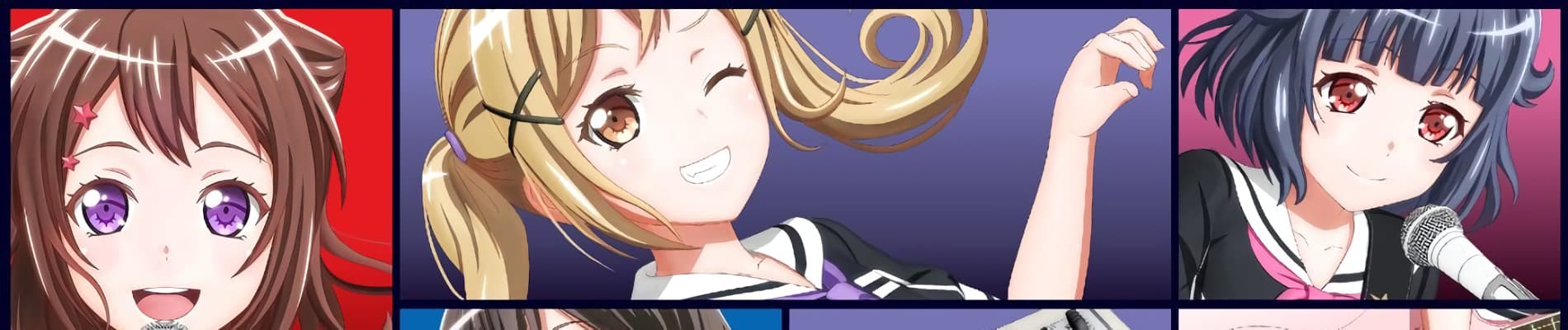
Season three of Bandori excelled at continuing many of the best aspects of season two while also innovating in many areas. One area where they innovated is shifting the focus from PoPiPa to RAS and Roselia, as they became more crucial aspects of the story. Likewise, delving into the interpersonal relationships of the other bands fleshed out the characters while also giving them greater importance in the story. Additionally, the more subtle aspects of season two remained a prevalent point in season three, such as characters having responsibilities and each band having their own goals, values, and backgrounds. In fact, the values of each band and what defines a band and its members are specifically explored. Although the hook of season three is the bands competing against each other to perform at Budokan, that is ultimately the destination, as the band's interpersonal relationships and the characters discovering their passions are the story's focus.
Unlike in the previous seasons, with PoPiPa being the primary focus, RAS and Roselia held more significant importance to the story for season three. The antagonist of the story, RAS, is the focal point, which is a strong aspect of the story. It not only added an element of relatability to the characters, but it was also easier to sympathize with them, specifically CHU² or Chiyu, as PoPiPa was no longer the main band of the series. Additionally, RAS and Roselia having a more crucial role in the story gave them a lot more depth beyond their music and initial tropes, specifically as they dealt with adversity. Apart from PoPiPa, conflict was not something meaningfully explored for the other bands in the previous seasons.
Likewise, from a plot and narrative point-of-view, it made sense for PoPiPa to get less attention. They have already overcome their internal conflicts in the previous seasons and have grown tighter bonds. That does not mean PoPiPa was not an important part of the story, though, as they were still an integral aspect. However, instead of being on the receiving end, PoPiPa, in many instances, was the one to help push the other characters and bands forward. Highlighting how much they have grown. Additionally, there were still moments of growth for PoPiPa, such as Arisa and Rimi stepping up when it mattered, which was great to see, considering they were a bit neglected compared to Kasumi, Tae, and Saaya last season.
Since RAS had more significant importance to the story, it is also notable to point out Chiyu as the antagonist, considering RAS being the antagonist is more so an extension of Chiyu. Along with being the initial catalyst for the drama, Chiyu was also a pretty insufferable character last season. Despite that, she ended up being a relatively well-written character without completely changing who she is. After all, she retained the same bratty and immature characteristics of the prior season. Yet, it was easier to sympathize with her as the story progressed—even if it does not necessarily justify her actions. In fact, she is extremely relatable in some areas, such as placing high standards on herself because of her parent's success.
However, it is because of that inferiority complex, her extreme passion for music, being spoiled, and her age that causes her to have an unhealthy desire to create the perfect band—causing her not only to accept being hated by others but even treat her bandmates poorly. Essentially, treating them as a means to an end for her to reach her goal. Honestly, it is fair to say she saw them more as instruments of her band rather than as her bandmates, let alone friends.
The other members, specifically Rokka, Masuki, and Rei, also received more attention and grew as characters, especially when they began spending time with the other bands.
However, PAERO is by far the most notable character of RAS. The stark contrast between her exceptionally colorful and expressive personality as PAERO and her more proper personality as Reona made her character stand out. Additionally, Reona referring to PAREO as if it were a separate persona or personality gave her character a lot of potential. So, it's a shame they did not explore her character more in the story, as the juxtaposition created between these separate personas made her such an interesting character for RAS and the entire series.
Although RAS and Roselia had a greater spotlight, the bands not involved with the tournament received significantly less attention than the previous season. Ultimately, not having every band participate in the tournament is a positive, as it emphasizes how each band has unique dreams and values. After all, the tournament should not align with each band's reason for playing together. Likewise, competing in a tournament is a major commitment, and as established in season two, everyone has responsibilities unrelated to their bands.
So, it ends up being a bit of a double-edged sword, as while it does help create a more believable and alive world, it is a bit disappointing that a large portion of the cast were neglected. Seeing more of the other bands, specifically when not interacting with the three main bands, could have aided the story in creating an even more realistic world. Ultimately, this is a byproduct of the story being pushed forward by the tournament, which, considering the other aspects, does outweigh this issue, albeit not necessarily relieving it.
Similarly, the music took a bit of a backseat despite the BanG Dream tournament being the hook of season three, as the focus was on the interpersonal relationships between the involved bands. However, doing so allowed there to be a greater emphasis on the characters, as many of them chased that special feeling and passion the other bands radiated.
Episode five accentuated this point perfectly with the juxtaposition between RAS and PoPiPa's music videos, as they embody passion differently. While RAS's music video was undeniably of higher quality due to the overall polish, it did not capture the band's passion but rather Chiyu's vision of perfectionism. PoPiPa's music video, on the other hand, was not of the same quality or professionally produced. Despite that, their passion was perfectly conveyed, illustrating the bond between them and their friends.
Both music videos perfectly expressed the band dynamic between both groups. PoPiPa is a tightly-knit group, with Kasumi as the glue of the band, and with them only getting closer by overcoming adversities the past two seasons. Meanwhile, RAS was Chiyu's band with the other members simply playing in it, not necessarily being true bandmates. Because of that, on the surface neither video is necessarily superior over the other, but the issue with RAS's work is that it did not capture the entirely of the band's feelings. It was the vision of one person, and this became more prominent further into the story as the other members craved the missing aspect the other bands had.
In fact, passion and finding one's identity as a band were major themes explored throughout the season. Particularly, RAS and Roselia were used to progress this narrative, as they faced most of the conflict this season. This makes sense, considering PoPiPa and bands like HaroHapi had clearly already found their passion. Additionally, while the other members of RAS did loosely follow the same goal as Chiyu, it was not to the same extent as hers. Masuki, Rokka, and Rei spending time and building relationships with the other bands is when they realize they are missing something special that unites them.
There could have been a bit more spice and drama for the ending. More consequences for some of the characters at the end would have definitely elevated the story, especially considering that the drama and interpersonal relationships are the best parts of Bandori. Because of that, the ending does feel like a bit of a cop-out. However, it's not like it does not necessarily work either, as it does coincide with the overall theme of season three, making it a pretty fitting finale.
Regardless, the past two seasons have greatly improved upon the first season and even remedied many of its issues, mostly stemming from the writing and lack of execution of the drama. The drama is specifically essential to point out, as it did have an impact on the story and the characters, as well as felt natural, for the past two seasons. Additionally, because the drama was better executed, it allowed for the more wonky and surreal moments to add a bit of color to the story, such as with HaroHapi.
What specifically sets season three apart though is the story being more cohesive and having a clear narrative. While season two was great, it did lose its focus at times. Additionally, shifting the focus from PoPiPa to RAS and Roselia made the series more interesting and even separates itself from other band and idol shows. It also simply benefitted the story by giving the bands more depth.
However, that is not to say season three is without its issues. As pointed out, issues and nitpicks can definitely be made. The lack of attention for the other bands is disappointing, especially when they all received a considerable amount of attention last season. Additionally, some topics felt unresolved, such as PAERO's separate personalities and Rimi's fear of the future, as they did not fully take the time to explore them. These issues also coincide with the last few episodes faltering a bit, such as with a lack of consequences from the drama.
Despite that, there are plenty of things season three did great, such as the overall well-written and coherent story, character growth for many of the characters, the alive and believable world, and, ultimately, the fun cast of characters. Although the music was not as prominent as it was in season two, there were still some great songs. Likewise, the CGI was on par of the previous seasons and so was dynamic camera shots that made the live performances enjoyable. However, more importantly, having a clear theme greatly aided the story as the band's interpersonal relationships were explored and them finding their passion. Ultimately, while there are some stumbles and minor issues, the many great aspects of season three makes it a fantastic finale.
12 out of 13 users liked this review