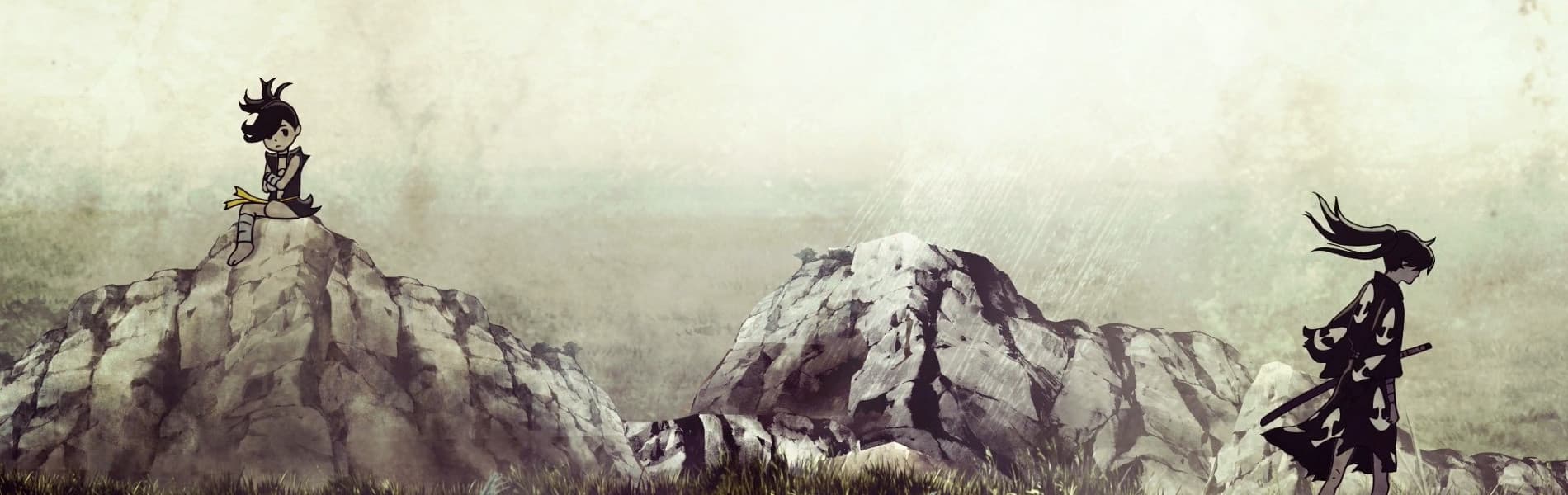
Dororo
a review by GrandMasterWaifu
a review by GrandMasterWaifu
The deep dive I endeavor to produce is intended to further enhance others as-well-as my own appreciation for the subtle minutia and vague intricacies littered throughout “Dororo”. In the aftermath of one’s watchthrough I seek to enlighten them on the depth of storytelling built into one of my all time favorite anime’s. Many of the translations I will cover are more applicable to the english abridged/dubbed version, but without further ado, enjoy my rants and ravings.
Have you ever been in a situation that felt familiar but you couldn’t figure out why? Caught in a hypnotic trance over an undeniable inkling of a pre-conceptualization. Déjà vu is a term often used when defining a form of recall/recognition in a past, present or future event. In my case, I’ve experienced this many times throughout my life as I’m sure countless others have. I must’ve been in High School placing this timeline of events in roughly 2013-2018, but I’d experienced a recurring dream often enough to identify and remember exact details. This dream was of a great fire breaking out within a castle, stemming along the walls, setting ablaze the interwoven paths along a mountainside. This burning fortress would later become recognizable to me as Daigō Kagemitsu castle, marking the end of Hyakkimaru’s bitter struggle. For the reason above I can’t help but find a semblance of myself within the anime as if it is profoundly my own by some twist of lucid imagination.

Set in the Sengoku period of Japan; the region presided over by the daimyō Daigō Kagemitsu is fraught with famine, plague, drought, war, and various natural disasters. These acts of judgment tantamount to the will of a higher power leave the land and its people on the verge of collapse. In a desperate attempt to seize renown, wealth, and prosperity, lord Daigo seeks a deal with 12 demon gods. These gods, presumably sealed away long ago by previous members of the clan, are offered anything which belongs to him and given sanction to roam free, committing atrocities along the countryside. This land would henceforth be known to outsiders as the land of demons.

A deal is struck and the firstborn child of the Daigo clan, moments after conception, is stricken by a thunderous clap of supernatural phenomena. At the moment of impact the goddess of mercy statue loses its head, halting the flagrant endeavor to reap all the child has. Hidden behind the veil of cloth cloaking the newborn infant, we discover a being cursed to live an existence lacking senses, limbs and other essential internal and external components required when defining the natural appearance of a human being. While assumed to be dead on arrival, the baby breathes life as if to cling and grasp at what it’s owed.

Sent afloat by an empathetic midwife, the child bathed in demon god flames is set on a path determinable only by the will of fate and destiny. Drifting along the current of a narrow channel, the boat is guided ashore, residing solemnly on the reed covered banks of a steep pathway. To the surprise of Jukai, a prosthetic craftsman seeking retribution and atonement, a child like no-other comes into view as he peers over the rails of a rickety wooden boat. Not a trace of damnation in his eyes, he innocently cradles a marvel of sheer will and determination betwixt unsure arms.

Crafting, integrating, and developing elements of the boy's missing body, Jukai would give this scornful being a name – Hyakkimaru. Translating directly to “Demon child” or more accurately at this phase in his life “Little Monster”. This is referenced later on when Hyakkimaru’s mother silently mutters under her breath, piercing words from her lips, like daggers to the heart “I know not who has named you, but your name tells much of how you have lived”. Due to this innately corrupt nature, he possesses an unusual disposition through which Yokai are drawn to consume his already fleeting and discarded continuation. In light of this aversion, his adoptive father decides to move forward with training in the way of the sword. Over the years Hyakkimaru would grow in talent, skill, strength and aptitude for the art of swordsmanship. Eventually fueling an overwhelming obsession for retrieving what was wrongfully taken. Unbeknownst to him, these constitutional chains would drive forth an instinct “like a wounded beast, hiding in his cave” leaving Hyakkimaru to be the arbiter of his own fate and determine what type of beast would dawn from within the cave when the raging battle of retribution had receded in its finality.

Following a departure from the only home ever he's known, a grueling journey testing Hyakkimaru’s adversity to the winds of change, an expedition opening the windows to the soul, and an experience afflicting the destiny of an entire people would be thrust upon the glass pedestal of one man. Together with Dororo, a war orphan, we discover the multitude of colors residing within the soul, the counterbalance of peace and indignation hidden amongst a damaged people, and the ethical dilemma striking down upon a society aflutter with the impending doom of eradication. Growing as we tour the countryside our bad batch of heroes defeat throes of Yokai and Demons Gods, slowly returning Hyakkmaru to his original self piece by bloody piece. In this proclamation of self renewal they uncover the wicked intentions carried out by the people of the land and the sway fear, love, and power hold over the hearts of man.

“Even if you do go out there and defeat all the demon gods you want, it will not end up changing the world very much”. So what is peace? What was revenge? And what came out of the cave when all was said and done…?
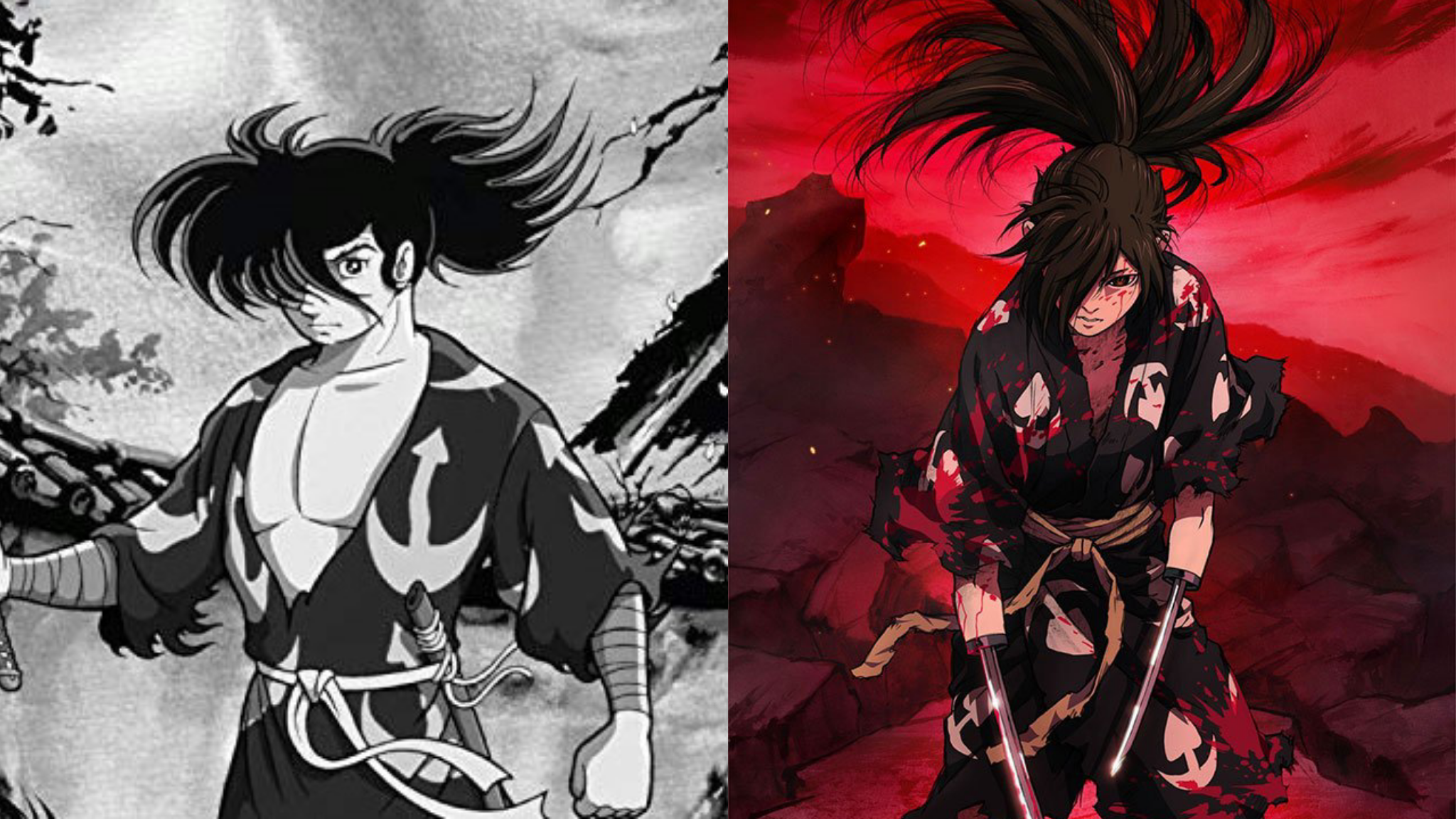
Originally pitched in 1968, Dororo was a television series based on the manga of the same name by Osamu Tezuka, released in 1969. Produced in black and white the airing ran for 26 episodes unlike 2019’s 24 episode run. The crux of the issue revolving around the first series was the cancellation of Tezuka’s manga prior to its tonal-shift towards Dororo's "coming-of-age" story. This meant most early plot lines centered on Hyakkimaru's battles with supernatural monsters, leading early viewers to consider Hyakkimaru as the only main character. As seen in the revamp, it's a story about growing together rather than apart, which takes Tezuka’s finished establishment of the story into account. To me, this is proof a remake or reanimation of a previously adapted series doesn't have to be a soulless attempt or a money grab, but rather can focus on the grandeur of it all by analyzing content either missed or applied senselessly in the original.
In addition, the cohort of demons numbered 48, each specializing in a particular body part. In this series we presume the final demon failed to take Hyakkimaru’s heart, whereas in 2019’s newly adapted story, the final demon failed to take his life (Heart symbolizing Life between the two recreations). This massive difference is due to the demon count being nixed down to 12 instead of the initial 48, meaning we can assume Hyakkimaru possesses all of his internal organs. While the heart is used to symbolize life between the two, it's a far cry to say you’d survive at all missing that many internal features of the human body. Whether you believe this fact discounts his determination to survive, or vice versa, it being a more realistic approach to the story. The fact of the matter remains the same, Hyakkimaru must survive and persevere to reclaim what was taken as these trials and tribulations continue to impede the purity of his soul. Another obvious distinction lies in our character design, primarily with Hyakkimaru. The initial sketch presents him as a beefed up, muscle bound, brute. The revitalization being an antithesis, depicting him as thinner, less healthy, haggard and lengthy like a feral animal. I believe the change represents a correlation in body and mental state, his figure looking just as starved as his heart and mind, desperately seeking family and the semblance of a normal life.
Structured episodically, Dororo delivers its story not as a straightforward journey, but as a series of confrontations—each one a small, personal climax that revisits and deepens the series’ central themes. Whether it’s the color of a soul, the fractured state of the region, the scars of a traumatic past, or the shifting ambitions of its characters, Dororo ensures that no detail is left untouched. Instead, each element is reintroduced and recontextualized, threading the world and its people tightly into the fabric of the story. This repetition isn’t redundancy—it’s reinforcement. It shows that in a world marked by ruin and survival, nothing stays buried for long.
Even small lines of dialogue carry weight. A line like “Human lives were hardly worth more than a stone on the ground” doesn’t just reflect the cold calculus of war or the prevalence of suffering. It reveals a greater truth: the erosion of empathy in a world where life is cheap and survival is currency. It speaks to the climate between people—where trust is fragile, kindness is rare, and the true enemy may be the world itself.
War-torn settings, particularly in episodes five and six, paint vivid portraits of loss and oblivion. These episodes don’t simply show us despair—they immerse us in it. They remind us that the most dangerous people are often those who have already lost everything, yet the series also balances this darkness with quiet moments of meaning. In the smallest joys—shared meals, warm gestures, or a single act of mercy—we are reminded of what’s still worth saving.
Family, one of the series’ most powerful motifs, is shown not as a safe haven, but as a double-edged sword. Mio, desperate to save her found family, makes a choice that ultimately damns them. Hyakkimaru’s own family, in their attempt to save the land, sacrifices him. In Dororo, love and betrayal often come hand in hand. The tragedy is not in villains versus heroes, but in the complex, conflicting choices people make when they believe they’re doing what’s right.
At its core, Dororo carries a message about perseverance—about continuing the fight, even when the lines between good and evil blur beyond recognition. Every character is trying to survive, to protect something, to rebuild what was lost. But survival always comes at a cost, and Dororo never lets us forget that someone always pays the price.
It is this moral ambiguity that gives the series its depth and staying power. There are no easy answers, no pure victors. Just people—wounded, driven, and painfully human—trying to make sense of a world where gain and loss are two sides of the same coin. In this way, Dororo doesn’t just tell a story. It invites us to sit with the discomfort of it.

Their choice speaks volumes about the climate of the region—a place where innocence is a liability, and vulnerability invites ruin. The world of Dororo is not merely violent, it is predatory. In such an environment, even a parent’s love must be filtered through strategy and foresight. Dororo’s upbringing is shaped not just by affection, but by fear of what the world might do to a girl left unprotected.
This turbulence is not just background—it is a constant, pulsing presence that deepens with each episode. As we meet more characters, their lives unravel tales of desperation: men and women clinging to fragile futures, haunted by loss, driven to cruelty, betrayal, or blind hope. These aren’t just stories of individuals—they're bricks in the larger structure of a society unraveling.
And with every tale, the world expands—not in size, but in sorrow and complexity. What once seemed like isolated tragedies begin to link together, forming a vision of a system that no longer sustains life but devours it. It is a world that feeds on itself, where hate breeds more hate, and betrayal becomes a twisted form of justice. The moral architecture of Dororo is founded not on fantasy, but on the bleak reality of people trying to endure a collapsing world.
This is the power of Dororo: it doesn’t sensationalize tragedy, it investigates it. It shows how a world steeped in violence reshapes the choices people make, even those made out of love. And it asks the hardest question of all—what does survival cost when the system of morality is broken?
The dialogue in Dororo unfolds as a slow burn—appropriately so, given Hyakkimaru’s condition. At first, he exists in near silence, a protagonist without a voice, navigating a world that has stolen everything from him. But this silence is not a void—it’s a buildup. As he gradually regains his body, he also begins to discover his voice, both literally and emotionally. That careful pacing gives weight to every word he eventually speaks, making his evolution all the more powerful.
Narratively, Dororo excels in weaving together grand concepts—power, peace, humanity, monstrosity—into a tapestry that feels both mythic and deeply personal. The boundary between man and beast is constantly blurred, not just in the demons Hyakkimaru faces, but in the actions of the people around him. In this world, power can be protection or corruption, and peace is often pursued at the cost of others’ suffering.
The series populates its world with characters designed to challenge or support the status quo. Some uplift—offering moments of compassion or clarity—while others seek to disrupt, motivated by fear, greed, or desperation. Each encounter alters the emotional and moral terrain of the story, helping it evolve naturally alongside its characters.
This fluidity of circumstance, shaped by those who inhabit the world, ensures the narrative never stagnates. It grows, layer by layer, in perfect sync with Hyakkimaru and Dororo’s physical and emotional development. Dialogue, pacing, and character design all work in harmony to support a central truth: growth is painful, identity is hard-won, and every word earned carries the weight of everything endured to speak it.
The careful use of tone and audio in Dororo is instrumental in building suspense, tension, and atmosphere. It doesn’t merely underscore the action—it amplifies the emotional landscape, painting vivid, intimate portraits of how characters feel in any given moment. Whether through the haunting stillness of silence, the swelling strain of strings, or the sudden rupture of sound in battle, each auditory choice is deliberate, sharpening the impact of what we see and, more importantly, what we feel.
This layering of sonic and emotional cues enhances the resonance of key scenes—not just at a surface level, but deep within the viewer’s emotional core. The sound design isn’t just heard; it’s felt. It carries longing in the quiet moments, loathing in the tremble of a rising score, and love in the small spaces between words—where music, or the absence of it, allows feelings to swell.
Through this, the audience is not just watching Dororo—they are inhabiting it. The audio landscape transports us into the minds and bodies of the characters. We sense their hunger, their grief, their fury. We feel the hesitation before a swing of a sword, the weight of a word left unsaid, the ache of love never fully realized. Each conflict—internal or external—is translated into sound and tone with such precision that emotion becomes physical.
By allowing tone and audio to speak as loudly as dialogue or action, Dororo invites the viewer to experience emotion not just as observers, but as participants. This depth of immersion is part of what gives the series its enduring power—its ability to reach past the screen and strike something elemental in the human heart.
So rarely does a series allow itself the space to breathe—to embrace the stillness of a moment, or to sit with the eerie aftermath of action. Dororo stands apart in this way. It doesn’t rush to fill silence with noise, or motion with more motion. Instead, it grants its scenes room to settle, letting emotions linger just long enough to leave a mark.
These moments of quiet—after a battle, during a stare, in the weight between words—are where Dororo often speaks the loudest. They invite the audience to pause and feel, to sit in the discomfort, beauty, or sorrow of a character’s experience. The stillness enhances resonance, turning fleeting events into lasting impressions.
By honoring the space between beats, Dororo allows emotion to echo. And in doing so, it reminds us that sometimes the most powerful storytelling doesn’t come from what is said or done—but from what is allowed to simply be.
While Dororo offers a rich tapestry of side characters, it never overwhelms the audience. Each supporting figure is crafted with enough depth that understanding even a few reveals the greater complexity of the world. These characters are not merely background—they confront their own demons, their struggles mirroring and reinforcing the ambitions of Hyakkimaru and Dororo themselves.
Our main cast, Hyakkimaru and Dororo, are fully realized, three-dimensional characters whose journeys provoke thoughtful reflection. The narrative doesn’t hand us easy answers; instead, it forces us to question our own beliefs. What principles guide our judgments? Where do we draw the ethical line in the shifting sands of survival, loyalty, and justice?
The ensemble includes its share of villains, yet Dororo resists a simplistic “love or hate” dichotomy. Instead, the boundary between right and wrong is deliberately blurred—gray and elusive, defying easy definition. Every action, whether heinous or noble, carries weight and meaning within its context.
Through this moral ambiguity, Dororo challenges its audience to step back and reconsider the nature of justice. It asks: in a world where survival demands sacrifice, can right and wrong truly be defined?
What makes Dororo truly exceptional is its seamless use of tandem development—two characters, each rooted deeply in tragedy, shaping and healing one another as their stories unfold. Hyakkimaru begins as a lone wanderer, singularly focused on reclaiming what was stolen from him. His world is narrow, defined by a cold mission with little room for connection.
Then he encounters Dororo—a scrappy, young thief eking out survival by reselling stolen goods. After Hyakkimaru saves her, their lives become intertwined, bound together by fate and necessity. Yet beneath Dororo’s tough exterior lies a profound loneliness. Her decision to follow Hyakkimaru speaks volumes about the cruelty she has endured, especially since she parted from her mother in the field of dragon lilies—a memory steeped in loss and sorrow.
Dororo’s hardened demeanor and penchant for theft are defenses forged in isolation. Trusting others has been too painful; closing herself off seemed safer than risking betrayal or abandonment. But the day Hyakkimaru saved her was something out of a fairy tale—a white knight moment that swept her away from not just immediate danger, but from the deeper wounds lurking in her heart.
Together, they offer each other something rare: a chance to belong, to heal, and to confront their pasts. Their bond is not just companionship; it is the delicate weaving of two broken souls learning to trust, fight, and ultimately grow—together.

Dororo, ever persistent in recruiting Hyakkimaru into her “business” pursuits, begins her journey of self-discovery alongside the beast trapped in a cave. Naive to the world of demons and the harsh realities surrounding them, Dororo gradually learns that appearances can be deceiving. She comes to understand the unique vision that Hyakkimaru and Biwamaru possess—seeing beyond the surface into realms invisible to others.
At this point, Dororo is little more than a shadow trailing Hyakkimaru, who carries no attachment or sentimentality toward her beyond the simple fact that she is human with a pure soul. But slowly, we glimpse a different side of Hyakkimaru, one beyond the cold, stone-faced killer we’ve known so far. As he regains his sense of sound, he becomes vulnerable and withdrawn; noise overwhelms him, pulling him away from the world he’s been so ruthlessly navigating.
This fragility leads him to Mio—a sex worker fighting the samurai in her own quiet way, providing for those at the abandoned temple. Her singing becomes a boon for Hyakkimaru, offering comfort in his unease and teaching him to lean on someone else. This connection marks a turning point, the catalyst for his entire character arc.
When Mio is brutally slaughtered, Hyakkimaru’s world shatters. The loss of someone who genuinely cared for him sends him into an uncontrollable fury—grief that is raw, personal, and deeply human, despite its outward appearance. The slight hints of romantic tension between them make this loss all the more poignant.
In the aftermath, Hyakkimaru’s “shadow” takes on new meaning. He begins to see Dororo not merely as a companion or a tag-along, but as someone who cares for him in her own fierce, unspoken way. This shift softens the edges of his isolation and lays the groundwork for their bond to deepen beyond survival.
MIO'S SONG:
Hidden meaning: I tried to dissect the song as a poem, reading into the elucidation of a deeper context.
(Feel free to skip this, I was hypothesizing here)
“I found a red flower and pulled it"
Red flower representing Hyakkimaru, plucking him from the dark path he’d ventured down
"I found a red flower for her"
Her meaning Dororo, the red flower representing someone she can rely on and trust
"Where shall I place this crimson treasure "
How do they feel towards one another? Do they need each other?
"Nowhere other than in her hair”
To care for someone like Hyakkimaru never has before, he will stand by Dororo’s side.

Earlier in these episodes, when Dororo wielded the demon sword, Hyakkimaru did not kill her. Instead, he chose to expertly knock the blade away—an act that feels deeply symbolic. It’s as if he’s drawing a line between light and dark, refusing to harm a human being, not out of personal attachment to Dororo yet, but from a fundamental desire to preserve a life he viewed as unsullied. (Gray hue)
From episode six onward, the dynamic between them changes noticeably. Dororo begins to receive care in a way that feels more attentive and genuine. Her concerns and suggestions—like recommending they search for the Demon God under the cover of night or advising the use of herbs to stave off hunger—are no longer dismissed. Hyakkimaru listens.
This is a marked departure from before, when her words, feelings, and emotions seemed to “fall on deaf ears.” Though the monk hints that Hyakkimaru understands her in his own way, it’s only now that we see a more open, reciprocal communication forming. The thick walls around Hyakkimaru’s heart begin to soften, allowing Dororo’s voice—and by extension, her humanity—to reach him..

A younger brother—a possible companion—turns out to be a rival, shaped by the very world that cast Hyakkimaru aside.
A mother, Nuinokata, offers the faint glimmer of love and regret, but her powerlessness only underscores the futility of redemption in a world shaped by cruel bargains.
As an audience we would aptly describe the beginning of this sequence as a "break in the clouds", but one quickly overtaken again by the storm. In many ways, Hyakkimaru is being told—by both fate and the people he meets—that while he has regained pieces of himself physically, spiritually and socially he remains disinherited.
Nuinokata—complicit through silence, through her choice to remain with Daigo rather than reject him outright. Her attempted self-sacrifice is both a literal and symbolic atonement—a mother trying to give something back after giving nothing when it counted.
Jukai—a doctor who trained a child to kill. His guilt stems not from neglect, but from equipping Hyakkimaru to survive in a world of violence. In doing so, he paradoxically condemned him to walk the road alone.
When they both say “I cannot save you,” it reflects a deeper truth: they both participated in shaping the very path they now regret seeing him walk. The road to hell, in this case, is paved not just with good intentions, but also necessary compromises made under broken systems.
To touch on something critical: He seeks atonement without absolution. Both Nuinokata and Jukai seek atonement, but neither is absolved. Their remorse is genuine, but their penance is observational—they can no longer act, only weep at this current stage in Hyakkimaru’s cycle of vengeance. Only able to plant the seeds of conscience.
This dynamic reoccurs throughout Dororo:
The world is full of people who can’t undo what’s been done.
Redemption is often out of reach.
And the burden of carrying all this unresolved pain falls on those least deserving of it—Hyakkimaru, Dororo, even Tahoumaru.
Yes—even Tahoumaru, as we’ll come to learn, is a tragic mirror of Hyakkimaru.
At first glance, he seems like Hyakkimaru’s antithesis: the favored son, raised in privilege, healthy, articulate, and loyal to Daigo. But as the series progresses, especially moving into Act 2, the similarities begin to surface—and the tragedy of his character becomes undeniable.

That sacrifice leaves a different kind of scar—one bound to love, not just trauma. And so, when something resembles that love (as in the cursed sculpture in Episode 13), Dororo’s guard drops entirely.
She sees what she wants to see.
The cursed sculpture offers her a reflection of her mother, and for a fleeting moment, she chooses belief over reason, hope over danger.
This isn’t foolishness—it’s deeply human. But it nearly gets both her and Hyakkimaru killed, and that near-loss drills home a critical realization:
Wanting something badly enough doesn’t make it safe to believe in it.
The lesson here is emotional maturity forged through trauma—the realization that love, or the echo of it, can be weaponized.
Dororo never falls for the same illusion again. She learns that she doesn’t have the luxury of sentimentality in a world so unforgiving. Her actions become more cautious, her judgment sharper. And this is important:
Dororo grows not by hardening into cynicism, but by learning to love with discernment.
She still loves Hyakkimaru like a brother. Still holds on to ideals like hope and justice. But she no longer assumes that ghosts wear kind faces, or that the past can return to comfort her. She becomes a protector, not just of Hyakkimaru’s life, but of his dream—his humanity.
This fact is the culmination of what Shes learned in episodes 2 and 13.
Just as Hyakkimaru is haunted by the people who couldn’t save him, Dororo is haunted by the one person who did—her mother.
And where Hyakkimaru must learn mercy and identity, Dororo must learn trust and agency. The moment she stops searching for the past to return, she begins to build the future. This is what makes her one of the most quietly compelling characters in the show.
These learned experiences have sowed a crucial point: the cost of emotional vulnerability in a brutal world, and how Dororo learns to carry her grief without letting it endanger others. It’s a painfully honest portrayal of growing up too fast—a child forced to survive, then forced to grow into someone who protects others from the very kind of loss that made her.
In that way, she doesn't just support Hyakkimaru’s quest—she has her own. One that leads her to become someone capable of carrying forward what her parents died for, but on her terms, not theirs.


To me, episodes 14 and 15 ask a powerful question: “What purpose do our hardships serve? And what greater meaning lies beyond journey's end?”
In these episodes, we witness a village suffering the consequences of its actions—both innocent and damnable bystanders falling into ruin, bearing the weight of "decisions made for the greater good" . It’s a stark portrayal of how far desperation can drive people, and how manipulation can spread like a disease under the guise of hope.
While I love every episode of the series, these two fall near the bottom for me in terms of enjoyment. They don’t bring much new in terms of plot, but they do highlight a compelling shift: the demons are no longer just feared, but worshiped. In times of hardship, people turn to anything that offers sanctuary—even if it means revering what was once seen as irreverable.
Revisiting the premise introduced in episode two—sacrificing life in exchange for prosperity—these episodes reinforce that tragedy is not isolated, but cyclical and widespread. The narrative frames this as an “us vs. the world” struggle, echoing Hyakkimaru and Dororo’s own mission to defeat the demon gods. Yet that very mission comes at a cost—potentially endangering the very people they wish to save.
And so, we’re left with a haunting question: Who is truly in the right, and who bears the weight of being wrong? In our pursuit to destroy what we deem evil, have we become the very thing we claim to stand against?

Episodes 16 through 18 are a profoundly intimate trilogy — not just in narrative structure, but in emotional cadence. They mark a shift in the story’s rhythm, a deeper, more carnal look into what Dororo and Hyakkimaru have come to mean to one another — not just as companions, but as mirrors to each other’s growth. Emphasizing a sheer desperation in which each is unspokenly and unconditionally needed by the other.
In episode 16, “The Tale of Shiranui,” Dororo is abducted by Itachi — the same man who once betrayed her father and their band for a shot at survival. Now, he's chasing a treasure hidden by Dororo's father, a hoard said to hold the power to transform an entire nation. But this isn’t just a search for gold — it’s a reckoning. With past sins, with inherited burdens, with cycles of desperation repeating themselves.
As they fall into a deadly trap and morale begins to collapse, Dororo emerges with a stout resilience. She channels her father’s defiance, not as a memory, but as a living flame. Her choices reflect more than survival instinct — they reflect a deep internalization of the lessons both her parents left behind. From her mother, she learned that there’s power in choosing which battles are worth fighting. That living isn’t always pretty, but it matters.
This is where her connection with Hyakkimaru begins to make more sense — not just emotionally, but intuitively. She sees in him someone else shaped by hardship, someone else trying to piece together a self from the fragments of suffering. But while Hyakkimaru fights demons to reclaim what was taken, Dororo fights to hold on to what matters: compassion, clarity, and the courage to stay human.
It’s not just admiration — it’s recognition. They understand each other without needing words, because beneath the scars and silence, they’re walking the same path: toward meaning, toward freedom, toward themselves.
Worthwhile to state Dororo equally learned where to draw her own line from her mother, this is why she will always attempt to stop Hyakkimaru when his mind snaps and he goes berserk. While the mother and daughters lines are drawn differently (won’t sell body vs. won't kill), she takes an extra page from Mio’s book, if we recall the conversation leading to the reply “Mama was admirable, but so are you for staying alive”. It’s clear that preservation trumps all at least in the grand scheme of completing her journey with Hyakkimaru. Anyways – Dororo stands tall, giving rise to valor and bravery as she devises a plan and jumps headfirst into the jaws of danger. What remains of the crew finds safety as they make landfall and set up camp. But all has not been forgotten. Jet black truths come to light as we discover a tattoo was given to both Dororo and her mother Ojiya, dividing a map. An encrypted map divulging the location and whereabouts of the cave of gold. The jarring reality is that it took Itachi desecrating Ojiya's grave and stripping Dororo, to uncover the completed map. Originally Hyakkimaru was the only known character alive to encounter the truth of Dororo’s gender, a fact which changed absolutely nothing for him. The beauty in this is that despite the mother and fathers best intentions to protect their daughters chastity, innocence, and safety, it was never in danger with Hyakkimaru because a person is more than their gender to him. He perceives a deeper countenance.


The meat and potatoes fall here in episode 17 and 18. Dororo and Hyakkimaru, having been through so much, are seized by the hands of fate. Whether they know it or not their lives are intertwined in the life and death struggle for acceptance and love, something they have for one another but not for themselves at this point. We jump into episode 17 “the Tale of Questions and Answers” as Hyakkimaru is seen slaying a monster and unilaterally reuniting with his father, whom he hasn’t seen since his initial departure marking the beginning of his journey. I don’t believe he was out looking for Dororo at this point, in fact it’s not until he’s pushed into a conversational corner by his adoptive father, Jokai, that Hyakkimaru’s feelings in regards to Dororo come full circle. Believing at first he needed a new prosthetic leg to fight demons, he comes to realize the leg serves a greater purpose. Perhaps he requires his leg not to fight demons, but to fulfill what he truly desires – To find Dororo.

In the same episode we have an emotional moment between father and son. Jukai states that “he is nobody” to which Hyakkmaru extends an arm out to Jukai and says “I know what you are. You’re “Mama””. Hyakimaru internalizes what a parent should be vicariously through Dororo. Yet another example of Hyakkimaru actively listening despite not actively replying. I also want to note that “mama” is used with quotation marks further referencing Dororo’s mother when she speaks of her. Jumping back to the Island, Dororo announces that “big bro will save me” exemplifying the complete faith she has in Hyakkimaru. I connect this passage with Hyakkkimaru’s, in that they both reach a similar conclusion. In their heart of hearts, they’ll be there for one another.

This’ll be a small section as it’s only a tiny little tidbit for episode 19 “The Tale of the Amanojaku”. The main crux here is Dororo being jealous of Okawa. Up until this point we knew how Dororo’s character felt in relation to Hyakkimaru. He serves as a brother figure or companion. Or so we thought! It’s not too far beyond the realm of imagination to say Dororo feels stronger emotions than maybe she herself had realized. In reality children tend to confuse feelings of love and romance when they idolize someone, however, I don’t think that’s the case here. The episode centers more around “coming to terms” with your emotions towards a particular person. We do love some good foreshadowing, but I think it also shows the depth of Dororo’s resolve. The journey isn’t complete and knowing Hyakkimaru, he couldn’t truly be happy being semi-intact.

Motivating the events shifting Hyakkimaru’s entire mode of thought, episode 20 “The Tale of the Nue” intensifies the plot, pushing us ever-closer towards the climax of our journey. Not much to say about the villain besides him being another corrupted human tainted by the ambitions he once held. Foundationally, I believe there’s a single incident that transpires, leading Hyakkimaru deeper into the cave than he’s ever gone before. When both characters are thrust off a collapsing cliff edge, Dororo becomes pinned in place by a large boulder. Surrounded by what appears to be a formation similar to that of a dried hospring, water erupts from the ground filling the shallow pool of earth entrapping Dororo. As the water rises, surpassing the fringe of Dororo’s head, Hyakkimari adamantly heaves at the seemingly immovable object. Striking in multiple vain attempts Hyakkimari eventually shatters his arm disabling the use of both tactile and weaponry features. Shortly after proclaiming he’d needed his limbs for Dororo, they’d become pointless. Paling in comparison to the real thing, he could do nothing but watch helplessly as his best friend drowned. Destiny and fate play a huge role in this series as seen in the recurring reunions between our duo and Biwamaru. As fate would have it, Biwamaru arrives, plunging his instrumental sword into a gap, leveraging the rock just enough to release Dororo from her watery grave. At the exact moment she is pulled clear, the blade snaps. Similar to when a pedal falls or a glass cracks, the sword breaking stood for impending doom.

Post haste, without a word of gratitude uttered, Hyakkimaru storms up the hill to Nue and the Demon God. Defeating both without reward, he walks onward, soaked head to toe in blood. When asked where he’s going, Hyakkimaru delivers a line so cold it sends shivers up my spine. He replies “Daigo – After all that’s where my body is”. It’s at this point Hyakkimaru has had enough of the wicked games he’s played thus far. He wants what he’s rightfully owed and wants it now. Otherwise how else can he protect the one he holds dearest. It’s almost as if losing one more thing would send him over the edge, and being so close to losing Dororo changed his entire mental scape concerning the progress of his restoration.

I’ll discuss the icing on the character growth cake in the “Final Act”.
Kanj -
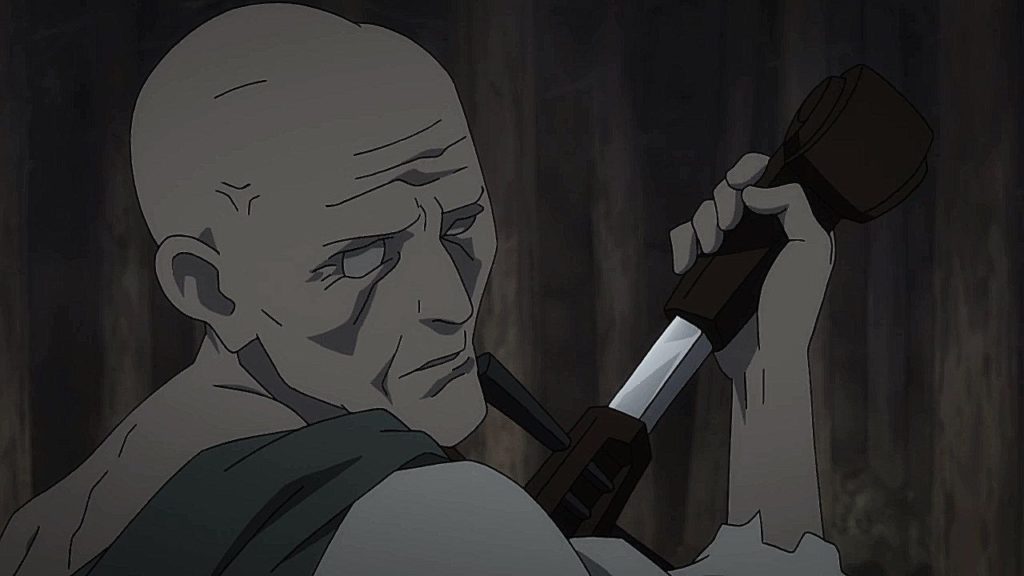
What I love most is that Biwa isn't a translation but an actual japanese instrument. Biwamaru, verbatim, is a Wooden Lute. The exact instrument he carries around in the show, almost like an identity. This could parallel the fact that he’s no longer tied to a lord and thus in no longer a samurai. As a ronin he has no identity other than his Wooden Loot. The one form of identification and confirmation of his existence that he still carries, potentially from long ago.
Kanji -
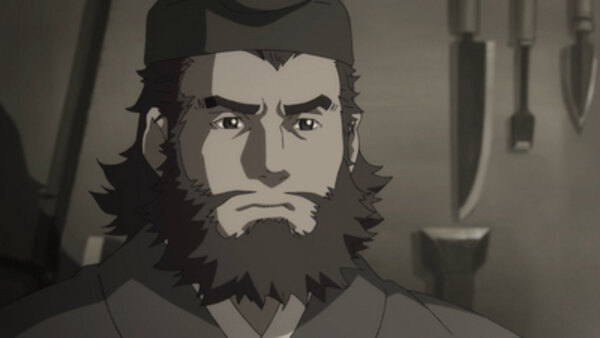
Jukai can be otherwise expressed as “Sea of Trees” potentially referring to his time in the war. He’s moreover lost in a sea of the bodies he's condemned but trees are used instead to symbolize that he is still living despite being caught in the expanse of his wrongs.
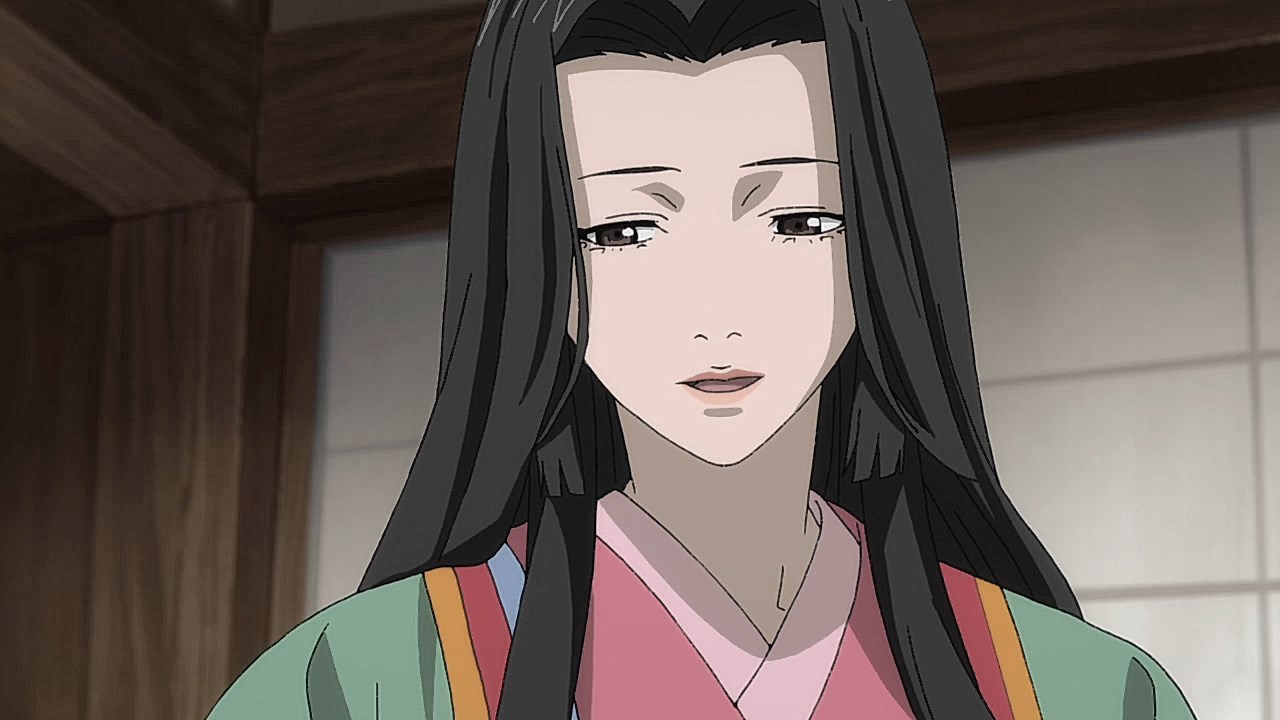
Kanji -
“Nui” meaning sewing, “No” acting as a modifier and “Taka” taken to mean hawk. To me this could be interpreted as one who seeks to repair what has been torn but is cursed to watch from afar.

Kanji -
Taho translates to “Edge of the lake” and Maru being a common suffix for “small”. I don’t think the kanji for “Maru” means anything in this instance as many characters also contain the latter addition to their names. I believe “edge of the lake” to correlate with the distant confusion surrounding Tahoumaru’s relationship with Hyakkimaru. As if standing on the precipice of sin and acceptance, Tahoumaru is forced to walk a razor's edge either supporting the brother he never knew, or the father he blindly admires.

Kanji -
Doesn’t deserve to have “kage” as the first kanji characters if I’m referencing Naruto. But Kage means “Shadow” and Mitsu, although it has many meanings, I chose to interpret as “reflection”. Altogether meaning Shadowy reflection which could then be further derived as evil personified/ demon in human form. Ironically enough Hyakkimaru is painted by Daigo to be the only demon left to defeat but there's beauty in the mirror imagery here as lord Daigo could also be considered the only demon left to defeat. Two different world views simultaneously colliding, not being too far off from one another in all actually. Another great example of the gray line Dororo incorporates. Goes to show, one must “Seek to understand before they are understood”. There is unnecessary tragedy caused through misunderstanding and lack of empathy.
Quite possibly the most overlooked aspect of Dororo is the inquisitive meaning behind a soul's color. Moreover the individual interpretations of what one’s color may actually be. Throughout the journey we surmise the intentions of a character via Hyakkimaru or the monk's (Biwamaru’s) ability to gauge the soul based on its color or hue. This unique aptitude, used as a pseudo sight, can be attributed to their lack of eyesight thereof. On many occasions we have the opportunity to see how characters view each other, and on even fewer, how they view themselves. For example Hyakkimaru
Views Dororo as a soft, gray, unsullied flame.

Whereas a Demon god reflects the deep red color of blood.

Should also be pointed out that besides typical atmospheric indicators giving away the problematic intentions of a newly introduced character, we are familiarized very early on with the look of someone who’s murdered or had a hand in deaths deal. Demonstrated in episode two “The Tale of Bandai '' when we glimpse the soul of a villager whom is in cahoots with a Demon God, leading helpless passerby to their demise. This is visually represented through the tinged aura being at its core gray but with red and black speckles being attributing to their crimes. Moving forward this is reiterated through subtle reinforcement so that the audience itself can peer through the same sightless lens and deduce the scheme at hand.
Extremely minute and visualized through a “blink and you’ll miss it moment”, the hypothesis I carry is regarding how Hyakkimaru views himself vs. how others view him. As we are narrated to believe – plants, animals, humans, objects, etc, all give off a hue indicating a form of threat level or neutrality in some way. So, one may think a prosthetic would carry a different shade from the rest of the body, however, it is in fact considered to be one and the same unlike the demon sword referenced in the image above. While the person themself doesn’t necessarily need to be corrupt but rather are corrupted, the inverse can be said. Being whole with the parts and objects one wields is also possible.
Below is an image from Episode 3 “The Tale of Jukai '' where Hyakkimaru is trained up in the way of the sword. This would be the prequel story or background prior to episodes 1 & 2 which details/ montages the start of his arduous revenge. This image is how Hyakkimaru views the color of his soul at the start of his journey.

To others, such as Biwamaru, “Demon god flames are the embers left behind from his whole ordeal” and this is the appearance he takes on. This also reinforces the theory that his prosthetic arm giving off a grass green tint would be considered part of a whole as Biwamaru views him likewise as one color.

Within the same episode “The Tale of the Nannys`’s Song, part 2” Hyakkimaru has taken the lives of man and demon alike. This is notated the next time he comes into contact with our monk as it’s stated he sees the blood of men has been spilled by Hyakkimaru’s hands. However, despite others believing Hyakkimaru to be a beast in a cave, a demon child, or an obstacle threatening the peace of an entire people, he considers his cause to be just. This can be seen in episode 17 “The Tale of Questions and Answers” when his first person perspective renders a pure grass green tint, despite the degradation of his morals.

Drawing a line of uncertainty
What makes something good and what makes something bad? Dororo (The 2019 series) forces us to take an introspective glance at the question while we walk a tightrope, oftentimes assessing the gray line between the two. On the surface we see multiple instances of cases just like this. For example Dororo’s unsullied flame comes across as a calm gray, untainted by the red/black of death. On the other hand, we have the Demon Gods appearing blood red by nature. Tainted by the lives they’ve mercilessly taken and despicable deeds they’ve carried out.
It’s hard to say what truly disturbs the color of one's soul. The most likely answer is selfish intent, in other words, morality gone astray to the point where lives are nothing more than a means to an end. We know for certain a person's perception of themselves has nothing to do with the color they exude, likewise actions taken out of selfless intent. Mio is a perfect example because while she sold her body and felt as if Hyakkimaru was peering into a dirty soul, she in truth wore a flame as unpolluted as Dororo’s. Her purpose being for a better life, not only for herself, but the orphans fostering together who dreamed a similar dream. Bad being a term inapplicable with the bias and prejudice people may carry, as other opinions don’t mean much in the grand scheme of things – In consideration to the color of the soul. Despite the term “bad” being subjective, it’s balanced on a double sided scale against beings and people with much worse intentions. The weight of one’s actions can then be surmised to affect one’s color only by the character of said actions.
The subtle inbetween, providing “food for thought” is the change of sides whether it be good to bad or vice versa. In episode 7 “The Tale of the Spider Woman” a demon is comforted and given shelter while in a weakened state. With initial intentions to drain the human of life (Not necessarily kill) we see the growing fondness and softening of the demon spiders constitution towards the individual in question. Over the course of the episode we see these changes take root, as selflessness wins over the heart of a demon, melting away the sole desire for an isolated existence hunting humans. By the end, the blood red hue transitioned into a yellow/green tint, symbolizing that even those who are once deemed unsalvageable and corrupted, can still recast the deck they’re dealt.

Plotline A:
Presaging the imminent return of her son, Nuinokata stares solemnly at her husband, saying “The peaceful times in this land are coming to an end”. We see the full weight of Hyakkimaru’s burdens come center stage as anger and hate cloud his judgment and cast fear and love to the wayside. From episode 6 onward, Hyakkimaru has been attentive and paid heed to Dororo’s concerns/grievances with respect to his deteriorating mental state. Yet neither blind to nor listening to Dororo, Hyakkimaru blatantly dismisses the sincerity of her words, all for the sake of the body waiting for him in Daigo.
The interactions between Dororo and Hyakkimaru in the opening collection of scenes is heartbreaking. Initially attempting to reach him through emotional constructs such as sentiments towards his mother, the comment Dororo makes is sharply retorted with a stern “If they get in my way, they’re dead”. Later reinforcing these claims Hyakkimaru threatens a bystander, sword to throat, for warning him of the tumultuous affairs transpiring in the land of Daigo. Actions aside, a few things are clear for our titular character, the first being his hot-headed determination to collect the final missing pieces of his body, and the other is Dororo’s unwavering loyalty. When Dororo asks what he’ll do when he’s all alone, Hyakkimaru replies “I will have you there”. If at least a few more things become clear, it is that Dororo is Hyakkiamru’s worldly attachment, the last bastion of hope tying him to what little humanity is left inside. Also, killing humans is nothing but a means to an end, a way of furthering himself at the expense of others. When I last spoke of this exact predicament, it referenced one key inference about a condition for tainting the color of one's soul. We will also find in the final act that Hyakkimaru is no longer attributed to a demon, but rather a Demon God. It’s a minor change in dialogue, but with major symbolic affects connected to the tempering of his soul.
Plotline B:
Tahoumaru’s arc progresses on in the penultimate events leading to our conclusion. His dialogue is heartless and rigid, leaving no room for doubt in regards to his feelings toward Hyakkimaru. Convinced his brother is the scourge of Daigo, Tahoumaru pleads with his father - “If we do not rid ourselves of him now, then we will never again be allowed to govern the land of Daigo in peace.” The man hunt begins. Promising to stay as Tahoumarus “right hand” (Mitsu) and “left hand” (Hyogo) they will serve until his ambitions are met. Later both Mitsu’s right and Hyogo’s left arm are severed in a fight against Hyakkimaru. This marks the first domino to fall the moment Hyakimaru entered Daigo’s territory. Also foreshadows the clash of ambitions, one set formed through blood, sweat and tears (Metaphorically cause Hyakkimaru lacks eyes, and most likely tear ducts) and the other a legacy, passed down from father to son. Which will triumph when push comes to shove? Losing these arms also set forth the proceedings for the 12th demon god’s intervention/manifestation into the realm of man. Besides that I don’t know how much worth Tahoumaru’s counterparts losing their limbs had. More of a plot driving action used to bring Mitsu’s disease to light, leading to the Hall of Hell deal and so on and so forth. To me it was comedic justice for hypocritically believing Hyakkimaru to be deserving of nothing after losing everything. Coincidentally happening hours after her motivational right/left arm speech. But I’ll discuss these two characters' finality in more detail later.

Nuinokata’s character development is subtle yet beautiful. Always teetering on the precipice between duties of the state and matters of the heart. After she frees Dororo we discover Nuinokata had to make a choice. Continue on as a devout worshiper or become the wife of a lord/ a mother.

Also begs the question, how close Hyakkimaru himself is to becoming a demon? In an excellent use of reinforcement we can recall episode 6, where the spider is able to alter its soul. I believe this hints at there never being a point of no return. There is always a chance at redemption no matter what state you’re in. So even if the demon god flame inside Hyakkimaru becomes stronger consuming him, there’s still a way back – a way back to Dororo.
“If you remain true to your heart, you won’t lose who you really are” - Dororo

Plotline B:
Nuinokata begins to abandon her title as the lady of a lord and instead follows the virtues of the goddess once more. She wishes not for a shortcut to this redemption, refusing Dororo’s offer. An offer to negotiate the validity/righteousness of her actions in the wake of Hyakkimaru.
Nuinokate has so many enthralling quotes throughout these final episodes that it’s hard to incorporate all of them!
“What we are doing is wrong, there’s no need to use a child as a shield.”
Learning from her past mistake, committed many years prior when she sat idly by when the lord used Hyakkimaru as a shield for the land. It should be said that she didn’t actually “Sit idly by”. Nuinokata vehemently opposed the injustice carried out, trying to cling onto Hyakkimaru when he was stripped from her arms, running to the marshland where he was set to be drowned, and praying everyday thereafter for his safety. On a personal note she feels as if she abandoned her son, not being able to take action until Hyakkimaru was out of reach, and then being condemned to stand idly by.
“I abandoned Hyakkimaru, choosing the land of Daigo and its people instead. As a lord's wife I do not regret my choice”
Nuinokata chooses her words carefully if we read between the lines. Her statement signifying the ulterior mode of thought – As a mother and follower of the faith she greatly regrets her choice
“I feel I’ve come to understand one thing, all I wanted was to see him again. One more time. As for what I must do when that time comes, a mother will know”
While foreshadowing the final episode viewers may be able to notice that Nui accepts that the end of her life may be near, surging down the same river where Hyakkimaru’s life began.
Nuinokata is seen smiling on two occasions. First when Dororo holds her close and calls her mother and the next when volunteering to help the invalids. Further showing that Nuinokata never covetted her title as “lady” and in doing so, demonstrates her true nature as both a woman of faith and as someone who desires to be a good mother.


As Dororo speaks to the men on the cliff, they chastise the samurai in a manner similar to how her father once had. Now witnessing similar convictions through a clear lense many years later, she seeks to resolve the conflict in a different way. Not through brute force as her father once had, but by utilizing power of a different kind. (Cape of Gold)

Orphaned a
54 out of 55 users liked this review
