Kino's Journey
a review by KrenZane
a review by KrenZane
Say, are you a traveler?
Do you drift between little worlds, are you a creature set in open motion? Are you an outsider, a mere observer unfettered by the obligatory laws of attachment? How must it feel to be unbound and dictating your own freedom grounded by a sturdy principle of self-preservation? Please, tell me your stories.
I am like a citizen of some country at some corner susceptible to intake the chronicles of every outsider as indelible imprints to my meager life. Perhaps you feel the same instead; our kind who shoulders the sanctity of community through settlement make up the brunt of the population. Thankfully we can be like travelers now, within the world of fiction.
Included in the package is the right to insert ourselves as the main character themselves. Intriguing, however, that pomposity does not hold the greatest sway. But we are backdrops with a telescope and withheld visitors with the same capacity of change, and by consequence victims to philosophical musings, by choice to the beauty of the world.

Primarily a dive-in to assorted hypotheticals playing around human ideals, tradition, and general way of life, Kino's Journey is a first-person walkthrough in a quest-less, seemingly endless adventure on the road. I say "first-person" because of how the titular character is intentionally arranged to be inclined against participation of any sort of town-(re)building by her being rather devoid of attachment to societal concerns unless forced to act or through caprice (and having caprice means she has her moral systems, too).
Many times she is unpredictable. Some of her actions (and inactions) were questionable. But this works for the engagement of the audience as we could easily fit into the vessel of the main character who has a quiet reactionary expression and an ambiguous judgment such that varying opinions or the lack thereof are welcomed. And as she acts on self-preservation, policing becomes futile. The last episode shows that chance practically saved her life when the citizens of The Kind Land threw away theirs out of ego. Attachment to the country almost killed Kino, and from then on it was her principle to not stay anywhere for more than 3 days in fear that she might cease to be a traveler. Her best advice to any adventure then boiled down to caution in order to not lose their own lives, therefore self-preserving. In that sense, many watchers can be the traveler and Hermes by extension.

I must admit, taking in the mindset of an observer without obligation to anyone aside from respect was a refreshing sort of feeling: just witnessing the various countries be, having a jolt at Kino's few interventions, perhaps being pulled to certain judgmental emotions as values must be inclined to ask of us, although letting it flow to the oceanic conclusion that "the world just is, therefore it is beautiful" as is the brave assertion of the series.
And why is it beautiful when most episodes comprise of tragedy? Why, with all the massacre, the conflicts, the sorrows that breed the ugly thoughts which drive human beings to a winding road towards devastation, can it be considered beautiful? Kino's Journey does not hesitate providing instances wherein the usual notion of beauty is seemingly desecrated to end up claiming that its slogan still holds true, and that it can only achieve greater heights of truth in so doing.
We're descending into ruminative realms with this one. Kino's Journey appeals to the viewers that beauty is inherently attached to existence. And because the world exists, so it is "beautiful", and no terrible thing can find faults against that claim. It is a wonder that such a complicated thing exists to home billions of equally complex lives and non-lives with an innate ability for cohesion and cohabitation. Maybe that the world offers an endless stream of sensation, an endless road of experience, and an endless diversity of thought and action, where anything can happen, constitutes the sanctity of Beauty as wife to Being. And Kino, in her many travels permitting her closest audience to the workings of the world that is housing society and nature and the in-betweens, with the clearest look on the bigger picture with all its ornamental blemishes and decencies, can be a carrier of story's core theme. The journey allows for achievement of the self's reconciliation to the unpredictability of existence by anchoring oneself to a claim that resides within the spectrum of optimism. This may be one of the reasons why Kino continues traveling. It is appealing to the recalibration of perspective which is more hospitable to the "good" than the "bad" and accepting to what "is". The message becomes more resonating when Kino is also at most risk of letting the "bad things" get to her, but she all the same remained on the road.

img (https://i.imgur.com/oyFaW0z.png)
Traveling takes you to many places. Kino sometimes has a clear decision on where she wants to go (like if Hermes needed a fixer, or if hearsays in the wind caught her attention). Other times her voyage is spontaneous (episode 5's ending with Kino and Hermes choosing either the left or right road). Either way, direction is essential and having it derailed can be upsetting. Now of course detours are not reduced in grace through this, but the series doesn't really talk about that concept, so we'll leave that for now. I brought this up because in the beginning of episode 5, Kino says that she doesn't like riding in the forest as it makes it easy to go in the wrong direction.
I find that interesting. Well, I found the whole episode among the most interesting ones, especially with this specific question being repeatedly asked to Kino: "Traveler, where are you headed to?"

Directions make destinations reachable. In not wanting to be led to wrong directions, it must then mean that Kino wants to reach her destination. The destination being, the next country. But inevitably, confrontations occur through simple yet striking questions that step above a few or so levels from base thought and action to reach a degree apt to be donned as "ultimate". It was so penetrating that it rendered Kino speechless with a look that screams drowning in a sea of realizations and uncertainties.
So really, where is Kino headed to? Where do travelers end up being? Everyone knows the answer, really, that the journey itself is the destination.
Unlike those three old men working on the rails due to external employment, eternally waiting for the call of the authorities on the conclusive verdict, Kino acts upon her own self's affinity towards traveling which led her away from the doom that was being physically wired to be a robotic adult in her hometown. There is strong emphasis on the significance of doing what you want to do and being where you want to be. Indeed, the three workers did what they needed to do, which can also be categorized as a want since it brings them satisfaction working at the expense of their loved ones. In that we cannot reduce their quality as human beings (and who are we to be official judges of such?), though we cannot deny that utter submission leaves a blind spot. But what we may extract if we compare them to Kino is the agency she is lucky to have seized for herself. As much as they will never stop undoing each other's hard work, so too will Kino never stop living to travel.
Thus, going to the wrong direction, i.e., not being where she wants to be, not doing what she wants to do, is irksome. The forest will pose to be a challenge for the traveler. I go back, however, that I was interested in such notion, and I was gloriously satisfied holding on to that bit of statement when that bomb of a last episode dropped.
Recontextualizations abounded with the trip to The Kind Land. It brought a brand new layer of depth to Kino's life from birth. It was a most transformative experience for Kino, one which had her firmly stick to her principle of self-preservation.
What that episode did was a trick of inspired similarity and opposition. Basically it portrays Kino's life in another angle, making the direct comparison potently enriching especially being situated at the end of the anime's journey. Things we can relate to and draw comparisons from our lives become that much more connecting, don't they?
I say these because it is important that The Kind Land is what it is after knowing its origin as a country built upon the forest. The people's customs even render service to nature as a form of respect to their roots. Whereas the forest is the community of the citizens, where they settled upon even after knowing the catastrophe, the forest for Kino is an element misleading direction. The forest is where those people decided to set their whole life's chart on; Sakura even declined her parents' telling her to travel with Kino, but in the same end result as her them, she was determined to stay, for it is her dream to tour travelers around her country and give them moments most unforgettable. The forest is the direction which leads her to her destination: still within the forest. But for Kino it is different and her world resides elsewhere.

One other detail which played a part on this idea's stage is the gunsmith's passing onto Kino his prized gun named "Person of the Forest" (or "Woodsman" in other translations). It serves as a remembrance of Kino's time with the people of the forest, and as she now is transferred ownership with it, also, as it were, bestows upon her the same denomination. As a person of the forest, she must take the endless challenge of being swayed towards directions she doesn't want to be thrown into. The dichotomy of her occupation and her metaphoric citizenship marks the beautiful duality of the world being not beautiful at times yet consequently leading itself to beauty. With this, we have Kino, a traveler of endless forests filled with uncertain obstacles, unfettered by obligation yet bounded still by the afflictions of suffering, commonly unparticipative but life-changing all the same, journeying for the sake of it to experience at its personal fullest the sights of the beautiful world, alive and functional despite the chaos it is fraught with, accompanied by her trusty sentient motorrad (it is no use to question why it can talk, for it simply can, and the world, again, just is). It takes two to create a world. Creators can't live without each other. The symbiosis of Kino and Hermes carries on the memory of the country built on that forest, and together they become keepers of the lives that once were.
...or at least, that was my interpretation powered mainly by poetic motivation.

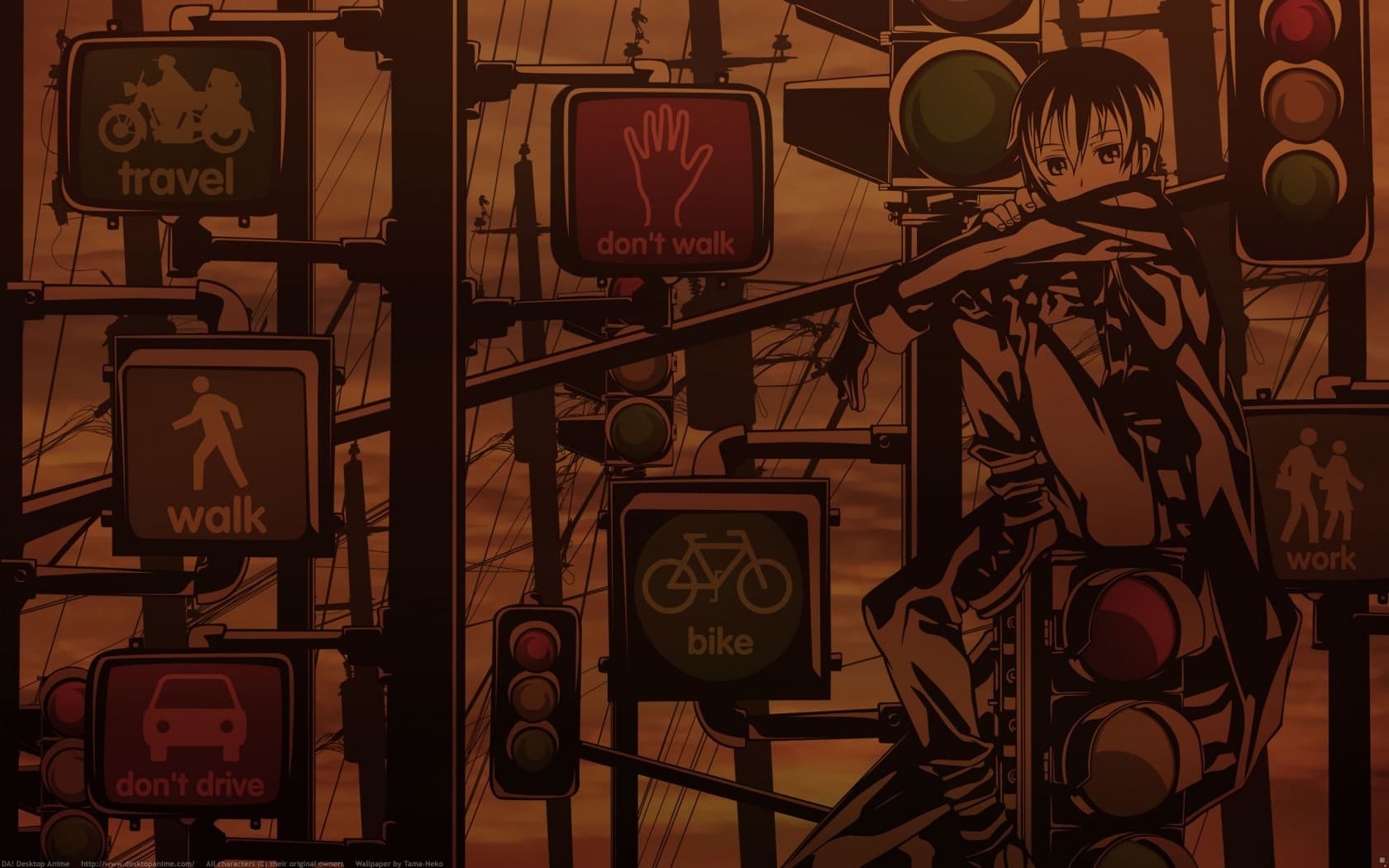
At the last parts of this review/reflection I should dedicate it to a sort of wrap-up of my thoughts. Kino's Journey is solid to the core with its intention, never going astray from its own convictions. It creatively utilizes the potentials of fiction by leading us through vignettes of hypothetical countries and encounters which always have something to say or at least open up for self-reflection. I should never forget that its storytelling methods were very refreshing, notably the episode in The Land of Books. With a distinct feel delivered through enigmatic and nostalgic music as well as complementarily muted "vibes" and sepia-dominant tones to its visuals, and a present-centric mindset, Kino's Journey stunts you with newfound or resurfacing thoughts as travelers take stops to take in foreign or sometimes familiar air.
 ~~~~~~
11.5 out of 15 users liked this review
