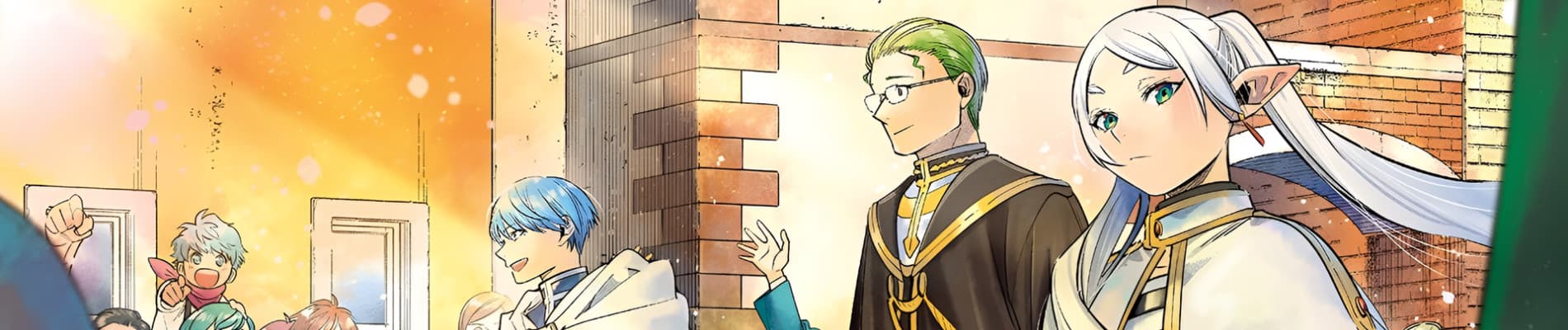

This review contains spoilers but is safe to read for those who haven’t read the series. All major spoilers are spoiler tagged, with the rest being very light spoilers. I wanted to write a review for the anime but also talk about events in the manga, so I sort of "combined" them into a single review here, primarily focusing on the manga but occasionally bringing up the anime.
###

Everyone has regrets. Whether it’s something small, like skipping out on a party with friends, or something larger, like choosing the wrong path in life, everyone has felt the bitter pain of wishing you chose differently, or acted better, or decided quicker. As you get older, regrets only pile up, since more and more important decisions must be made. And these regrets, they shape us: similar to how negative feelings are more memorable and powerful than their positive counterparts, momentous regrets stick with a person. So when the next important decision comes around, your past regrets will influence your future behavior.
Regrets are closely interwoven into the story of Frieren: the main character, an immortal elf, is burdened under multiple lifetimes worth of them. Things she could have done, feelings she should have expressed, people she would have appreciated; there are innumerable things she could, should, and would have done differently.
As the famous mage of the Hero’s party, Frieren’s regrets primarily stem from her time spent with her (comparably short-lived) comrades. During their ten-year adventure, she was consistently aloof and distant: she rarely expressed emotion and felt little attachment to those around her. Her inconceivably long lifespan distanced her from truly living with others, and by the time she realized what she had, she had already lost it.

 format(webp))
But Frieren’s journey isn’t over: determined to atone for her previously aloof and distant nature, she elects to go on a new journey (of both body and mind), one where she will “get to know humans.” This time, she’ll do better. She’ll try to understand the people around her and learn more about the enigma that is “humanity,” which she has yet to truly comprehend.
It’s through Frieren’s decision to actively remedy her mistake that the series confronts its grander theme about regrets. Rather than wallowing away in a depressed stupor, Frieren opts to continue traveling, but this time with a newfound attentiveness to those around her. She doesn’t let her regrets control her or negatively impact her life, instead choosing to acknowledge and internalize them, channeling them as fuel to better herself so she never makes the same mistakes again. Rather than thinking about “what she could’ve done” with her old party, Frieren thinks about “what she will do” with her new companions: she applies the lessons and ideas she remembers from her time in the Hero’s party, which she was too emotionally distant to properly understand at the time, to her new adventure with new companions. Retracing the steps of her previous journey, Frieren recontextualizes her past experiences with her current understanding of humanity, not only bettering herself, but also honoring her former comrades by passing on their lessons and customs to the next generation. By doing this, Frieren posits that it’s never too late to atone for past regrets: by acknowledging your mistakes and improving yourself for the future, you can progress forward on your own journey through life.
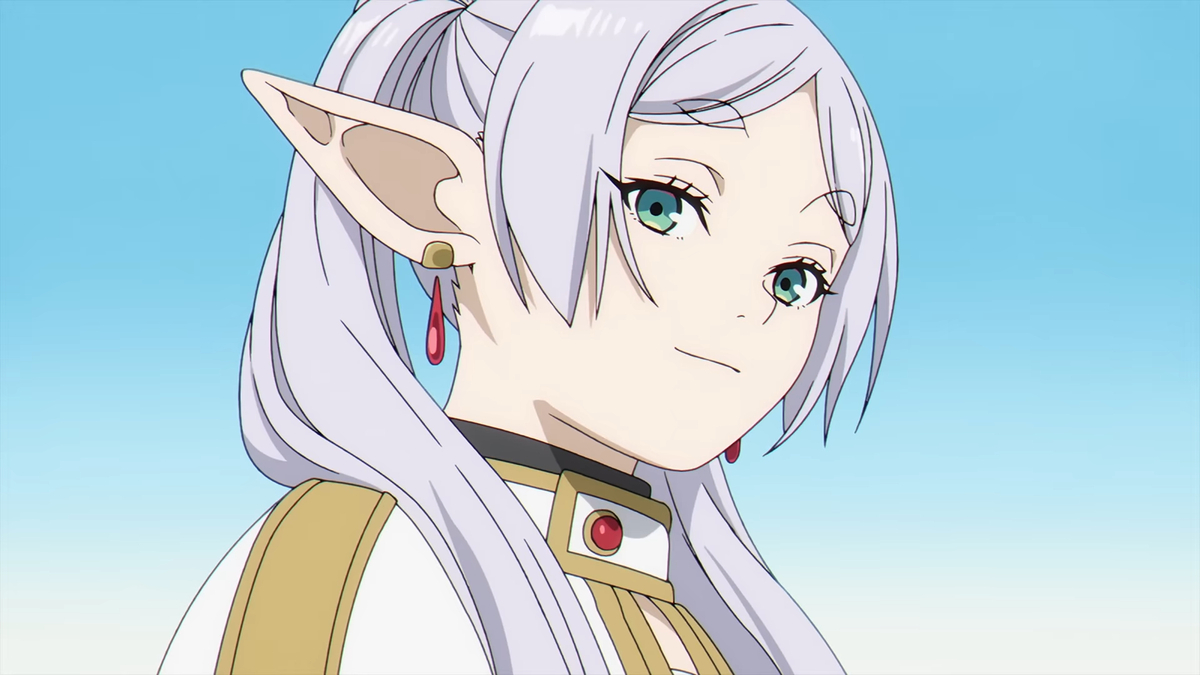
Frieren overcoming her regrets to improve herself and grow as a person is both powerful and inspiring. There’s something intrinsically appealing about watching Frieren contemplate her past with a newfound perspective: it leaves you with a bittersweet feeling, partly wishing that she was cognizant of the significance of these moments when they first occurred, but nonetheless happy that she has now fully realized and appreciated them by applying them to her current adventure. And this feeling permeates the manga, creating an intoxicatingly bittersweet and melancholic reading atmosphere.
Frieren masterfully interweaves lighthearted comedy with casual sentimentality, substantially contributing to the manga's calmingly sentimental atmosphere. The author brilliantly walks this fine line, inserting gentle comedy in the perfect places to offset the series' melancholic and bittersweet retrospection. Furthermore, Frieren always knows when to best throw in a bit of tension and danger—both to balance out the manga's overly sentimental nature and remind readers of the ever-present perils lurking within the series' vivid fantasy landscape.
Our regrets humanize us; since everyone has them, everyone understands and can empathize with them. This, along with her efforts to improve herself, makes it especially easy to empathize with Frieren, who—despite living in a fantasy world with magic and demons—deals with problems that any person growing older would understand and relate to. And it’s not just regrets that she grapples with; even though she’s one of the most powerful characters in the story, she struggles to understand the people around her, can barely get out of bed in the morning, and is forced to watch as the world around her changes without her. These (mostly) relatable qualities humanize Frieren, making it very easy to sympathize with her and understand her troubles.

Similar to how regrets are universal to the human existence, Frieren’s other major theme is omnipresent in the lives of humans, existing as an unavoidable law, a frightening blessing, and a comforting curse: time. Frieren skillfully depicts the vastness of eternity yet places significant emphasis on infinitesimally smaller (in comparison) moments. Years can pass in a single panel, and weeks or even months in between regular chapters. In the blink of an eye, the turning of a single page, decades can go by, because that’s what time feels like for Frieren. This demonstration of the passage of time not only contributes to the manga’s melancholic atmosphere, but also really puts into perspective how Frieren perceives time, enabling readers to further empathize with and understand her.
In stark contrast with the series’ portrayal of time, Frieren places substantial focus on small moments of sentimentality, suggesting that the key to a meaningful existence lies not in the quantity of time you’re given but in how you spend it. Specifically, the series implies that the best way to spend it is with others: by making connections with those around you, you can find meaning in and justify your existence. Frieren’s own journey reflects this realization, as she’s spent most of her life in isolation, lacking meaningful connections with others. Only through her party with Fern and Stark has she been able to properly build these relationships and grow as a person.

Interestingly enough, Frieren’s development can be tracked through her shifting perspective on time. Towards the start of her new adventure, she would spend months in a single location satisfying her spontaneous whims; however, as the series progresses, she learns to control herself and gradually comes to understand the difference in her perspective. This understanding provides insight into her development, demonstrating how she’s slowly becoming cognizant of the feelings of those around her, and it’s clear to see how far she’s come when compared to the Frieren in the earlier chapters.
Frieren used to remark that her time spent with the Hero’s party was (and I’m paraphrasing) “a mere ten years, not even one one-hundredth of my life.” And yet, as the series points out, that one one-hundredth changed her. Continuing with the series’ established theme of time, this is another beautiful way to demonstrate that the amount of time is irrelevant for growth as a person. It’s not years that change someone, it’s ephemeral instants, minute junctures in a person’s life that really affect them. And it’s these small moments of significance, accrued over a lifetime of experience, that truly make you who you are. Frieren has a distinct lack of these moments, and it’s her new journey, with people she now appreciates and cares about, that enables her to accumulate a vast collection of these priceless treasures.

Frieren’s journey reminds us, the readers, about what we should be valuing in our own lives: our time spent with others, the memories that define us, and the people around us. It's a distinctly grim yet uplifting reality check, warning readers that the people in your life won't be around forever, so you should take advantage of the present to really get to know and appreciate them. And watching Frieren as she really lives in the present, cherishing every moment with her new party, appreciating every moment with her old, and just learning about her new companions, hits so damn hard. It really spoke to me, encouraging me to apply these lessons to my own life—to treasure small moments with my friends and family, value this evanescent present I’ll never get back, and appreciate the small joys that life has to offer.

Frieren primarily explores both its themes of regret and time through the use of well-placed flashbacks to Frieren’s time in the Hero’s party. These flashbacks facilitate Frieren’s development by enabling her to revisit previously introduced themes, whose seeds were planted in its brilliant introductory arc. Each subsequent flashback beautifully expands upon these already established ideas, providing context as to why these moments matter to Frieren and showcasing her character development. Plus, it doesn’t hurt that Himmel (the Hero) dropped absolute bars throughout these flashbacks.
It’s important to note that Frieren is not about living in the past. Although most chapters contain a flashback to her adventure with the Hero’s party, the series specifically emphasizes how these moments affect her current adventure. Frieren’s reminiscence and recontextualization of her past is not the purpose of the narrative: it’s how her past experiences, of which she can only now cognize their true significance, shape her present journey and character.
 ###
### I’ve talked greatly about the SoL side of Frieren, but that’s just one genre in Frieren’s eclectic arsenal. It wouldn’t be a Frieren review if I didn’t talk about its other aspects, namely its shonen elements.
As Frieren is a shonen, it occasionally has story arcs, which usually last around 10 or 20 chapters. These arcs may lean into common shonen tropes and cliches (like over-monologuing), but they’re super well-executed and incredibly entertaining.
While they may not be the primary focus, each arc always has some hype battles where we get to watch our protagonists display their skills and abilities. These fights are always super entertaining and never rely on deus ex bullshits or “plot” to dictate the victors. Instead, every character has their own strengths and weaknesses, and it's by playing into their strengths and intelligently planning around their weaknesses that the victors are able to come out on top. Furthermore, there are no “throwaway” characters, nor any characters defined by a single quirk that will never be mentioned again. Every character introduced has a distinct personality, unique motivations, and cool abilities, with many of them playing (or likely to play) key roles in the story.

Each arc also serves a narrative purpose for the overarching story or characters. They don’t exist solely to meet some metric for the Weekly Shonen Sunday; rather, they are weaved directly into the story, serving an important function for the overall narrative. Whether that’s revealing the primary villains, introducing characters who will reappear later, or just telling a compelling narrative, each arc directly impacts the series as a whole, so they can’t (and shouldn’t) be skipped over or ignored. Moreover, the arcs never forget what type of series Frieren is: each arc has important flashbacks and character moments that further develop our protagonists and enhance the themes of the series. They almost always flesh out the characters, usually demonstrating the closeness between our main party, revealing important character backstories, or simply sticking to the series' tried-and-true formula.
This next paragraph is going to contain spoilers, discussing a slight problem I have with Frieren involving a specific manga arc.
Spoiler, click to viewclick to hide
Frieren recently closed out its time-travel arc with the Goddess Monument, and while this arc has some of my favorite moments in the series, I do have some small issues with it. I have yet to reread it, but the arc felt rather slow reading it weekly—however, I can mostly overlook this because there were some great moments between the Hero's party. But this arc simply does too much setup: while I am hype for what's to come, this arc lacks the payoff of, say, the El Dorado arc, which concluded Macht's story beautifully while setting up threats and plans for the future. I normally love how Frieren sets up future plot points, but there needs to be narrative satisfaction for it to be effective. Maybe if they had successfully dispatched Grausam it would feel better, but nothing really came of this arc from a narrative or plot-focused perspective. There were some wonderful moments, but aside from that all the arc did was introduce a bunch of new threats and give us some (more than welcome) Solitär fanservice.Of note, the artist does struggle to accurately depict dynamic motion: specifically, the fights tend to lack the "flow" or cohesiveness between panels found in most other shonen. Nonetheless, I personally find the action super hype and have never taken issue with this—the writing alone could make the fights entertaining, and the art only elevates them in my eyes. But it’s worth mentioning that you shouldn’t come into Frieren expecting beautifully drawn or choreographed fights; the hype battles are just an added bonus to the already great manga.

The next paragraph contains minor spoilers, specifically about how Frieren handles demons. There are no concrete examples, just information about the demon race and how the series portrays them.
Frieren also excels in its depiction of villains, deviating from the modernized trend of sympathetic demons prevalent in most animanga (I’m looking at you Demon Slayer). To put it simply, I love the portrayal of demons in Frieren. Described as monsters whose greatest weapon is human language, the word “demon” is a truly apt description for them. Not only do they possess long lives and an incredible aptitude for magic, but they also lack distinct human qualities such as guilt, malice, or empathy. Because of this, they come across as intelligent psychopaths that wouldn’t hesitate to lie or kill. From a human perspective, they are undeniably “evil” creatures that imitate human speech to garner sympathy, but they are more akin to animals: their social hierarchy is entirely dictated by strength, and they are incapable of escaping their true nature as demons. And since the emotions that make humans "human" are inconceivable to them, can they truly be blamed for acting the way they do? It’s not out of malice or “evil,” it’s because they truly don’t understand why what they are doing is considered wrong. And it’s this dissonance that makes it impossible for humans and demons to coexist. Neither side is necessarily right nor wrong; humanity just wants to live, and demons just follow their natural-born instincts, so it’s more analogous to a predator versus prey dynamic. So you can’t exactly hate the demons, but you also understand why it’s necessary they be killed without question (though the author has yet to explain why demons gravitate towards killing humans, but that's honestly such a small detail and will likely be covered if it becomes story-relevant). This portrayal of demons is not only extremely refreshing, but also makes for some absolutely excellent villains.
This next paragraph is going to be entirely spoilers and discussing my favorite villain of the series (and one of my favorite villains ever). Spoiler warning for the El Dorado arc of the manga.

Spoiler, click to viewclick to hide
Macht is the primary villain of El Dorado, and one of the most fascinating villains I’ve ever encountered. He desires coexistence with humanity, to understand the human emotions demonkind lacks, but this impossible task leaves behind a trail of boundless destruction in his wake. And his ability, turning anything into gold, is so overpowered, but it fits his character so well that he finds it “mundane” to decide every fight with it. His backstory is unbelievably interesting, and the resolution to the El Dorado arc is extraordinary and so poignant. And I haven’t even mentioned Solitär, who, although not quite as interesting as Macht, is one of the most unsettling villains I’ve seen, acting as a brilliantly distorted version of Frieren. They both want to understand humans better, but Solitär is more interested in them as “research subjects” and doesn’t think twice about murder, while Frieren wants to understand humans to form meaningful connections with them. They’re like opposite sides of a mirror, similar yet extremely different, and it’s such a phenomenal and uncanny idea for a villain. The fact that the author cooked up two outstanding villains for a single goated arc is still absolutely insane to me, and I legitimately believe this arc is one of the best arcs in shonen.
Aside from its SoL and shonen sides, Frieren also serves as an excellent fantasy in its own right. One such staple of a good fantasy series, the foundation to build the story upon, is the worldbuilding. And Frieren’s fantasy world is surprisingly intriguing: it’s rather minimalistic, rarely taking to the forefront and only really brought up when necessary for the story, but it’s very consistent and “realistic” (in the sense that Frieren’s fantasy world feels authentic and plausible). Frieren also never over relies on exposition dumping, nor does it spoon-feed its readers; rather, the author actually conceals many crucial aspects of the world, such as important events and characters, which provides ample breathing room for fans to theorize about the story and builds hype and satisfaction for important reveals.
Thanks to Frieren’s emphasis on time, the characters also don’t feel like the center of the world: the author refuses to bend the world around its central characters, so Frieren’s journey feels like one of countless events happening at a given moment. These qualities give the series a very grand sense of scale, where it feels like the world and its inhabitants are always changing over time. This sense of scale is extremely palpable when comparing Frieren's flashbacks to the present, which clearly demonstrates the sizeable difference 80(ish) years can make. Small nuances, like the evolution of technology, advancement of trends, and development of magic, become exceedingly evident and further contribute to the magnitude of Frieren’s expansive world. Additionally, Frieren’s current adventure—specifically the physical distance traveled, time spent journeying, and myriad of locations visited—also considerably supplements the series' sense of scale and overall worldbuilding.
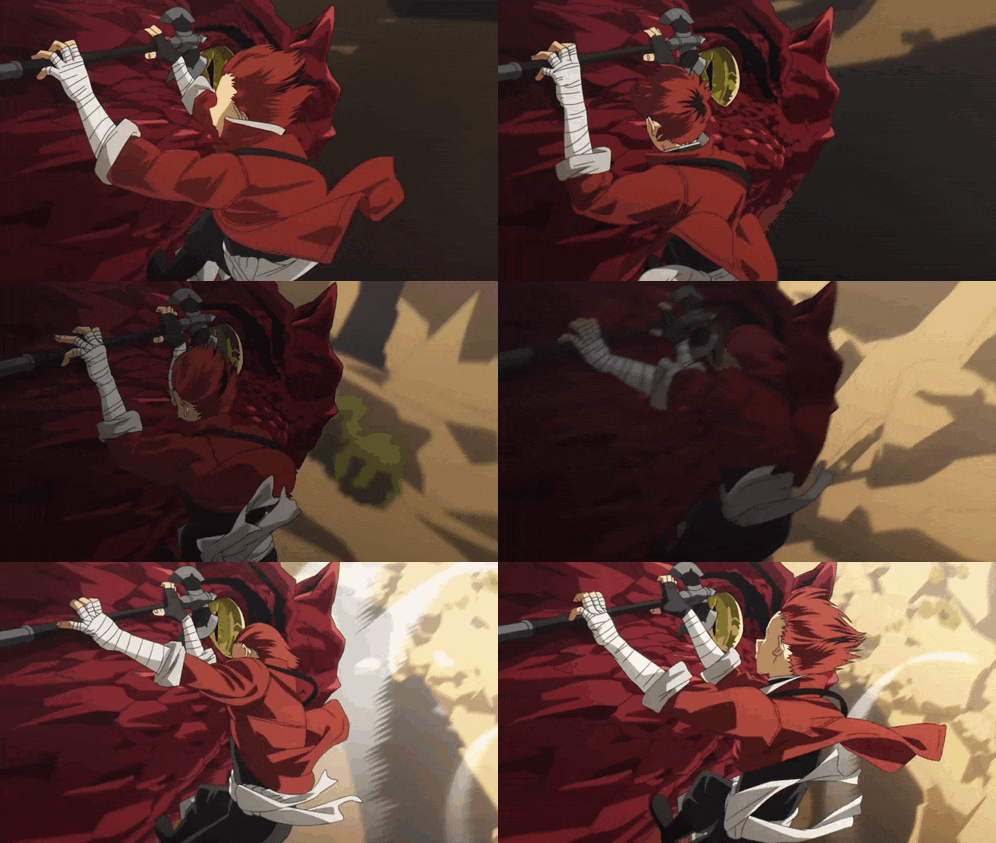
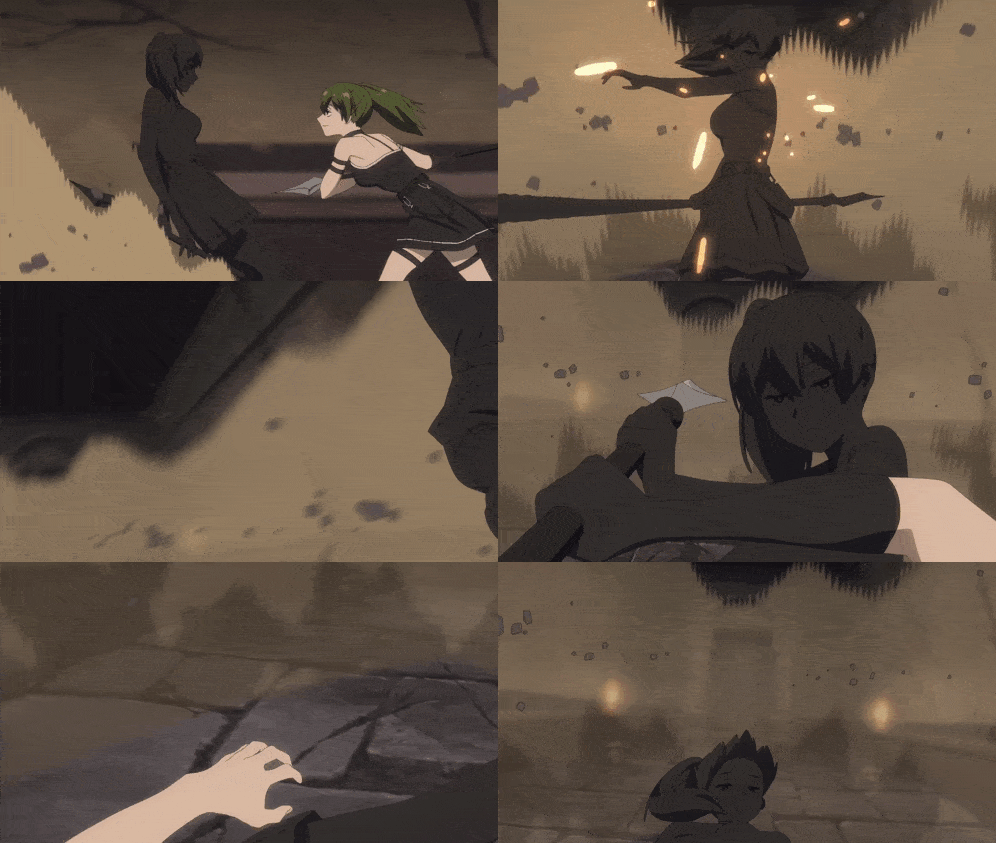
I will note, however, that the anime does a far better job emphasizing the gorgeous fantasy landscape than the manga. I wish the manga better accentuated the beautiful fantasy scenery like the anime does—because trust me, the anime art and backgrounds are absolutely breathtaking—but it's not enough to substantially detract from the series. Just one of the few nitpicks I have regarding the series as a whole that could make the manga even more incredible than it already is.

Frieren also uses its worldbuilding to emphasize smaller messages unrelated to the series’ more prominent themes. While not as important as the series’ primary motifs, they nonetheless elevate the story in small ways, serving as meaningful life lessons for the cast and readers. The best example of this is Frieren’s dynamic magic system, which is fundamentally rooted in imagination. For a mage to overcome an obstacle, they must first be able to picture themselves overcoming it. If one can’t first imagine themselves winning a fight, then they’ve essentially already lost the battle (and I shouldn’t have to explain why stressing the importance of imagination and creativity is a good thing!). Frieren is chock-full of examples like this: minor spoilers ahead, but Eisen teaching Stark that the way to defeat a powerful opponent is to keep getting back up is a wonderful lesson about hard work and determination that perfectly aligns with the series’ shonen elements. Another example is how strong warriors still feel fear, signifying that fear is perfectly normal (and even a good thing!). It teaches (a possibly young and impressionable shonen audience) that courage comes not from the absence of fear but from conquering it. Or how most of the Goddess believers Frieren encounters believe in the Goddess because they want her to exist, because they want someone to praise them for the things they’ve done in life. Not only does this allude to the human desire for praise and admiration, but it’s also a wonderfully optimistic outlook on life (and is unironically one of the best arguments I’ve heard for religion).
These lessons may seem small, but they aren’t insignificant. The author builds these meaningful lessons into the power system, the worldbuilding, and the characters’ beliefs, which aren’t enough to carry the story by themselves but nicely supplement the series’ more prominent, pre-existing themes. They provide a lot of meaningful concepts for the readers to ponder alongside the overarching themes of the story, really enhancing the overall value of the series. And I can’t help but love seeing positive messages like these naturally embedded into the very heart of the story: it really attests to the level of care and thought put into Frieren's vibrant fantasy world.
There are many more virtues to Frieren aside from its thematic brilliance or shonen/fantasy elements. For instance, Frieren masterfully manages its interpersonal relationships, foregoing the exaggerated expressiveness and melodrama of other animanga for wholesome and realistic relationships between the characters. When Fern gets mad at Stark, things aren’t blown out of proportion: they may act childish (because they are children), but it’s never overdone or excessive. And at the end of the day, they both want to make up with each other, so like real people, they communicate, apologize, and move on. It’s always wonderful to see a healthy and realistic portrayal of relationships in animanga, and I personally think scenes like these do wonders for fleshing out and building attachment to the characters.
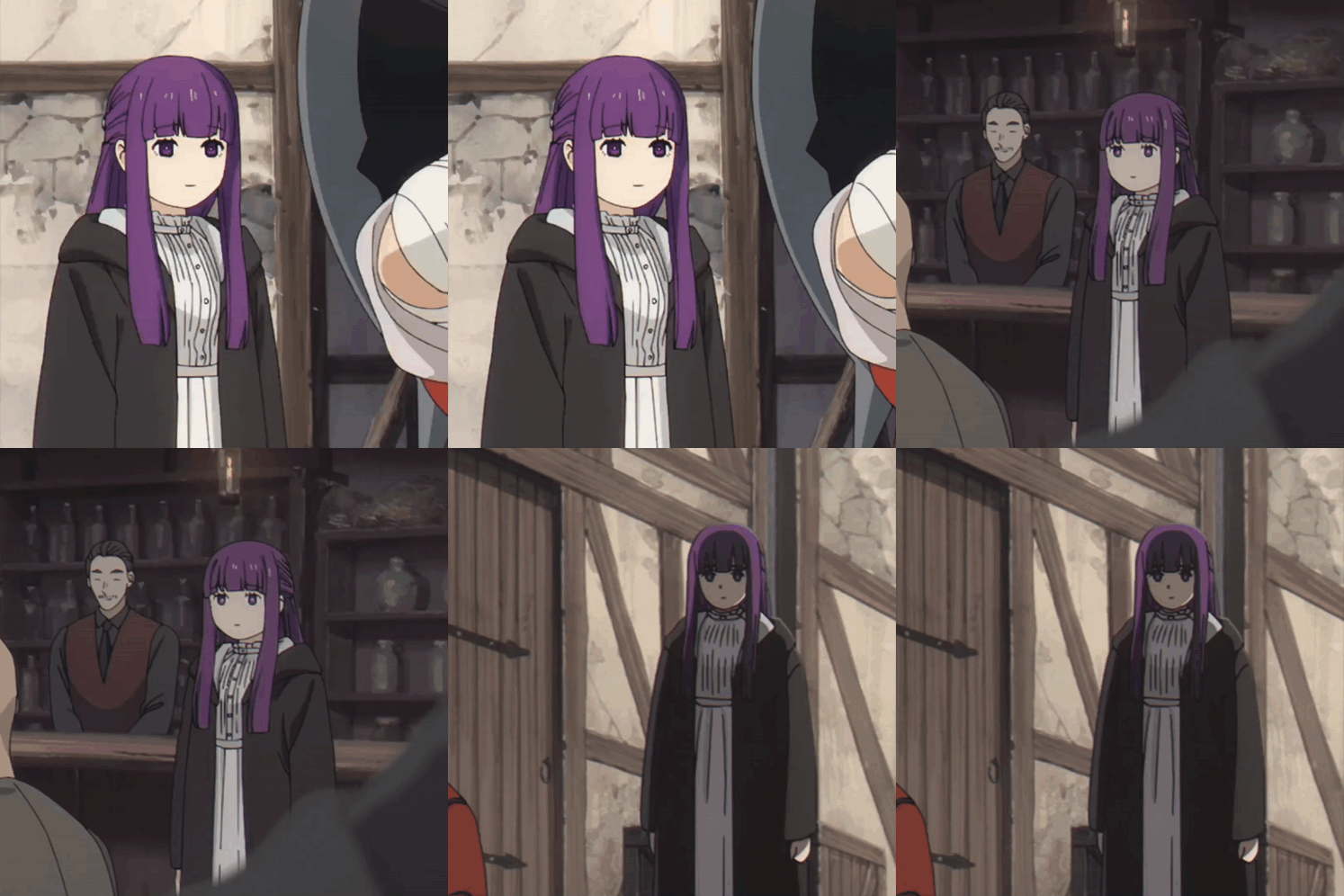
Speaking of relationships, Frieren excellently handles its romantic subplot. Like the worldbuilding, it's never brought to the forefront, but there are select scenes and relationship developments that just plaster a huge grin on my face. It's a slow and subtle build-up, never feeling forced or unnatural, and it's honestly quite adorable. The characters simply have a lovely dynamic, and I can't wait for their relationship to advance even further. Honestly though, the author hasn't touched on it in quite a while, so I'm hoping that they will decelerate a little bit after the current arc to give this awesome relationship even more time to shine.

While far from the level of artistic behemoths like Oyasumi Punpun or Vagabond, Frieren's art is very charming and has substantially improved over time. The art style perfectly matches the tone of the series, and the artist is actually quite talented; I’ve never seen an artist better at depicting subtle emotion in facial expressions, which is the perfect skill to have for this series. Seriously, some of the manga's facial expressions hit like a truck; I never thought smiles (in manga) could depict such a wide range of emotion until I read this series.
 ###
###  ###
###  ### You can viscerally feel the pain and sadness present in Himmel's facial expression
I will note, however, that while the artist is talented, Frieren could definitely benefit from them flexing their artistic chops more often. Most of the backgrounds in the manga are extremely generic, and it's quite rare for chapters to have a full-page spread. If they went more all out on the action, backdrops, and just included more full-page spreads, the manga could've been elevated to even grander heights. Frieren is already quite emotionally impactful, so I can only imagine how hard it would hit with more full-page spreads during the climactic moments; I'm not sure this is on the author or the artist, but I would seriously be crying every chapter if they did this.
Frieren lacks the distinctly overexaggerated expressions prevalent in most animanga, which provides a nice change of pace compared to most other series. Some may say that the characters feel too deadpan or emotionless, but I completely disagree; in fact, I find Frieren’s reserved nature (and lack of other anime-isms) extremely refreshing. This stoicism also perfectly matches Frieren’s mellowed-out tone, contributing greatly to the series’ lighthearted and calming atmosphere. Plus, these placid expressions make the rare depictions of emotion that much more powerful (as evidenced above).

I adore Frieren. The things I love about the series, as explained in far too much detail above, far outweigh any problems I have with it. This is like my perfect series, combining everything I love about animanga (drama, SoL, iyashikei, action, etc.) into one masterfully crafted story. It’s my favorite ongoing manga and one of my favorite series of all time. Maybe I just have a proclivity towards time as a theme in the media I consume. But either way, the recently concluded anime is also an outstanding adaptation—honestly, it's one of the best anime adaptations I've ever seen, overflowing with passion, creativity, and budget—so if anything here sounded interesting, definitely go watch the anime (and then read the manga) if you haven’t already.