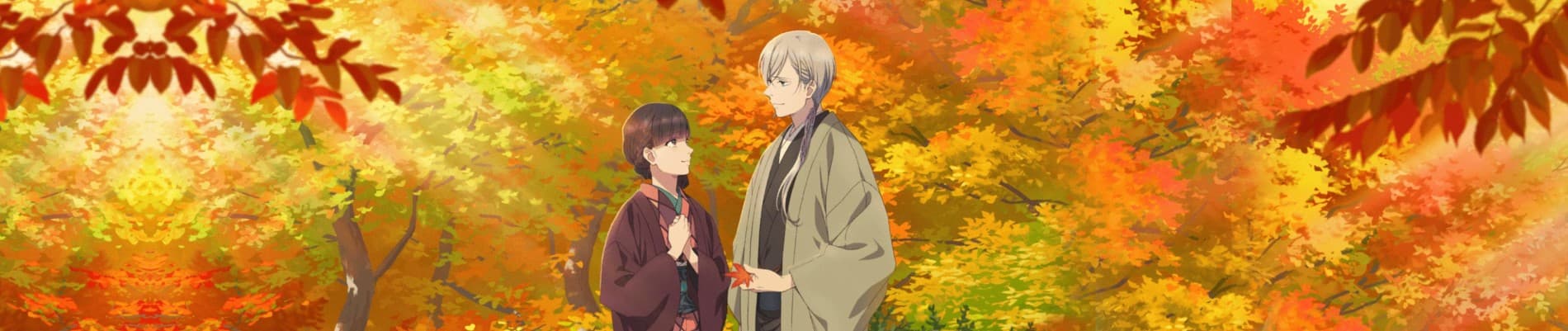
My Happy Marriage is an interesting combination of a very shoujo-style period romance mixed in with what one might call more typical shonen-esque features that focus on supernatural powers, setting and combat. The show likely finds a large part of its broader appeal, and therefore positive reception, since it does blend the two elements relatively cohesively. Yet this also highlights that the show does not develop or dig down into either of these elements to turn its story into something exceptional, or perhaps even anything above adequate. To an extent, the show does exactly what is described on its metaphorical tin. There is a focus on the romance and the growing relationship between our leads. Still, the summary frankly does create the impression that it will be a heavily character driven piece that explores the relationship in depth and within the context of the period it is set in. It leaves out the fact that the supernatural elements, which initially seem like merely a twist or aesthetic flavour, actually play a more significant role in the story. To the point where the plot is driven more by the supernatural setting than character relationships, as one might expect for something more firmly in the romance genre. In forgoing the focus on characters and relationships to broaden its appeal, it loses a lot of the character depth that makes shows like this stand out. While it still does have many of the usual shoujo hallmarks in its trappings and framing, it more so ends up combining the pitfalls of that genre-demographic with the shallowest elements from shonen and action-fantasy shows.
The season adapts the first two web novels of the series, allotting six episodes to each. While the supernatural element is present in both of these stories, there is a distinct expansion of it in the latter half of the series. Although this pivot is not jarring, nor comes out of nowhere, it does feel like it spreads the show's focus and narrative resources too thinly. It leaves neither element enough depth to stand up to any kind of closer consideration once the surface veneer is peeled back. Admittedly this does create an effective perpetual hook since the show alternates between centring around the romance with its associated complications and the setting's supernatural conflict. However, this continual regeneration of interest has more to do with dangling the promise of something more engaging than what is currently happening. Or more specifically put, each time the show focuses on the relationship, it reaches a point of melodrama that threatens to overwhelm the audience. It is then that the hints of the supernatural elements feel more tantalising and draw the viewer's intrigue. Conversely, when the show reaches a period where its focuses on its underdeveloped setting and power system become merely mind numbing action, it is the glimpses of how this all relates back to the relationships between characters that lead the viewer on. While this could be praised as good structuring and integration of two different genres, it also highlights the inability of each element to stand on its own merit.
In particular, this can be seen in the first half of the season, which focuses more on domestic affairs and the growing relationship between our leads Miyo and Kudo. As much as the story draws on Cinderella and Chujo-hime, its execution does feel intensely melodramatic for a significant amount of its screen time. Part of this is, frankly, what the viewer knowingly signs up for. By contemporary standards, any Cinderella-esque story with an abusive, evil stepmother and half-sister is bound to, at the very least, skirt the territory of melodrama. However, the show is particularly heavy-handed with its framing of Miyo's plight and the unreserved villainy of its antagonist. This is not to say that all villains must be relatable. Far from it. But there should be some level of complexity with how blatant and frequently they behave like this. The show frames them revelling so much in their abuse that it reaches almost comical proportions during the mid-season climax. Despite the few moments where the show changes to their perspective, we receive little insight into how they rationalise their actions. This does not need to set up the now equally cliche idea that all villains are simply misguided or facing their own crisis. But having a glimpse of their thought process, no matter how skewed, emotionally charged, or warped, would have done wonders for their characterisation since no one sees themselves as the villain. Even if their thought process confirms what the audience believes, seeing it is the point and what gives the narrative more weight. It would not have entirely done away with the melodrama, but it would have significantly improved things since we would no longer see them as barely more than caricatures.
It is then remarkable that My Happy Marriage is extremely direct with the framing of other characters. It is already quite clear to the audience that the head of the Tatsuishi family is up to something nefarious, conveyed both by his mannerisms on screen and the delivery of his lines. It feels particularly hamfisted when the show feels the need to reinforce this by having us hear his inner monologue, blatantly spelling out that he is using someone or what his obvious motivations are. This happens to a lesser extent with Kudo, when the mystery about his character and the rumours surrounding him are quickly dispelled. Although any genre-savvy viewer expects this outcome, and it is basically in the show's title as well, it undermines any organic tension they could have built between him and Miyo that would show more of their characters. Their initial characterisation of him from Miyo's perspective was already sufficient in showing the rumours were clear exaggerations. Yet we get very little development on why these rumours exist in the first place since the more prickly elements of Kudo's personality are played up by the narrative, only for them to be almost immediately dismissed by changing to his internal monologue. Having not read the source material, it is unclear if this problem of entering various perspectives stems from the web novel. But it seems more likely to be an issue with its adaption since most novels either remain in a single perspective or alternate between certain characters instead of being told from an omniscient point of view.
As a result, there is little mystery in our characters but also little corresponding depth to make up for it. The major missed opportunity is in Koji since he is the only character that has any substantial conflicting goals. Despite ample chances to develop this, he is left pigeonholed as the weak but good-natured love interest who puts Miyo ahead of his own feelings. While there is nothing particularly wrong with this character arc or its conclusion, so little about the conflict is explored or even shown that it makes Koji feel far flatter as a character than he should be. As a result, every character fits into very standard archetypes with little to break the mould, including our protagonist Miyo. Though, it is admittedly strange and conflicting to be searching for more nuance or depth to her, given the extreme treatment she has suffered. In a way, that is simply an inherent limitation of a character in that vein and perhaps feels particularly trite because of the long cultural history of tales like Cinderella and Chujo-hime. There still could have been more done to add depth through her relationship with Kudo, using her position as the known quantity to the audience to have her growth start to reveal things about the mystery behind his character. As much as the dynamic between them feels done to death, it could have explored how the difficulty in communicating makes them grow as characters. In the case of Kudo, about how to be less abrasive and more emotive, and for Miyo to muster the courage to be direct when necessary despite all the suffering she has been through. There is an attempt to develop them along this line and some touching moments as a result. Yet so much of it feels less earned than it could have been since the pacing does not show much struggle before a breakthrough is achieved. In fact, much of these moments are achieved through external prompting from other characters, which takes away focus from the relationship and potential depth since we are shown less of the introspection.
Even then, the relationship dynamics are not that interesting due to how typical it is for the period. In some ways, this seems like a no-win scenario for a period piece these days. Showing a more modern relationship dynamic tends to break the illusion that this is set in the late Meiji or Taisho era. But on the other hand, it is understandable that the very traditionalist nature of Miyo and Kudo's dynamic, if not off-putting to some people, is simply trite. Although there is nothing inherently off-putting about what is being portrayed, the period setting is doing much of the heavy lifting in making it palatable to a wide audience. It would have been interesting and more so justified the historical setting to explore the norms, pushback and complexity of marriage in that era. And the show does offer an inkling of that when it introduces Hazuki, Kudo's sister, who contrasts Miyo's more traditional outlook with her modern girl attitude. However, little is done with this, and it's more of a footnote before the narrative changes focus to Kudo and its supernatural elements. Perhaps it is an unfair expectation of complexity for a web novel since they generally have the same complexity as light novels. It is a large, perhaps even dry by genre fiction standards, topic to cover that is usually the preserve of literary novels or non-fiction. Yet having that depth would be one of the few things that could elevate My Happy Marriage from merely competent to something exceptional.
Perhaps then, the time to dive into the relationship was lacking because the show has more of a focus on the supernatural elements than expected. Admittedly, when My Happy Marriage introduces its supernatural angle in its second episode, it is a compelling twist. The premise provides a convincing reason why Miyo is at the centre of so much family politics and intrigue while also giving it an element that differentiates the show from more traditional shoujo fare. This supernatural, political part of the premise also helps keep the viewer interested despite the heavy-handed melodrama the show opens with. It creates the possibility that the show's initial melodrama is due to expediency, that it is a sacrifice meant to rush through basic characterisation in order to do more interesting things with the premise. Unfortunately, the melodrama of the latter episodes and the general vagueness of the setting and supernatural elements dispel that notion. The supernatural elements like the grotesqueries they fight and the superhuman abilities all suffer from the usual limitations they do in most shonen action series. They are ill-defined magic powers that generally operate as the plot demands with little account given to how they would alter the setting. Most disappointing of all, it is a supernatural force that drives a wedge in Miyo and Kudo's relationship later on in the series. This is little better than the trope of a "homewrecker" type character in more grounded stories becoming an obstacle the relationship needs to overcome instead of the drama being centred around the pair working out difficulties or flaws between them.
Ultimately, the supernatural element serves as mere plot utility and a surface-level aesthetic. As usual, very little thought is paid to how different society would be if there were individuals who could create firestorms at will. Like in its shonen counterparts, it undermines the idea that this is a period piece since the world would look incredibly different if even a single person could shoot lightning. While the show does have the fantasy tag on some websites, it does little to make the historical setting seem like anything beyond an aesthetic. The supernatural and historical elements of the setting may then enable a story like this to be told, but they do little to support it thematically. This is not necessarily a problem, since the setting serving the plot is the norm with most series. However, it is another area where My Happy Marriage does not go further than being adequate. What this results in is that the supernatural side of things is not fleshed out enough to stand on its own, has no thematic connection to the character elements, and serves primarily to drive the plot. This ends up being paired with characters that feel very archetypical, with little depth or nuance to any of them, and a sizable amount of melodrama.
Overall, while My Happy Marriage does have its merits in that it is a moderately effective blend of two genres, it seems to sacrifice much of its depth to achieve this. While there have been similar shows like Inuyasha and Kyoukai no Kanata, they generally succeed in balancing their relationship and plot elements since their protagonist have a great deal more agency than Miyo. Here, we have the shoujo tendency toward melodrama and its issue with passive protagonist, merged with the common shonen problems of shallow characterisation and excessive focus on its setting and powers without achieving clarity or them serving any thematic purpose. It is almost the worst of both worlds. Yet the execution of the series was still competent enough, with at least enough subtlety with Kudo's initial portrayal to avoid an incredibly stereotypical impression. Perhaps this speaks more to the strength of combining a supernatural period piece with shoujo elements than it does to the actual story of My Happy Marriage. But it is still worth a watch, perhaps more so for those interested in the romance or supernatural element than its historical setting. My Happy Marriage is, at best, a 6 out of 10, perhaps even closer to a 5.5 at its low moments of heavy melodrama. There is the potential that the adaptation of later books will have more depth as the author finds their footing and digs deeper into their world and characters. But it is still a hard ask to have to go through an entire season or multiple light novels before there is any substantial character work being done.
29 out of 41 users liked this review