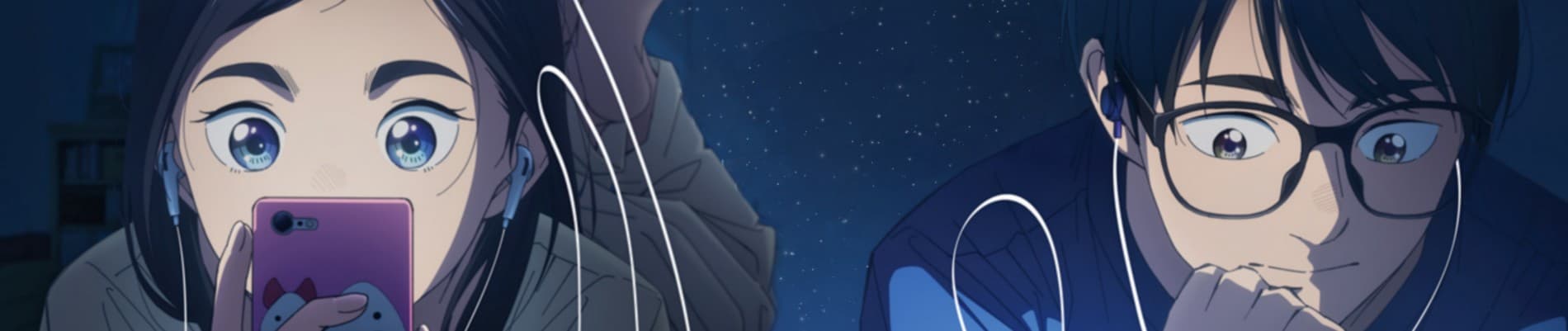
Insomniacs After School, or Kimisomu, is a solid high school romance drama with a surprisingly decent focus on amateur astronomy. The summary does not quite do it justice since it omits the show's focus on astrophotography as an activity central to its characters and plot. Kimisomu does not merely use the night sky and stars as a shallow aesthetic gimmick but actually dedicates a reasonable amount of time to the subject. Of course, it is still secondary to the focus on the relationship of our leads, but it is an integral part of the show's identity that helps differentiate it from others in the genre. That said, it does not quite get technical or focused enough for Kimisomu to be described as a show about astronomy or astrophotography. It still is, more than not, focusing on the relationship of its characters for most of the narrative.
As far as high school romance dramas go, Kimisomu definitely exceeds the quality of an average show in the genre. Yet even though the show excels at creating a mellow and intimate atmosphere when called upon, the overall construction of the narrative and characters are fairly by the numbers. Its greatest strength is probably the focus on the night, with our leads suffering from insomnia and the main activity they undertake being astrophotography. Nighttime scenes are a rarity in high school anime, with the focus mostly on school hours. Part of this is simply because it is rare to be out so late at that age, leading often to those few scenes after dark being used for drama. Kimisomu captures the more mellow and quiet side of being out late at night. A sense of calm you cannot find while the sun is up, and that feeling of being the only people awake at the moment with the rest of the world is far away. It leverages this to give scenes either a mellow, contemplative air when characters are silent or really heighten the intimacy of scenes when they connect. Yet the framing of the show can be a little heavy-handed at times with what it wants to convey to the audience, especially with the close-ups of expressions and blushing of the characters. While this is a hallmark of most romance and dramas, it comes on a little too strong with how early in the show it begins when the leads have barely met and with how frequently it is used. It serves to build romantic tension but can feel a little inorganic when used too often. The plot is on the idealised side of the high school experience, but it is still handled with enough grounding that it never comes off as fantastically juvenile. It succeeds in creating a fun origin story for their astronomy club, with the idea of having one's own private space at school in the form of their observatory clubhouse being incredibly cosy.
While falling squarely in mostly standard archetypes, the cast is still well-written, well-acted, and well realised, giving them an appropriate level of depth and believability. The male lead and primary perspective character, Nakami, probably has the most depth out of the cast. While the surface-level explanation for his irritability and insular tendencies is his insomnia, plenty more is going on beyond that. We eventually see much more of Nakami and how he is actually a rather passionate person who feels strongly about things he comes to care about. There is a good deal of subtly in how it is shown to the audience, with his more emotive side coming out gradually. Particularly through the early episodes with how he takes the astronomy club seriously even though most other people would have done the bare minimum needed to maintain their clubhouse. But as the series progresses, we see the more painful side of his emotional attachment and how it relates to his insomnia and overall character. While exploring the tension in someone who is outwardly reserved but extremely passionate on the inside is interesting, it often results in instances which feel like melodrama. Nakami's outbursts or emotive reactions do align with what the narrative and character work sets up. However, it still contrasts so heavily with his reserved side that it sometimes feels like overacting. In a few cases, his reaction felt so extreme that it even breaches the audience's suspension of disbelief. Though the show always manages to recover from this with ample breathing room in the more mellow and intimate scenes that follow, it still feels like more restraint would have created a far better grounded show.
On the other hand, Magari is a much more straightforward character and can even feel a little shallow at times since she falls squarely into character archetypes that frequently appear in anime. While there is little groundbreaking with the cheery, upbeat character that hides her sadness and anxiety to avoid inflicting it on her friends, it is still written with enough nuance and unique elements to give the series something deeper to explore. Even with many by the numbers character elements, or maybe because of it, Magari is highly endearing and is easy for the audience to be fond of. In particular, despite this being her first major role, Tamura Konomi's performance is excellent at capturing Magari's bubbly personality. There is always a risk that characters meant to be highly affable, like Magari, end up lacking flaws which severely detracts from their depth and believability. She does skirt close to this at times, but the audience eventually gets to see a bit of her more reckless and selfish side that dispels the worry. Though it is still relatively minor and only marginally explored, it is sufficient to give her a convincing level of at least potential depth. While perhaps not a completely realised character just yet, she is incredibly charming with the clear potential to become an interesting character on par with Nakami.
Despite the contrast between her and Nakami, there is still a great deal of chemistry between them. Even though the earnest girl drawing the reserved boy out of his shell is a well-trodden dynamic in anime, it is a classic for a reason. And in Kimisomu, it is well executed with the added connection of both of them sharing the difficulty of their insomnia. While they share this common experience and find some respite in each other's presence, surprisingly little is actually directly discussed about their insomnia between them. There is the potential to add significant depth to their relationship, but that can only be realised once they delve more into the causes of their insomnia and how they help each other through it. The physical aspects of their insomnia, like their ability to go about their day while sleep deprived, are also never really brought up after the first few episodes. It makes it hard to feel the magnitude of their impact on each other's well-being beyond just being generally positive. There is improvement in Nakami's sociability with others as the series progresses, but that is more of a development on the conventional character front than being shown to be directly related to his insomnia being eased. However, given the severe origins of their problems, it is probably more organic and convincing to have them only take small tacit steps towards this throughout the season. Being able to address it so quickly would have felt rushed and curtailed any future season's ability to dig into it more. The connection of their insomnia to astrophotography is primarily thematic since it is done to keep their club afloat rather than something they choose to do together since they cannot fall asleep. While that is mildly disappointing, Kimisomu does excel in capturing the feeling of astrophotography and stargazing in how introspective and even solitary it can feel. This is more so the case with the scenes of Shinomaru since she does her photography alone, and the framing really accentuates how small you feel against the vastness of the sky. It provides an excellent thematic contrast between the tranquillity of choosing to be awake in the dead of night for astrophotography and the anxiety or even terror of being forced to remain awake because of insomnia.
The supporting cast goes a long way in ensuring that Nakami and Magari's relationship does not feel like it exists in a bubble. Like our leads, most of the supporting cast tends to fall into fairly standard character archetypes, though still very competently executed. The most interesting member of the supporting cast is probably Shinomaru, though she does not get that involved with our leads despite being set up as their peer mentor. Given how she was established, it is disappointing that she does not have a more direct role in the story after teaching Nakami the basics of astrophotography. Shinomaru is an interesting contrast to Nakami as a more introverted person who is satisfied with the significant time she spends in solitude. But this comparison with Nakami, who clearly desires more connection with people despite his introversion, is still only implicit at this stage. With the current narrative focusing squarely on Magari and Nakami's relationship, it does not help with fleshing out either lead's character from other angles. The rest of their friends in the supporting cast face a similar issue of being relatively standard characters with minimal depth. What little is given is not delivered particularly well, especially in the case of Kanikawa, where her parents literally tell it directly to the rest of the cast and audience. Prior to that, there was actually some fairly organic and subtle development, but it was unfortunately abandoned for a clumsy direct approach. While Kanikawa risked being unlikeable and even petulant at times, it is saved by Lynn's voice acting rather than writing that deepened her characterisation. Anamizu, on the other hand, saw her character background better conveyed, but it was still a bit too on the nose with how literally show not tell was done, to the point where it felt blatant. Even if the stereotypical tomboy and mildly spoilt princess types are characterisations that lack any particular depth, they are least conveyed to the audience coherently and convincingly.
On the other hand, Ukegawa does not quite fit into any particular character archetype but, at the same time, seems to lack depth because of that. Given there are no established shortcuts to characterise him, little more is known about him from the start of the season to the end of it. While Ukegawa in that sense is a refreshing change from the usually very rough way male characters are depicted to support each other, it also means that he has very little depth to him at this juncture. Like most of the supporting cast, we know about his general character and some smaller quirks but not how it came about, any potential contradictions within it or specific reactions to certain things. The inclusion of Haida as something of an antagonist feels distinctly out of place here since Kimisomu is ostensibly aimed at the seinen audience. Although not quite a character that is an outright bully or something so childish and direct, he still feels like a cheap and quite juvenile way to antagonise Nakami for some drama. This is mainly due to the lack of any follow-up on any of the differences between them. Nakami neither loosens up after considering Haida's actions as merely a difference in personality instead of antagonism, nor does he reject Haida's suggestions as being something that is just not who he is. At this juncture, it feels like a character element that is left almost entirely hanging. Of course, some of this is understandable since Kimisomu is adapted from a manga that does not arrange its story or character arcs to fit within the confines of a season. That said, it begins to feel like perhaps too little was done with the supporting cast despite the focus on our leads paying off quite well in other areas.
Overall, Kimisomu is a solid drama romance, with the highlights being the nighttime atmosphere it excels at creating and some incredibly sweet and tender moments between our leads. Despite performing well above the average show when everything is put together, it is hard to give it an exceptionally high rating with how archetypical and even shallow some characters can sometimes feel and the occasional slide into melodrama. But personally, I found the atmosphere to be particularly powerful because of my own experiences with amateur astrophotography. That and the resonance with how the characters described their anxiety preventing them from falling asleep really elevated the show on an emotional level. While my personal rating is probably slightly beyond an eight, objectively, Kimisomu is likely closer to a 7.5 out of 10, though leaning towards the higher end. Hopefully, the show does well enough to warrant a follow-up season that can help rectify some of its flaws since they are largely to do with a lack of depth instead of them being core issues with how the series is constructed.
21 out of 22 users liked this review