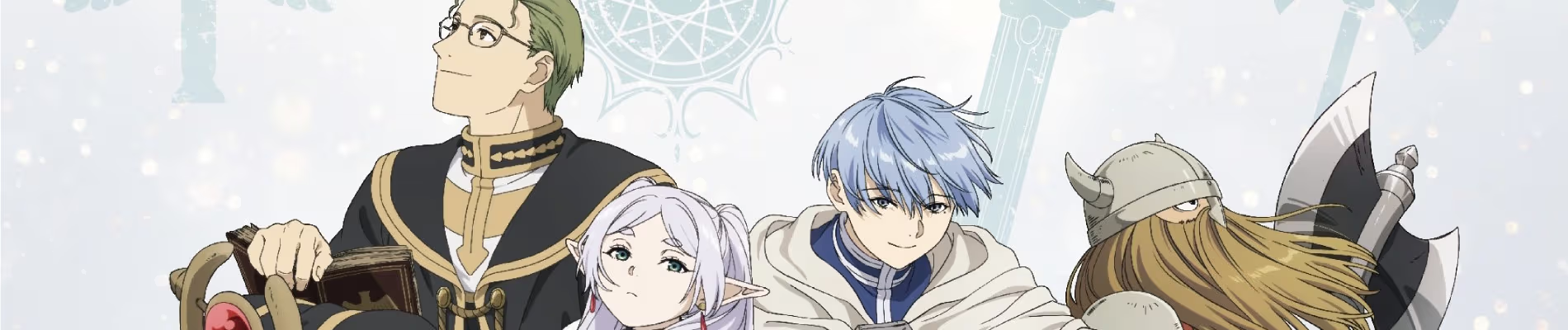


Frieren is nothing short of a sensibly grounded venture, despite its genesis taking place after the end of a journey. One which seems all too archetypal, familiar, and one-dimensional at first glance, yet manages to be just as compelling, nuanced, and human as the “now” once it patiently unravels its innermost secrets. Not merely in terms of complexity - quite the opposite on occasion - but rather how the decisions the series makes throughout its course defies infamous narrative traditions occurring within its genre at every twist and turn. This applies to the recurring parallels it draws to the past, although it’s just as remarkable to mention that viewing the story’s revelatory growth in self-awareness has never felt like a chore. Frieren emanates innovation because the way the world functions feels distinctly real in its own distinct way. It’s an insatiable mesh between refreshing simplicities, unexaggerated drama, and high-octane storytelling for when the moment becomes ripe. Episodic-esque narration fuels its sense of exploration, simultaneously being a humbling appreciation of the past, whilst gradually recognizing the invaluable treasure that is the present moment.
Each episode directly showcases a different adventure from the next, although every present dilemma holds “stark” correlation to Frieren’s memories as we evocatively live through them. Loosely tied scenarios on the surface, yet they are all meaningfully relational to each other. The chemistry, whether between characters or their individualistic relationships with the world, becomes systematically believable thanks to ideally simplified dialogue and natural social cues. Director Saitou’s grasp of interpersonal relationships and character dynamics can only be labeled as exquisite - a model example capable of being applied to Fern, Stark, and their distinguishable outlooks on life. The series encourages pure sensibility and depth through structural competence, avoiding common pitfalls within the carbon-copy fantasies we’ve become desensitized to.
The story’s undying sense of everyday simplicity enables its emotional moments to feel all the more grand, genuine, and memorable. Though, what I find most remarkable about its structure is that it gives you a plethora of reasons to deem its world as actually and believably intelligent - one worth taking seriously at every narrative development. However, this isn’t particularly in the context of showcasing an attempt at excessive mind-game displays or metafiction, but rather, in its unmatched intimacy. One that takes form through the moments in-between, capturing cherishable glimpses of the tale before, and after.
It’s as if those seemingly inconsequential moments are the ones Frieren, her companions, and potentially those beyond the screen, remain susceptible to overlooking its invaluable merit once they become memories. These memories are known to be taken for granted once time voyages without a moment’s notice. Perhaps this ultimately signifies the importance of creating them in the first place, as a means of being able to simply reminisce the joys and difficulties which have molded them into the heroic individuals they’ve been hailed as.
It is through the collective effort of MADHOUSE’s redemptive production - composed of its diverse, mystical score selection, flowy visuals, and organic cinematography - which ultimately enables its mastery over emotional transitioning. The shifts in tone are spaced and balanced out appropriately according to its themes, but it’s just as notable knowing one can praise the nature of the content, dilemmas, or even lighthearted fun we see the characters experience from time to time. The show has proven it doesn’t necessarily rely on dialogue to convey a telling message. Interactions are either preferably rationalized, thematically nuanced, or un-presumingly complex - a seldom feat among numerous titles today. It’s no doubt Frieren balances these elements throughout with unfaltering consistency.
The show’s exponential portrayal of Himmel’s contagiously transparent simplicity acts as an alternative to his archetype. And his transparency reflects the charm of his comrades and their adventure. Heiter’s un-priest-like personality is what makes him all the more genuine. Eisen, the frontline warrior, doesn’t hesitate to admit his fears and vulnerabilities in the midst of difficulty. They quite literally move in the opposite direction of what is expected of them - which is a refreshing sight to say the least.
In addition, the narrative’s method of imbuing comedic solace works in its favor. The soft-pedal, under-expressed gags are as contagious as Himmel’s conviction, converting redundant fantasy platitudes into what are essentially cherishable moments worthy of looking back on.
More often than not, the source of conflict varies by the episode or arc. Sometimes, the foe standing before them is none other than themselves, or natural disagreement among the party; other times, it’s the fleeting nature of time, or the inability to remember fond memories once age catches up. Even the changing seasons.
The atmosphere is more so organically comforting than it is fantastically romanticized. Consistent shots of medieval realism, and the interchanging folk scores play an indispensable role to this. It isn’t merely a medium serving its purpose of an inviting welcome; it allows one to truly engulf themself into the world in which the characters reside. Let it be mentioned the intentional choice of lacking visual color saturations aids the story in its attempt to humanize and ground itself.
The charm of its fantasy elements, particularly the magic system motif, lies within how its definition varies by the individual. Rather than for the purpose of shock value or one-note ulterior motives, it’s regarded as an instrument for characterization and occasionally its theme structure, and every episode explores this through variegating perspectives which incentivizes one’s investment. Even the differing predicaments we see the characters go through are rich in narrative consideration and thorough in layering its structure.
Beyond the technicalities, Kanehito Yamada’s opus is one derived from the privilege of introspection. There are innumerable thematic outlets within the show for one to resonate with, whether those emotions have been personally experienced or not. The world is as methodically crafted as its characters, reaching artistic realms far beyond what is normally expected from its genre, and I’d go as far as to say it’s managed to impart a profound sense of individuality. The story takes us through both ends of the protagonist’s imaginative revelations, dualistically linking to even the two-sided nature of time itself. We traverse through an ever-changing era, viewing man’s habitual adaptation to it.
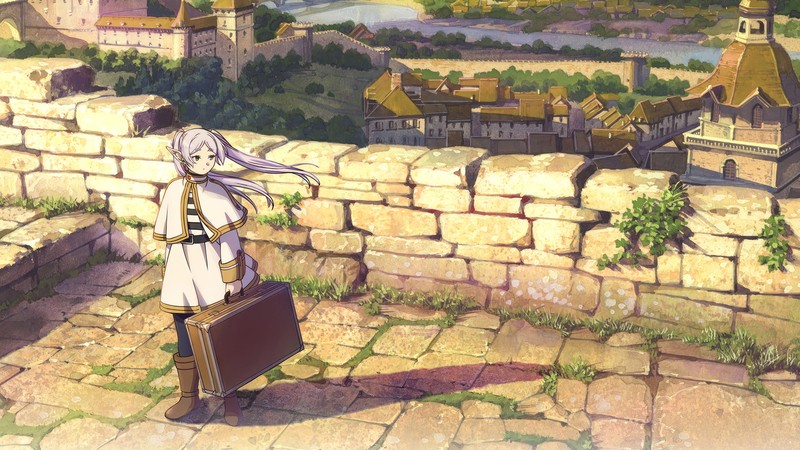
The essence of Frieren lies within its detours. Rarely does a story convey this level of narrative intimacy where the perception of time largely differs by the character; it is no different than an ever-changing fluctuation. And this is part of the reason why the show’s recurring callbacks to the past are completely different in nature from the traditionalized, often forced utilization of “backstories" we've become accustomed to.
These glimpses into the journey before stand as the other monumental personality of the show which ultimately completes itself. They aren’t mere means of exposition, nor are they overdramatized, redundant sob stories; they are homages to the passage of time - characterizing the lasting impact of past characters and memories left to the world and most vitally, the protagonist who’s known to have taken time for granted. To its innermost core, Frieren is a historical retelling of the past, and a simultaneous telling of the uncertain present. Dualistic tales, like yin and yang, which naturally compliment each other as two distinguishable parts of a whole.
These reminders, which live within Frieren, serve as proof of her companion’s undeniable existences; they were anything but mere superficial fairy tales. And going deeper into the show's web of thematically rich narratives, perhaps they were more believably human than we thought them to be.
Ultimately, discovering the inherent value of companionship exists within the ability of growing to thoroughly appreciate the memories which established it in the first place. Yet, it simultaneously requires the will of being able to embrace its eventual, bittersweet end.