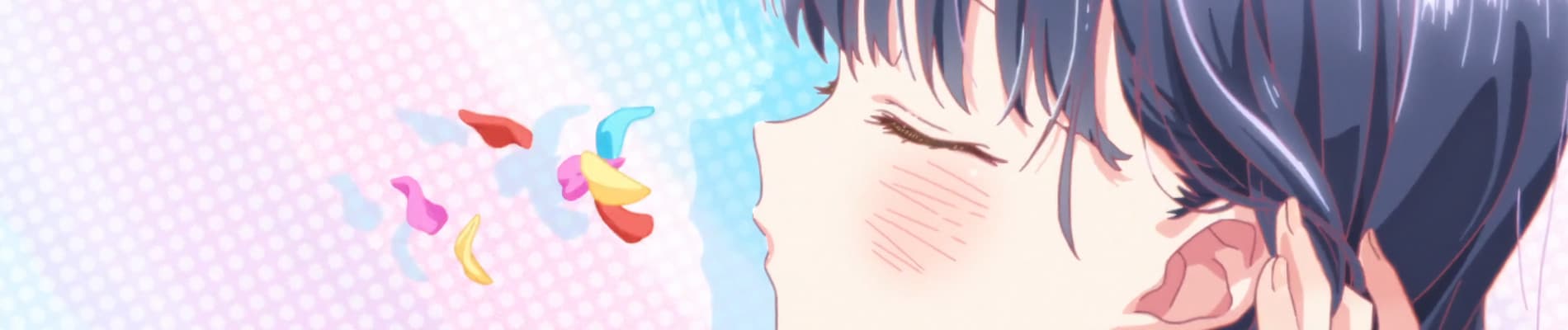
One of the most important footnotes in the romance genre is the prerequisite that every story must adhere to: the innate ability, the essential ingredient that is a touching personal narrative strong enough on its own merits so as to display a perfect handle on dramatic storytelling. Characters that are above all easy to root for as they grapple with a gradual progression, a complex maneuvering of their emotional developments, before synonymously arresting the viewer, us, in feeling something akin to passion, of true love. The Dangers in My Heart (or more colloquially referred to as BokuYaba) is one such story that meets every criteria imaginable in order to showcase the early years of adolescence, a touching story about two individuals heavily affected by the other, which in and of itself steers them to self-reflect and improve themselves for the better through no fault but their own intimate bonding experiences. It's not that far a stretch to say this is a genuine masterpiece two seasons in, thanks to a smart and resourceful adaptation by Shin-Ei Animation and mangaka Norio Sakurai's already poignant touch as a writer and as an artist brimming with creativity. Once you come across that diamond in the rough, that underrated gem, you'll never forget it.
BokuYaba stands out immensely (whether or not its first few episodes gave you the worst impression or subpar intrigue, the grievances vary) as a conversation starter unapologetic about exposing the ugliest, and yes, cringe, behavioral patterns true to life in every middle schooler's bizarre imaginary world. It's realistic to such a degree that people can relate to the feelings Ichikawa himself goes through. What makes the story's dunking down on its MC himself so innovating is its authenticity in depicting conceptualized notions about what expectations can do, as negatively and positively impaired as they are to relationships. Truly the "dangers" in our "hearts" (not even remotely sorry for the pun) can be recontextualized to form a deeper inside look at the insecurities, the apprehensive paranoia we feel when confronted with social interaction. We've no alternative but to deduce our own slanted purview of others, for fear of being ostracized or worse, viewed as less than when we're still on the starting precipice of growing up. Being frightful of actual change, pursuing connections that may or may not hurt you, so it's understandable to close yourself off from the world. And that's what makes its antithetical thematic message so paramount in challenging those obstacles.
Slow-burn romances can be counted with as many dimes a dozen and yet what encapsulates BokuYaba as a character piece is its dual perspectives owed to both Kyotaro and Yamada as individuals with their own issues, which perfectly round out their personalities wherein their romantic entanglements help each other reevaluate themselves and by extension their families and friends. It has the most apt form of natural, grounded development. The two are completely different polar opposites and their dynamic is illustrated in succinct fashion, shown to be just as good if not better in displaying the benefits of leaving your comfort zone. Paired with some of the most outstanding staff with the likes of genius composer Kensuke Ushio and scriptwriter Jukki Hanada as well as directors with firm handles on the romcom appeal (Teasing Master Takagi-san's Hiroaki Akagi) and you have a team that has more than enough tacit understandings of the material's internal strengths.
It's not every day you find a well-maintained production (while still rough when it comes to technical aspects like excessive lighting). Even the important scenes carry their integrity as artists well-versed in constructing a cohesion of color work, backgrounds and character models maintained with immediate visual fluency. Thoughtful characterization that's doled out in wholesome interactions, subtle nuances interlaid behind impactful music (let's not forget the show's amazing integration of the episodic title cards; they work their magic each and every time we hit an emotional moment). Voicework goes the extra mile. It's excruciating and painful following Ichikawa's inner thoughts and Yamada's burgeoning feelings, however relatable they are to similarly awkward teens, adults, etc. The list goes on and on.
Its masterful directing prowess, its visionary approach unrelenting in giving the duo's relationship its own graceful period of laughs and serious contemplation, allows itself to brave ever forward to an ending point satisfying for both readers and viewers. It's such a beautifully made show leavened with knowing what works and what doesn't in adaptation choices amenable to its audience. It covers all the finer points as best it can and I for one will cherish the newfound appreciation I had for this story and characters. Definitely one of the best watching experiences anyone could ever have. This is something really special. It'd be remiss not to give it the benefit of the doubt. Try it and it will surely move you to tears, just as it did to me. You won't regret it.
57.5 out of 60 users liked this review