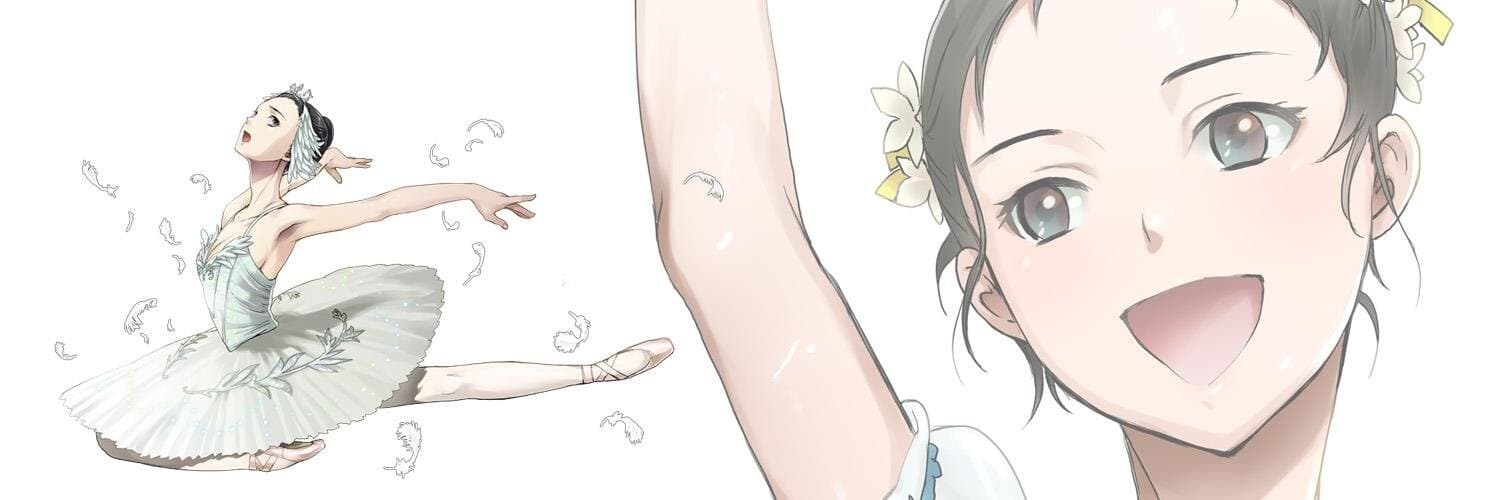

Kenrantaru Grande Scène Review
No Unmarked Spoilers
Amidst her NSFW work, Kenrantaru Grande Scène is clearly Cuvie’s pet project, where her interests intersect with her storytelling and drawing skill as a mangaka. This results in an extraordinary combination, albeit an unfortunately underrated one.

# Throughout the manga, Kanade's passion for dance and ballet is so vibrant it transmits itself to the reader, even if just a little
I once read somewhere that this manga is so well drawn in terms of depicting body motion and proportions that it was clear that Cuvie was experienced with NSFW, and in fact, she is known for it! I did not know this before reading Kenrantaru, but I certainly agree now that I have. The question remains: why is she known for her hentai manga, and not this?
In this ballet manga, the artistic beauty and clarity in the portrayal of the dance itself rivals complex action scenes, and it pulls you in completely, a feat I think is quite commendable for a purely visual medium. But my praise does not end with the art: the characters are wonderfully multidimensional, and even the secondary ones give glimpses of their true potential, of their hidden facets that probably won’t be explored: but only because of the main cast, which gets the deserved nuanced portrayal of their struggles, and, of course, especially Kanade, since this is her story mainly.

# Kanade and Shouko's bond is very wholesome, and certainly an highlight
Kanade dreams of being a ballerina, but that is of course not without its struggles, as with any dream, really. So Kenrantaru is mostly a coming-of-age story where Kanade pursues this dream relentlessly, but not so much so that the manga loses its grasp on reality. Kanade’s struggles are very much real, and they make sense. This is one of my main praise points for this manga: it never loses its grasp of reality and doesn’t fall into naive or unrealistic idealism, which frequently solves everything in the genre. What sparks Kanade into action is an unfortunate failure, and it is certainly not the only failure you will witness.

# Every character has its relevance, and is well placed in the story
The whole cast is great, all of Kanade’s peers are relevant to aid her growth and stand by themselves in their own stories and struggles. Everyone has a consistent personality and reasons for acting how they do. The occasional POV changes add a layer to this that shines light on the fact even more evidently, and lets you appreciate their thoughts beyond Kanade’s eyes. The relevant mentors/adult characters are interesting as well, as they exert influence and guidance over the main characters: as children, it is natural that they are shaped by the adults around them to a certain degree. This is not forgotten, narratively speaking.

# Sakura: the Privileged Rival?
Spoiler, click to viewclick to hide
There are no unnecessarily antagonistic characters, and yet the manga never shies away from portraying fierce competition (I’d give particular praise to the handling of Sakura and Evelyn, as well as Shouko to some extent).All in all, if you appreciate coming-of-age stories and have no qualms with ballet or literary classics (why would you?), this manga is most certainly worth a read. It is written in a shounen manner in terms of progression, but don’t let that label deceive you much; it is very nuanced and real even as the narrative stakes keep rising. The recommendations are filled with other ballet manga but if you like coming-of-age stories in general, I find it very hard to dislike Kenrantaru, if anything it might spark in you a light curiosity in regards to ballet. God forbid this manga being mentioned for all possible reasons as well, but if you liked something like Act-age, this is right up your alley too.

# Get pulled into Kanade's world and feel her struggles deeply as you root for her success
This is a really, really good manga, and it shouldn’t be as overlooked as it is. Give it a chance if you feel so inclined.
A word of warning: as of the time of writing, the manga is currently being released, with many translated chapters available. However, the official English localization only goes up to Volume 10 to the extent of my knowledge (the “other” translation, and a very good one at that, goes up to Volume 19). The official French translation is only 2 Volumes behind (up to Volume 22) and still being updated, unlike the others.