Kamichu!
a review by douveAtomique
a review by douveAtomique
Like a checkpoint in a video game, Kamichu! will provide viewers with a safe place to rest and heal their soul, far away from all the shitty self insert power fantasies roaming aimlessly out there like zombies in a post-SAO world. Even though the series is chock-full of cuteness that would put Hello Kitty to shame, it doesn't shy away from exploring more serious subjects - albeit in a very subtle and toned-down manner - like hard work, poverty and responsabilities, creating a complex and endearing slice-of-life story.
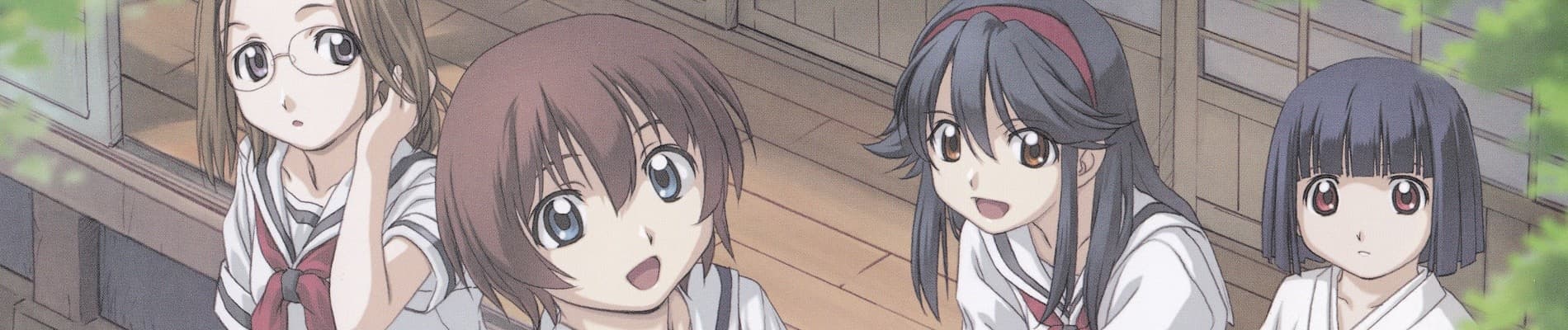
Uncle Ben would summarize Kamichu! with the iconic proverb "with great power comes great responsability", or in that case something more like "godhood oblige". Indeed, the anime narrates the struggles of Yurie, a shy middle-schooler who happened to become a god. She might be blessed with incredible power, but great power begets great expectations. Through her struggle to learn how to use her newly-found powers and how to balance her responsabilities with her school life, Yurie gets an early taste of adulthood. But she also learns how to be confident, kind and helpful, she comes to realize the importance of honesty and the value of friendship and memories. Yurie not knowing what kind of god she is (as there are many other gods in Kamichu!'s world) is an obvious reference to her not truly knowing who she is or wants to be, she is in search of her own identity.
Because its story is presented through the perspective of teenagers, Kamichu!'s world is coated with a layer of innocence and naivety that allows serious subjects to be explored in a lighthearted manner but also tends to create a clash of ideals between kids and adults. In an adult world, it's all too easy to lose sight of what's truly important and sometimes a shift of paradigm is needed to see things in simpler terms. This theme is present through most of the narration which includes a strong emphasis on Shinto religion. As a westerner, I can't help but be reminded of practices such as cledonism, a type of divination popular in Ancient Egypt and Greece which attributed special meaning to words, especially to those of children. The particular agency of children, who can see things in simple terms, is for example illustrated by Pollux, a Greek author from the 2nd century AD, who describes in his Onomasticon how the sacrifice of a ram in honor of Heracles was solved thanks to children. Because of a flood, the ram was not able to reach the sanctuary, so the children created a substitute of the animal by placing four twigs under an apple and two twigs on top of it: those were its limbs and horns. This story, despite probably being fictive, highlights how children's games and agency could solve serious issues in a ritual environment. Of course I highly doubt the author had Pollux's Onomasticon in mind when they wrote the story, but I'm sure the special place kids occupy in society is not exclusive to western cultures and it's no coincidence if Yurie is described multiple times throughout the show as naive and simple-minded, the way she thinks and expresses herself is more akin to a child than a middle-schooler. We see throughout the show how her words, imbued with this child-like innocence and simplicity, are able to create change in those around her, in particular adults. It gives them a new perspective and helps them solve problems in a very straightforward way. Maybe 'a new perspective' is not the right choice of words; the series indeed delves into another theme: memories. Several episodes are devoted to the exploration of characters' past, a return to a youth of simplicity and happiness. A youth that seems so distant, yet so easy to recapture. While our past experiences are what ultimately shape our identity, it's important not to forget where we came from. Thus, Yurie doesn't necessarily give people a new perspective on things, but maybe simply enables them to regain a sense of a much needed child-like innocence.
Apart from Yurie, the show also features two main side characters. These two, despite not being explored much, give an interesting balance to the trio: Matsuri, who took upon herself to rebuild the fame of her shrine, sees Yurie as a god first and tends to use her powers to attract customers while Mitsue sees Yurie as her best friend first and puts honesty before anything else.
Being a short series, Kamichu! unfortunately doesn't have much time to develop its side characters and its conclusion might seem a bit unsatisfying. Furthermore, the 4 specials are all over the place and don't seem to try to convey the same themes as the main 12 episodes. Despite these issues, Kamichu! is a very pleasant anime to watch. It'll make you smile, maybe laugh, and probably overdose on cuteness. The show's animation is very good and every shot includes a lot of small details. The setting of the show and its music also create a sense of nostalgia or melancholy that makes you want to go back in time and relive those sweet childhood summer days, aptly fitting its narrative. Kamichu! teaches us to love. It teaches us to be genuine, kind and respectful.
16 out of 17 users liked this review
