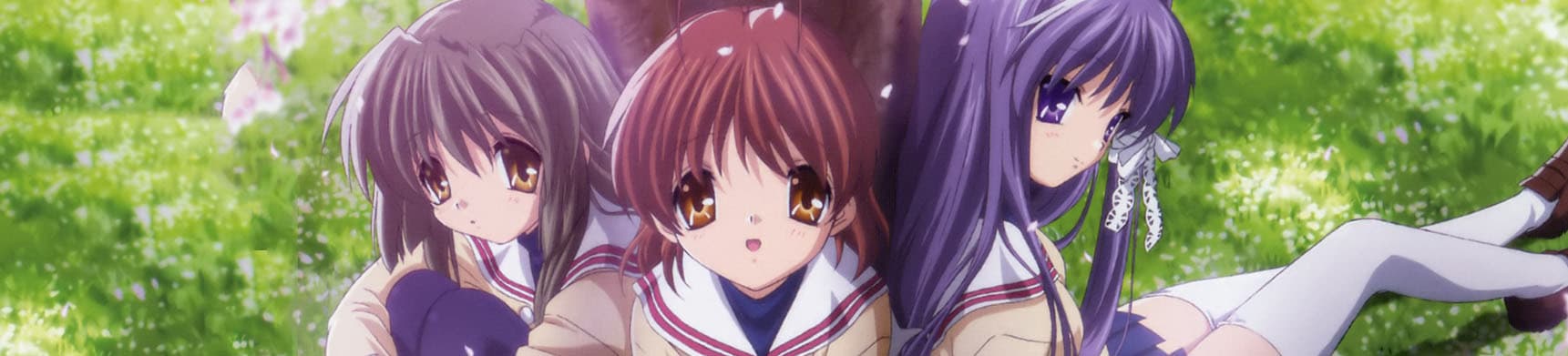
In my opinion, this season primarily serves to lay the groundwork for what will be narrated in the second season, establishing a small-town setting that will characterize the entire series, particularly for certain events in the second season. We follow the school life of Tomoya Okazaki, a delinquent who spends time with his best friend Sunohara goofing off; nevertheless, Tomoya perceives life negatively, in shades of gray, his life characterized by endless monotony. This sadness is broken by the encounter with Nagisa, a shy girl repeating the year and attending the same school year as the protagonist but not in the same class as him.

The objective that will characterize this part is to rebuild the theater club, facing various difficulties typical of school anime. Simultaneously with this main goal, there are some subplots that will lead the protagonist to take on the desires of other people, making his own happiness directly proportional to that of the people around him. This concept of shared happiness is one of the main pillars of the entire series.

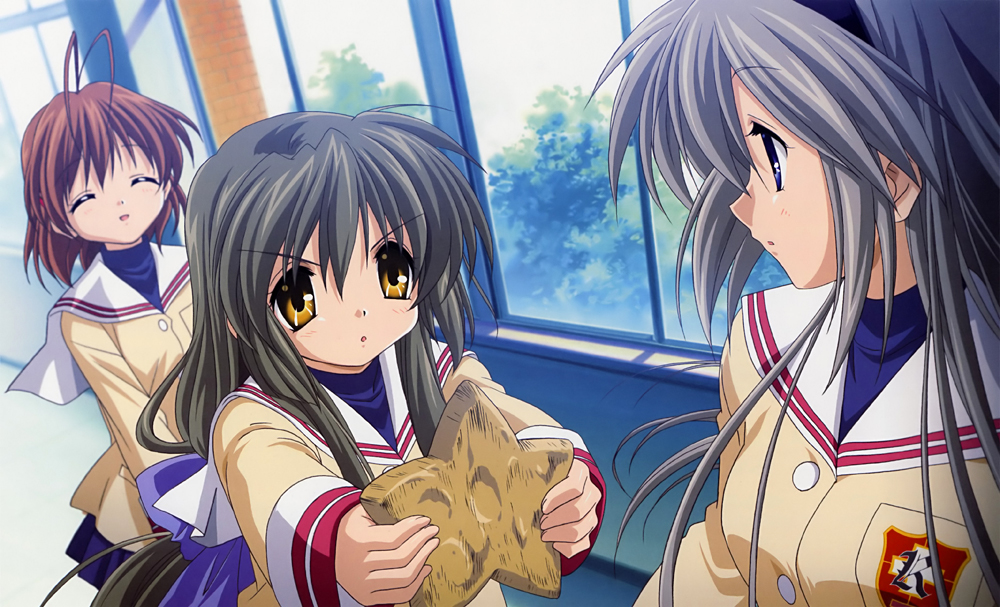
Among the various subplots, the one I preferred is definitely Fuko's, a girl of dubious existence who tries her best to make her sister happy. Despite her efforts, the results are scarce if not absent. Moreover, the effort and failure are emphasized by the pain the girl feels in her hands: the pain she feels will be shared among the main characters who will support her in achieving her wish, leaving a very simple but important message, that alone we are limited, but thanks to collaboration and teamwork, we can overcome the difficulties that come before us.
During the development of the events, a narrative in a parallel world is unfolded, depicting a girl alone in a world who will try to create beings to keep her company. The two worlds seem completely different, but at the same time, during the series, it is shown how they are actually particularly connected, especially during Nagisa's final performance, which almost seems to be aware of the parallel world.
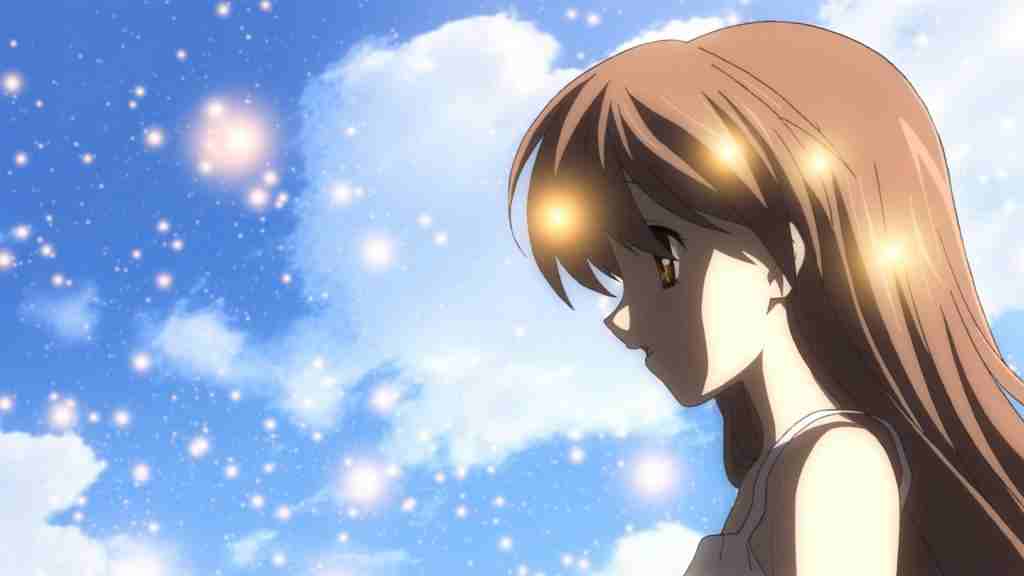
Since I mentioned Nagisa's performance, I will talk about one of the themes that fascinated me the most about the series, namely, family. This theme is addressed in all its facets throughout the story, from absent parents, like the controversial relationship between Tomoya's father and the protagonist, to the ideal family like the Furukawas.
In particular, from Nagisa's family, one can derive the true role of parents, who prioritize their children's happiness as their own and consider their children's desires as their own.

The romance in the work, like many anime of this type, is very slow, especially in this first part that mainly analyzes the "falling in love" phase. Additionally, Nagisa is not the only girl interested in the protagonist; therefore, it is not a work suitable for those looking for an anime that deals very explicitly with love with more direct behaviors. Furthermore, the work is adapted from a visual novel that explores various romantic routes. Only Nagisa's route is present in the anime, but there are OVAs for the others.

The soundtrack is super impactful and remains in the viewer's mind long after watching the work. As for the animation, it certainly shows its age, but I believe it is still completely enjoyable even today, particularly due to a very distinctive drawing style and graphical style that managed to capture my attention remarkably. The huge eyes, which initially bothered me, slowly made me fall in love with them; furthermore, they represent the simplicity of the anime excellently. From a comedic standpoint, it finds its focal point in the repetition of some comic situations, often very simple but, in my opinion, very effective in eliciting a smile from the viewer.
Many people criticize the "magical" aspect of the work, but I believe it is quite sensible since it doesn't seem to be the authors' goal to fully immerse the viewer. Moreover, the unrealistic elements are often present and therefore did not bother me during the viewing.

27.5 out of 29 users liked this review
