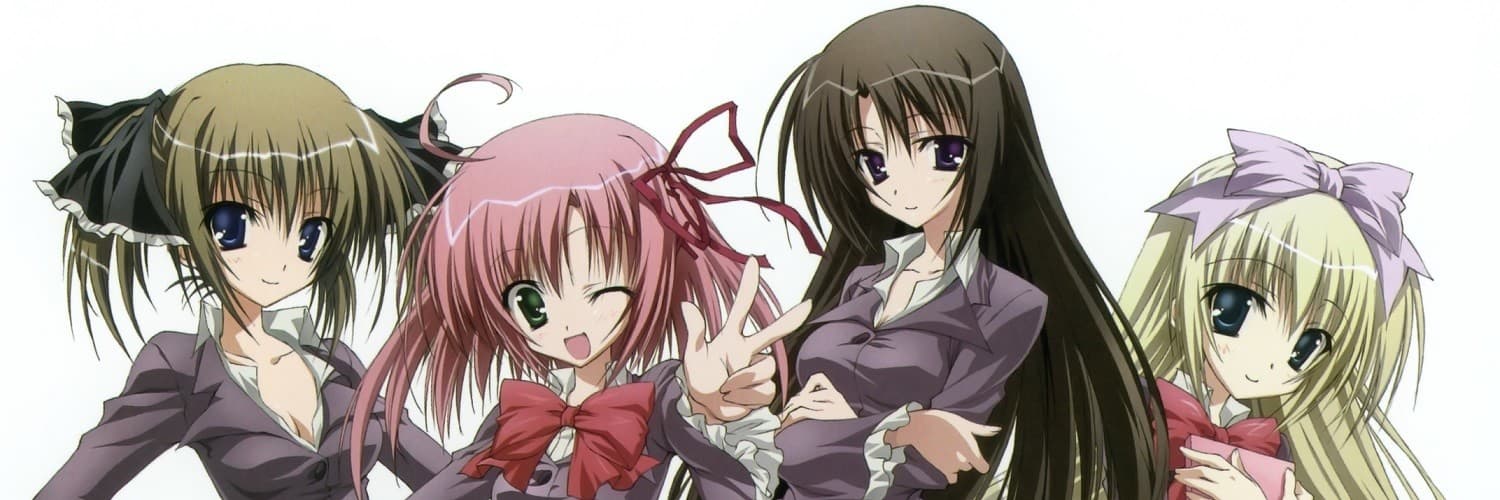
Anime is full of grand adventures, epic tales and profound stories. It has the ability to take you to a completely different world. Yet, sometimes I just can’t be bothered with that. Sometimes all I want is to turn my brain off and laugh at some goofy people goofing off and being stupid. Seitokai no Ichizon is the perfect anime to lay back, relax and chill out to—it’s cosy, silly and light-hearted, and, honestly, I just can’t get enough of it.
In the very first scene of the first episode, “Understanding the differences in media” is written on the whiteboard. The characters joke about how they can make the anime more appealing than the light novel, with some self-deprecating jokes along with it. Out of curiosity, I decided to actually investigate the differences in media by reading the first volume of the light novel. While the light novel definitely has its appeal—one that’s slightly different from the anime—I think the anime’s funnier. The ‘difference in media’ I observed was the sheer power of visual comedy, voice acting and comedic timing. The anime breathes life into the interactions by adding so much energy and liveliness that’s only really possible in an audiovisual medium. On top of that, I noticed how the plot was shifted around a bit. Rather than adapting the story one-to-one, they took bits and pieces and mixed them with others, with different contexts, to make it flow a little better. So, I have to say, the anime and light novel did help me understand the differences in media. Thanks for bringing it up, President!
One of the big reasons I decided to watch this was that it’s a 2000s anime. I realised that I hadn’t watched many older anime and wanted to broaden my horizons by branching in that direction. Now, it’s very clear from the art-style that it’s an older anime, but I don’t mean that in a bad way. Older anime have a certain appeal to them that’s hard to describe. Although I’d say animation quality has improved over the years—especially in action scenes—I might prefer the character designs and style of 2000s anime. For the record, that’s not nostalgia speaking. I was a little poopy baby boy when the anime came out so I can’t say “those were the good ol’ days”. Well, peeing all around the house probably was the good old days, but that’s not the point. Despite not having experienced anime in the 2000s, there’s a particular charm to them, similar to that of a childhood summer. With the art-style and general ‘vibes’, the anime radiates that feeling and makes it so incredibly endearing.
The anime revolves around the main character, Sugisaki, and four other girls that he wants in his harem. Every episode consists of them sitting in the student council room talking, chatting, goofing off, wasting time, erm… that’s about it…? It’s as close to a sit-com you’ll get in anime (I think? I’ve never actually watched a sit-com). Slice of Life is one of my favourite genres, so I love this kind of dynamic, but I’d imagine a lot of people would be put off by this. Moreover, there really isn’t much conflict at all. Stories normally centre around conflict, so without it you’d think it would just be boring. But, slice of life seems to be the exception, for some reason. This anime is stress-free and never takes itself seriously, which is nice every now and then.
One of the funniest things about it is how self-conscious it is. It might even be the most self-conscious anime I’ve ever watched. I mean, even in the very first scene that I mentioned before, one of the characters read a review that says ‘the story’s the same and nothing goes on’, taking a dig at itself. Not only that but it’s pretty much a parody of harems. It realises how silly the idea of a harem is, so it doesn’t take it seriously at all. It’s so goofy and ridiculous that it sometimes feels like a parody of anime itself. It knows exactly what it is and doesn’t try to be anything it isn’t. Something I noticed around half-way through was that they change the lyrics to the ending each time. And each time, it’s complete gibberish. Utterly random and super silly. In episode 11, the ending is the President mouthing off about how great she is and how you must vote for her for the whole ending. Sometimes the ending has the voice actors laughing at themselves, forgetting the lyrics or singing out of sync, and they kept all of that in. Now, I don’t know about you, but I think the voice actors had a lot of fun with this anime.
Something that stands out is the references. I know Gintama is supposed to have a bunch, but I haven’t seen it yet, so this anime probably has the most I’ve seen in an anime. It mentions Naruto, Gurren Lagann (even kind of spoils it), Haruhi, Index, Fullmetal Alchemist and even freaking Metal Gear Solid. I can’t remember if it was in the anime or light novel, but one of the lines is, “Don’t speak until Hunter x Hunter is finished!”. If Sugisaki took a vow of silence and became a monk to obey that, he still wouldn’t be able to speak (please finish HxH, Togashi, I’m begging). Also, they reference the light novel’s publishing company a bunch. They go so off the rails with the references that they often have to censor themselves to avoid copyright, which, in itself, is pretty funny.
What’s more, the anime breaks the 4th wall more than any anime I’ve seen too. The first scene I described is one example of that. But throughout they constantly say how Mafuyu’s characterization is being ruined by her BL love, or how Minatsu being good at math doesn’t fit her character, or how having a meeting about what to do with student absences is too basic and wouldn’t be fun for the viewers to watch. It takes all the rules about immersion and throws them out the window for the hell of it.
Now, in terms of the actual comedy, it is hilarious. The skits and gags are utterly absurd and it never takes itself seriously. It’s fast-paced with ridiculous situations, great one-liners and goofy slapstick. It’s not necessarily adult comedy, but definitely not pee poo childish humour either. The lack of emphasis on immersion and realism allows them to do the most nonsensical and stupid things. The bread and butter of the comedy is the straight man, funny man act, where one character will say something stupid and the other will retort, addressing how little sense it made. But the characters aren’t type casted into either role—it usually changes to fit the situation. Anime usually has a ‘comfy’ type of comedy as opposed to other media, for me at least. Though Seitokai no Ichizon made me laugh out loud time and time again.
The characters themselves are quirky and hilarious. Each with their own unique qualities and flaws, such that you can simply put them in a room together and it’ll be hilarious no matter what they do. Despite lightly fitting into certain character archetypes, they each have plenty of aspects that distinguish themselves from that and make them lovable by their own merit. The anime drops us in with them already being friends, so they’re close to each other from the beginning. This lends to the comedy involving each character teasing or making fun of the others a lot of the time, which is possible because of how quirky and goofy they inherently are. It reminds me of a bunch of teenagers messing around and mouthing off to each other, which is what they actually are. But it really does capture that youthful dynamic of being so rude and horrible to each other, in a loving way. They can only do that because of how close they are.
Despite how much they tease and poke fun at each other, the anime makes it clear how much they genuinely value their friendship. They truly cherish the time they have together and the safe space they’ve created in the student council. And whenever necessary, they stand up for each other and have each other’s backs. As cheesy as it is, that’s a true friendship being portrayed.
Comedy is such a powerful tool, especially with how it can contrast seriousness. Don’t get me wrong, it’s mostly jokes—the author even said it’s “90% jokes and less than 10% serious”—but there are a few moments where it strips back the goofiness and has some thought-provoking scenes. There’s a scene where they’re in Tokyo and watch the sunset silently together, and somehow it’s really beautiful. A few scenes like that are scattered here and there, and although they’re not what stands out in the show, they’re rather impactful because of how rare they are.
It’s hard to really criticise a show that doesn’t take itself too seriously. I would’ve said that the interaction between the girls was lacking, but then there was an episode when Sugisaki got sick and it was just them, and they held out together great without him. I suppose it could be lacking some climactic and memorable moments, but I’m not too hung up on that.
Overall, it’s so lovable, silly, hilarious and has some great moments shining through. I’m looking forward to season 2 of this, which is hopefully just as good. 9/10.
13 out of 13 users liked this review