Chargeman Ken
a review by hsch96
a review by hsch96
**Spoilers for Chargeman Ken! and the 1985 movie *Brazil***
Chargeman Ken is an anime unlike anything I have ever seen, in that it comes off as a Brechtian play. It is incredibly good at putting mediocre episodes in between the completely unhinged ones, like the pickled ginger that comes with sushi, to make you lower your guard again and increase the effect of the next piece; and I think that this exact mixture of involuntary contemplation and incredulous stupor is necessary to discover its subtextual message. Even the animation and the music do everything in their power to break the immersion in the A-plot and annoy you as much as possible, so you begin to look behind the curtain (There is even a liberally used track that canonically makes the listener go insane).
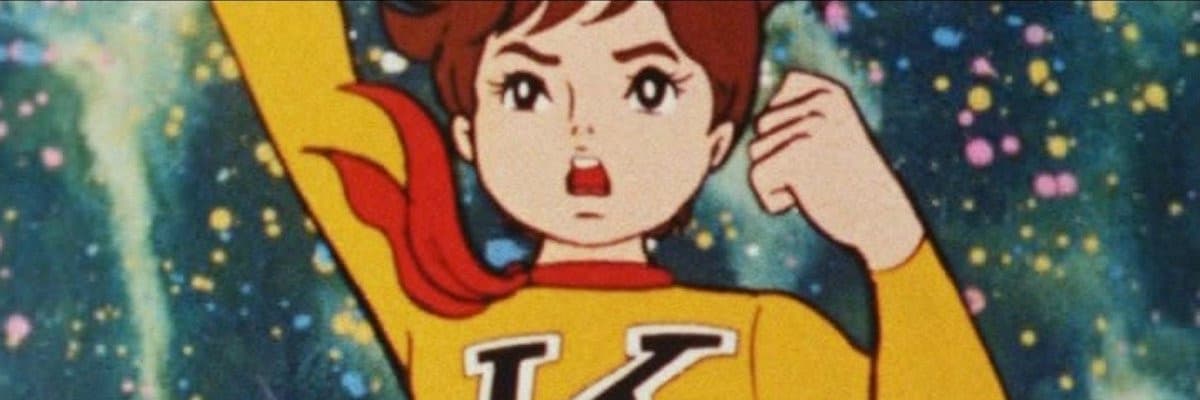
As we embark on our journey, we are greeted by Ken, the ostensible protagonist of the series. He lives a happy life in future Japan with his mom and his dad who is a doctor, his little sister, and his clumsy robot. Ken's paradise is only threatened by an alien race, called the Juralians, who attempt to supplant humanity by taking over the world. The dastardly Juralians threaten human society in some way, Ken transforms, desintegrates them using a beam weapon, and the day is saved (for now). This is the plot of almost every episode, and on a surface level, the show is a monster-of-the-week action flick where the main appeal is to see what wicked design the Juralians have come up with this episode.
But as the episodes go on, the whole thing becomes a bit silly (like with all the classrooms in Japan being packed into a single building), and the always-same OP, ED, and canned transformation sequence starts to hamper your enjoyment of the action and kick the analytic part of your brain into gear. Then, there is an episode where the picture that has been established suddenly cracks. A meteor rushes towards the Earth from outer space, and instead of cackling gleefully about humanity's impending doom, the leader of the Juralians offers his help to deorbit and whittle down the meteor, and actually goes through with it! Hold on, weren't they, you know, bad guys? How reliable is this narrative anymore? The next few episodes are mid slop, so you are given some alone time to ponder these questions.
Over time, social-political elements are introduced, especially as the show goes into other problems like food shortages, poverty, or corruption. But strangely enough, even though those issues are known to be systemic, they are discussed as though they were brought on by some group of Juralians that has to be eliminated. Even when a more popular boy than him appears at Ken's school, he is revealed to be a Juralian in disguise. Hold on, didn't we hear this somewhere before? Let's look at some of the things the superficially apparent story of this series does:
Though this may appear innocuous at first glance, these are in reality the 14 defining characteristics of fascism outlined by Umberto Eco. By fighting against what he believes to be an existential threat, Ken is unwittingly, though by no means accidentally, transformed into the ideal fascist supersoldier battling an increasingly strange and inconherent external enemy to uphold internal stability. Over time, Ken shows his growing disrespect for human rights himself every time he fires at Juralian vessels he has to assume contain innocents and hostages. And once this is revealed, the future doesn't seem so utopian at all: In the penultimate episode it is shown that every facet of human life hinges on a central computer system that cannot be circumvented and has no backup, meaning that whatever instance controls these computers exerts dictatorial, even tyrannical power on everyone else's feeble existence.
But, in a twist that may have gone on to inspire Terry Gilliam's similarly eminent classic Brazil, the actual governing entities are anonymous; the only thing we get to see - albeit in excruciating detail - is the operation of the immediate executive force, be it Brazil's all-enveloping bureaucracy or Chargeman Ken's symbolic and militaristic displays as a führer figure. Fittingly, this leads to another question both of these works pose to us, Brazil more overtly in its biting satire befitting of Monty Python's animation director; Chargeman Ken more subtly in its distinctly circumspect Japanese manner: Who is really to blame for the attacks?
Suddenly it makes sense that every classroom in Japan would be in the same building, despite the horrifying security implications an actual Juralian attack on this building would entail, that despite possessing overwhelming scientific advantages and vastly superior firepower they would go for underhanded, convoluted machinations all involving extremely mundane episodes in the life of this one specific boy, and that after the complete extermination of the Juralian race during the series finale, no attempts are made to explain how this final solution actually solves any of the problems from which Ken or humanity itself were suffering.
In contrast to the bland A-plot from which to escape, the subtext is brilliant and refreshing: You, the viewer, are put into the shoes of a fascist believer who slowly, through a state of introspective zen masterfully interrupted by sporadic clues and moral wake-up calls, manages to free themself from successive layers of delusion about the regime and their own role in it, despite everything that was taught and promulgated to them as unquestionable truth on a meta level. Chargeman Ken! might just be the antidote to fascism.
25 out of 26 users liked this review
