
This review is spoiler-free.
〈 𝘈𝘴 𝘴𝘢𝘵𝘪𝘴𝘧𝘺𝘪𝘯𝘨 𝘢𝘴 𝘢 𝘧𝘪𝘯𝘦 𝘣𝘢𝘯𝘲𝘶𝘦𝘵... 〉
Fantasy as a genre has become something of a crutch over the years. What was once a banquet of ingenuity and a feast for the imagination, full of wonder, magic, and otherworldly creatures, has now become nothing more than a shadow of its former self. Too many stories barely nibble around the edges of the genre's potential and serve the exact same old, reheated, and lukewarm concepts to the viewers over and over again. However, it's not all doom and gloom. Even though the number of bland, monotonous, and cookie-cutter products labelling themselves as fantastical is constantly growing, there's still hope for the genre. This is precisely where Dungeon Meshi comes into play, as it repeatedly demonstrates how much flavour the fantasy genre has within its insides and how delicious its content can be if you give it enough attention, care and time. Though, on the surface, the show seems like your average, run-of-the-mill, isekai-esque mishmash of ingredients with no interesting tricks or twists up its sleeves, we quickly realise that's not the case here. There's much more to it beneath its unassuming appearance and rough texture.
It's the very foundation of the anime that's its most delectable feature by far. Dungeon Meshi doesn't shy away from its Tolkien-inspired roots, D&D-like backdrop, and RPG-esque framework. __Instead, it displays them proudly like a chef boasting a Michelin star. However, rather than relying on the worn-out, well-known, and more-than-obvious tropes and concepts to do the trick without doing anything noteworthy, it thinks outside the (lunch)box in a delightfully fresh and spicy manner. You see, my dear reader, as far as other stories are concerned, they very sporadically (or never, for that matter) explore and examine the ins and outs of the ancient, monster-riddled monuments. Typically, these places are merely used as grounds for scavaging precious loot from bygone civilisations, exterminating mythical monsters, or exploring for the thrill of it; nothing more, nothing less. Sure, we might get a lick of their backstory, learning how they came to be and what they were in the past, but this is often done in a shallow, sterilised, and undercooked manner that produces more questions than answers. "Dungeons are just dungeons, as simple as that" is the conclusion many come to. But is that really all there's to them? Nope, not at all. Even the dullest, dreariest, and dumbest of ruins can be successfully transmuted into magical, fascinating strongholds filled to the brim with intoxicating mysteries, effervescent corridors, and lavish surroundings that'll punch you in the gut and leave you hungry for more.__

So, how does Dungeon Meshi dish up the secrets of these ancient mazes? That's quite simple, really: by having its protagonists chow down on the fantastical beings and animals they slay along the way! Yes, that's the entire premise of the series. It might sound silly, gimmicky even, but it's surprisingly not just that. We're not merely supplied with 20 or so episodes of non-stop monster munching with nothing of substance sandwiched in between. As unique as it sounds, the premise alone wouldn't make the anime this entertaining, endearing, and enchanting. Thankfully, the mere act of slaying otherworldly organisms and transforming their bodies into gourmet dishes is just the appetiser. There's a whole lot more on the menu. The real secret sauce is the show's mouth-watering, hunger-producing knack for breathing life into its setting; whenever the characters reach a new layer of the dungeon, they're greeted with a completely unique climate, atmosphere, and vegetation. Early on, they wander through cosy, welcoming and rather unassuming environments that seem harmless at first glance. For instance, one of the initial levels is entirely comprised of trees and nature-inspired enemies. Although it's still part of the titular building and shouldn't be underestimated, the way it looks doesn't instil a sense of danger within us just yet. In a way, we can tell we are merely stuffing our faces with an easily digestible lunch, waiting for the main course to burst onto the scene and spice things up. Soon, our wishes come to fruition; the further we descend, the harsher, more vicious, and increasingly exciting the wretched monument becomes. One level is dominated by bodies of water full of aquatic enemies that force the protagonists to cook up creative solutions to deal with these obstacles. There's a castle level packed with haunted paintings, treasure monsters, and moving armour, where even a single piece of furniture could be a trap waiting to bite. Then there's a gigantic ghost town oozing with eeriness and uneasiness. There's even a level completely covered in snow and ice, which will surely send a shiver down your spine, both figuratively and literally. With that said, it's not just the dungeon's multi-layered structure that made me fall head over heels in love with it; many smaller elements add even more flavour to the structure, thus making it feel much more lived-in than it looks. For example, plenty of spots are created to allow adventurers to rest, restock and reorganise their freshly obtained loot. In a place bustling with people of different kinds and backgrounds, it only makes sense that they set up campgrounds to better prepare themselves for the lower levels or trade with others for food, money, or equipment they may be in dire need of. It's an extremely trivial and insignificant detail, yes, but it's tough not to appreciate such cool features.
Additionally, every nook and cranny of the dungeon is home to inhabitants who are as different as apples and oranges. Monster A lives only on Level X, Monster B is found exclusively on Level Y, and Monster C only roams the depths of Level Z; this simple concept creates a habitat that feels self-sustaining, self-developing and harmoniously cohesive. While a lot of tales toss the fiercest monsters into the lower levels of their respective ancient constructions, they rarely chew on the consequences of these creatures' presence. In Dungeon Meshi, the absence of a smaller fry leads to a shortage of medium-sized monsters, which might force the bigger beasts to stray into other parts of the labyrinth in search of food. I wholeheartedly adore this detail because it subtly and intriguingly mirrors real-life food chains and represents how an organic animal kingdom operates. When a predator notices its usual prey is scarce, it expands its hunting grounds in search of other means of nutrition. It's as logical as it's satisfying, and I'm all for it. All of this makes the ecosystem seem tangible and realistic, without doing anything out of the ordinary. Yes, in a vacuum, these elements might not seem that impressive, but if you take a step back and look at the entire picture, you'll swiftly realise that without them, the dungeon—the star of this cooking show-like narrative—would be a rather uninteresting, drab and boring location. But hey, a fantastic foundation like this is only a part of what makes this series as full-bodied as it is.
So, what about the plot? What's simmering beneath the wacky premise? Well, like I mentioned earlier, eating monsters and exploring the dungeon are just parts of the storyline. In a way, they're the ingredients of the anime's body that put it on the map and set it apart from the competition. To be honest, the plot starts off rather slowly, like a pot warming up on a low flame. We get to know the characters, understand the situation they're in, learn about their goals, and see how they plan to tackle them. The episodes go by, and they tend to follow the same formula of goofing around, fighting, and cooking with some variations in the actual plot progression. Nevertheless, this somewhat playful facade quickly melts away, and the show begins serving us genuinely impactful content, both emotionally and conceptually. Suddenly, we're not just watching a fantasy rendition of MasterChef, but a thrilling quest to uncover the mysteries surrounding the place, its creators, and what can be done to keep it in check, while trying to save one of the main characters' companions from the grisly fate they suffered at the hands of a red dragon. This massive change in tone and vibe may leave some viewers gobsmacked and be incredibly confusing to others, but, all things considered, it's quintessential to keeping the series excitingly fresh and introducing tangible stakes into the story at hand. For all intents and purposes, these moments of heightened seriousness and intensity not only allow the viewers to savour the setting and the various concepts that populate it in a slightly different, richer coating but also add much more gravitas to everything that occurs on the screen. While yes, Dungeon Meshi contains a few pet peeves of mine like healing and resurrection magic, they are not as disruptive and detrimental to the experience as they initially may seem, as there's a lot more nuance to the whole magic system. Healing actually hurts, and being brought back from the dead has its own set of consequences and drawbacks that depend on a plethora of circumstances. Overall, the show triumphantly finds its emotional footing, and it promptly engrosses you in the story it aims to tell; it balances light-hearted charm with darker, more serious moments in a way that's quite sensational and sparkling.
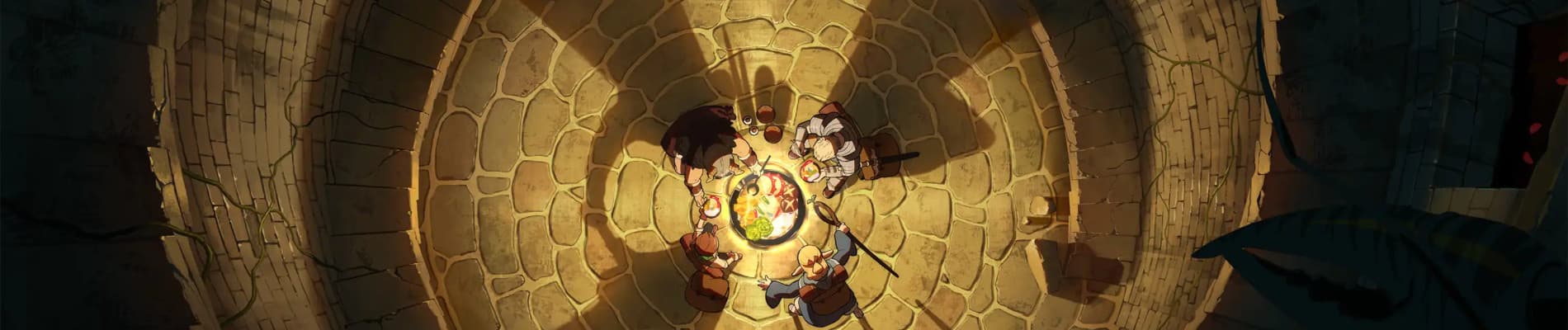
However, I feel like the series' plot wouldn't work as well as it does if the characters didn't carry it on their backs the same way skilled chefs are able to bring out the best in their kitchen team. Laios, Marcille, Chilchuck and Senshi each bring something unique to the table and are fully-fleshed individuals with their own quirks, easily distinguishable personalities, backstories and motivations. While they may start off as a walking-talking collection of tropes or gimmicky characteristics, as time goes on, Dungeon Meshi makes sure that they all get their moments to shine and develop into authentic and relatable people. Sooner rather than later, the characters stop being just a bunch of lovable meatheads and become flesh and blood. You immediately become attached to them, cheerfully following their antics, appreciating their squeaky-clean chemistry, and feeling like you're a part of this family-like group of flawed people who care greatly about each other. It's that warmth that really pulls you in and doesn't let go. Much like a hearty campfire and a homey meal that relaxes your body after a challenging trek, these seemingly mundane characters and their everyday adventures are what truly make this feel so cosy, comfy and comforting. They're what makes Delicious in Dungeon really delicious.

Naturally, a great narrative deserves to have only top-shelf production values at its disposal, and Dungeon Meshi's visuals and soundtrack definitely fit those criteria. When it comes to the various tracks that inhabit the scenes, they fulfil their role rather well. Sure, there might not be any standout songs in my eyes, but none of them are ill-fitting or distracting either. The opening themes are slow, sweet, and deliberate, which perfectly embody the sense of friendliness, companionship, and love the cast of characters radiates with. On the flip side, the endings are either cheerful and celebratory (the first half) or sombre, melancholic, and oddly nostalgic (the second half), setting the mood just right. Lastly, the various insert songs we hear over the course of the show's run give off a strong fantasy vibe that really nails the tone at every turn. In other words, the soundtrack is sweet, inoffensive, and does its job quite nicely.
On the other hand, the visuals are where all the juices are, and they couldn't be better. The colour palette is downright gorgeous, with a myriad of vibrant, warm, soft, and almost pastel-like hues that immediately and effortlessly immerse you in the vast, glamorous world of magic, monsters, and meals. The same applies to the art style. Though it may seem quite mismatched or generic at first, it uses its straightforward, fascinating lines and designs to produce some genuinely striking imagery. The background art is gorgeous to look at, and every single centimetre of the dungeon's structure oozes with personality and life. The monsters' designs are compelling and eye-catching, the various locations spread throughout the dungeon are full of this majestic, adventurous atmosphere, and the character designs are instantly recognisable and memorable.Of course, the animation is what ties all of it together, and it's genuinely competent on all fronts. It's fluid and expressive to such a degree that even the most mundane and action-deprived scenes are somehow a treat to watch. Additionally, the camera work is wonderfully dynamic whenever a situation calls for it; the editing doesn't allow for even a second of boredom to appear; and the lighting further enhances the ambience of the eerie dungeon. All in all, each component of the visuals comes together to produce some truly amazing, screenshot-worthy shots and scenes and they make the already comforting experience that much more worthwhile and exceptional.
That was a mouthful, but I hope my ramblings at least sparked your interest in the show or allowed you to look at it with a fresh perspective in mind. There's a lot to love and admire about Dungeon Meshi. Certainly, it's not perfect, but the elements that are praiseworthy, amazing and entertaining fire on all burners, and provide us with a hearty helping of whimsical, heartwarming, and nutritious content that'll stick with you for years to come. You can feel with every fibre of your being that it's made with love, talent and passion, and not churned out like yet another mass-produced slop that we see every single season. In a nutshell, Dungeon Meshi is a genuinely sweet and charming surprise I didn't expect to love to such a degree. From the phenomenal worldbuilding seen in the dungeon's layout, ecosystem and food chain to the joyful, wholesome and endearing relationships and interactions between the characters, this series time and time again proves that confidence is key, and even the most unassuming of textures can reveal a wonderful, one-of-a-kind flavour when you're willing to dig in. It's an incredibly lovely experience, and you should have a bite as well.
Bon Appetit!