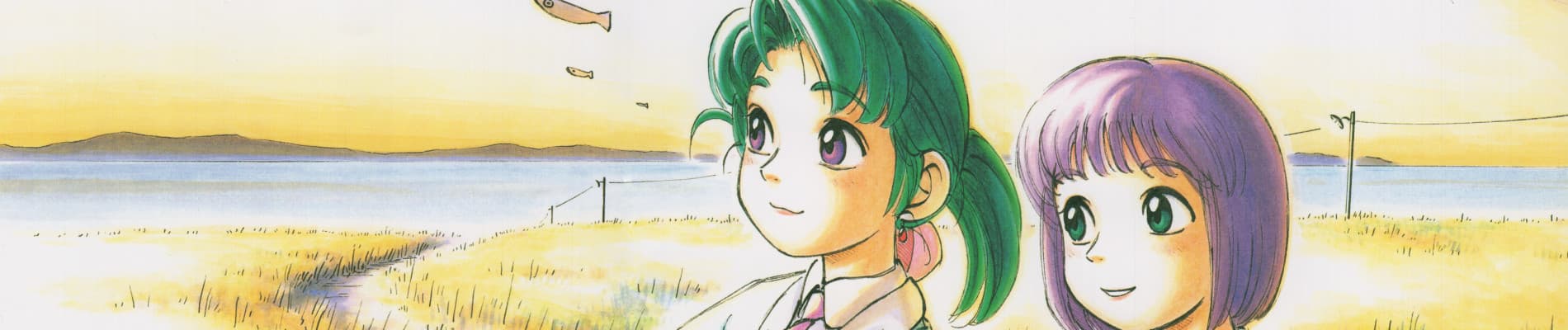
This is the way the world ends
Not with a bang but a whimper.
A catastrophe is characterized by tremendous explosions, deafening screams, barren deserts, piles of charred bodies, chaos everywhere, and all kinds of natural disasters that occur at one time. Children cried and suddenly died in vain, adults lost their morals, world leaders fled from the face of the earth, and those who survived were those who had prepared themselves to become people with a steely mentality, so hard and cruel. Or at least, that's how we usually get fictional depictions of the apocalypse, when the world 'ends', when humanity is cut down or almost gone. Every day life goes on as usual, then suddenly one day, the whole world blew itself up, the universe suddenly turned against the earth, and in less than 24 hours everything went from mediocrity to destruction. Infrastructure is collapsing, poison is everywhere, food needs to be obtained by killing people. Add the element of robots or aliens, and the picture we get is a world that is complete. But why is it that every time we imagine catastrophe, every time we imagine apocalypse, we keep coming up with the same premise, the same story, the same plot? Can't we watch the world collapse and humanity experience its decline while drinking coffee near the coastline, occasionally eating a watermelon given away for free by a neighbor whose harvest is too plentiful?
I introduce you to Alpha Hatsuseno. A 'robot' (mechanically, the rest is the same as a human) who runs Cafe Alpha, a cafe in the middle of nowhere on the Miura Peninsula, near Yokohama. In Cafe Alpha, every day there may be only one or two customers, and Alpha runs the cafe just to fill his time, because he doesn't need any resources to survive. In this very quiet area, there were only her, Ojisan, Takahiro, Makki, and several people passing by fishing or coming to the beach for other business. There was nothing, just Alpha and his quiet cafe and her scooter which she sometimes used to buy fresh coffee beans in Musashino. This description of course does not depict a disaster at all, especially on a global scale. Sure enough, in the manga where Cafe Alpha is told, Yokohama Kaidashi Kikou, the storyline is more like a regular slice of life manga that centers on the atmosphere, revolving around the same place and telling about daily life in the village. What differentiates Yokohama Kaidashi Kikou from other manga is first, it is one of the pioneers of the genre itself, and second, YKK tells of a world in decline, heading towards a time of destruction.
Alpha describes it as the 'twilight age' of humanity. We are far past the bright morning when not much movement happened, when human life was so short and so simple, and have passed the busy afternoon when the earth was so busy, so prosperous, so miserable and so scary, so noisy and chaotic, so fast turning. In YKK, Yokohama had sunk, as had the majority of Tokyo. Mount Fuji has just erupted and the climate has changed drastically, resulting in a climate that is strangely more stable than it used to be. The world can no longer support human civilization as we know it those days are over. In this fragility, there is no chaos, murder, or cruelty. There were only two I would say big developments in YKK. First, when Alpha fell into a ravine and had to be hospitalized for about a week, and when Cafe Alpha was hit by a typhoon which took several years to be rebuilt as before. These two events, while important, did not reach a catastrophic scale, we can encounter them every day now, in the unfinished world we live in. Because YKK only contains minor events, it is a perfect read for those who are not in the mood to read about deep crises or tragic conspiracies. But YKK also doesn't just tell stories about everyday life like its followers, for example another apocalypse story Girls Last Tour we can always follow the trail of slow destruction in every small event.
Yokohama Kaidashi Kikou is a mixture of two elements that are so closely related but so difficult for modern humans to imagine, cutting-edge technology and an increasingly shrinking civilization. In a world where magic cameras and self-sustaining robots are popping up everywhere, we don't see blaring neon lights or capitals with skyscrapers full of electronic advertisements on street corners. We see streets as they were before the internet, and small towns before they grew into metropolises, with unmediated human relations, and growing as they are. Humans in YKK simply survive, fulfilling tasks according to their respective abilities, repairing what can be repaired, and harvesting what can be eaten. Miraculously, YKK doesn't fall into the trap of romanticizing the 'good old days' or that the modern era is so decadent it should be rejected. Explicitly the world Alpha lives in is modern, very modern, complete with all the technology we know, even more sophisticated. But what Alpha and her friends are trying to illustrate is that social order and technological progress are two different, although related, things: with the same gadget level, we can inhabit two completely different societies. YKK in no way gives the message of 'return to lost glory', not even 'the present is the best scenario in our lives'. As the story comes to an end, she seems to realize that humans at this point may no longer have a future. All that remains is nostalgia, and every day doing what can be done.
Because in every inch of asphalt that is swallowed by waves, or urban space that is shrunk by forests instead of vice versa, perhaps in YKK there is no longer a 'human future' that will be present. Maybe that's why she never described the future. Humanity may soon become extinct, a new era may soon emerge, but there is no rush. Tomorrow will definitely come, until there is no tomorrow. What would you do if today was the last day of the world as we know it? Alpha will probably contact Ojisan and Sensei to see the Sea of Japan on the side of the inter-prefecture road which has been partially submerged. Kokone probably happened to be visiting, and she decided to spend the night at Cafe Alpha, because the road to town was too far and tiring. Every day, towards the end, maybe it will never come, maybe it will come suddenly, but what is clear is that tomorrow Alpha has to return to Yokohama to buy back packets of coffee beans due to the cafe's stock running out. In the final panel of the manga, there is neither resolution nor tragedy. Alpha comes home, welcomes Kokone to her cafe, and looks up at the sky while muttering, "I hope the evenings for human civilization are peaceful times."
21 out of 22 users liked this review