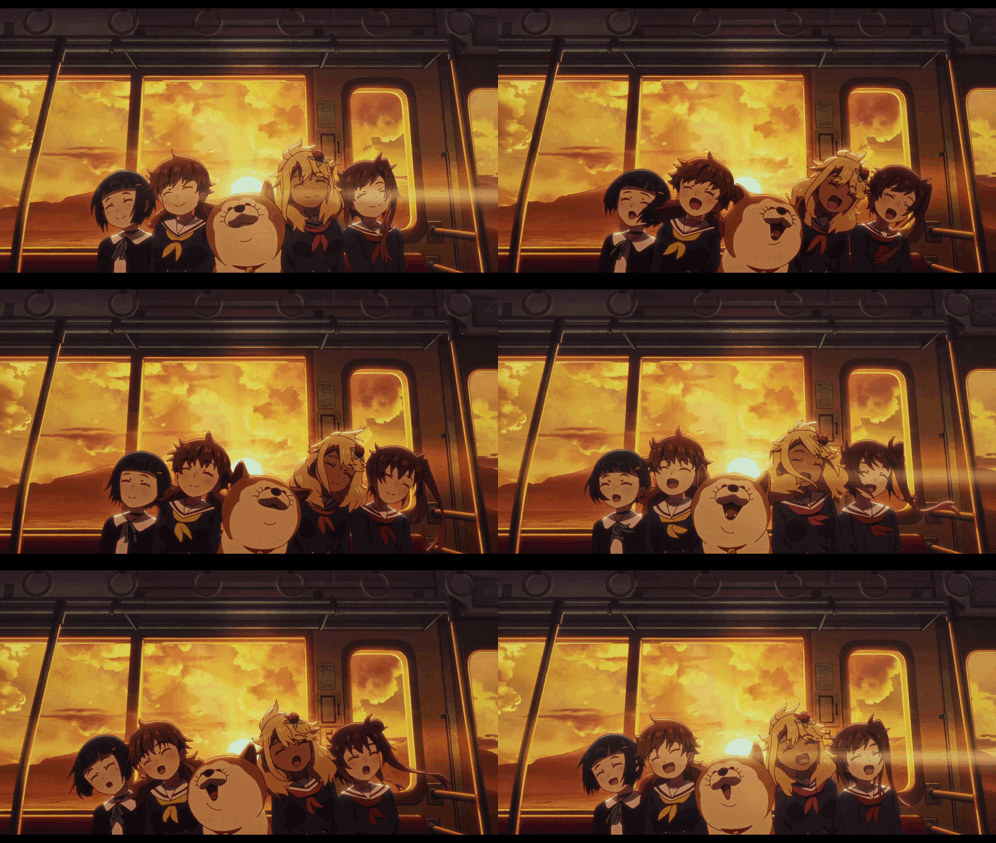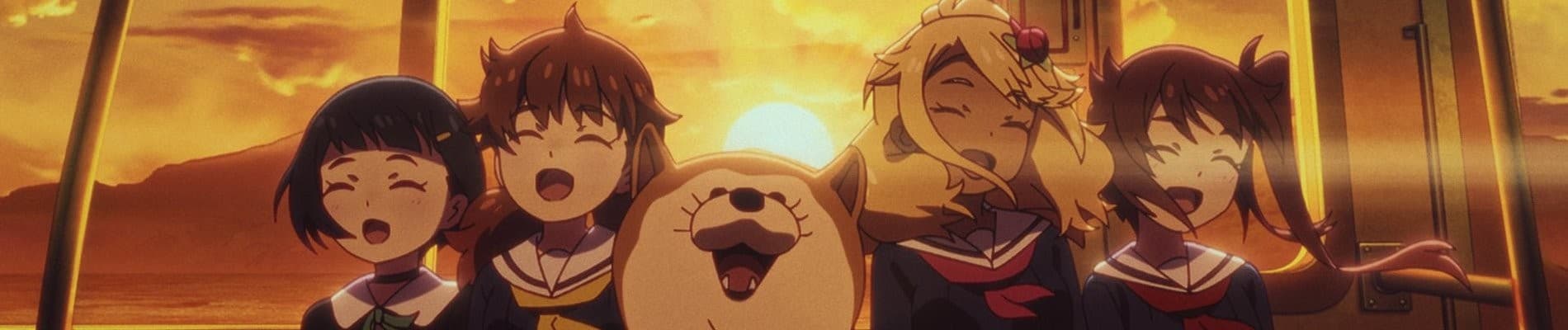

(Video includes audio. Be sure to unmute)
Director Mizushima Tsutomu isn’t concerned with making the next “hit” – if anything, he’s concerned with making the next “concoction.” A look at his filmography will show that he has directed several projects which involve the heavy collision of various ideas that, on paper, seem like they should get along like cats and dogs. How, for instance, is the idea of cute girls doing cute things in a tank battle setting supposed to work? Why would anybody expect a lowbrow teenage sex comedy that also functions as a prison escape flick to mesh together, and somehow have that work? Crazy, right? But crazy is the point, as lo and behold, Girls und Panzer exists, as does Prison School.
And those are just two examples! Mizushima’s understanding and approach to genre is to take what it is about each that people enjoy, and bend or twist them into new, almost-unrecognizable forms. Mizushima doesn’t care about having something to “prove” as it were, mostly because he gets his jollies out of being weird rather than being artful in the way that other directors are. And in an anime landscape where fresh ideas seemingly are in shorter supply, it’s at the very least worth considering just what he’s cooking up at any given moment.
It therefore makes perfect sense why Shuumatsu Train Doko e Iku? / Where Does the Doomsday Train Go? / Train at the End of the World functions as it does in its weirdness. It is quintessential Mizushima, in that it feels like a sensible next step in his handling of preposterous entertainment ideas. Our foursome of heroines all embark on a post-catastrophe science-fiction screwball road comedy journey through a topsy-turvy funhouse world of strange landscapes, bizarre people, and way too many bitter lemons to eat. Each stop along the path to Ikebukuro comes complete with its own warped or finagled place, where the people there are just as mystifying. One stop has a serious shroom problem (to put it one way), while another location has a miniaturized military. But where could the adorable Yoka be, the person who accidentally got this whole 7G Network mess started when she pressed the button and screwed everything up? Can the world return to normal?
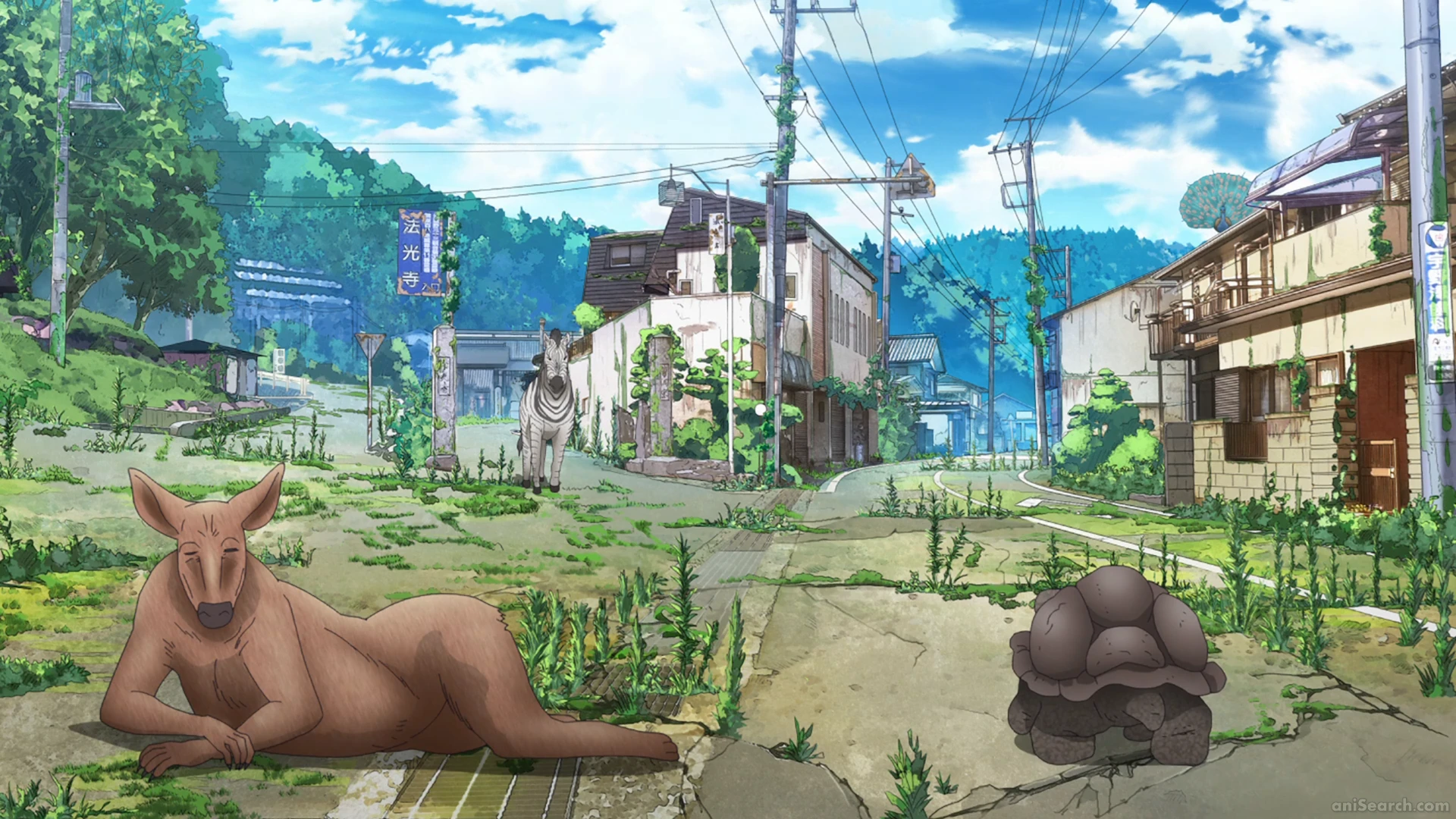
(Animation credit to Minazawa Yasunori. The post-7G Japan is just goofy-funky enough in its layouts and storyboarding to be strange and a little unwelcoming at times, but is never foreign enough to feel like an entirely alien world. The balance between the two vibes is executed to near-perfection)
From the first minute, Shuumatsu Train doesn’t pretend to be concerned with giving fully fleshed-out character biographies to Shizuru, Nadeshiko, Reimi, and Akira and assumes you’ve seen enough cute girls doing cute things anime to know this rigamarole already. The immediate need-to-know particulars of who they actually are comes through in the quick conversations and colliding personalities about incidentals and the grand design, and expects you to “get it” already so it can “get on” with the real point – the journey. Any development or more-dynamic character building will come not from the native environment that they know, but instead by venturing into the yonder.
 format(webp))
(The characters core dynamic makes for a strong magnetism at the start, and gradually begins to take on newer, cooperative shapes as the journey continues)
And if cute girls doing cute things has often been the gravity surrounding fixations on hobbies / “the main thing” that could be considered either abnormally obsessive or unusual (we all can list at least one show in which the cast revolves around a niche activity that more or less defines them), then Shuumatsu Train takes that gravity and maximalizes it to the universe itself. Each location does indeed have its own central “thing” that distinguishes it from every other stop, almost like the different levels of a video game in which each location has its own puzzle to crack before opening the door. It provides a sheer unpredictability to each setting even when the outcome inevitably ends with the train pulling out of the station and moving on. Sometimes, they’re simply passing through and commenting on how weird something is because…well, sometimes something is just weird and there’s not much more to say. Other times, the ridiculous level of micro and macro analysis needed to get through is itself like an overstuffed shogi board ready to collapse under the weight of its excess pieces.
Yet, miraculously, it never falls apart because it never stops being fun. The inherent appeal of the screwball road comedy is in the varying locations and peoples, and how the characters are forced to interact with both in order to make heads or tails of what’s happening. Using post-catastrophe science-fiction as the backdrop allows any crazy idea to be applied without needing to spend all this time and energy explaining why something is the way that it is. Any such explanation can be chalked up to “LOL 7G” (its activation in the first episode makes a further lack of explanation all the more acceptable) and instead put resources into making each stop more tangibly present. Beyond the “trait” that each place possesses, each also presents obstacles that are distinct enough to require different solutions rather than a single tried-and-true method. As such, the variety in the settings complements the variety in the situations.

But that maximalization I spoke of does not occur with the heavier drama, though drama is certainly present. Tone-wise, the show rarely makes actually sincere attempts to divert away from the comic because the attempts that appear on the surface to do so are, in and of themselves, far too deliberately silly or tongue-in-cheek to take too seriously. Yokote Michiko’s series composition lets you know who is doing what and how they are functioning within the show’s overall universe either as a force for, against, or within the main foursome, but never to the point where it forgets or misplaces its popcorn origins. This is only broken with Yoka and Shizuru, the ones who got the metaphorical train running in the first place. As a result, the show’s inner structure is quite bare-minimum, but the color explodes every time, coming with some genuinely-impressive layouts and animation displays that go far harder than a show like this would reasonably be expected to have.

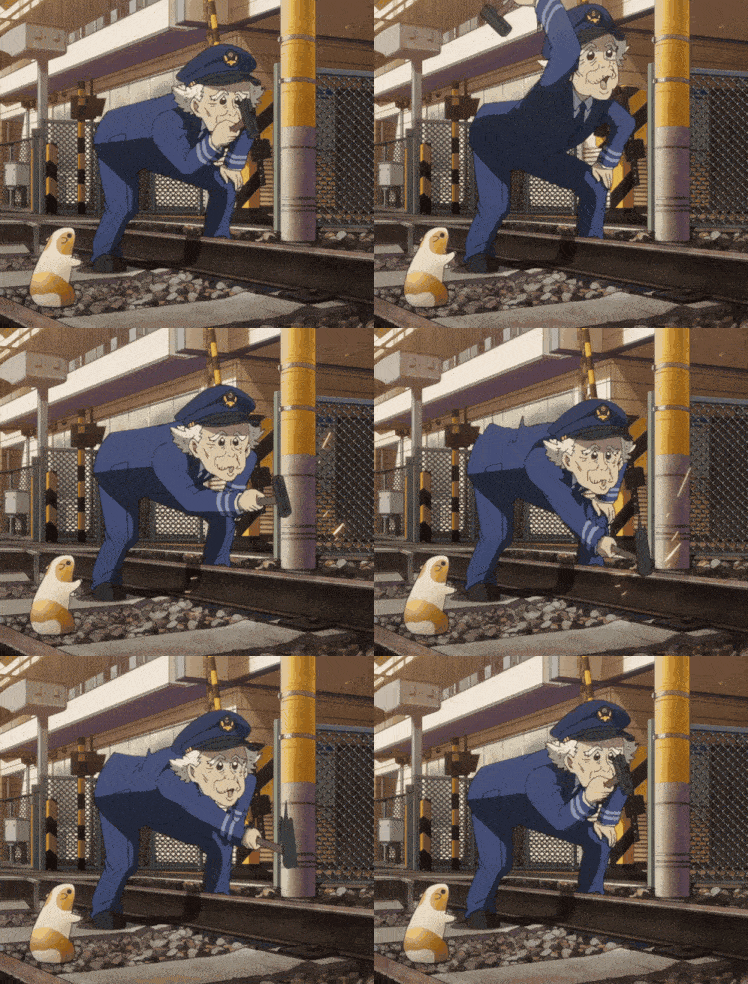
(Shuumatsu Train has an inherently ridiculous sense of humor, with the characters put in odd situations or having to reconcile that the world is constantly defying reason and always has a weird surprise around most corners)
Coupled with the understanding that Mizushima’s Twitter account [over]( https://x.com/tsuki_akari/status/1792767382488043996) the past [several weeks]( https://x.com/tsuki_akari/status/1782421339258966121) has been talking about train stuff from facts to fascinations, including other incidental things about the production or locations used for making it, he clearly got bitten by some kind of bug and decided to just run full-tilt with it. He’s created something with the full awareness of what it is and avoids the pitfalls of derailment, even if it couldn’t escape production problems with its final episode. The whole is an unusually free-spirited anime, chugging along its merry way and always prepared with a fun little something to whet the appetite.
There is no room for normal on this route; Shuumatsu Train takes delight in its oddness, and that’s the way it should be.