WIND BREAKER
a review by RenxRen
a review by RenxRen
Preface
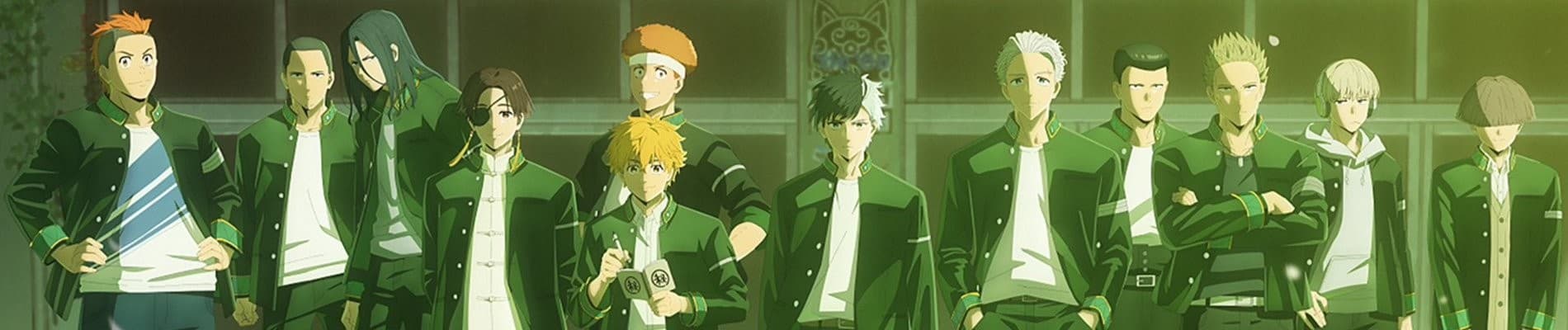
Wind Breaker is a modern delinquent anime that I would describe as a hidden gem. My statement may seem exaggerated because an average weeb must be living under a rock if they aren't, at least, aware of its existence. Many viewers compare the anime with TR and hype up the animation, fights, and sometimes the character designs. However, few discuss the intriguing characterization of the main cast and their dynamics that, in my opinion, outshine most shounen battle anime.
Main Criticism
Before I attempt to prove my point, I must point out some evident omissions that initially hindered my enjoyment. Where are the parents, teachers, and police? There are strong indications about their family status here and there, like Sakura having no contacts on his phone and Umemiya growing up in foster homes. Furthermore, we can assume that the local police either do not arrive on time or are incompetent. The question is, how do we explain the absent teachers in a high school setting? The students regularly hang out on the school grounds and ditch classes to patrol. It would be way more compelling if they established a special education program, funded by either the government or a certified private organization, that encourages volunteer work for children from broken homes; a readjustment to society, or the nurturing of a task force. I hope these aspects get addressed in the future.
Characterization & Dynamics
The show opened with symbolic imagery that portrayed Sakura's complex psychology, an ordinary tale among the shonen protagonists at first, depicting discrimination, bullying, abandonment, and maybe worse. Sakura, the victim of this abuse, chose violence, aggression, and solitude as his defense mechanism, rationalizing that fighting was the only way to get rid of toxic individuals, and his fists gradually evolved into his language. His reactions to kindness also hinted at his self-loathing and tendency to self-sabotage. Being ridiculed for his unconventional appearance and rough-at-the-edges behavior, he regarded himself as intimidating. As such, it led to a quest for self-recognition. If he showcased his superior strength, he would be worthy of everyone's fear and respect.
His mindset crumpled after his fateful encounters with Bofurin's and Shishitoren's leaders. Umemiya was the first to spark a fire in his heart, pushing him to revisit his worldview. While he pursued conflict and a lonesome lifestyle, Umemiya strived for companionship and peace despite his demanding position as a gang leader. Sakura could not grasp this foreign concept, although he witnessed strong people naturally gathering around him. On top of that, he found pleasure in this lifestyle. Communication, skinship, friendship, and camaraderie fulfilled the basic human desires he craved and never received. His bashfulness and shyness may come off as funny and cute, but they are a product of alienation.
On the other hand, Tomiyama was a catalyst for his development as the mirror image of his future self. Similarly to Sakura, he pursued self-fulfillment, believing that happiness and freedom come with strength. This ambiguous obsession caused him to ostracize his companions and become an empty shell of his ambition. His greed started eating him inside out, preventing him from picking the pieces together and widening his lens. It was thanks to his genuine connection to Togame that snapped him back from his tunnel vision. I am not surprised that Sakura admitted their similarities. If he were to embark on this journey, a never-ending vacuum awaited.
Accepting his flawed views, Sakura strayed from his old habits. However, he was lost. What was he supposed to do, especially when he took up a leadership position. Luckily, his curiosity got the better of him, and he consulted the second-year grade captain. Kaji is like a feral beast in disguise. He appeared calm and collected, standoffish and aloof, until you get under his skin. This contrast puzzled Sakura and, eventually, confronted him, questioning his leadership. The reply was simple yet profound. Kaji's classmates chose to follow and rely on him without an apparent reason. In turn, Kaji relied on them and lived on their expectations. Essentially, nobody had to drastically change. It seems like a simplistic answer on a surface level, but Sakura wants to discover what makes him so reliable that he was elected as a leader. This trait is open to interpretation, and I am sure that his subordinates would respond differently. However, it is a crucial piece of knowledge for Sakura to discover and embrace himself.
I could go on and on about Sakura's self-exploration and evolution. In particular, his immersing conversations with Umemiya and Tachibana's wisdom painted the exact portrait of his current and future selves. I will not dive into the details because my time is limited. I opted to emphasize the parallels between Sakura and the leaders so that they also get the spotlight.
Other notable characters are Togame and Nirei. The former is not impressive per se, but his subversion from a villain to a good guy was outstanding and unexpected. In a nutshell, Togame applied Tomiyama's ideals to their team, hoping his leader would not lose his light by imposing his destructive judgment. Plus, he distanced himself to give him space, and Tomiyama's greed escalated instead. Fortunately, Bofurin members taught them how life works. While his epiphany made us sympathetic to his character and aggravated towards his leader, the follow-up failed to solidify the sentiment. Tomiyama's headspace, the imaginary dessert glass world, was the perfect metaphor to illustrate his emptiness, but the reason behind it was lackluster. A richer backstory, or an elaborate exposition of his potential existential crisis, would enhance the emotional impact of his downfall.
As for Nirei, he is the nonfighter of Bofurin and a valuable informant. He may seem like the crybaby of Wind Breaker, but the lack of power dynamics highlights his genuine connection to his classmates, mainly Sakura. They formed a bond devoid of competition and ulterior motives. In addition, his bravery and adaptability are remarkable, given his harsh environment.
Concerning Suo, Hiragi, and Kiryu, they are captivating, but we remain in the dark about their characters. My only complaints lie with Taiga and Sugishita. For example, our wrestler boy is vigorous and humorous, but his personality traits are just shticks. The virtue lines and his over-the-top behavior are designed to give us some good laughs and cheers during battle sequences. Similarly, Sugishita is just a mad dog, growling and tossing chairs. I am indifferent to those two characters, viewing them as parodies. However, any surprise like Togame's would be welcome.
Animation & Fighting Sequences
Enjoyment-wise, the most praised aspect of Wind Breaker is the fighting. I am talking about full-blown street fights, integrating martial arts and individual unique styles. The animation, direction, music, and art skyrocketed the experience from 10 to 100. The grittiness and ferocity behind each move and the elaborate and clean choreography evoked memories of real-life duels. Adding the emotional investment to the mix, even a bloody fight emerged as an amazing story piece. Of course, exaggerations were needed for spice. Realistically speaking, such fights would end in seconds with heavy injuries and reduced stamina, but battle shonen would not be a thing. It does not change that Wind Breaker had the most memorable hand-to-hand combats I have seen in anime. No special effects and flashy spectacles are essential to provide high-quality entertainment.
Plot & Pacing
Regarding the plot, this season felt like a prologue. The series addressed Sakura's major issues and a vague idea for his future development. It also introduced the key members of the Bofurin gang and their first ally. Given the scattered clues about their mysterious past, the potential is infinite. I can easily envision it as a traditional long-running shounen.
The pacing was satisfactory, indicating that the creators had a solid grasp of storytelling. The ups and downs of the pace were carefully crafted and executed. Because Wind Breaker is a battle shonen animanga, they served us with enjoyable action even during the slow episodes, such as the parkour scene and the new characters fighting mobs to showcase their abilities. However, they mainly delved deeper into our understanding of the characters and their dynamics. No scene overstayed its welcome except for one, the interaction between Togame and Tomiyama in episode 10. Reconciliation needs immense effort, such as brutal honesty and ownership of our mistakes. However, prolonging conversations that convey the same message as the previous episode is redundant.
Conclusion
Wind Breaker is not innovative by any means, but it excels in characterization and the art of hand-to-hand combat. Specifically, it provides a fresh perspective on complex psychological issues, not shying away from their potentially harmful consequences. At the same time, it manages to calm the waters by building wholesome relationships and providing adrenaline-pumping action scenes.
On the flip side, the absence of certain adult figures is a bit off-putting initially, but not too vital to be deemed a plot hole at this point of the story. In addition, a few supporting characters are basic shonen archetypes, cliched and forgettable. Thankfully, their screen time is limited, aiming solely at comedy and action.
If you are looking for an exciting seasonal watch with the potential for something greater, Wind Breaker is for you! It is a must for action viewers who prefer a more realistic approach to close combats and enjoy the fundamentals of real-life martial arts.
27 out of 33 users liked this review
