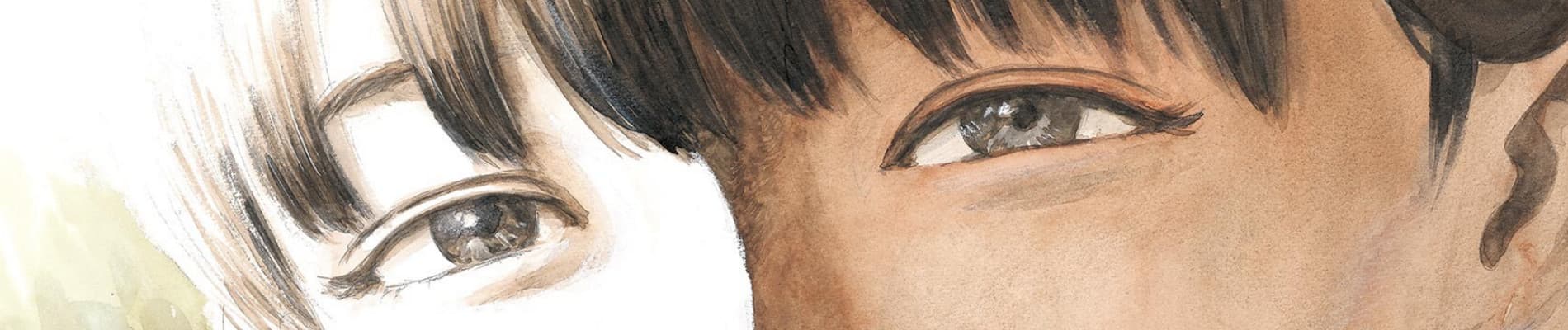
What I wrote here is not the kind of review in which I rate and analyze the full plot, characters, and art in detail, as I’d need to reread the first 14 volumes and give some objective feedback in order to do so. I don’t want to do that. This doesn’t mean they are not worth a read, in fact, even for the art alone every page must be stared at over and over again. I just think that the way I experienced this story felt like the most correct way, and I don’t want to hijack that.
When I started to read these series, I was interested in the psychological thriller aspects, the excellent art, the incredibly unhealthy and rotten mother-son relationship, the jumpscares, and so on. Seiichi, Seiko, and their relationship were all incredibly real at times, which must sound horrible and psychotic on paper. However, the loneliness and ridicule a mother endures as she is looked down upon by her in-laws, and a child’s identity heavily influenced by what her mother thinks of him are all things people witness and go through in life. In fiction, there are tons of mother figures who inflicted horrible pain on their children to hurt them the same way they were hurt, out of a desperate attempt to create someone who would perfectly understand and never leave them. Seiko was the most unique of them all, and arguably the best portrayal and deconstruction this trope could ever hope to have. You would think that Seiko had some horrible, heavy trauma, that something more concrete and painful happened to her– but no. There is just something so “real” about her that makes me think of all the kids I knew long ago, who only slept and slept in school, who had nothing going on for them, who had never eaten a breakfast prepared for them by their parents before school, not even something in the fridge that was marked with a post-it note paper. I grew up in a more sheltered manner like Seiichi, so I was able to relate to him and cry for him when he
I eventually caught up in the manga, and I stopped reading chapters one by one. I went back to it after it was completed, and I was just like Seiichi himself. What Seiko had done to him in the past, what happened to him were all somehow distant to me. I only remembered that she was a monster I could also, somehow, sympathize with. I read, and I read, and I just cried like a baby until I reached the end.
Seiko had a casually heart-wrenching life, a past that felt like cutting yourself with paper, but as if you were doing it every day, to the same place, until you somehow reached your bone and just cut off that limb. Despite knowing what she did to Seiichi, I was just immersed in her story.
Maybe I would hate the last three volumes if I didn’t take a break from reading Chi no Wadachi. I wouldn't be able to make sense of learning Seiko’s whole life or Seiichi's actions in the last act. I loved the ending so much because I was also similar to him in a sense, as we both had blurry memories of what had happened.
While you are growing up, sometimes the way your parents act hurts you and leaves a scar on you. You don’t understand anything as a little child. You spend your adolescence despising them for what they did. Then you reach adulthood. You reach the point where you are mature enough to see and understand their circumstances, their anxieties, their flaws, their own traumas, and why did they say that, or why did they act like that. You realize that nobody is perfect, and it is also impossible to raise a child perfectly, without making any mistakes, because they were doomed to be imperfect, and you were doomed to become an imperfect adult too anyways, no matter what they did. After this enlightenment, you yourself actually get better. Sometimes you forgive your parents at the end, and sometimes you do not. Both is fine and understandable.
However, when you open up to people about your parents, and talk about their messy sides, in those people’s eyes, your own parents appear as monsters no different than Seiko was for Seiichi. At those times, you understand that you are completely alone. Alone in seeing them as human beings, so much that you can only bring yourself to do so in a dream. For me, that was what Chi no Wadachi was about.
Its storytelling paralled a perfect, very specific reading experience for me, so I give it a 10.
20.5 out of 22 users liked this review