Before we beign
This review is focused on the first season of The Rising of the Shield Hero, and I will only discuss plot points relevant to this season. However, having seen the subsequent seasons, it's inevitable that some of my perspective is influenced by the broader context of the series.
The Rising of the Shield Hero is, at best, a mediocre anime. I enjoyed it to some extent, but it’s not something I’d eagerly recommend. There are several reasons for this, primarily the rushed and shallow plot. I’ll save the bigger criticisms for the end, so let’s start with the positives.
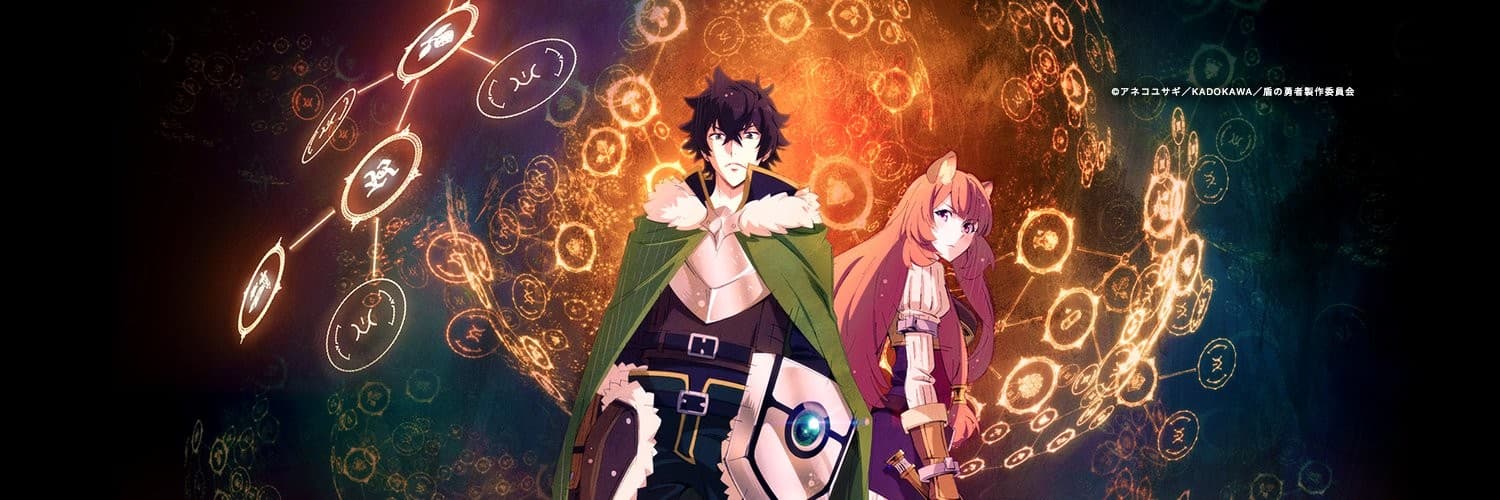
For those unfamiliar with the premise: The Rising of the Shield Hero follows Naofumi, an average otaku who finds himself transported to a fantasy world where he is tasked, along with three other young men, with saving the world from the “Waves of Calamity.” Each of them is granted a weapon and embarks on an adventure to gain experience, as the series incorporates a familiar game system.
While I usually shy away from such plot devices, Shield Hero manages to build a decent system that serves an actual purpose and shows progression, rather than simply highlighting how overpowered the protagonist becomes. Naofumi, however, is at an immediate disadvantage. The others have some prior experience with this world’s system due to their backgrounds in their own worlds, leaving Naofumi as the odd one out. To make matters worse, the people of this world seem to harbor a grudge against him, causing him to become a brooding, distrusting loner.
~~~
# World Building
The world of Shield Hero feels alive and well thought out. There are various fantasy kingdoms, each with distinct architecture, culture, technology, and policies. Some side characters, while few, add life to the world. However, my main gripe with the world building is that almost all the locations we see are directly tied to the main plot, leaving little room for pure world exploration. The Waves of Calamity are an effective plot device to raise the stakes, and the well-crafted mystery surrounding them shows the author’s effort in world-building.
---
# Naofumi
Naofumi is a complex character who becomes increasingly edgy and distrustful. As mentioned, he isn’t well-liked from the start and is falsely accused of a crime early on. This tarnished reputation, seemingly inherited from his predecessor, the previous Shield Hero, causes everyone to turn against him, regardless of evidence. This changes him significantly. Although he wants to do good, he is forced to act like a villain and is reluctant to trust others. However, his edginess sometimes feels overplayed; he often projects sinister motives even when he’s simply trying to help, a trait that most characters see through immediately. This aspect of his personality is also used to justify his interactions with morally dubious characters, like a creepy slave trader who remains in his good graces for far too long.
---
# CGI and Choreography
The animation quality in Shield Hero is inconsistent. The first and last arcs of the first season are well-animated, but the quality dips significantly in the middle, with less fluid animation that relies heavily on CGI. The fight choreography also suffers, with some battles feeling like turn-based RPGs where characters awkwardly stand around in the background before launching their next attack. This issue is exacerbated by the linear storytelling, which doesn’t handle background characters well, a common struggle for adaptations of written works.
---
# Slavery
The inclusion of slavery in Shield Hero is hardly surprising, given its presence in many isekai anime. However, like most, it’s handled poorly. Slavery is enforced by a magical crest that causes pain if the slave disobeys their master. Initially, the introduction of slavery is somewhat tactful. Naofumi, needing a companion to fulfill his duties as a hero, is left with only the option to buy a slave, Raphtalia. This act is condemned by the other heroes, leading to some conflict. Up to this point, the treatment of slavery as a way to control people is plausible, especially given Naofumi’s deep-seated trust issues.
However, once the story arc focusing on the problems of slavery wraps up and the story progresses, slavery stays a problematic plot device, albeit mostly ignored by the characters further on. Naofumi’s slaves develop what can only be described as Stockholm Syndrome, viewing their enslavement positively and even encouraging others to become slaves. Despite Raphtalia’s troubled past, which led to her enslavement, and the group’s efforts to free other slaves, these individuals often just end up as Naofumi’s slaves, which is portrayed as acceptable because “Naofumi is a good guy.” The anime also ties slavery into the game system, subtly encouraging viewers to overlook the moral implications.
---
# Plot
As I mentioned earlier, I appreciate the setting. Naofumi, an outcast, travels the world as a merchant while trying to uncover a political scheme against himself and his role as the Shield Hero. The other heroes, full of themselves due to their popularity and prior experience with the game mechanics, become careless and arrogant, leading to conflict. While many of the plot points are intriguing on paper, they are poorly written, rushed, or lack the expected payoff. The anime also introduces plot holes when convenient. For example, Raphtalia’s sudden transformation from a child to an adult is explained as a racial trait tied to her strength, yet no other demi-human child experiences this. This felt like a forced attempt to promote her to a love interest, despite her mind remaining that of a naive child. Additionally, the anime introduces several "loli" characters with crushes on Naofumi, offering even less explanation for the change of of Raphtalia.
Another major plot point that falls flat is the handling of a criminal plotting against one of the heroes. Like the slavery arc, this issue is addressed but not resolved, leaving it hanging as the story moves on without proper closure.
---
# Verdict
Despite its flaws, I enjoyed The Rising of the Shield Hero enough to continue watching if another season is released. It’s neither a must-watch nor something I’d recommend wholeheartedly, but if you have time to spare and enjoy the isekai genre, you’ll find some familiar tropes with above-average execution.~~~