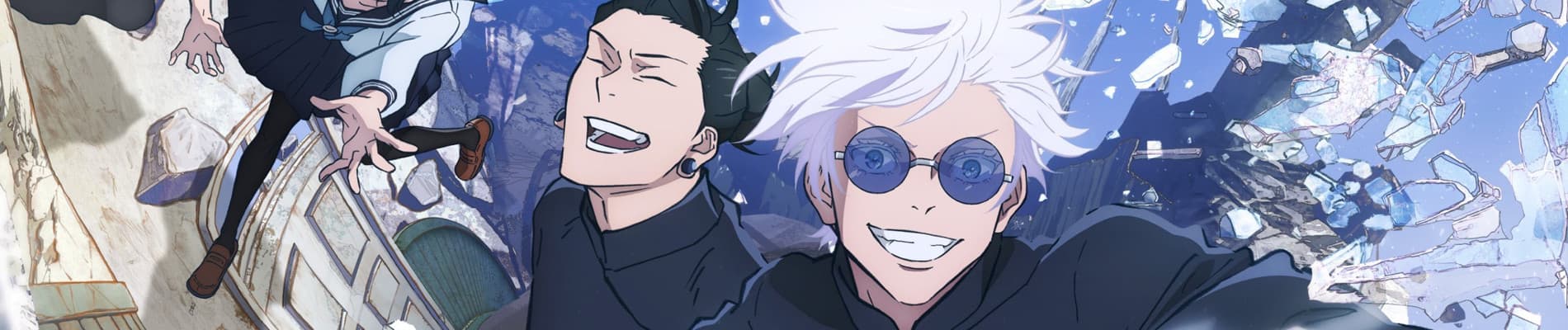
DISCLAIMER: Contains spoilers of JJK season 2 (obviously)
It is without question that JJK season 2 is one of, if not, the most hyped up shonen anime in recent years. Once the season finished airing, many posts spread proclaiming the ‘Shibuya Incident arc’ as one of the greatest shonen arcs of all time. Many of these posts frequently contained words like ‘peak’, ‘masterpiece’ and ‘goated’. This theme of JJK season 2 supposedly having achieved unanimous GOAT status caused me to become extremely excited to watch the show and see what all the hype is about. As I was watching the show, I was eagerly waiting for any scenes or moments that justified all the hype. Minutes passed. Episodes passed. Nothing… JJK season 2 was not peak, it was not a masterpiece and I believe it’s misleading to say so. By giving JJK season 2 all these labels that address it in such high regard, the weight of expectation becomes too heavy of a cross to bear for the show.
All of the hype surrounding JJK season 2, all of the comparisons to all-time great shows such as HxH and One Piece’s Marineford. All of this hype and comparisons are likely to place unfair expectations onto some viewers who watch JJK expecting something that matches said hype.
Did all the comparisons and comments surrounding JJK season 2 negatively affect my viewing experience? Yes, yes it did. All the talk about it caused me to expect greatness from a show that had no reason to have these expectations to begin with.
Regardless of all the comparisons, it’s clear that to many people JJK season 2 was able to successfully execute the expectations a significant proportion of fans had for it. And that’s where the issue inherently lies with this season. JJK season 2 faced overwhelmingly significant hype and expectations, which cultivated an environment where meeting everyone’s expectations would be near impossible.
For instance, the comparison between JJK’s Shibuya arc and HxH is completely misleading and unfair. This is because when I think of HxH, I associate well thought character arcs that reveal deep psychological and moral layers. In HxH this is achieved by delving into complex, slow arcs coupled with intricate world-building and character development. Consequently, I approached JJK season 2 with expectations of storytelling similar to HxH, which as a consequence led to a feeling of dissatisfaction. JJK’s Shibuya arc has a completely different almost ‘messy’ narrative which tends to heavily focus on immediate plot developments.
However, a ‘messy’ narrative doesn’t immediately mean that the shonen plot is bad. Going back to one of JJK’s many comparisons, HxH is a great example of what some consider a ‘messy’ plot. HxH consists of diverse and distinct story arcs such as Heaven’s arena, Greed island and Chimera ant. The way the characters interact within the world allows for the plot to be pushed in wild directions, yet these storylines are meaningfully interconnected which contributes to a cohesive overall narrative. So despite HxH’s messiness, its author never fails to neglect the benefit of excellent character development, world-building and strong thematic consistency of personal growth and friendship throughout the show even during tonal shifts throughout the story arcs. This ultimately helps mitigate any perceived messiness due to the well-designed plot which adds layers of depth and richness to the story.
The same unfortunately cannot be said about JJK season 2.
While HxH can be considered deliberate in its ‘messiness’, JJK fails to achieve a similar feeling. It doesn’t feel meaningful, it feels somewhat… vague. Perhaps it’s due to a large proportion of the manga waiting to be adapted, but nonetheless, certain plot points feel open-ended and incomplete which contributes to a sense of vagueness. This leaves the viewer with many questions and a desire for more context. The conflict within the Zenin clan, Megumi’s connections with the Jujutsu world and the organisations within the Jujutsu world are some examples of plot points that aren’t really explored. These elements are briefly touched upon, leaving questions about their significance to the overarching storyline. Maybe in future seasons, these plot threads are fleshed out and explored, making my comments invalid, but as of right now the plot seems to lack clarity and is personally hard for me to engage in.
Another issue with JJK season 2 are the underdeveloped supporting characters, so while some characters like Gojo, and Geto receive considerable development and insight into their characters, the same cannot be said about many of the characters that appear in the show. Since many characters are not really fleshed out, it may give the viewer the impression that these characters are mere plot devices for action rather than fleshed out individuals that have purposeful roles within the story. Furthermore, while some characters show growth and development, much of it is linked to immediate plot needs/events rather than ongoing personal character arcs. Combine this with the quick transitioning between characters and their different involvements in the plot, it leaves minimal opportunity for deeper exploration of character growth and personal development outside of immediate plot needs. This can make their development feel superficial and rushed, which I personally find frustrating.
I say frustrating because the author is clearly capable of bringing characters like Toji with very little screen time to the forefront through a blend of distinct personality traits and connections to other characters within the series. The way the author breathes life and a memorable identity to Toji creates a character that demands the viewer’s attention every time he appears on screen. So, it’s a shame that this feeling of interest and attachment to Toji could not be replicated across some of the other cast.
Leading on from my earlier point of character development feeling superficial is my opinion on JJK’s missed opportunities to properly develop characters. In particular the Shibuya arc has moments where in-depth exploration of a character’s past or internal struggles could add substantial depth to the overall plot, but these chances are not effectively used.
For instance, for me the relationship and interactions between Miwa and Mechamaru felt underdeveloped and as a result their scenes struggled to evoke any strong emotion within me. Their interactions are thinly scattered throughout the season, with only a few scenes dedicated to their relationship, so there isn’t sufficient time to fully develop their dynamic or reveal the depth of their connection. The same can also be said in season 1, where Miwa and Mechamaru often engage in shallow conversation that focuses on the current plot point rather than possible exploration into their thoughts. Bringing this Miwa x Mechamaru romantic subplot to the limelight out-of-nowhere solely due to Mechamaru’s inevitable death feels somewhat out of place due to the lack of any significant scenes of the pair in the past. This ultimately prevents me from building an attachment to their relationship, so it makes their interactions feel much less impactful.
So, while I praise JJK season 2 for its visual appeal, I feel that it falls short in terms of providing comprehensive character development, which is made increasingly challenging due to the involvement of a large cast of characters. The author cannot throw these underdeveloped characters into the spotlight and expect the viewers to quickly build an emotional attachment towards them. To add to this, the frequent use of flashbacks to provide character backstory and exposition can be seen as a crutch which tends to feel like the info was just thrown in rather than being smoothly integrated.
Okay, that’s enough criticising, I will now talk about things I really liked about the show. Firstly, the most obvious positive aspect of the show is its artistic excellence. The fight scenes are meticulously choreographed and fluidly animated. Many battle sequences throughout the season involve dynamic camera angles which creates a more interesting and immersive experience. In particular the Choso vs Itadori fight (especially the bathroom fight) was sensational and one of my favourite battles in the show. The way the camera closely follows the characters, rotates around them and shifts perspectives amplifies the intensity of the combat which is just really engaging to watch.
The silky smooth animation is a significant factor that contributes to its visual appeal, but the importance of the chosen colour palette is overlooked by some. The dark colour palette contributes immensely to the aesthetic of the season, where the colours complement the darker aspects of the story such as the theme of inner turmoil which is pivotal in this season. These muted or desaturated colours help highlight the sheer gravity of the situation for the characters, which helps immerse the viewer into the world of JJK. Adding onto this, the consistent use of dull, dark colours creates a sense of tension and imminent danger. This feeling of uneasiness helps keep the viewers engaged and invested in what happens to the characters.
Another enjoyable scene of mine is Sukuna’s entrance. Sukuna’s appearance in JJK season 2 is wonderfully executed with the use of various cinematic techniques to accentuate his menacing presence. By framing Sukuna from low angles, it portrays him as an overwhelmingly dominant force to be reckoned with as he towers over and looks down on the other characters. Sukuna is also accompanied with ominous sounds such as deep resonant tones and eerie effects that create a sense of dread upon his appearance. All these techniques combine to create a memorable and intriguing impression of Sukuna in season 2, strengthening his reputation as a formidable character in JJK.
Moving on from the visual appeal of JJK season 2, the voice acting throughout is spectacular but in particular, Mahito’s voice acting stood out. His voice has a distinct tone and is full of emotion which captures the essence of his character perfectly. The VA perfectly conveys Mahito’s malevolence and sinister intentions and also his moments of uncertainty and vulnerability towards the end of the season as Mahito’s demeanour changes.
__My Concluding thoughts:
__
Currently, JJK consists of a lackluster story that has been gifted with an absolute masterclass of creativity and artistry. JJK is a fairly mediocre story that has soared to extraordinarily high heights primarily due to the visual brilliance on display which acts as a veil to the story which pales in comparison. However, this being said, I don’t hate dynamic, high-energy battles. In fact I thoroughly enjoyed them, but after hearing all the comparisons and praise of the show I developed the expectation of witnessing intricate storylines like some people have claimed JJK to have. Thus, I couldn’t help but feel slightly dissatisfied since what I was told about the show was not completely accurate. But despite my prior comments, I’m not trying to discredit the work of JJK, I just believe that JJK season 2 was unfortunately subject to misleading expectations and comparisons by some fans which negatively impacted my viewing experience. That being said, I still found JJK season 2 enjoyable, despite my personal issues, so I will give it a modest 7.5 out of 10.
Thanks for reading ( ̄^ ̄)ゞ
36.5 out of 42 users liked this review