Steins;Gate
a review by sushiisawesome
a review by sushiisawesome
Steins;Gate is one of the most beloved anime of all time, with a fantastic main cast of characters, a gripping story and incredibly memorable scenes scattered across the series - so beloved that it spawned an entire franchise that continues to produce new spinoffs and side stories to this day.
I'll mildly allude to events in the series - because I do think they're necessary to explain anything about the story - but will avoid spoilers to the best of my ability.
It's one of my favorite anime of all time as well, but there's components to it that I don't think are as heavily lauded as they should be. There are things to dissect about Steins;Gate that I think are easy to point to - the necessity of acknowledging the past for what it is and not change it as well as human connection and its necessity to break out of the isolation that pain brings with it. That said, there's other things that I think also complete what Steins;Gate is as a story beyond its technical elements - the story's well-written (though some of the writing around a certain character does come off as a bit dated and weak, vegetables is all I'll say) and follows its own time-travel rules incredibly well, it's well animated, well directed, has an incredible soundtrack and some of the best voice-acting in the industry - Mamoru Miyano as Okabe is forever one of the best roles in anything ever. All of that is valid, but my main reason for loving Steins;Gate as much as I do is its personability.
Fundamentally, Steins;Gate is a story about memory and recontextualizing it. It's a story that lives off its main cast looking at memories of the past and choosing to reunderstand what it means to them rather than change it entirely, becoming a story about changing someone's perception of the past to mirror where you are in the present, and where you'll go in the future. This is communicated both through the series's setting in a technologically forever innovating center of otaku culture in Akihabara - a conscious choice due to said culture being correctly associated with rampant escapism, but the series also shows it and its influenced internet culture as an avenue for interconnectivity and connection. The series in a cautiously positive approach to that element of the subculture, while chastising its more sinister elements - we see this through Moeka's codependency on phone communication especially.
This extends to everything in the story, really, but there's an undertone of permanent loss as the story goes on - that the mere act of living in and of itself is an act of losing something in the past and present, but one that also prevents people from establishing connections or even maintaining those people in their lives at all. We see this in the second half especially, but the underpinning is clear; accepting and recontextualizing the past is a necessity, else you'll lose things in the present and miss out on things in the future. It's part of why the story constantly has characters often sitting in silence as they awkwardly want to get closer to one another but draw a clear line as to how much closer, or has characters understand and reunderstand how things used to be and their meaning to the person in question now. Steins;Gate is a story that lives and thrives on this constructivist understanding of the world, that living is an act of understanding and reunderstanding the world around us and where we are in it to ourselves and the people around us - and that any attempt to break either of those or both away from us will inevitably lead to a literal dead end.
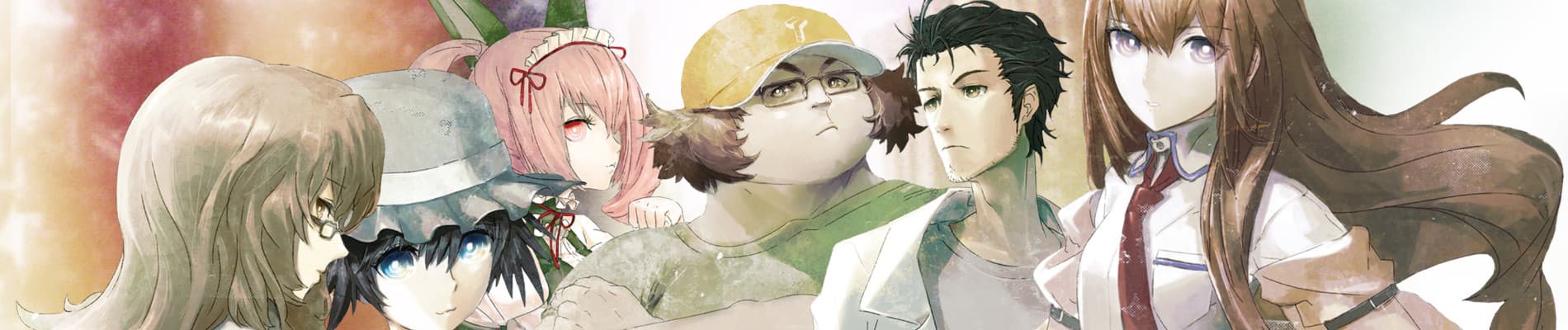
The relationship between the main trio is central to this all - Okabe's relationship with Mayuri as a symbol of the past's apparent innocence and naivete, with the Hououin Kyouma persona as the barrier between himself and others, and Kurisu as that of the more broken present and future, uncertain where she exists and why but persisting onwards regardless, continuing to try and evolve and change despite the isolation and pain. This gives the final stretch of the series a more personable feeling, one where Okabe accepts the volatility of the future, but chooses to move forward anyway - the fact Kurisu and Okabe's dynamic is the best in the series due to the two's fantastic chemistry together and how they develop and progress as characters as the series goes on is the final glue that brings the whole series to work as well as it does.
Steins;Gate is an amazing story because it is at once cohesive and at the other infinitely human, relatable and intimate. It's a timeless anime classic that has only aged like fine wine and will never ever not be relevant as a story to what people were, are and will continue to be.
That, too, was the choice of Steins;Gate.
Thank you for reading my review, any and all feedback would be appreciated.
82.5 out of 86 users liked this review
