Batman Ninja
a review by Kehsihba
a review by Kehsihba
Note: I wrote this review to offer a different perspective. I had ignored this film for a long time, as the community calls it " a worthless piece." I had been warned to avoid it at any cost, often hearing it labeled as "utter garbage." And so, I did, until a recommendation came from a more positive voice. Finally, I decided to give it a chance. And to my surprise, while the film struggles with conventional storytelling, its strength lies elsewhere. And I am here to talk about that.
____
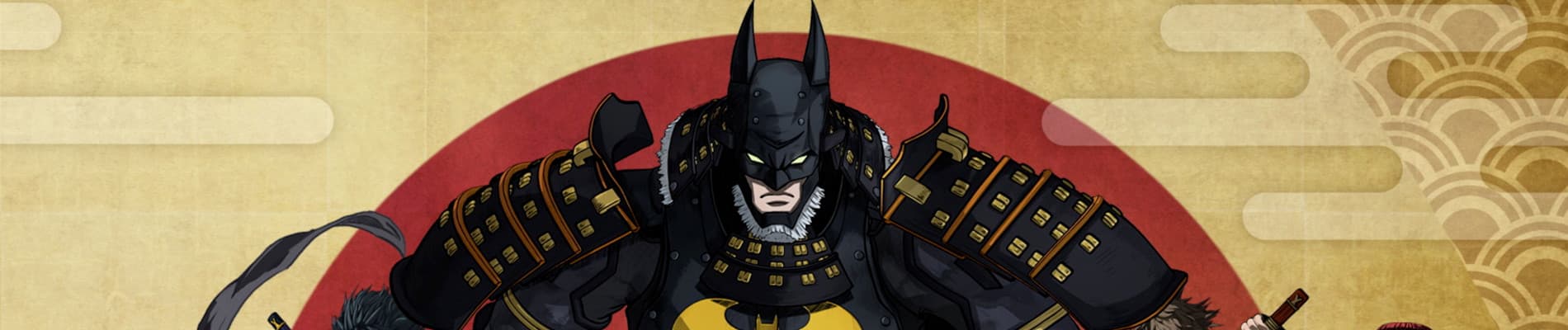
Ninja Batman is more like an artistic fever dream loosely held together by Batman's silhouette. The film's core strength is in its refusal to play by any rules and to turn every scene into a visual playground. In that sense, it is an experiment, perhaps one that excels aesthetically, but falters as a narrative experience. I mean, this film is undeniable fun to indulge in, but once it's over, it leaves little behind narratively; except the lingering image of a giant mecha joker and beautifully stylized scenic sequences.

The film’s absurdity isn’t accidental. It’s an intentional design choice meant to upend audience expectations of a Batman story. Consider the mecha castles: on the surface, yes, they are utterly ridiculous. But are they random? .... hmmm...No. Because they function as a deliberate parody of both the Batman mythos and genre mashups. By blending feudal Japan aesthetics, sci-fi robotics, and Power Rangers–style camp, the film unshackles itself from the constraints of realism, creating a space where anything can happen and often does. This rejection of logical consistency isn’t a flaw; it’s the point. The film weaponizes absurdity, using chaos to generate surprise and humor, signaling early on: “stop expecting coherence, and just enjoy the ride.”
Mostly films use dialogue or plot beats to carry emotional weight, but here it’s the artistic flourishes that are carrying it. Style becomes substance. That wouldn’t work in a film that promises grounded storytelling, but here, the film is unapologetically an experiment. Its creative freedom is its identity.
Rather than treating its stylistic shifts as mere visual decoration, the film integrates them directly into its storytelling. Scenes transform into ukiyo-e woodblock prints, sumi-e ink washes, and flowing calligraphy, not to advance the plot, but to reflect tone and character mood. These sequences replace conventional exposition to immerse viewers in a hybrid world where Japanese tradition collides with comic book surrealism. In key moments, the film abandons literal storytelling and just uses visuals to depict psychological tension or dissolve character perspective.

Even something as ridiculous as the Joker’s mecha fortress, which is assembled from feudal architecture, serves as the ultimate rejection of narrative seriousness. The fact that such technology shouldn’t exist in the time period isn’t a plot hole; it feels like a statement. When Joker’s castle transforms into a giant robot, it's not meant for a twist but a declaration that the film refuses to honor the rules of conventional storytelling. Joker’s madness is being externalized through the world itself where logic collapses and absurdity prevails.
And that is the film’s central trick: absurdity as narrative choice. By discarding realism, it aligns itself with super robot anime tropes, where spectacle matters more than plausibility. The film isn’t asking viewers to wait for an explanation. It is daring to stop asking entirely. This disarmament is crucial because Batman, as a character, embodies reason and control. But in this world of walking castles; his tech fails, his tactics break down, and his enemies play by no rules at all. His identity here is being deconstructed. Not through dark introspection, but through displacement. The film turns Batman into a lost figure in a world that refuses to make sense, and in doing so, it reframes him in a genre-bending fever dream.

The film also pokes fun at itself and its source material through self-aware humor & symbolism:


Moments like these are what maintaining cohesion because they fit the film’s playful, chaotic tone. They expose how displaced Batman is in this world, turning him into a figure of unintentional parody. He is not the Dark Knight here. Therefore, the film is expecting the viewers to recalibrate expectations, positioning the story closer to parody without entirely slipping into slapstick. It's encouraging to watch for visual invention not for narrative coherence.
This film is not built for plot analysis or character study. While it fully commits to artistic creativity and genre-defying spectacle, it does so at the cost of narrative depth. Beneath its impressive visual strengths, the film offers little in terms of:
Ironically, the film’s very embrace of creative freedom ends up limiting what it can achieve as a story-driven experience. Characters like Batman, Joker, and Harley Quinn function less as developed personalities and more as symbolic pieces in the film’s stylistic puzzle.
This disconnect can be jarring given Batman’s established identity as a figure rooted in dark, grounded stories. When we place him in a world of giant mecha battles and absurd transformations, it creates a little tonal dissonance for fans who are expecting something aligned with the traditional Batman storytelling. I'm sorry, but here, the film severs him from his thematic foundations, reducing him to a mere visual motif.

I think that is the wrong question to ask. A better approach is understanding what you are getting into. If you align yourself with what the film is aiming to do, you can enjoy it; it's a visual experiment or a playful mashup. Sure, your level of enjoyment will vary but at least you won’t dismiss it outright as a "worthless piece of trash" like a someone missing the point entirely. :P
Yes, it can feel hollow or a bit superficial if judged by storytelling metrics, but at least it is clear in its identity and fully commits to it. And that is what artistic freedom sometimes looks like- embracing a creative direction and seeing it through, even if it is not conventionally satisfying. Ironically, we often claim to value artistic freedom, yet when confronted with something genuinely experimental, we judge it by the narrow standards of conventional storytelling and label it subpar. Ironic, isn't it?
So, is this film “good”? Honestly, that again, might be the wrong question. This film doesn’t try to be “good” in a traditional sense; it tries to be playful. So... if ask...
Is it fun?
Well...Yeah!

15.5 out of 17 users liked this review
