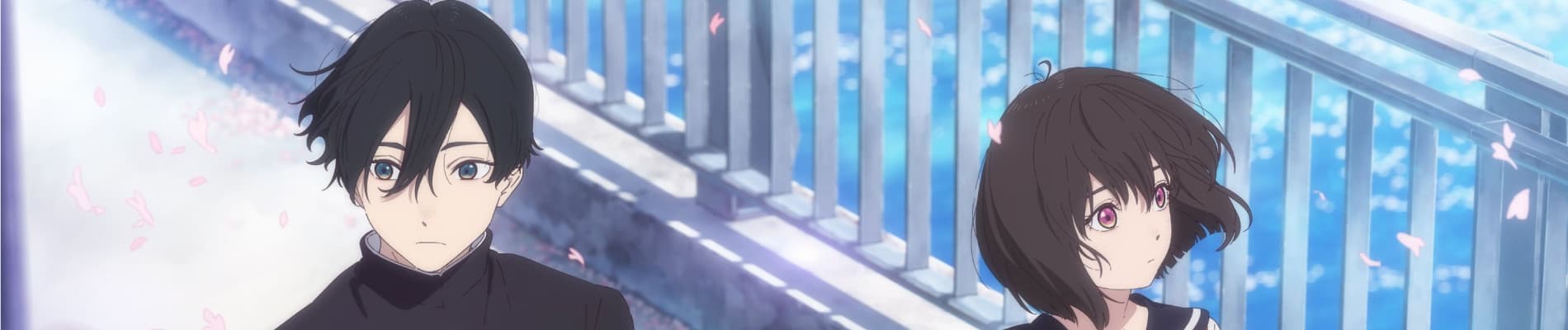
Shoushimin is an excellently constructed series on both the technical level with its mysteries and on the character front with how complex and compelling its leads are. As another early work of Yonezawa Honobu, the comparisons to Hyouka were almost inevitable given the latter’s acclaim. But despite there being many interesting comparisons, much of the talk has sadly focused on very superficial elements. To immediately get this point out of the way, the two series are indeed similar on a stylistic level, but that has more to do with being works by the same author rather than one being derivative or a prototype for the other. Shoushimin is distinct in its tone and themes with how it is far more dramatic in both its character dynamics and the consequences at stake. While the mysteries are still used to explore the characters, Shoushimin allowed Yonezawa to showcase his skill at constructing not just mundane puzzles like an afterschool club dispute but some rather serious situations that involve actual crime. It is from this that Shoushimin gets its identity as exploring life’s more dramatic situations and how characters respond to them; compared to Hyouka’s more everyday and comfortable atmosphere that is driven by satisfying one’s curiosity. Yet, while the show does use its mystery and character layers to enhance each other, they do sometimes find themselves in competition for the audience’s attention due to how dramatic and high stakes the situations can become. Although brilliantly put together, it does raise the question of whether the most intellectually compelling narrative and the most emotionally effective one are necessarily the same.
Perhaps the most immediately striking thing about Shoushimin, especially to a viewer going in with preconceived notions from Yonezawa’s other work, is its heavier atmosphere and tone. Part of this is down to the more dramatic nature of the show, both in the contents of its mystery and in the more confrontational and curt interactions between many of the characters. While the setting is still firmly in the mundane world of high school, it does not have this cosy or idealised veneer to it like most other stories set there. It is not meant to be a nostalgia trip where characters are written softer and quirkier than in real life to lull the viewer into a sense of comfortable suspension of disbelief. There is always something slightly tense or unsettling in the atmosphere of the show. Though it never gets to be truly uncomfortable or overwhelming in ways that might disrupt suspension of disbelief, instead it serves as a reminder to the viewer that there is always something deeper going on with its characters.
The atmosphere of the show is highlighted most of all with the excellent directing choices made to visualise Kobato’s inner thoughts. While most media attempts to draw a clear line between the inner world of a character and the “objective” third-person view of the camera, Shoushimin deftly blurs the two together. Scenes of Kobato’s thought process and hypothesizing are animated in the same style as the rest of the show, often showing him and the characters involved in the conversation at other locations around Kira (Gifu) City. It utilizes the visual language of film taken for granted in most shows to seamlessly transition between “reality” and Kobato’s inner world. Cuts that usually signal to the audience a change in camera angle or a move to another scene at a different location are used to enter and exit Kobato’s thoughts in a way that blends his inner world and reality, at times creating an almost dreamlike quality. Not only does it provide visual interest and variation to what would otherwise be static conversations taking place at a single location, but it also creates a subtle tension in the audience with the frequent need to be reminded of what is real within the show and what is in the minds of the characters. Of course, none of this ever becomes disorienting despite occasionally being used for dramatic effect, with there always being subtle but clear cues to differentiate things. All of it serves to excellently highlight how exceptional Kobato’s mind is at handling logic problems while showcasing his supposed “abnormalness” with how it is metaphorically represented on screen.
Beyond giving the mysteries an atmospheric and visual flair, the tone and directing choices aid in the exploration of the lead characters, Kobato and Osanai, as well as their complex relationship with each other. It presents the implicit question of what kind of person has both the inclination and capacity to solve mysteries and what might be the consequences of such a personality. The more subtle exploration into Kobato’s character of actually being cursed by his intelligence is fairly interesting, though the few overt discussions of it have sadly been rather hamfisted. Much of the ideas about Kobato’s character and beliefs are gleaned through inferences made from his more socially driven conversations, particularly with Kengo who acts as a good foil with his forthright personality. However, even within this dynamic, the show comes close to blatantly telling the audience the thesis of his character archetype in one or two instances. Arguably this was done for expedience and clarity since the show mainly uses Kobato as a point-of-view character instead of as the primary subject of its character study. But it is still disappointingly clumsy for what is otherwise a subtle and methodical show, especially since the whole “cursed with intelligence” archetype already runs the risk of coming off as “edgy” instead of compelling with how conceited it can appear.
Instead, it is Osanai’s character that Shoushimin dedicates it’s the majority of its narrative to exploring. Her portrayal is particularly excellent, from the way her mannerisms are animated to the layers of her voice acting. It all combines to create a complex character that is easy to see has a lot more going on under the surface but in a way that does not feel blatant or artificial. In a lot of other media, these more troubled and complicated characters tend to end up as caricatures or shallow stereotypes of certain tropes like yanderes. This often leads to performances that strain believability with characters flipping their supposed facades on a dime with only clumsy “cracks” in their mask to foreshadow it. This frankly often misuses the skills of their voice actors, either putting on such a complete performance that blindsides the audience or having such a blatantly artificial mask that there is little intrigue or depth to what the character's intentions are. Shoushimin avoids all of this not only with its strong character writing but also due to Youmiya Hina’s outstanding performance. She gives Osanai’s normal mannerisms a complexity as her demureness has an undeniable sincerity to it yet maintains an evident troubled or even sinister layer. While having facets to a character that permeates through all layers of their behaviour may sound like a rather basic expectation when spelt out so blatantly, it is unfortunately not a consistent benchmark that most media achieve, and in fairness is also much easier said than done a lot of the time. Shoushimin far surpasses this with its portrayal of Osanai which expertly balances the sincerity, complexity, and opaqueness of her character.
The complicated personalities of Shoushimin’s two leads come to form an intriguing relationship. While on the surface it can look like a more well-worn dynamic of two friends gradually discovering their feelings for each other, like for instance in Hyouka, there is a great deal more at play than just potential romantic feelings. Not only does a lot of Kobato and Osanai’s relationship hinge on their past together from middle school, adding a layer of history to everything, but it also eventually questions if their relationship is one of equals or if someone is actually using the other or feels the need to be more in control. While it does not get quite as dark as that might sound, it does indicate that there is perhaps too much baggage and complexity to be convincingly written for teenagers just starting high school. It does not reach the realm of impossibility or disbelief, especially helped by Shoushimin being well written to begin with, but it might have served the series better to have the characters be slightly older like in their first year of university. But this speaks more to anime’s preoccupation with high school setting that bends some narratives to fit it rather than anything that fundamentally undermines the suspension of disbelief Shoushimin works hard to establish. Still, there is ample to find compelling about how complicated their characters and their shared history all is before it finally builds up to powerful and emotional moments at the conclusion of the season.
The mysteries themselves still make good use of the high school setting and divide the show between different layers even within the genre. There are smaller mundane puzzles that fit into single episodes and longer more consequential mysteries that are set up over the span of a few episodes. Only the opening “every day mystery” in the first episode falls a little short, not creating the best first impression with how it is solved primarily with tenuous assumptions or even leaps in logic. But that is somewhat understandable since the episode also had to dedicate a substantial amount of time to character introductions and laying other parts of the series’ foundation. From there on every one of Shoushimin’s mysteries contains the expected polish and finesse that Yonezawa is known for in their construction. The “everyday mysteries” in each episode provide the audience with an entertaining and light-hearted problem to work out with the characters while serving as a distraction or set up for clues to the larger mystery playing out in the background.
This approach of having different narrative layers to the mystery is excellently utilized throughout the show, particularly in the first four episodes which adapt the first light novel. Many innocuous events that in most other shows would only further characterization end up doing double duty in Shoushimin since they are used to give the audience and characters bits of information that prove useful later. The eventual drama playing out on screen is often a powerful distraction, not only due to its emotional intensity but also because it encourages even an attentive viewer to take more interest in the character implications of events instead of how they might mechanically fit into another mystery. There are still limitations to this approach since Shoushimin is not a “traditional” mystery series that opens with a problem being presented to its protagonist, allowing them to seek out a solution the entire time. At worst it leads to some of the information gained or sequences of events feeling a bit contrived, or too coincidental, but this is largely smoothed over by being reasonably in service of exploring the characters as well. It also still ensures that the audience does not feel overly misled or blindsided since the drama is interesting in its own right in revealing more about the characters.
It is in the latter half of the series that adapts the second light novel where this method of blending the mystery and drama genres starts to show some of the tension inherent in that approach. While the overarching mystery is still brilliantly constructed, there is a sudden escalation in the drama that seriously overwhelms the viewer’s capacity to maintain a partially detached analytical perspective required to appreciate the mystery elements or even see them coming at all. And not unreasonably so since the show’s dual genres encourage the viewer to be invested in the characters in addition to appreciating the cleverness of the mysteries. The dramatic events of the latter episodes are still within the realm of plausibility for a mundane high school setting, but it would be something only expected, and far more at home, in a more stylised teen drama. The result is the viewer assuming that this is Shoushimin shifting gears to focus squarely on the character drama in the vein of a “mystery gone wrong” plotline instead of the entire sequence actually being another part of the puzzle.
There is ultimately good reason why the show makes such a sudden dramatic escalation that chafes heavily against the tone and atmosphere it has established thus far. It also definitely proves impressive that it dovetails nicely with a larger mystery that is fascinating both on a technical level and what it reveals about the characters. Yet while the intent of the almost incredulous escalation might have been to signal to the viewer that something more at play, it cannot help but feel like it is punishing the viewer for being emotionally invested or absorbed in the narrative instead of remaining aloof and looking out for just the intellectual element of the mystery. At best this only retroactively does away with the strain on the suspension of disbelief instead of preventing one in the first place. This approach does have the additional strength in how it matches Kobato’s perspective of also being too preoccupied with the immediate events to notice, but it is still ultimately asking the audience to either feel for the characters or relish in the intellectual puzzles when ideally the two should come together. This effect will likely vary from viewer to viewer, and it might actually be a sign of suffering from success if Shoushimin does capture someone’s attention to that great a degree, but it is also difficult to completely overlook how inherent this potential clash of different genre elements is.
However, the payoff does make a lot of this tension, or even compromise, in the different layers of the narrative justified with how it serves as an incredibly compelling examination of Osanai’s character. The series uses the occasional wolf metaphors and motifs with her character can feel a bit dramatic given the image it conjures when used by teenagers tends to be self-aggrandizing. While more refined imagery or use of literary devices might have made for more effective foreshadowing, the comparisons to a wolf still turn out to be an apt descriptor. The way the show explores her vengeful side is extremely visceral in how realistic it still feels despite the proportions of the consequences. It avoids much of the melodrama that can come with this territory by convincingly showing how someone like her with little physical strength or special connections can do grievous harm to someone. The use, and even abuse, of societal institutions and the preconceptions of other people is extraordinary and crafty enough to leave a strong impression without it feeling unbelievable or meant to stroke the ego of the character. This more than makes up for any minor feelings of contrivance or the tenuousness of certain parts of the chain of events. However, this does return to the question of whether having the characters be slightly older would render this more impactful and convincing given the consequences of what has transpired. The characterisation of Osanai and Kobato in a vacuum is without a doubt excellent, but any reminder that they are first-year high school students does place its believability under a certain amount of strain.
All this serves to give Shoushimin an identity distinct from more ubiquitous “serious” mystery stories that deal entirely with crime or similarly consequential events, and from mundane “everyday” mysteries series like Hyouka. The mixing of both the ordinary and the extraordinary in Shoushimin highlights the tension between these two worlds and parallels the characters’ struggle with the quirks in their personalities. The mundane mysteries compliment the dramatic ones not just through their contrast but also as a window into the more carefree world that Kobato and Osanai wish they could solely inhabit. Instead, each time they are enticed or thrust into solving something more serious, it leaves the viewer with a feeling of tension not just at the material stakes but on the kind of internal conflict it places the characters in. The reluctant detective archetype in most mysteries is used mostly as a point of dramatic flair or tension that impedes the solving of the case instead of forming part of a real character arc. While Shoushimin still has a way to go in fully exploring this aspect of Kobato and has more to reveal about Osanai, it has clearly set itself up to do so and demonstrates it is doing more than the mystery genre standard of subordinating its characters as mere vehicles to resolve the plot.
Overall, Shoushimin is an excellent combination of mystery and character drama that uses elements of both to enhance each other. Even within the mystery genre alone, it demonstrates how mundane and extraordinary mysteries can co-exist in the same narrative, not only as thematic contrast but as ways to build intrigue for each other. Though even with the construction of the series, especially its mysteries, being excellent on a technical and intellectual level, it is hard to completely overlook how it does not completely blend with its character side. It is impressive that the seemingly character driven or social scenes are also mechanically important to the mystery, but that again speaks to quality in the nuts and bolts of the story instead of its more intangible elements like atmosphere or suspension of disbelief. With that, it seems apt for the series to be a 9 out of 10, not quite reaching that full rating that would come with really blending the two elements into something far greater. Even then, it is hard to understate how excellently constructed the mysteries are, creating a great deal of satisfaction when they are all put together. Perhaps if the series had a longer run, like Hyouka benefitted from, that adapted more of its material and further fleshed out the characters, it could have risen to a ten when taken as a whole. But with a second season in the works, it is more than poised to make that ten a reality soon with the strong foundations it has established here.
32 out of 40 users liked this review