
__Part 1 Step-Siblings__
“I cannot fall in love with you. Because, after all, we were step-siblings.”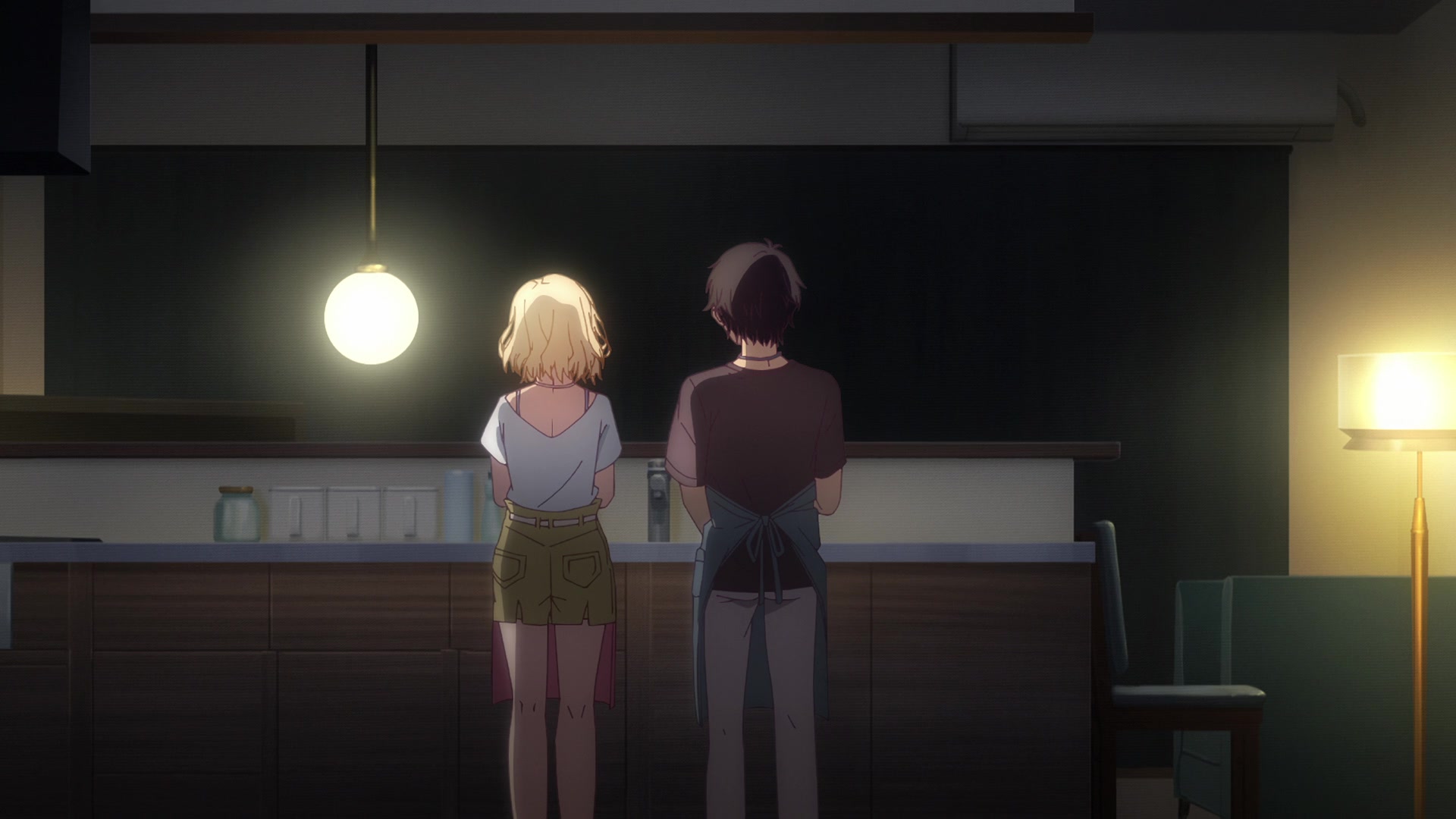
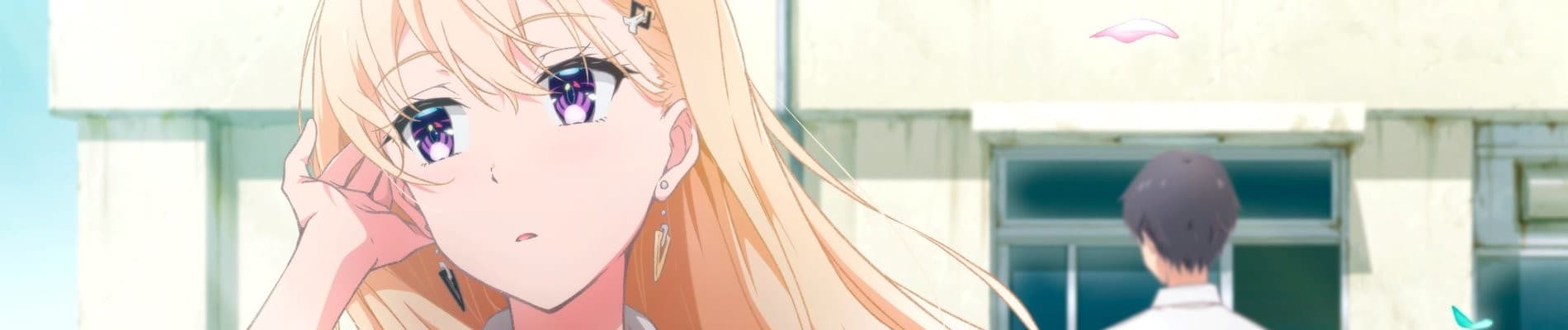
Romance is often unpredictable. You can be tainted for years unfazed by the romantic hints that are showered around you, but there can be that unexpected moment where you've met the person you deem to be a viable romantic partner. Initially, you are unsure of the things you feel and moments where you denied and ignored their existence in order to create a temporary peace with yourself and the people you had feelings with, but you cannot deny that the feeling inside your chest is slowly blossoming day by day until it eventually bursts. Normally, people would just confess to satisfy their feelings, but due to specific circumstances, they weren't able to. In this anime, we follow Yuuta Asamura (Kouhei Amasaki) and Saki Ayase (Yuki Nakashima), both high school students who were strangers to step-siblings overnight because their parents remarried. Initially, they've started their step-sibling relationship as nothing more than cautious, considerate, but rather distant. As time went by, they started to notice each other, which eventually led to them having unrequited feelings for each other. A classic falling in love story. However, there is an obvious obstacle that stopped them from taking a step forward, and that is the label of a “step sibling.”
Step-siblings are in an awkward situation. As the show implies, both of you are practically strangers at one point, forced to be siblings due to contractual and social reasons out of your control. There is a clear point in society that you should never have anything related to romance or intimacy with your siblings. Society condemned the act as undesirable, whether socially or scientifically, but what about step-siblings? On one hand, it would justify its act of intimacy in a scientific light since these characters are not biologically related but rather just contractually related. But the latter option is where it holds back. The morality of having romantic intentions with your stepsister can still be a taboo topic regarding its relation to having romantic intentions within the family. As the characters in the anime put it, it's inappropriate—or rather immoral—in the situation.
It would be an easy answer to say, “Just don't do it and find another person,” if you are looking from an outside perspective. But falling in love with a person is not a switch you can just turn off at ease. Love is complicated, even when it is morally forbidden. Many animes taking the step sibling trope would usually gloss over the bombshell and just play the romance as it is, either in a comedic light or an entirely ignorant take. With that being said, Days with My Stepsister presents this moral dilemma topic in a more realistic and down-to-earth way that really challenges a person’s perspective over this relationship, whether which side of the morality you side on.
Following the social norms, or being selfish?
This anime obviously would not change your current perspective on romantic intentions among stepbrothers, nor would it change the status quo, but it would enlighten you to be open-minded about the silent screams of the characters’s hearts. ***
__Part 2
A Blossoming Romance__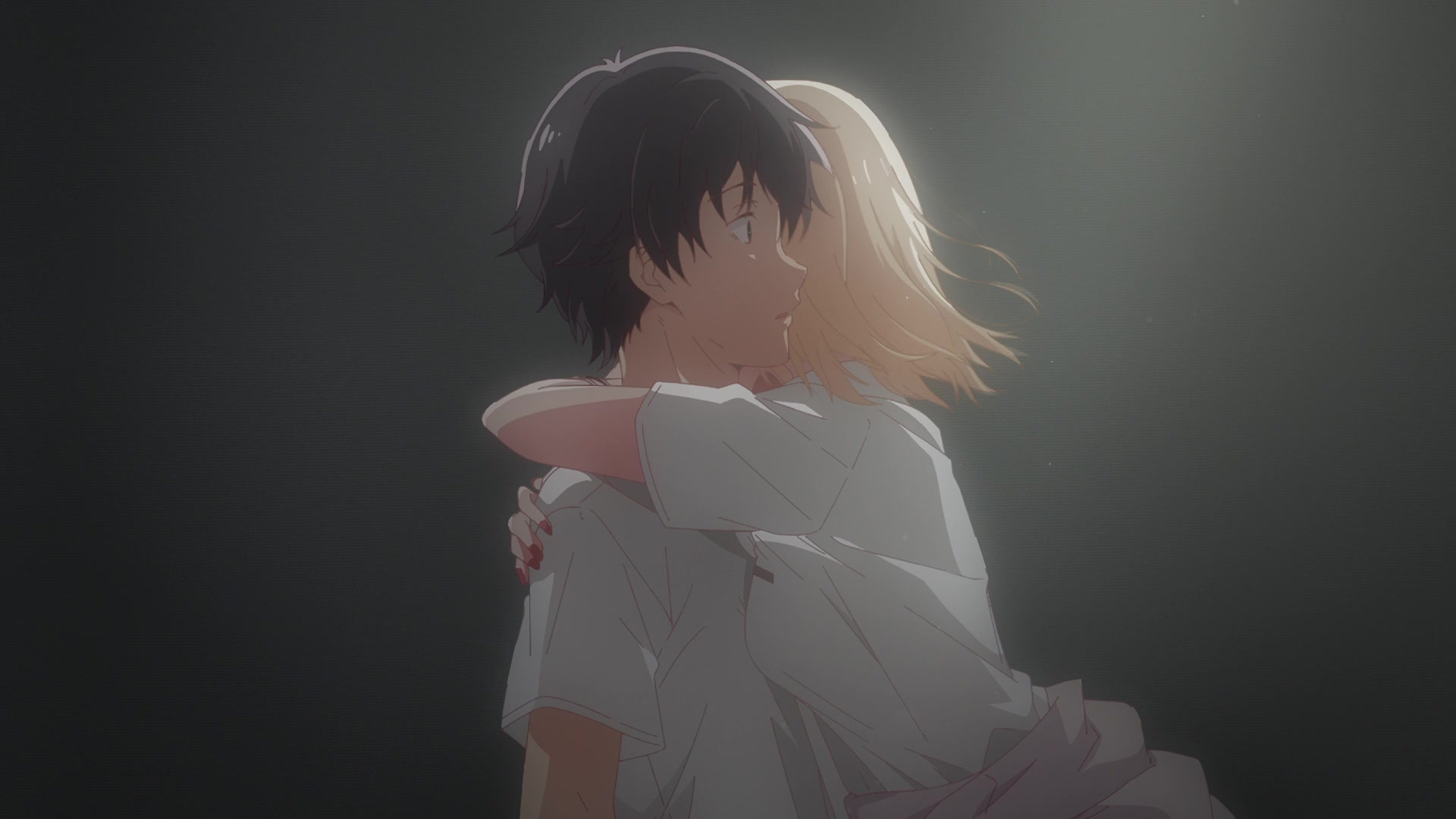
One of the main takeaways, especially in Episode 1 of this anime, is that it is slow in many aspects. I would like to talk about how this series was directed, but I will save that for Part 3 of this review. For now, I would like to talk about the slow, progressive romance in the series.
A slow romance story is something viewers mainly tick off. You invested your time following these characters, and there is very little development between them. A lot of romance anime have this issue lightening up around them and can make or break the overall series. However, this anime takes that “slow” romance as an advantage and an addition to its already sensitive topic. Like I mentioned in Part 1, these characters are having a dilemma about going forward with each other because of the status quo. It felt refreshing that the trope of being distant towards the person you are slowly developing romance with has a stronger impact and a sense of interpersonal threat.
You are greeted with these characters, who are distant and awkward towards each other. It makes sense that they would, since they were caught off guard by the circumstances they were given. As the story went by, they started to notice each other, finding out little things and doing mundane tasks that can be an eye roller to some, but this was a significant moment between these characters, even if it was as simple as noticing how one speaks or having that odd comfort of just eating alone together in silence.
Although this anime mostly leans on slice-of-life aspects, focusing mainly outside of the character’s home while also interacting with side characters that are significant in their own way, It kind of worked in some way, demonstrating their inner thoughts and the retrospection space of these characters. ***
__Part 3
Directing a Light Novel Adaptation__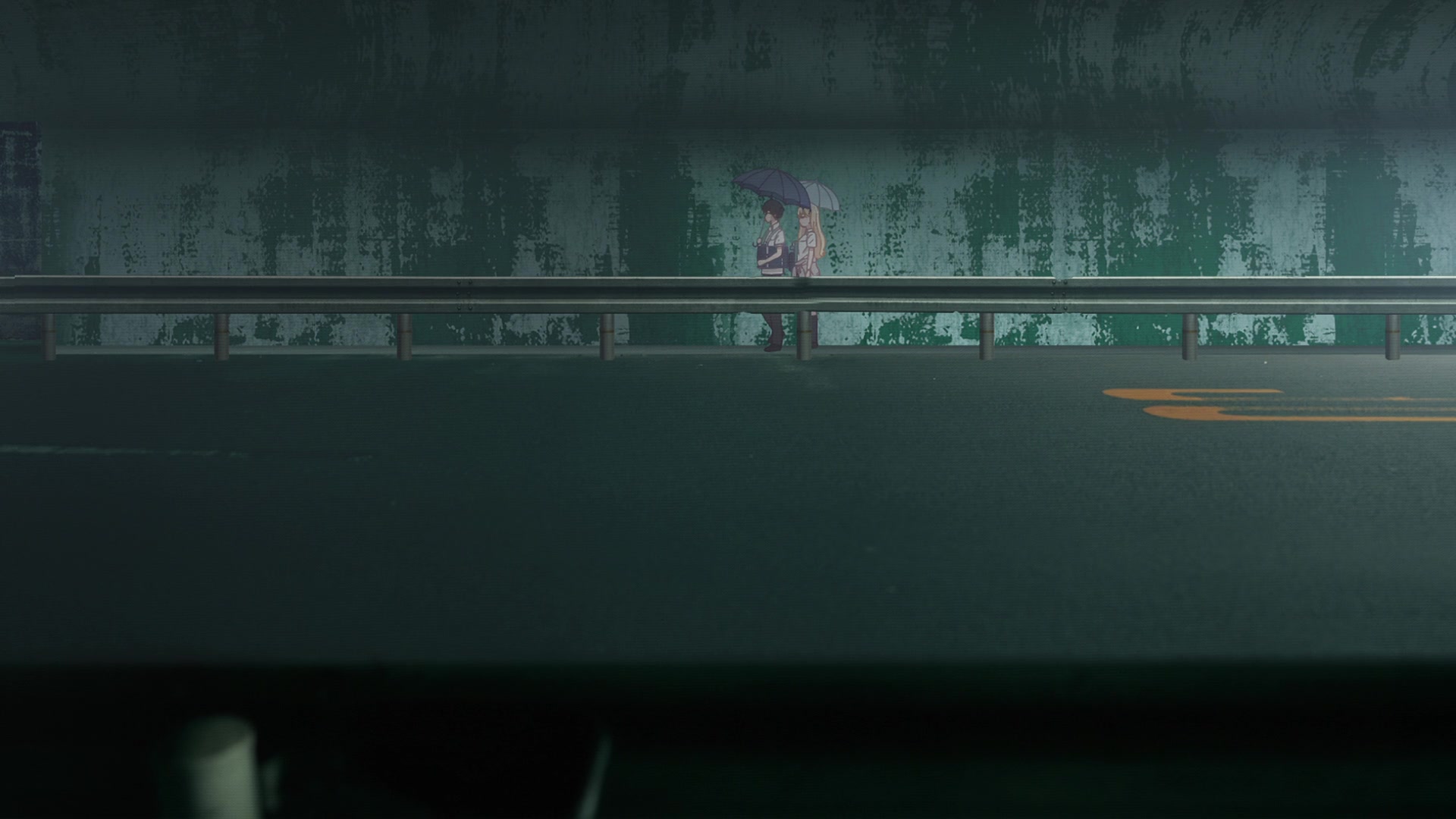
Light novel series are generally harder to adapt than manga series in terms of the directorial side. Since mangas already have visual cues, you can just add in-between scenes with a director’s flair. However, light novel adaptations are generally dialogue-driven, letting the director (Soudai Ueno) and the staff fill in the rest of the gaps, which is huge. It is generally not a huge problem since this is what adaptations are about. Just take time with the production and give those creative minds time, but we all know about the open secret in the anime industry that things get rushed more than they should have been. If the story is already strong, then it's fine, but it can be dragged down by its direction.
One notable example I can give is Angel Next Door Spoils Me Rotten, which is a Winter 2023 anime from a light novel adaptation. The original source material is considered really good by the readers, but looking at reviews of the anime adaptation on AniList, for example, showed a rather significant amount of negative reviews. These reviews mainly pertain to how “boring” or “dull”. One main reason for it is how the adaptation was handled. The Light Novel was rather fast-paced but didn't involve that many visuals around the characters. So if you adapt a series that is mainly about that, you will result in an adaptation where their animation mostly revolves around moving lips and a bit of character movement here and there. The charm of the story is still there, but it is pushed down by its uninspiring animation. There are a lot of examples that support or oppose this argument,but the reason I have brought this up is that this anime adaptation might be a repeat of what I said above.
To see it through, I read the light novel and watched the anime simultaneously to see what could be a huge difference when it comes to its direction, and I would like to say that the anime has some highlights and bold choices that make the overall direction of this series stand out, but there are still things that hold it back.
For instance, I appreciate it that the anime took a more melancholic and silent approach with its adaptation, giving off those slowburn western indie festival film vibes that complimented well with the story they wanted to tell. The story acknowledges its taboo subjects and the overall nature and personality of the main characters in the series and incorporates it in subtly quiet shots with a bit of flair with its dialogue-focused sequences. The distinction between inner monologues and diary sequences alongside character interactions really helped the overall immersion of the series. This is best illustrated in the second half of Episode 8 where Saki and Yuuta are in the living room together, sharing a conversation and a bite of food. The silence in these scenes helped the gravity of the emotions characters felt, and I think it's quite a genius move to do so. However, the unique direction this anime took can be something that drags this series down. In comparison to the light novel and anime, the anime is pretty slow. I can already see a lot of reviews heavily leaning towards this, which can be detrimental for viewers who are not used to this kind of format. If you ask me, this direction definitely worked for me since this tone is also how I imagined it while reading the light novel.
Despite what I have said above, there are some main points where it is detrimental to the series that even I, as a light novel reader, can find quite disappointing. One main factor around which the issues revolve is not understanding what these moments mean for these characters. In Episodes 2 and 3, there is a significant moment regarding Ayase, but the anime adaptation brushed the moment off and presented it as something that doesn't hold much importance. Another one is the side character of Shiroi Yomiuri (Minori Suzuki), where it's obvious for someone who reads the light novel and compares it to the series that this is not the same character in the light novel. This is especially true in Episode 5, where Shiroi is subtly portrayed as a losing heroine, whereas the light novel doesn't. These are the major inconsistencies that stand out to me, but there are many that have been sprinkled all around.
Is this a passable light novel adaptation? I would say the tone nailed it, and I definitely enjoyed and connected to the somber tone it presented, but understanding these characters in specific moments unfortunately got lost in translation. ***
Conclusion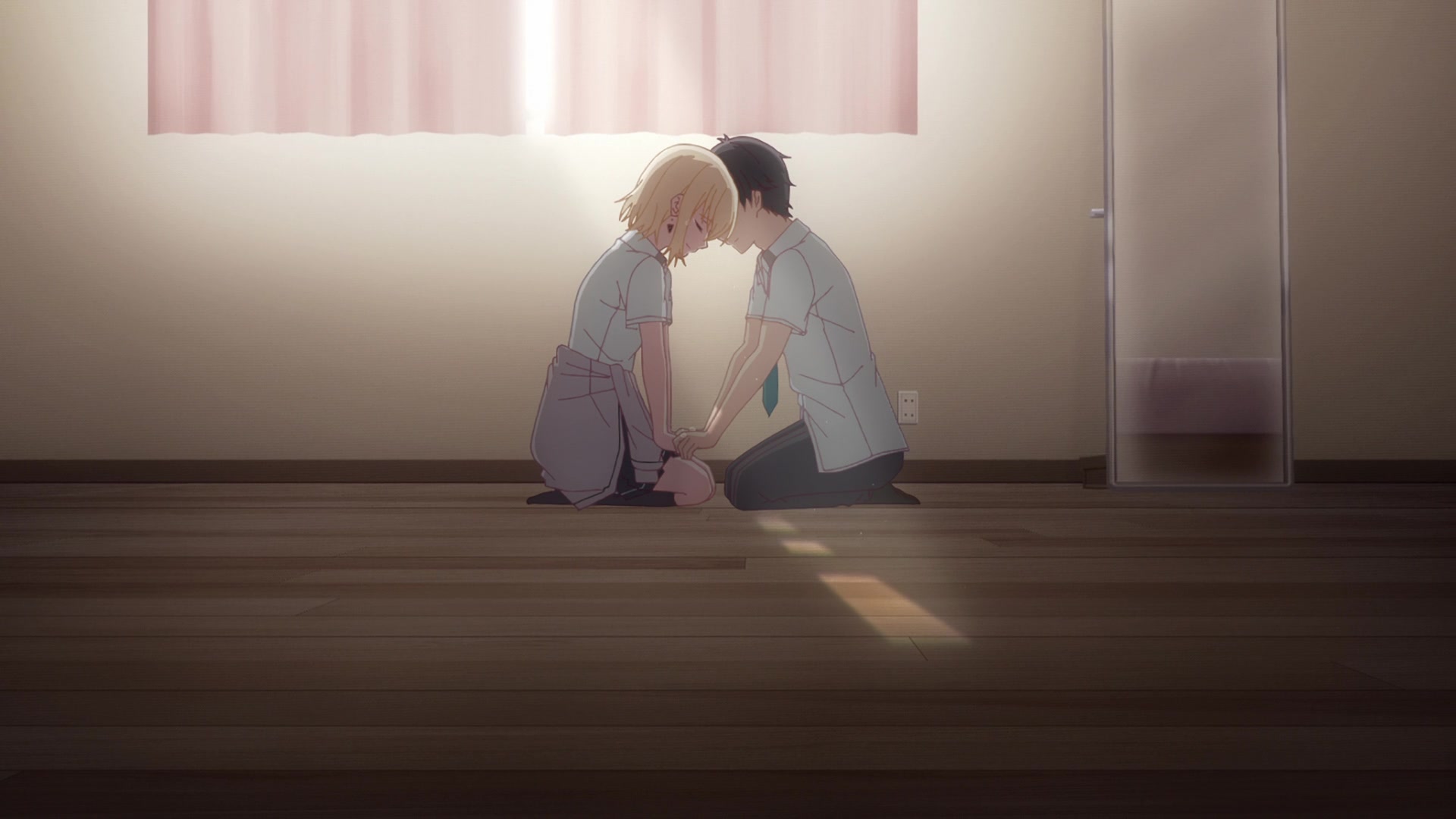
Days with My Stepsister is one of the most unique romance anime out there that tackles a taboo subject and takes it in a more down-to-earth tone, complimented by its slower burn tone than counterparts would otherwise aim in the opposite direction. However, there are some moments that feel like you are missing a huge piece of the puzzle inside its unique directorial style. If you want to experience this story in full, I would highly recommend reading the Light Novels instead, since there are a lot of plot-significant details that are glossed over and/or recontextualized in the anime. If you are an anime watcher only, you might feel that sense of incompleteness from its mature storytelling that you unfortunately have to fill in the gaps on your own. ***