Jujutsu Kaisen
a review by Krynn
a review by Krynn
The power systems are one of the best ever made. The 2 main forms are: cursed energy, a form of energy, like in any other shounen; and cursed technique, which is where it shines.
Cursed energy is like the basic 'ki' or 'chakra', but abit changed.
Cursed technique is specific abilities that are made possible through cursed energy. The abilities can sometimes be edited, too. It's basically a trade-off; the basic premise is in order to have a power, there must be a cost, kind of like alchemy from Fullmetal Alchemist, except it's not limited to physical materials and souls.. actually it's not limited at all in what it's capable of, the only limit is that the specific techniques seem to be hereditary, and so characters can't choose their own techniques, or even whether they're born with the ability to use cursed energy. But beyond the basic techniques, if they're skilled enough, they can generally sacrifice some part of it (e.g. range) for something else (e.g. power). It's like the Wishes from Tsubasa Reservoir Chronicles, except the cost is less arbitrary, and it can be used in major ways or smaller ways, and the deal being made is either with the cursed energy itself, or with another sorcerer (Binding Vows), or placed on you at birth for unexplained reasons (Heavenly Restrictions). And because the techniques are abilities, and not increases to power, there's no 'limit' to how strong an ability could be. It's not strength vs strength, it's ruleset vs ruleset; which is many times more enticing than the former.
But there is always a cost to balance it, whether it's that sorcerers with specific abilities are born hundreds of years apart, or that a technique user isn't aware of the ability at all. Even cursed energy itself is, to a degree, created from negative emotions.
The power system did fall off near the end, with
Sukuna, Todo, etc, becoming Binding Vow merchants, and it wasn't explained.
Alot of it simply isn't explained, too, for example, why or how only certain people can make binding vows, or exactly how strong a black flash is.
Also the entire power system is very complex, and presented in a way that makes it near impossible for even the most enthusiastic readers to fully comprehend it. Many hate that- I like that aspect of it, though.
The setting is modern-day Japan, except with 3 'races': humans, curses, and hybrids. Curses plague the world in many ways, and a select few humans are born with an amount cursed energy, and Jujutsu Headquarters recruits as many of them as possible to train them to help fight against curses. Unfortunately, the humans, being humans, can't even get along with themselves, and form rivalries and alliances. Perfect setting for a story of action, friendships, and slaughter.
Most of the story is really good, like 9/10 or so. The worldbuilding and foreshadowing are done really well, from the very beginning until now. Statements are made that come back much later, and I can't explain how well it's done in words, so I'll give some examples, such as when Sukuna makes his deal with
That comes back many arcs later. Or the stitches on
That is a major plot point, and it's shown from the beginning yet never mentioned until later, when it comes up.
Specifically, the masterful foreshadowing is in part because of the placement of the arcs. Gojo's Past arc is shown later, and it explains alot more than just his backstory. And Jujutsu Kaisen 0, the prequel, can be read / watched before the main story or after it, or at any point in between, but in spite of being only 4 chapters long, it explains major parts of the story. If all the arcs were just presented in chronological order, Jujutsu Kaisen wouldn't be nearly what it is.
JJK can also be seen as an analysis of despair. Besides the characters that are just broken (ahem Gojo), alot of them seem to get their cursed powers from overpowering negative emotions such as despair. For example, there is a character who had to go through an entire life dealing with the very corrupt legal system, and he had given everything up to try to improve the world, but, much like real life, he couldn't change anything. His technique was eventually born out of that, it's power corresponding to the darkness he felt (alot). But the reason it's an analysis of despair is it tackles the problem of 'what does he do now'? He could try to fight with his newfound powers, to change the legal system. Or he could fight for revenge. Or he could give up, as changing the world is quite a big and improbable task, and do nothing. Or he could turn himself in to the legal authorities. Or he could forget all that and join in the fight against a curse with Yuji.
The point is, the question is there: where do you go after despair? And it's not limited to a few of the characters, but most of them actually: Junpei's situation was very similar. Yuta's starting point is complete despair. Yuji is constantly crushed to the depths of despair. Gojo and Geto haven't always been so strong; they've suffered before, and had choices to make in the past. But whether it's a main protagonist or a side character antagonist, each of them has their own suffering and addresses it in different ways.
So, I've established that it's a good story, but maybe JJK follows troupes? I mean we already have the Strongest on the good guys' side, and also, the protagonists have to win and live on, right??
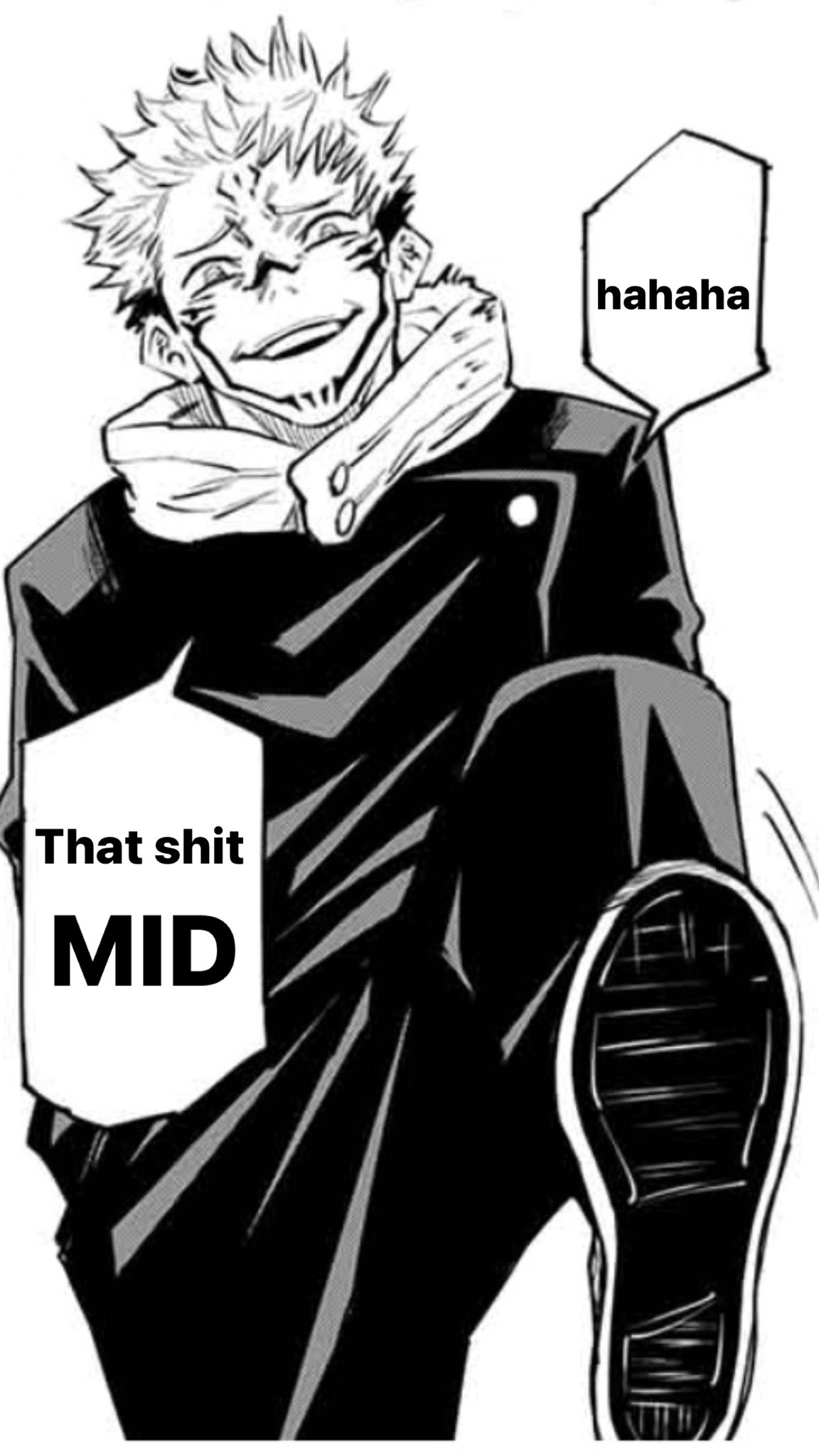
Troupes are too mid for this manga. It can always go the other direction. This manga does twists and surprises amazingly. The author, Gege, seems to have complete control over what direction he wants the story to go in, and every aspect of it, without anything feeling forced (except the end). Even the word Kaisen is a word he made up to match the feel of the story, roughly translating to 'endless fight'. He just throws in an entire plotline about America, because he can, and I think he doesn't like the corrupt American government.... but the point is he can add whatever he wants and make it actually good.
The fights feel similar to Bleach fights, from what I've seen: the powers may be random, but there is always a focus on resolve and honor. JJK did not hesitate to drop it's world's greatest swordsman, easily unparallelled, along with a kappa spirit of Sumo wrestling, for just 5 chapters, to show a point about the nature of true warriors, no matter their professions or backgrounds.
Now after reading those chapters, you might say
Bro that's cringe
And that is a good point.. introducing those few characters just to show a point was probably the most 'cringe' and one of the most philosophical things JJK has done, but it somehow manages to not be bad: JJK is actually starting to become an anime/manga that even 'non-weeb' 'normies' unironically like.
The story's biggest flaw is that it isn't always consistent in the peak quality, unlike One Piece. For example: while the kappa and swordsman did have great lines and great scenes, they were kind of a cheat power-up for Maki. And Mythic Beast: Amber was a really cool transformation, but it wasn't foreshadowed or led up to at all.
I feel like Gege had 3 stages of the story so far: 1, the buildup, 2, the craziness of the culling games, and 3, depression. The recent chapters seem to take on a theme of loneliness that comes from being the strongest, too.
In the end, for about a year, the story pretty much fell off. Unfinished plots, lack of necessary backstories, etc. There was some good in it, and some things that tied together and were concluded- in ways that couldn't really have been done any other way, too, for example,
Yuta becoming the 'next Gojo', or Mahoraga ending up as simply a power up.-
but mostly it was unfinished and rushed.
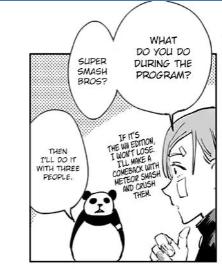
JJK does not hesitate at all to make direct references to (many) other things, especially other anime, manga, games, books, and real-life celebrities. And when I say direct I mean very direct.
The art is amazing, especially the angles and the fight scenes. I cannot emphasize this enough. The choreography is stunning. It's almost like watching immaculate animation on still pages. If Chainsaw Man has the perfect angles for expressions, then Jjk has the perfect angles for fight scenes. That is truly something I will miss.
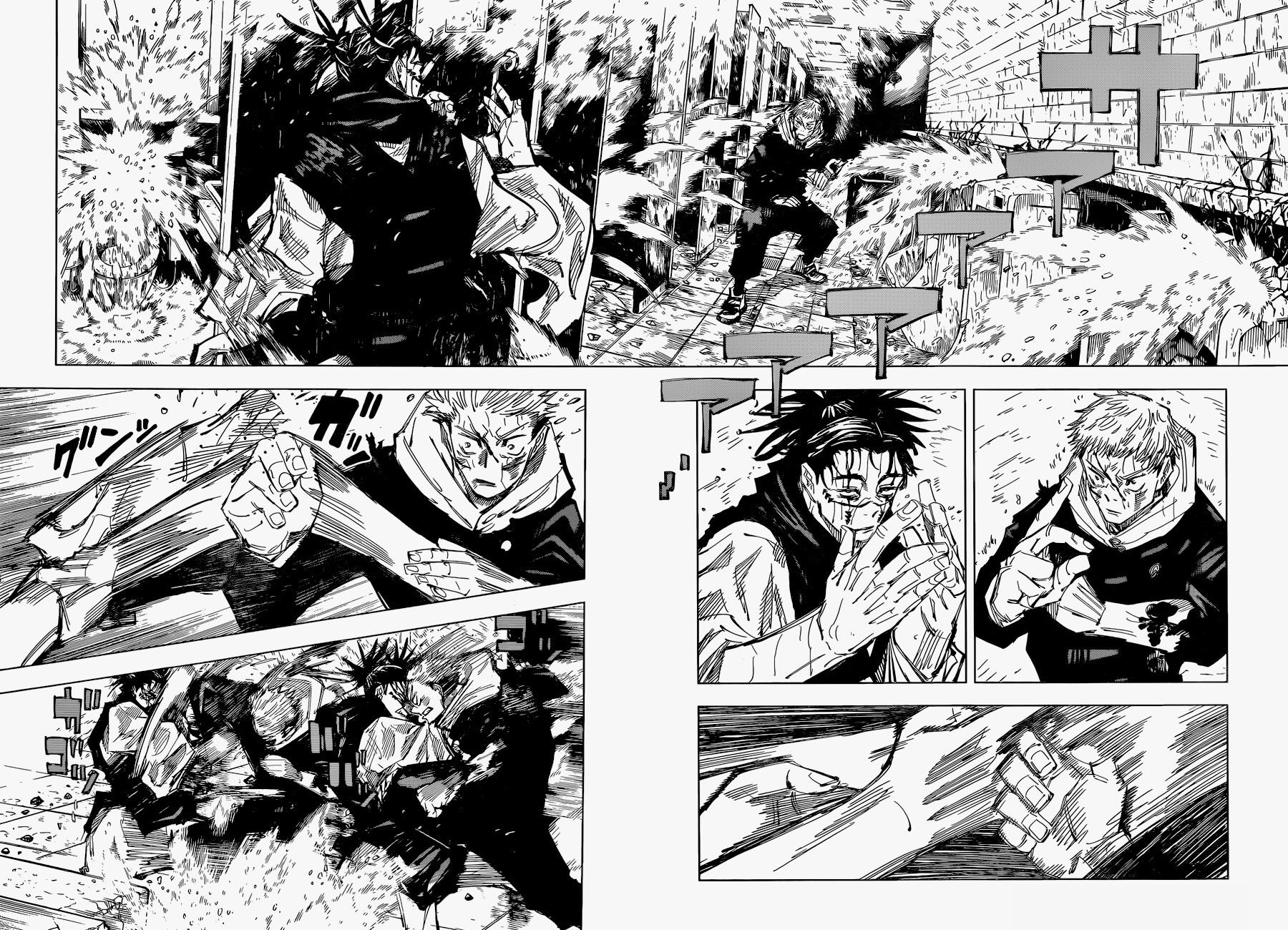
Not that those panels are a perfect example of it, but really, you'd have to see the fights to understand.
The art style does change over time, too.
In addition, JJK has many dark themes, and dark things such as transfigured humans and curses, yet the art keeps up the scary and suspense aspects while keeping it pretty, and without going into horror or gore. As someone who loves dark topics but doesn't enjoy looking at things meant to fill you with disgust or horror, I see this as a big win.
Now, onto some of the characters at the end, as this part's pretty long. Also, the characters, both the men and the women, in jjk are new levels of attractive. I only really think Chainsaw Man rivals female character design here. Also, Junpei somehow manages to look even more innocent than he did in the anime.
Let's start with the 'good guys'.
Gojo, a character who is about to become listed as the #1 most popular character on Anilist. He is often liked simply because of his utter coolness or attractiveness, but his full personality is revealed very slowly throughout the arcs. He's willing to risk his life for good people, although he does often act with a pride and confidence nearing mockery. Ah, also he's widely known as the strongest by literally everyone in the jjk world; someone with a god-complex and the power to back it up.
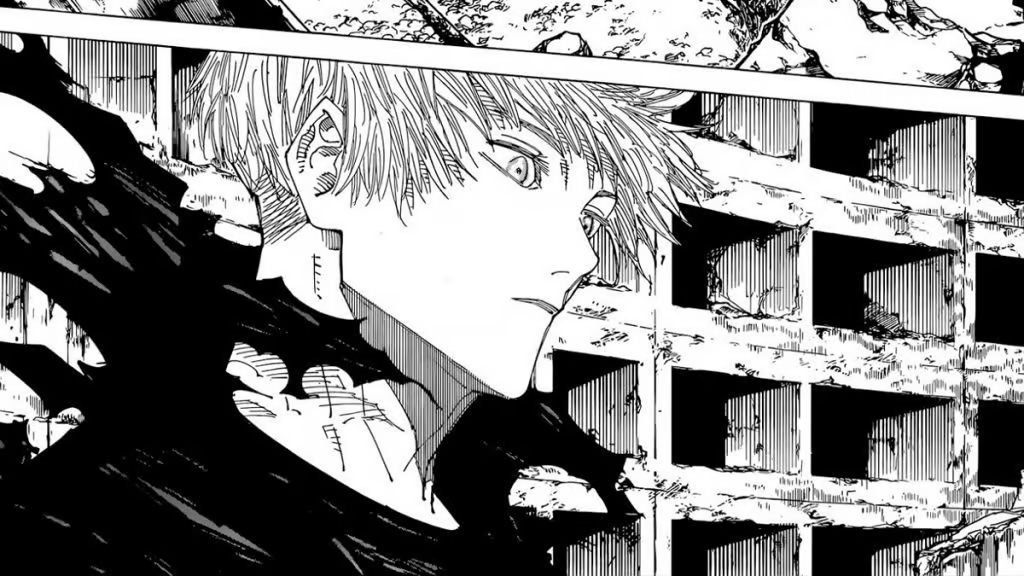
He is very silly, too.
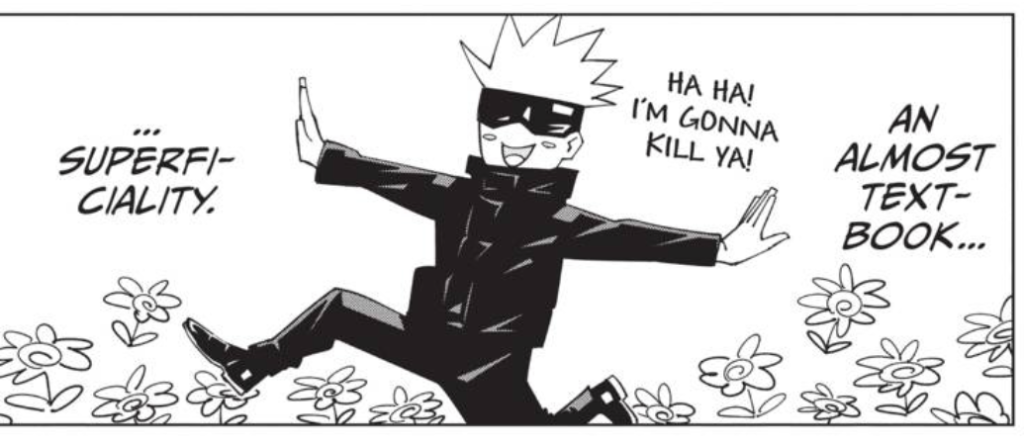
Now, on to his students:
The main protagonist, when Gojo's not stealing the show. Itadori is not your usual shounen protagonist: he's worse. Little aptitude for using cursed energy. No cool backstory clan like Megumi. A curse inside of him that literally ruins his life. He can be a dumbass and he knows it. The coolest nickname he gets in the entire series so far is "The Tiger of West Junior High" in chapter 1, from his old school. Not very flattering for a protagonist.
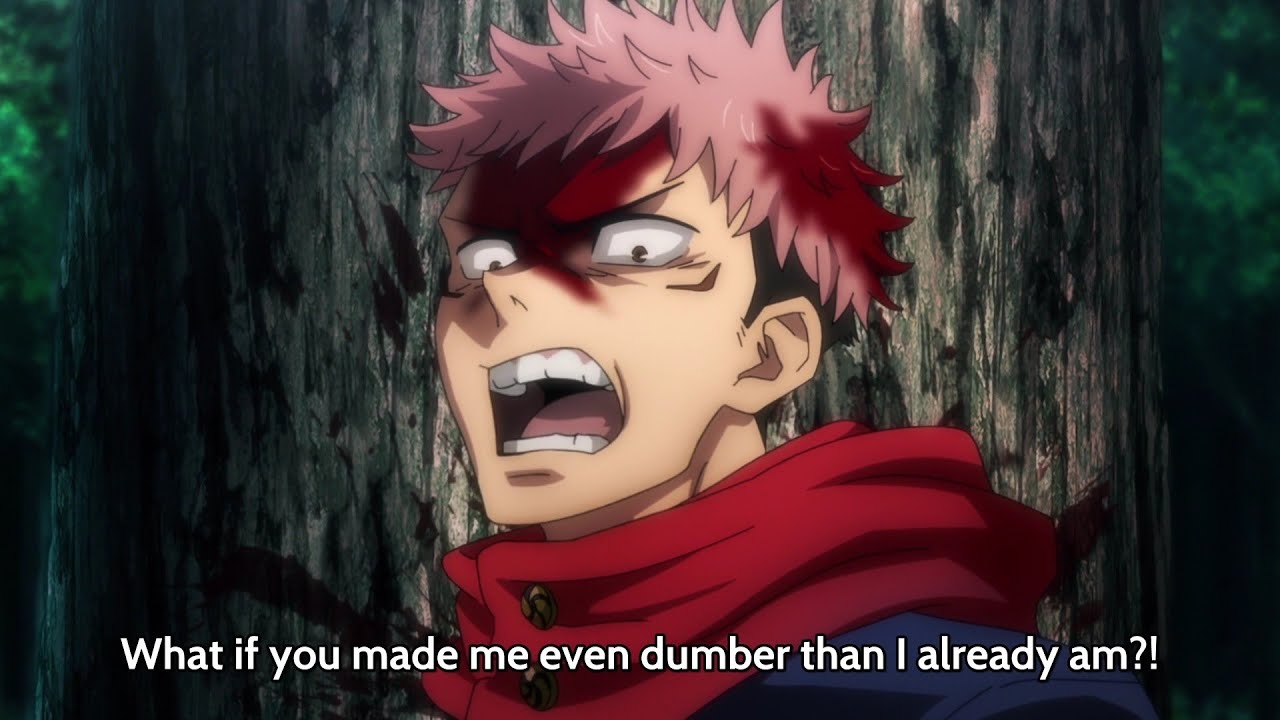
But to give him credit, he did earn that nickname due to his pure, beast-like physical strength. It does make up for alot, although he eventually has to try to learn to use Black Flash to fight sorcerers better. But the point is, for a protagonist he doesn't seem to get many protagonist benefits. He is crushed to the point he questions his own logic. He sets his standards pretty low (doesn't want his friends to die in 'wrong' ways, such as cruelty) yet he loses alot of his fights, and gets carried by Gojo or Sukuna. He is strong but the enemies are often so much stronger they make him look, well..
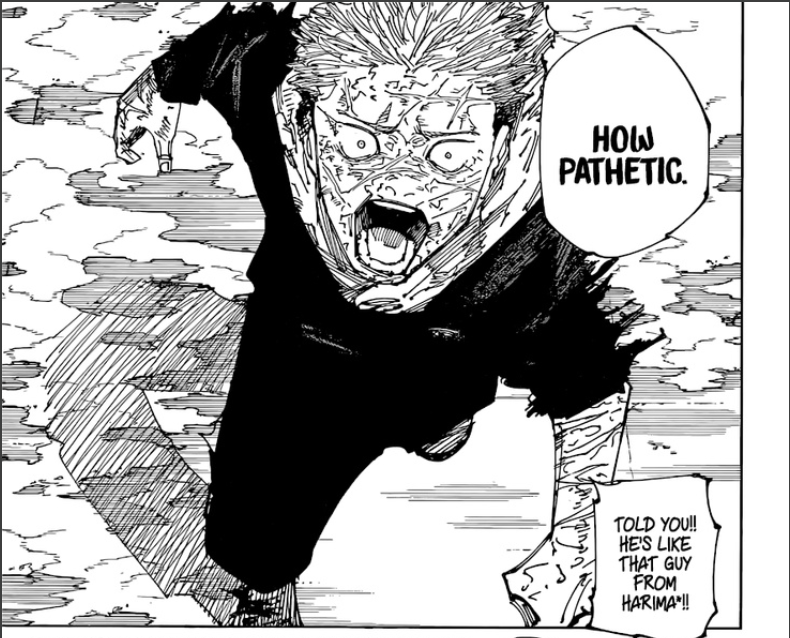
But here's why I think he's one of the best shounen protagonists: while he may lack the cursed energy and such, he never strays from his base convictions. He has always been willing to sacrifice himself (meaning death) if that means less lives are lost, and that never changes. He might not be impressive as a sorcerer, but as a guy, he's impressive and I see him as a role model. (Plus he's only 15, too much is placed on him.) He keeps his cool, even in situations that would make the realest ones of us angry.
Because of his conviction that life, or at the very least death, should be 'good', he always keeps himself cheerful, even if that means distractions, and no matter who he interacts with, he's good at forming connections, which is what stands out the most about him to me. No matter who it is, as long as they're not pure cruel, he'll probably be relating to them a few scenes later. It doesn't solve the conflict for him or anything; it's just something about him.
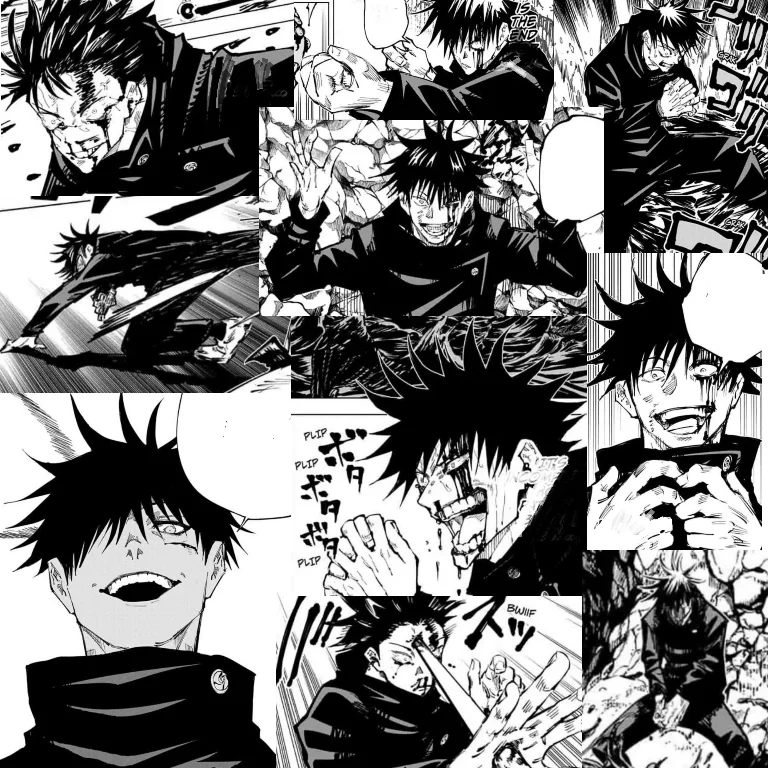
This dude, almost a tertiary character compared to the 2 listed above, is the one who follows the 'traditional protagonist route'. Learning the 'ninja'-like techniques. Inheriting his clan's ways (and more). Yet his emo, always cool, face conceals that he's just as much of a chill dumbass as the other 2 in the main trio of Gojo's students. He also doesn't take much more disrespect than Sukuna himself would.
Less Useless is an understatement, as she is not any worse than the other 2. Her backstory is hinted at from the very beginning, too. It is true that she and Megumi didn't appeal to me as much, as characters, but that doesn't mean they're bad at all (Nobara legit won the Crunchyroll best girl award).
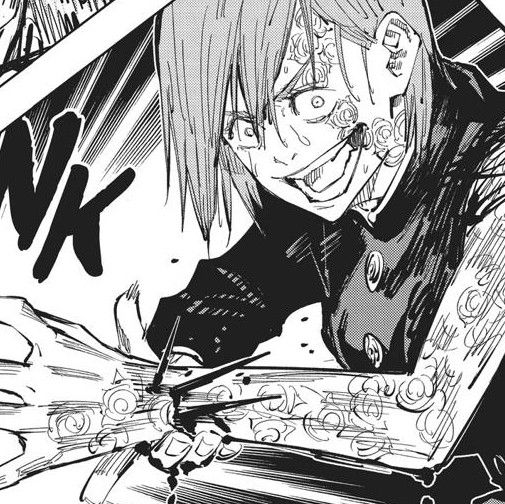
The dynamic of these 3 is a pretty good showcase of how chill all the (modern) people in the series are. In spite of being anime protagonists, they're just normal people, chill, and in general, dumbasses.
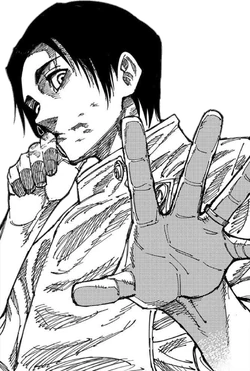
Another protagonist who parallels Yuji in many ways:
And with someone who's that similar to Yuji, wouldn't he fall under Yuji's shadow and be not as cool? After all, he was the protagonist of the prequel, and doesn't even show up in the main story for awhile.
Hahaha no, I would argue that he is an even better character than Yuji. I like him even better, more than everyone here except Geto, and here's why:
She is presented as an attractive character- cool and aloft, acting with confidence like Boa Hancock. Another similarity they have is that they both can be dumbasses, such as with Mei Mei's extravagant hair going right over her face.
She's generally just shown as attractive, and that's supported by her anime voice-actress, too. She's powerful and graceful.
But she is, in a sense, evil. She's shown to commit all sorts of crimes, and to be uncaring of anything besides her greed, and to be in short, irredeemable. But she gets the whole dream of one of the other characters- one of the nicest ones, who suffers a ton. It's the most well-known example of Gege writing something in his story for the purpose of showing how messed up the jjk world, and the real world for that matter, are. But no matter how much you hate Mei Mei, you gotta admit- she's a very well-written hateable character, aside from that one scene. But even then, in order to really make a character so cheerful hateable, you have to write in something extreme, so I can see it.
On an interesting note, she genuinely looks different to me between the anime and manga.
Now, onto the villains. Even more masterfully written than the protagonists.
Now this guy is bad, like bad bad. He states pretty early on that he condones things such as murder and r*pe. He has zero regrets on doing the worst things.
Yet that's the thing: is he going around doing things like that? No, he's not. He's presented in a very cool way. He's strong; acts confident and without regrets, as stated before; he's wiser than the protagonists he fights; and in spite of his pure evil,
I was not expecting anyone to surpass Fai and Bam as my favorite manga characters, but after watching the Premature Death arc, this guy became my favorite character from literally anything. (I swear I'll write unbiased though.)
But ah, was I very wrong. The backstory was beyond master-class.
He was simply a sweet little boy, who lost his reason to fight. "Why must people die? Why must we go through this? What's the worth of people who will not change?"
He didn't even give up when he started having these thoughts. He asked people, practically begged. He went to Yuki for help (his bestie was too busy those days). And Yuki offered the spark of hope to him, as she was one of the few people who seemed to understand. Yet she walked away without giving an answer to why killing would be bad, and without noticing the signs he gave. And when Gojo finally confronted him, even Gojo couldn't prove Geto was in the wrong.
Genocide is wrong, but that only applies to real life. This isn't the real world. This is a parallel to the real world with cursed spirits and cursed energy, which are factors that completely change things, and make up this entire story. Geto was put into a position where he had to choose the best way to deal with them, and genocide would end the cycle of curses and death.
His acceptance of things was also beautiful, as he immediately chose his path without regrets, and kept a despair-filled smile, which Yuki again mistook as nihilistic. He had lost his passion in life but never changed his resolve, even if his battle cries are emotionless shadows of what they were before.
I see him as the perfect 'tragic villain', or is it 'antivillain'? (I forget what it's called) But his motivations were better than anyone else's. I hope he comes back in the manga like was foreshadowed. I'd describe him as a somehow better-written Sephiroth. (Also I'd describe myself in 2 words as 'Geto kin', so there's that.)
Yet despite all that, he.. acts logically. He's strong, and smart, and always wins his fights, and thinks one step ahead. He has all the qualities that make a character cool.
But he makes sense. His power also makes sense, and just because we didn't want or expect him to become relevant doesn't make it a bad thing, it just shows how well the manga can surprise us without pulling anything that doesn't make sense.
Ah yes, the 'crude, rough, vulgar, delinquent' troupe. He speaks in dialect, smokes, etc. That's all he is, right...?
Nah. He subverts all that by being an honorable guy and a force of nature. He's often used to show the power of others in this series.
The character who has done the most evil, twisted, atrocious things in the series, even making Sukuna look chill. I can't bring myself to tolerate him after what he's done, pretty early on, too, and yet.... how does he look?
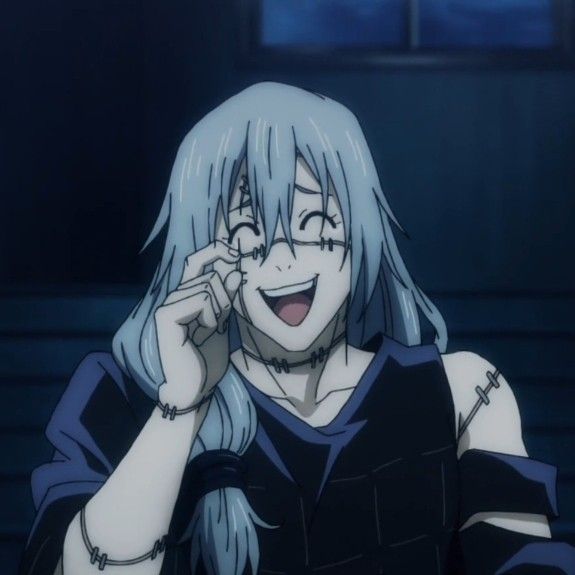
He has multiple looks, which include 'hot', 'flowery', 'cute', and 'badass'. His design, as well as his way of talking, is just the most fun-looking you could get. He's always laughing. He loves a good fight. He's incredibly strong. His energy pulls you in, and he's always the first to jump at a fun opportunity. He has the same kind of expressions and mannerisms as our main trio of protagonists do, when they're just being chill and messing around. He doesn't let the other villains change his fun-loving nature. The contrast between his actions and personality / expressions, is crazy.
Another thing that makes him more likeable is that he's perfectly logical. We are made to want to root for Geto because his actions make perfect sense; he presents his reasons for his actions; and no one can give a good reason why it's wrong of him. The same is true for Mahito. He's a curse, and is just acting true to his nature. He constantly tries to tell this to Itadori, to just get the point into his head. In his scenes, he's the one acting logically, and the others (like Itadori) don't have any argument they can put into words of why he's in the wrong.
Also, he's not just defined as the contrasting character meant to show a point: he has a whole personality. He's learning about himself, growing quite alot, and his later powers look absolutely badass.
(Still can't stand him though, I think. Or maybe the ending changed my opinion.)
I'm not gonna write "Complex Villain: 10/10" after every one of them, but I think I've proved it's close enough to true.
In conclusion, the moral of the story is what happens to frauds, and why you shouldn't gamble.
It's near a masterpiece. It would be a masterpiece if the Shinjuku Showdown didn't ruin the whole thing. I highly recommend checking it out, although the anime is a 10/10 adaption at least, so that's fine too. Anyway I worked hard on this review >< Feel free to message me abt it !!
Given the highs it reaches and the lows it also reaches, I can't give it a 99 like I'd originally intended. 80 is the closest I know how to score it, but honestly anything could work, as the Gojo's past arc is my favorite arc in fiction, but Gege does not know how to end a story, and the ending arc ruined alot. Rating jjk in separate parts would be far more effective, I think.
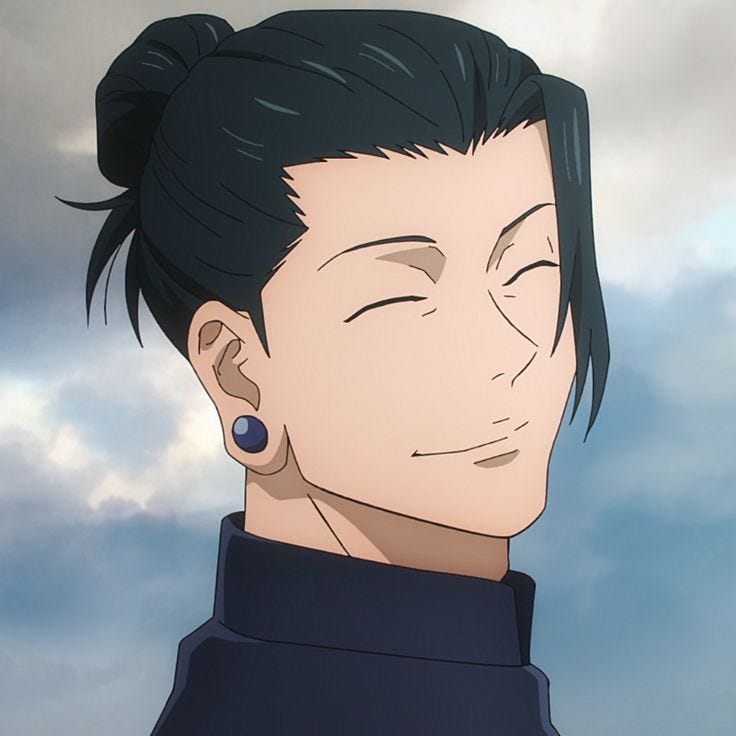
In spite of everything, Jjk holds a place in my heart that nothing else can fill. I have obsessed on it for months on end, what feels like years, and am very sad it's over. If you're looking for at least similar things though, I suggest Chainsaw Man and I'm looking for more.
29 out of 41 users liked this review
