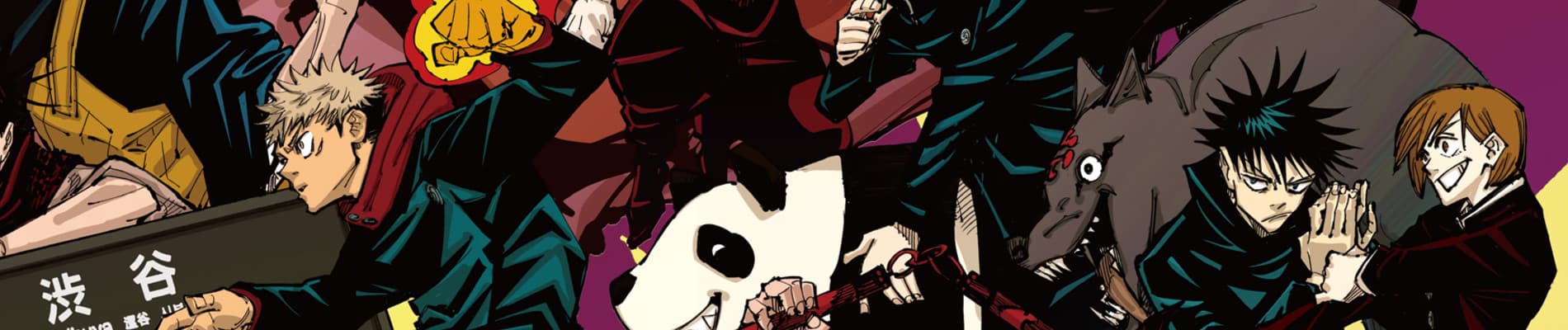
Jujutsu Kaisen
a review by Z4rc
a review by Z4rc
This review contains spoilers up to the end of Jujutsu Kaisen manga (Chapter 271).
TL;DR: Jujutsu Kaisen is objectively a successful and popular shounen manga series by Gege Akutami. Being serialized in Shounen Jump is already a significant achievement, but becoming an iconic and highly popular shounen series is on another level of difficulty.

Jujutsu Kaisen introduces a plethora of amazing characters with great potential to make the story even more compelling. However, the series takes a steep downturn, and toward the end, it feels as if each chapter is merely stalling, buying more time just for the sake of producing more chapters with no meaningful content. At this point, it seems like everything that could go wrong has gone wrong. If I were to summarize my feelings about Jujutsu Kaisen, I’d say that while parts of it feel like they were meticulously planned and written by one of the most brilliant mangaka on earth, other sections feel as if they were written by ChatGPT.
Below, I will review each arc and provide my honest opinion:
Introduction to Jujustu Kaisen
Let’s start with the first five arcs, which I’ll discuss together. While these initial arcs are good and enjoyable, they feel somewhat generic. They follow the typical shounen formula: humanity vs. supernatural beings, with the main character getting entangled with supernatural powers but choosing to side with humanity. The twist here is that Yuji cannot fully control Sukuna’s power.

However, the true purpose of these arcs is to introduce the characters, establish world-building, and explain the power system within the world of Jujutsu Kaisen. This setup ensures that no matter how the story develops later, the groundwork makes the progression feel coherent.
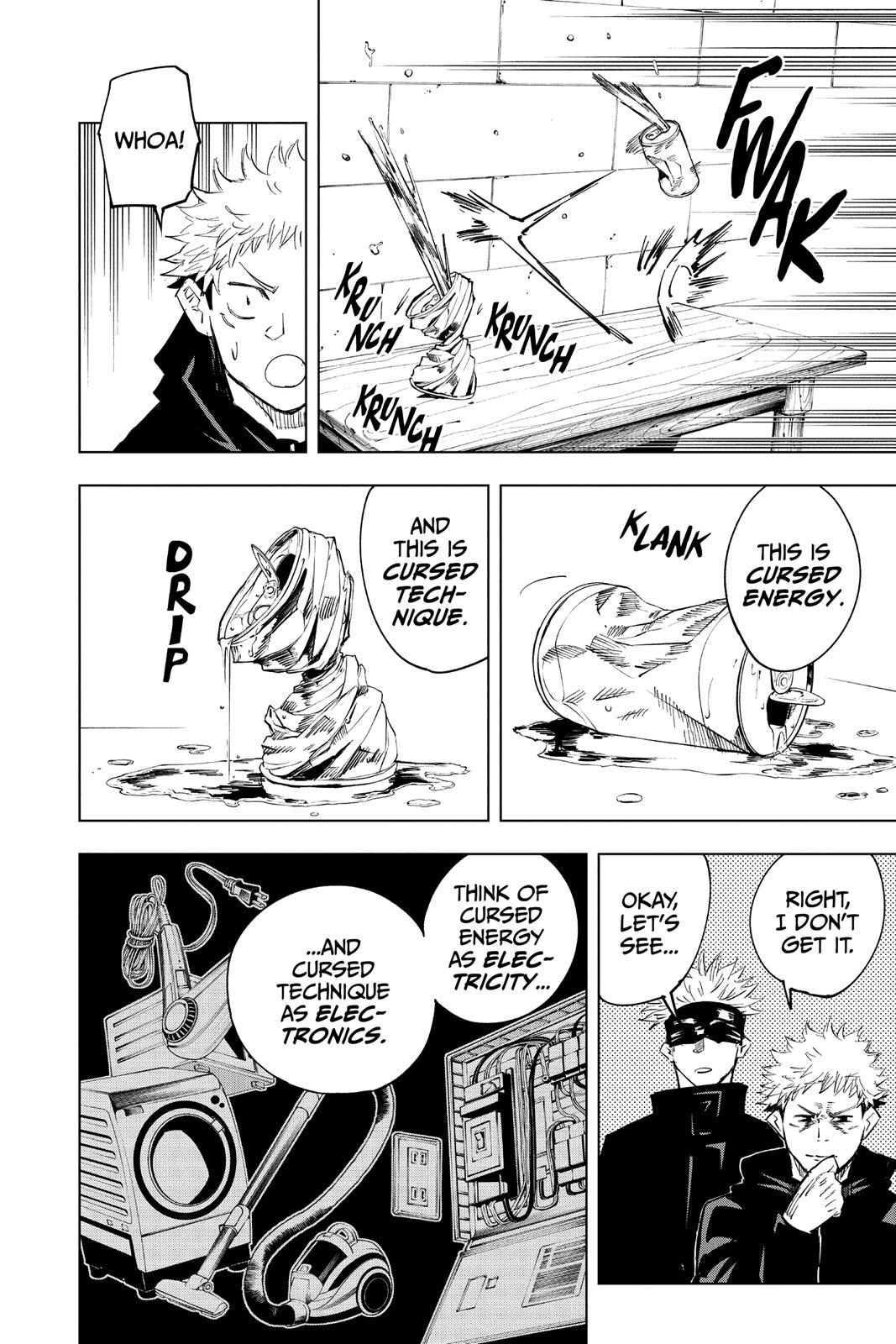
The introduction of elements like cursed energy, reverse cursed energy, cursed techniques, barrier techniques, and binding vows early on is highly appreciated. It prevents the story from relying on convenient plot devices and simply attributing everything to “well, it’s magic.” As a result, the outcomes of future battles don’t feel too unexpected or contrived, as the established power system provides a solid foundation for the conflicts and heightens the complexity of the upcoming battles.
Gojo's Past Arc
Gojo’s Past Arc is one of the shortest but most impactful arcs in Jujutsu Kaisen, second only to the Shibuya Incident. This arc takes place 12 years prior to the main series, when Gojo, Geto, and Shoko were still students at Jujutsu High. Gojo sees Geto as his only equal and considers him his one and only friend. Unlike Gojo, who was born with immense talent, Geto comes from a normal family and has to work his way up to become one of the strongest Jujutsu Sorcerers. Furthermore, while Gojo is somewhat self-centered, Geto strongly believes in the concept of noblesse oblige, holding that the strong are meant to protect the weak.
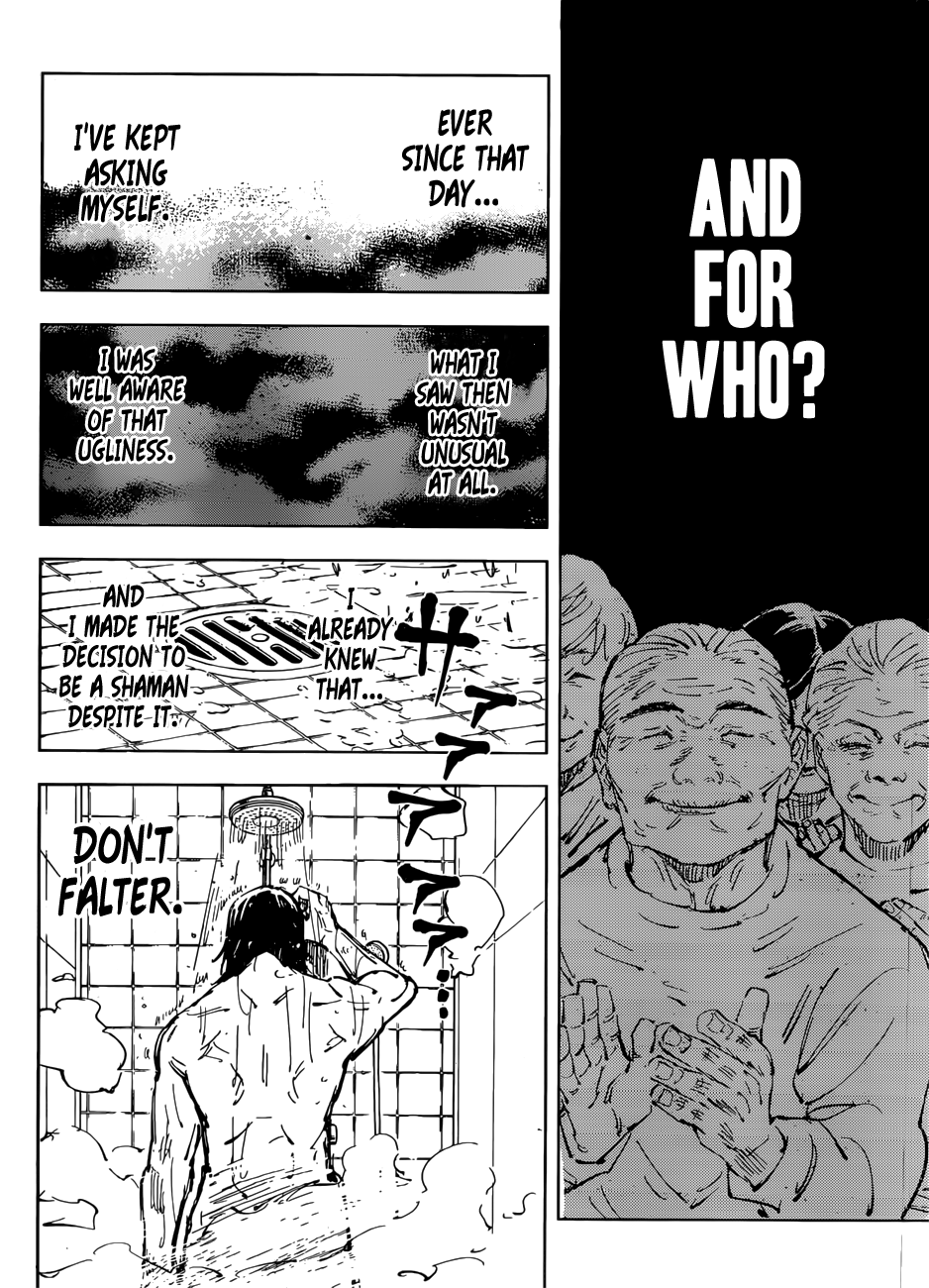
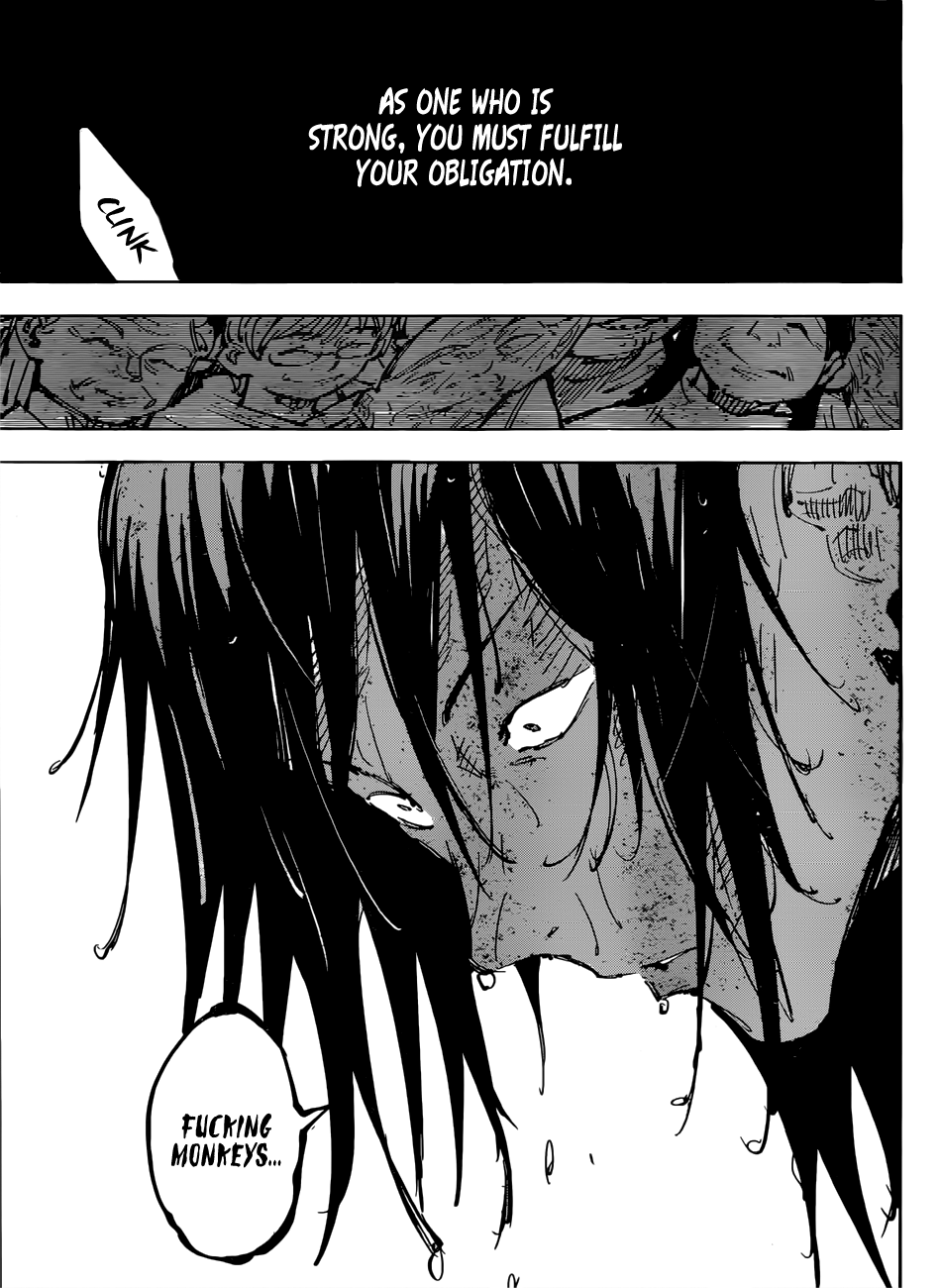
The outcome of this arc is deeply ironic. While Gojo becomes the strongest sorcerer alive, Geto ends up becoming a villain who seeks to eradicate all non-sorcerers. The death of Amanai, and the people's celebration of it, shakes Geto’s beliefs to the core, causing his sense of justice to consume him from within. The scene of Geto showering while trying to convince himself is exceptionally well written. Typically, characters take a shower as a symbolic act of cleansing themselves of negative thoughts, often resulting in a sense of clarity or a temporary reprieve—an attitude of “I’ll just stop overthinking about it for now.” However, this moment does the exact opposite (in a good way). Instead of purifying his doubts, it becomes the turning point of his tragic transformation into a villain. He ends up blurting, “Monkeys…”—referring to non-sorcerers as insolent lower beings—marking the beginning of his descent. This leads him down a path that transforms him into one of the most unique and extreme villains ever written.
__Shibuya Incident Arc
__
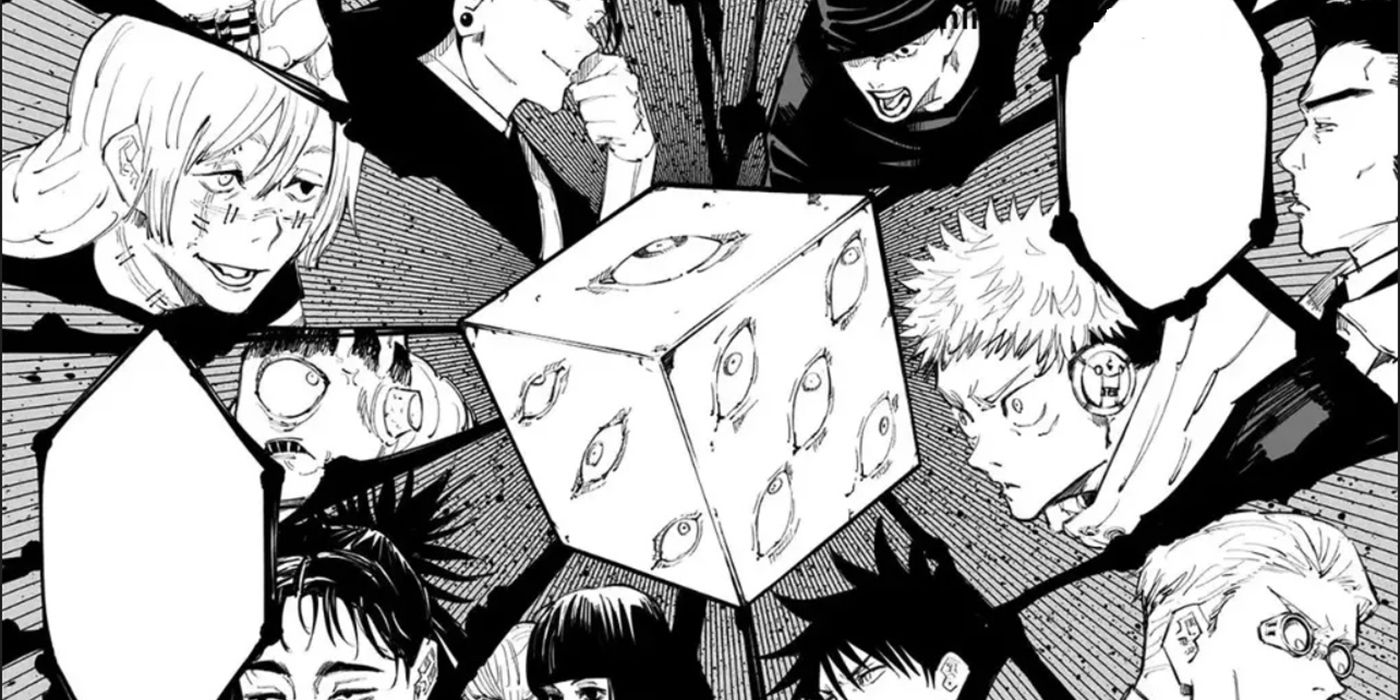 The Shibuya Incident is one of the best-planned arcs in the series. Kenjaku’s intricate plan to seal away Gojo is executed brilliantly. Throughout this arc, every character’s motives are clearly laid out for the readers, making the entire storyline more compelling. There are no characters simply “playing along with the plotline”; each one has a distinct objective, which adds depth and authenticity to the narrative.
Normally, an arc filled with constant fighting scenes can be boring or drawn-out, but that’s not the case here. Thanks to the solid foundation of the power system, it’s fascinating to see how creative Gege can get with each battle. Every fight is meticulously planned, and the transitions between characters moving from one battle to the next are handled seamlessly. The atmosphere set up in previous arcs shifts 180 to one of high tension and anxiety, filled with a sense of impending danger. Taking the “strongest” character out of commission significantly alters the tone and raises the stakes, adding a new level of severity to the story. The iconic scene from Uzumaki that is referenced at the end of this arc is the perfect cherry on top.
The Shibuya Incident is one of the best-planned arcs in the series. Kenjaku’s intricate plan to seal away Gojo is executed brilliantly. Throughout this arc, every character’s motives are clearly laid out for the readers, making the entire storyline more compelling. There are no characters simply “playing along with the plotline”; each one has a distinct objective, which adds depth and authenticity to the narrative.
Normally, an arc filled with constant fighting scenes can be boring or drawn-out, but that’s not the case here. Thanks to the solid foundation of the power system, it’s fascinating to see how creative Gege can get with each battle. Every fight is meticulously planned, and the transitions between characters moving from one battle to the next are handled seamlessly. The atmosphere set up in previous arcs shifts 180 to one of high tension and anxiety, filled with a sense of impending danger. Taking the “strongest” character out of commission significantly alters the tone and raises the stakes, adding a new level of severity to the story. The iconic scene from Uzumaki that is referenced at the end of this arc is the perfect cherry on top.
__The Culling Game Arc
__
 The Culling Game arc is where things started to take a slight downturn. While the arc is still enjoyable, it feels somewhat lackluster. The introduction of too many one-time-use characters is overwhelming and becomes a burden for the readers to keep track of. Although the inclusion of new cursed techniques is creative, it feels overly complicated given that many of these abilities are tied to characters who only appear briefly and don’t contribute much to the overall plot. This is also where Gege start his rampage of killing off hyped up characters without giving them chance to shine.
Gojo vs. Sukuna (prior Chapter 236)
 The battle between Gojo and Sukuna is one of the best-written and most well-planned 1v1 fights in the series (prior Chapter 236). There are no sudden power-ups or unexplained boosts in strength; instead, both characters focus on outsmarting each other. Gojo attempts to overpower Sukuna using his barrier techniques and sheer brute force, while Sukuna skillfully strategizes and counters each of Gojo’s moves. It’s truly a magnificent fight, showcasing both their abilities and intelligence.
__Chapter 236 Incident
__
 The real downfall of Jujutsu Kaisen starts here. Gojo is abruptly defeated off-screen in Chapter 236, despite being portrayed as having the upper hand in Chapter 235. As previously mentioned, taking the strongest allied character out of commission can significantly raise the stakes of the story, but in this case, it comes off as ridiculous. Sukuna suddenly gains a random power-up and defeats Gojo by claiming, “I didn’t cut you, my dimensional dismantle cut everything in space, so your Infinity doesn’t matter.” This explanation feels nonsensical, especially considering Gege previously established that Gojo’s Infinity is inherently linked to the concept of space.For a moment, I thought I was reading Yu-Gi-Oh! By the end, the narrative devolves into a chaotic mess of random dialogue and fight scenes that lack coherence, leading to an abrupt conclusion for Jujutsu Kaisen. I figured it would be better for me to outline what I dislike about these elements as I continue.
__Things I hate about Jujutsu Kaisen:
__
1. Yapping kill the hype
The introduction of the power system serves as a solid foundation for future battles, requiring minimal narration for readers to understand what is happening. However, during the Gojo vs. Sukuna fight, the excessive dialogue from all the characters detracts from the hype. The conversations feel slow and boring; it would have been better to focus solely on the fight. This meaningless yapping of the characters still get carried forward till the end of the series, which is really annoying, reading bunch of words, that contribute nothing to the plotline or the emotions.
2. Gojo's character makes no sense after Chapter 236.
 “Throughout heaven and earth, I alone am the honored one,” showcases his confidence and arrogance. Gojo is a self-centered character who couldn’t care less when Amanai died, yet he also has a caring side as a teacher.One thing I find hard to believe is Gojo is glazing Sukuna after his own death. Instead of worrying about his students, he says, “But Sukuna wasn’t able to give his all, and for that, I am sorry.” and “I am not sure if I could’ve beaten him even if he didn’t have Megumi’s Ten Shadow Technique.” This line is absurd, especially considering that throughout the battle, Gojo steadily increased the pressure on Sukuna, making him nervous for the first time. Sukuna’s finishing move Dimensional Dismantle is also molded from Makora adaptation, so Sukuna can never beat Gojo without Ten Shadow. This feels like Logan Paul challenges Muhammad Ali to a boxing match, but then calls in 2 bodyguards to support him. In the end, Ali defeats both guards and Logan, but Logan pulls out a pistol from 1 of the bodyguards and shoots Ali dead. Then, on his deathbed, Ali apologizes to Logan for not allowing him to fight at full strength.
__3.All the build up for nothing
__
There are numerous characters with great potential that Gege kills off and discards like toilet paper. He showcased Higuruma as a genius sorcerer and Kashimo as the strongest sorcerer from 400 years ago who never used his full strength, only for both to be killed off in a single chapter,respectively. What I find unbelievable is that Higuruma, touted as the genius sorcerer, doesn’t even grasp the mechanics of his own domain. Gege dedicates a whole chapter to illustrating how Higuruma will press charges in response to Sukuna's actions within his domain, only for it to conclude with, “Because the domain confiscated the tool cursed technique, Sukuna’s cursed technique is still intact.” What on earth is this plot armor?
While the Kenjaku vs. Takaba fight is hilarious, it feels overly dragged out. It seems like Gege is simply writing random content to stretch out the chapter count. More random moments keep popping up. Gege dedicates an entire chapter to hyping up Kusakabe as the “Strongest Grade 1 Sorcerer,” attempting to convince readers that he could stand a chance against the calamity. It feels akin to boasting about a child winning first place in a primary school sports event at the Olympics; the outcome is obvious. Kusakabe is destroyed instantly. This could have been conveyed in just a few panels, yet Gege stretches it out to a whole chapter.
Initially, it seemed that Gege wanted to portray Sukuna as the greatest calamity that must be defeated collectively. Gojo forces Sukuna to chant for his Dimensional Dismantle and temporarily disables Malevolent Shrine. Kashimo pushes Sukuna into his Heian form, Higuruma confiscates Sukuna’s cursed tool, Yuta temporarily disables Sukuna’s Shrine and enchanting, and Maki temporarily neutralizes Sukuna’s Reverse Cursed Technique, while other characters provide support. However, in the end, Sukuna regains all his abilities, and in response, Yuji randomly opens his domain and utilizes an unexplained, sudden power-up to overwhelm Sukuna??? This raises the question: what was the point of all this tomfoolery?
__4. Battle makes no more sense
__
The power system and world-building are completely undermined and demolished. Higuruma and Yuji learned the Reverse Cursed Technique in just a month? It almost cost Gojo his life to master it! Yuta’s proficiency can be explained due to his special circumstances with Rika, and Shoko is naturally talented at it. Even Yuki, a special-grade sorcerer, couldn’t use it! Yet we’re expected to believe that both Higuruma and Yuji mastered it in just a month without any further explanation or context? I need a lot more justification for how they were able to pull that off.
Throughout the battle, Sukuna seems able to conveniently pull off random Binding Vows to survive any situation. This feels far too convenient. Binding Vows are supposed to be extremely difficult to execute—Gojo and Sukuna being able to freely control their domains was already considered an impossible feat. And yet, now Sukuna doubles down by having even more Binding Vows? It undermines the sense of difficulty and limitations that made the power system compelling in the first place.
__5. Abrupt conclusion of battle
__
We haven't been shown the full strength of Uraume, and Hakari's response to his moves remains unclear; all we know is that Hakari is simply stalling Uraume, and the battle abruptly ends. Hakari is a highly hyped character with a lot of interesting potential, so it’s rather disappointing to see that he doesn't receive enough screen time. Once again, Yuji’s random power-up and his ability to directly overpower Sukuna and beat him into smithereens makes no sense at all. We don’t even know the properties of Yuji’s domain; all we know is that Sukuna randomly dies.
__6. Nobara return is not well executed
__
 The chapter where Nobara “dies” is incredibly heartbreaking. Typically, the trope of randomly reviving a seemingly dead character feels awkward; we have already cried for them, so give back our tears! Such a return needs to be executed very carefully to avoid feeling abrupt or coming out of nowhere. But Jujutsu Kaisen did not even try to execute it, it felt like they just pulled Nobara out of the coffin and told her to help kill off Sukuna as all the other characters have been thrown out of the commission.
__7. Am I watching a Vin Diesel movie?
__
Where is the proper showcase of Kenjaku creating the Death Paintings and how he brought Yuji into existence? Initially, Yuji encounters Todo, who claims Yuji as his “brother”.They are not blood related, and Todo is just being delusional. This goofy moment serves as great comedic relief. Next, during the Shibuya Incident, Yuji learns that he is also brothers with the Death Painting worms, as they are all creations of Kenjaku. Then it’s revealed that Sukuna is also related to Yuji? How does a shonen manga focused on eliminating curses transform into a saga of the main character trying to find his lost family?
__8. Did Gege Forgot to include Sukuna past
__
The real person who inspired the mythological figure "Ryōmen Sukuna" traces back to the classical Japanese text Nihon Shoki, where Sukuna’s imagined physical form (with two faces and four arms) and his malicious demonic personality are depicted. Naturally, we would be eager to see how Gege writes the origin of Sukuna in his story, but we aren't shown enough of Sukuna's past. As a result, in Chapter 271, I wasn’t convinced by Sukuna’s speech and didn't feel a strong emotional connection to it.
__9. Justice for Gojo please
__
Gege literally used Gojo’s funeral as the cover art for Volume 26. Let’s just say the amount of disrespect he showed towards Gojo is insane. After his death, Gege randomly includes scenes of Gojo giving a simple explanation of the power system. At this point in the story, adding more details to the power system feels unnecessary. Did he really bring Gojo back just to explain that? Yet, we never see a proper funeral or any aftermath showing how the other characters care for Gojo at all. 
__10. Why even bother balming Yuta
__
 After the battles conclude, there’s an excessive amount of dialogue wasted on debating whether Yuta should focus on assassinating Kenjaku or supporting Higuruma. This feels unnecessary and drags down the pacing, making it seem like filler content instead of meaningful plot progression. It also begs the question: why put all the responsibility on Yuta when Yuji could pull off his own domain and so easily overpower Sukuna? It is obvious Yuji is the only one who hasn't gone all out at the beginning of the battle. They didn’t even consider experimenting if Higuruma’s Executioner’s Sword could be transferred to Yuji—despite supposedly planning everything meticulously for the fight against Sukuna, they overlooked the most critical piece.
__11. Ending is lackluster
__
Does anyone remember America invading Japan to "spread freedom" at the end of the Culling Game arc? What happened to them now? Does anyone remember that Tengen—the reason why Japan’s curses were kept under control—was killed? What is the Jujutsu Society’s response now? Does anyone remember the higher-ups being killed? What happened to the Jujutsu Society after that? There are just way too many unresolved plot points that Gege left hanging. There’s no need for a conclusive ending, but at the very least, Gege could have shown that he still remembers these plot points. It would have been enough to see characters responding to the situation, yet there’s none of that. The lack of acknowledgment feels like a missed opportunity to create a more cohesive narrative. Overall, the ending itself isn’t the worst; there are still some great moments even toward the end.
 However, the sheer number of unresolved plot holes is too distracting for me to fully enjoy the conclusion. It’s a shame, as these issues overshadow the positive aspects of the finale.

37 out of 44 users liked this review
