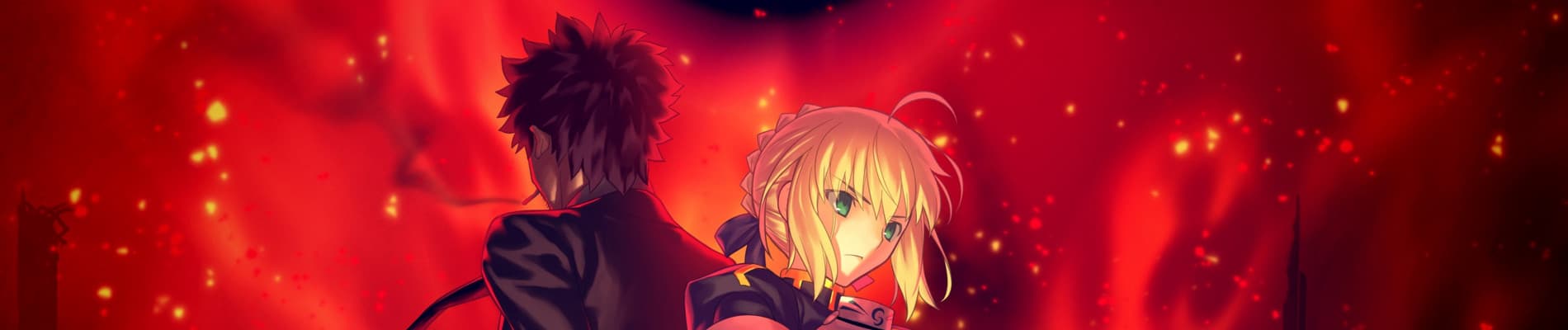


"And then… So fervently that, even on the brink of death, I was jealous. He said, 'Thank you.' That he was glad he’d found someone. That by saving one person, he had saved himself."
Idealism stripped down to its infantile dispositions—a utilitarian mindset of sacrificing the few for the greater good of many—collides with the reality of its emotionally stunted practitioner. A man embarks on a hopeless quest for a miracle that can validate his exhaustive efforts to reconcile with his grief—a child thrust into a world hostile to his empathy. A priest's bubbling psychopathy bursts forth as unchecked hedonism stains the land. Parental negligence ignites unseen repercussions, while nameless children become mere instruments in a ploy. The inorganic object meshes with the organic soul. A wildcard of psychotic murderers, a bond of pure brotherhood—linkages spanning time and dimensions.

In a soliloquy between kings and their subjects, all end with the death of their unattainable ambitions. There is no glory to be found beyond the horizon. A world of invariable hope crumbles and nihilism rises from its ashes. A gloryless reality of tragedy abounds. Die by your principles, or be consumed by the reality of your zealous ideals.

Urobuchi, I was not familiar with your game.
If the first season was a séance between the undead myths and the mages of the present—an essential, season-long establishment of motives, methods and mutuality—then season two erupts into an outburst of controlled chaos that sheds any pretence of valour and goes straight to the heart of the matter.
The battles between Saber and Berserker, as well as Kiritsugu and Kirei, can be juxtaposed to highlight stark contrasts in their presentation, showcasing the show's innate understanding of the stakes involved in different scenarios. Saber's conflict reflects a journey from curiosity to impending dread and ultimately to acceptance. This realization is veiled as a clash of swords, with her dialogue providing keen insight for both the characters and the audience, justifying the need for constant dialogue during the fight. In contrast, Kiritsugu and Kirei, while also uncovering uncomfortable truths, represent two sides of the same coin—nature triumphing over nurture and nurture triumphing over nature. A battle to the death between cold blooded killers. This fight's acclaim comes from two things: its immense production value and, in my opinion, the use of diegetic monologues. In a typical anime, a fight like this would be bashful, loud and completely audible to the opponent, which makes it both unbelievable for the audience and feels like a pointless venture. Zero circumvents this by eliminating the need for verbal exchanges between the two during their fight. Any dialogue uttered is entirely diegetic, intended solely for the audience itself, shifting the focus from their monologues to their physical movements.


In Fate, visual splendour and dialogical intersections are standard vehicles used to paint its world and eccentric ideologies. Urobuchi however, uses dialectics not only to reveal the various truths and lies about the characters’ dispositions but also to weave a larger narrative in the background. Pleasure and sin mesh with blasphemy and worship as kings enter a dialogue about the nature of their existence. There's always a battle of semiotics and ideologies that takes precedence over the loud clashes of swords and spears. While this may seem laborious to some, Urobuchi's narrative manages to offset that aspect by being consistently engaging throughout, which is entirely due to the meticulous construction of personal convictions and ideals.

Take, for instance, the episode dedicated to the exploits of a young Rin Tohsaka. While it may be disingenuous to claim that her counterparts are less realised, it's undeniable that there's a palpable maturity to her portrayal in this single episode that is rare elsewhere. Zero relies on a specific storytelling mode, i.e., long bouts of exposition. However, it manages to foil directorial missteps that merely utilises this for stuffy jargon with zero emotional tangibility and nothing else. Fate/Zero is remarkable because the same ideologies are framed not as verbal vomits but as extremely competent dialogues between emotionally well-realised and charismatically distinct figures. The thematic groundwork explored here about the nature of larger purposes, both regarding the Holy Grail War and the summoned heroes from the past, is passionately realised through the heartfelt outpourings from Rider, an immediate favourite amongst an already stacked, memorable, and intelligently written cast, and echoed in the interactions between other heroes.

While the second season offers a step up in visual flair, the cinematics may still seem "inferior" to its more bombastic visual effects sister. This doesn't mean that its action plotting still isn't intelligent to the point of Machiavellian. There's a sense of free-flowing expression and depth to the actions here that continue to dictate much of the show's charm. This is largely thanks to the excellent direction by Ei Aoki, who previously directed the brilliantly atmospheric 'The Garden of Sinners Chapter 1: Overlooking View'. Aoki’s brilliance is evident in Fate/Zero, where there's a lot more emphasis on oppressive atmospheres and creative cinematography. The battles are tactically engaging and are reflective of the characters' psychological states'. Character countenances are highlights in these battles and incite a sense of awe that cannot be mimicked by mere visual effects galore.


Realistically I could yap for 3000 more words about every single character in here and how poetically they all tie in together when it comes to constructing the larger thesis of Fate/Zero à la an unfair world kind to those who deserve it the least, but I don't have the energy to continue + this show has been discussed at length by far smarter people than I. All in all, this season, and the series in general, stands as a compendium of profound ideological follies and nigh-machiavellian battles of dialectics. Insurmountable woes and cataclysmic tragedies spanning from ancient mythos to contemporary assassins. Fuck me for ever doubting you, Urobuchi.