LOOK BACK
a review by currylover300
a review by currylover300
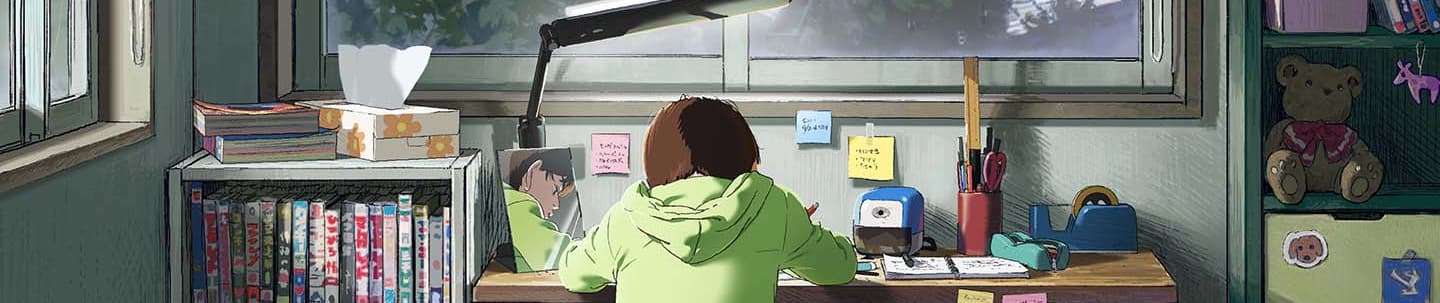
In a mere 58 minutes, Look Back captures the soul and reasons behind artists. The love and care put into this film is insurmountable. The culmination of Tatsuki Fujimoto's heartfelt manga, Kiyotaka Oshiyama's amazing direction, Haruka Nakamura's moving soundtrack, and the work of everyone from Studio DURIAN produced a touching film about being an artist, friendship, and reflecting on the lives we lived and shared without regret.
Not a single shot, edit, or line goes to waste, from its opening until the credits go by and the screen fades to black. Every moment contributes to the development of its two protagonists, Fujino and Kyomoto, as individuals, friends, and artists. Through three key views—their view of each other, their self-perception, and their view of their own art—we explore their frustrations, insecurities, strengths, ambitions, and passions.
One of the most easily relatable aspects presented in Look Back is the universal experience of someone else being better or more talented, which affects notions of our identity. At some point, someone is reeling in waves of laughter, scoring higher grades, or shooting three-pointers more consistently. Each of us reacts to these situations in a matter of ways. It can instill dread with the realization that we weren't as good as we thought, create walls to bolster our egos, fuel a determination to improve so we aren't left behind, or perhaps it'll be a part of a series of events that'll lead us to give up.
In the case of artists shown through Fujino and Kyomoto, insecurities and admiration of the other's skills and ambitions drive them to become better artists. There is a push and pull that ropes them deeper into their art. Their view of themselves is influenced by their view of the other and vice versa. From drawing 4-koma for their school paper to creating one-shots to be featured in volumes of Shōnen Jump, they constantly inspire growth in one another.
And yet, this passion and dedication are also put into question. With the fragility and shortness of life, why put so many hours, days, and years into art? Is what you're doing even worth anything? When the whole process can be so mundane, inconvenient, or even miserable, why go through it? Isn't it absurd to stake your life for something with zero guarantees and, in the end, may lead to nothing? "Why do you draw?"
Art isn't glamorous and sometimes torturest—when living itself is filled with mistakes and misery—Look Back doesn't pretend it's anything else. As we ponder the role art plays in our lives, Fujimoto and Oshiyama respond in silence but share gleeful smiles, leaps into a sunset-dawned ocean, the joy of sharing, and an undivided sense of accomplishment—moments brought to fruition by drawing. Art is a means of communication in which we share ideas and express ourselves. The ability to affect someone as small as putting a grin on their face or as influential as changing their perspective on life can be the most fulfilling sensation. After all the sleepless nights, sweat, and tears behind something you make, there could be someone else appreciative of what you've done, and maybe that someone else is you.
Look Back is a love letter to artists and making art. The manga was released the day after the 2nd anniversary of the Kyoto Animation arson attack and pays tribute to the people who've dedicated their lives to art. Even though their lives were cut short, their ideas, emotions, and efforts live on through their work to affect those who come by it. And as the credits roll on Look Back, the first to be shown aren't voice actors or higher-level production staff, but the animators who made this movie a reality.
For me Look Back is not unlike Hideaki Anno's Neon Genesis Evangelion, which addresses our sense of purpose and how we find meaning in life. While Anno dealt with the larger scheme of how we live in general, Fujimoto instead hones in on these topics from the perspective and circumstances of a mangaka. Out of all the movies and shows I've seen that have discussed the artist's struggle, Look Back captures the essence of the emotions and internal struggles the most accurately in regard to my experiences thus far.
146 out of 151 users liked this review
