The life of Seiichiro Tokunami was full of misery and solitude. It was the life of an underdog.
The original reading of the name was "Tokunan," but due to the horrific memories of being bullied at school during the war for playing on the word with "Kokunan" (national crisis), he changed it to "Tokunami" at the age of 30. (Source; Wikipedia)
He contracted diphtheria before kindergarten, leading to pituitary dwarfism and a height of 140 cm. This resulted in childhood bullying, contributing to his neurotic personality.
He tried various experimental therapies at the time and worked mainly in the "Rental Manga" business. Despite drawing for children's and shōjo manga audiences, his style was too "creepy," making all he wrote appear as horror manga.
In 1957, after a failed visit to medical scientist Ogata Tomosaburo, he attempted suicide while trying to kill himself with gas poisoning, but the owner of the apartment found out and closed the main valve. He even managed to marry, but the marriage was soon nullified due to the mental and physical abuse he inflicted on his wife who then escaped back to her parents.
After some unsuccessful manga, he quit and took on regular jobs for the rest of his life living an anonymous life till some editor decided to reprint his bibliography, but he remained pretty much unknown.
He passed away on December 24, 2009, but it was announced on a blog at the beginning of 2010.
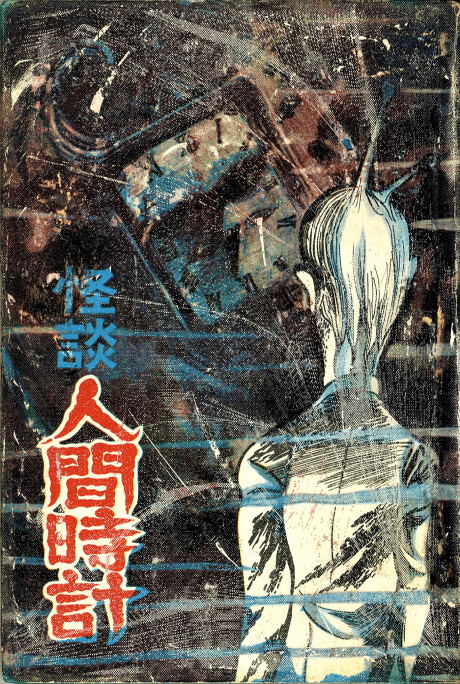
Despite his efforts, Tokunan remains largely unknown, even in Japan. His work "Kaidan Ningen Tokei" (The Human Clock) gained some recognition thanks to fan appreciation. Published in 1962, it stands out as an oddity among that year's releases. Tokunan's psychosis and neurosis likely influenced his style, which shares similarities with German Impressionism. In "The Human Clock," humans and places are distorted, creating a nightmarish atmosphere. The story's simple premise raises questions about whether the teenager involved is experiencing visions and blurs the line between reality and dreams, exploring themes of potential machine revolt against humanity.
The manga is truly remarkable, standing out as a unique work that may have been too avant-garde for its time. However, in today’s literary landscape, it resonates perfectly with the themes of experimental narratives. Interestingly, while Tokunan may not have set out to experiment with his storytelling approach, his art appears to reflect a deeply personal and distorted view of reality—likely a consequence of his experiences as an outcast in society.
I hope that this manga gets rediscovered by Japanese audiences, who may come to appreciate its intricate layers and emotional depth. Additionally, I believe that "Human Clock" has the potential to inspire a captivating anime movie adaptation, one that could enhance and elevate its inherently nightmarish qualities, drawing viewers into its haunting world.
Do not miss this one as it is a unique experience.
9 out of 9 users liked this review