Reptilia
a review by ShibuyaConfidential
a review by ShibuyaConfidential
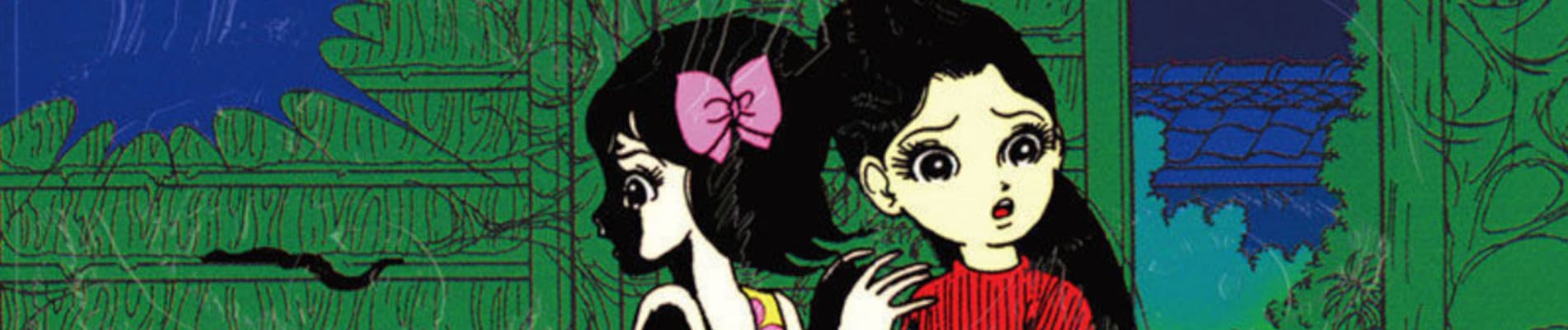
Published in 1965, "Hebi-onna" marks the beginning of a monumental career, making it essential for true manga fans, even those outside the horror genre, to read.
__Origin of the Story:
__
Kazuo Umezu's father used to share chilling legends from Japanese folklore, a tradition familiar to many manga and anime fans. For instance, in the works of Rumiko Takahashi, we often encounter elements of folklore. Many manga stories are, in fact, adaptations or transformations of ancient folklore that have also been represented in various forms of art.
The tale that frightened young Umezu the most was Okameike Densetsu (お亀池伝説, "The Legend of the Turtle Pond"), where a woman named Okame transforms into a giant serpent. After settling in Soni Village and bearing a child, Okame mysteriously disappears to the local pond, only to reappear as a monstrous snake to scare away her husband, who brings their crying child to the pond in search of her. Eventually, Okame's transformation leads to the pond being renamed "Okameike," and it is a real location.
Setup:
In the 1960s, shōjo manga was divided into rental comics and magazine publications. Horror stories were popular in rental comics but largely absent from magazine-published manga.
The rental market was particularly appealing to younger audiences and those who might not have the means to buy many volumes. It allowed readers to explore various titles without a significant financial commitment.
This market also catered to specific genres that might not have been as popular in the retail market, such as horror, which found a niche audience among girls and young women.
Having already created several shōjo manga, Umezu noticed a recurring theme in the genre and that was the close bond between mothers and daughters. To him, this relationship appeared almost sick. He then explored the idea of a mother who is a predatory snake, preying on her daughter, which he found to be a compelling premise.
__The Meaning:
__
Umezu is a master of horror, and while fans universally recognize Junji Ito as the modern horror standard, this does not mean Ito didn’t take inspiration from others. This is already evident in Hebi-onna, where we see partial body horror and a continuous sense of dread in the haunted faces of the characters involved. There is a chilling urgency in not knowing if the story will end well, and although some elements may feel naïve due to the time when the work was released, the creepy images and the children’s despairing faces have undoubtedly influenced many creators.
At its core, Umezu's work focuses on transformation: how a good mother can become a predator, or how a moral family can be turned physically and morally into a cluster of devouring snakes. He frequently explores the recurring xenophobic theme of the “stranger in our village,” something we see echoed in works like Higurashi.
3 out of 3 users liked this review
