I admit that I am positively biased towards this anime. Kia Asamiya has been with me my entire life as an author. I "met" him back in the 90s in an Italian magazine called Kappa Magazine. At the time, they were featuring the follow-up to his delightful Compiler, named Assembler Ox, and it was brilliant. Not long after, Italian Panini Comics published Silent Möbius, his first iconic success. Asamiya is one of the most genuine authors you can find, openly admitting to a somewhat lax attitude and a tendency to lose interest in his projects or stories quickly, which is why Silent Möbius took nearly 12 years to finish despite its relatively short run (12 volumes).

Mainly unknown to international audiences, we Italians—and the French back then—were lucky to witness the work of authors from that era who are now mostly forgotten. Manga was a new and untested market in the early 90s, so publishers had to be selective, and we mainly saw high-quality works compared to today. I know I sound old, but publishers had to choose carefully what to publish back then.
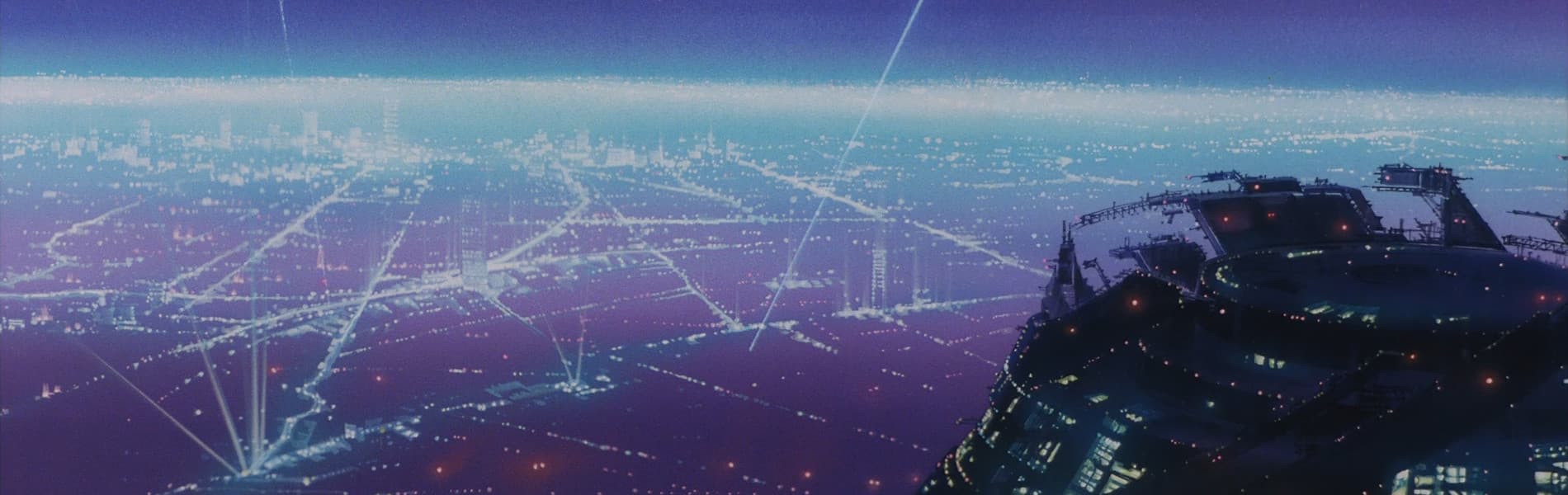
With this context in mind, the two Silent Möbius OVAs, which make up a long feature film, will be reviewed together - since they’re essentially two halves of the same story. In 2024, Katsumi Liqueur travels to Japan to visit her dying mother, set in a less gloomy Blade Runner-esque backdrop. After all, Asamiya admitted that everyone in the 80s was inspired by Ridley Scott’s iconic movie. But once in Tokyo, Katsumi is caught in a web of monsters from another dimension and mysterious powers that only she possesses. The two movies depict how the AMP—the name of the police unit—is assembled, completing the main cast.
There are so many familiar patterns here, starting with the almost Sailor Moon-esque dynamic among the cast, which makes sense since Asamiya is a great fan and friend of Naoko Takeuchi, the mastermind behind the Sailor Soldiers. Asamiya’s character design, honed from his background as an animator, is iconic and memorable. I’ve always loved his portrayal of women; something I feel anime nowadays lacks is “women” in this sense—not just “girls.” His female characters are charismatic, strong, and nuanced, a rarity today, where we often see an overemphasis on the "cutesy" aspect in young characters. The AMP team members are all unique and beautiful: Kiddy, the cyborg; Nami, the priestess; Yuki, the psychic; Rally, the intense and, at times, ruthless boss; Lebia, Rally’s devoted right-hand woman; and Katsumi, a woman who wanted a simple life but, like Shinji, is forced to “enter the damn robot”—only in this case, her power is rooted in black magic and sorcery.

The story is primarily a prequel to the main storyline that continues in the tragically underrated 1998 anime. Asamiya didn’t invent anything groundbreaking here; he’s primarily known as a pop artist with an occasionally lazy attitude, which made him somewhat forgettable to newer generations. Yet, he has always been uniquely pop and, at times, exceptionally distinctive. The OST of the movie is fairly forgettable, with parts that sound almost like a remix of Nausicaä of the Valley of the Wind. The ending theme screams late '80s city pop, and it’s marvellous.
Silent Möbius is a product of its time, so if you’re into retro anime, I highly recommend watching the first two OVAs before diving into the anime series. In my opinion, it’s a beautiful experience that stands well above average, even when compared to modern fantasy/sci-fi panoramas.
6.5 out of 7 users liked this review
