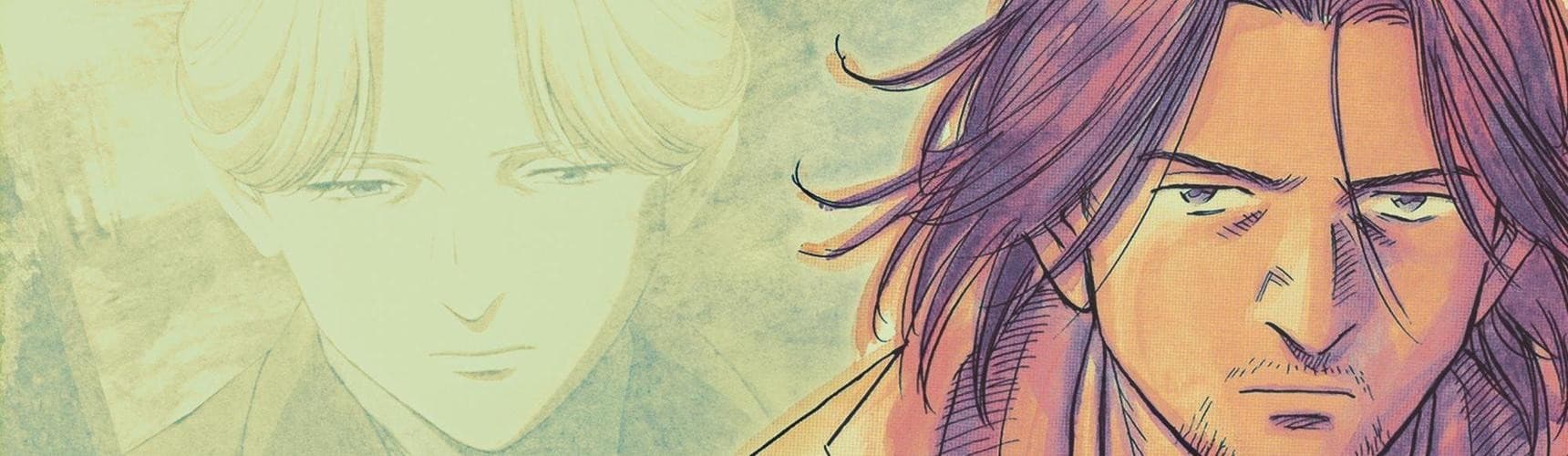
~~~ A staple of the seinen genre and for the time being my favorite series. It can offer deep insight into human psychology through various disciplines, although admittedly the plot and thematics can feel convoluted at times. Some might call it a slow burn, or consider it overrated altogether. Hopefully this review can offer some new perspectives or even spark some discussion for those curious to go beneath the surface. The story of Monster weaves a tale where the line between hero and villain blurs at the hands of one doctor's fateful decision. Urasawa is known for his great casts of characters, gripping mysteries and distinctive art-style. Able to capture human expressions like no other.
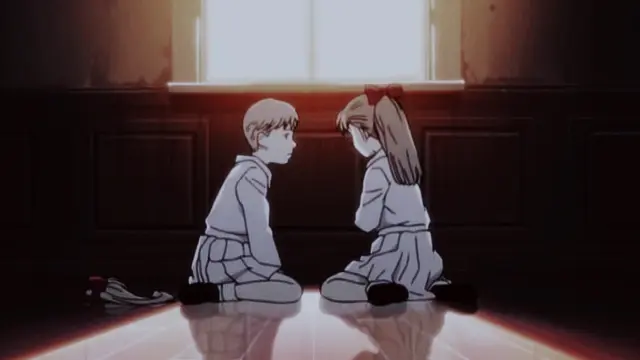
I will start with an overview of the story's antagonist, Johan Liebert: "I am you" From a young age, Johan was made to conceal his identity by his mother. She was an activist forced into a eugenics experiment involving her twins. Johan, along with his sister was born into this destitute environment. In the attempt of sheltering her kids, she made Johan dress up as his sister. Disallowing him of realizing his own humanity. Introducing this multiplicity of identities while unable to connect them to a pattern of unity; In other words, a loss of identity/self. Him and his sister didn't interact much with the world. Locked up for the first 6 years of their lives, only exposed to the fabricated stories of nihilism concocted by Poppe/Bonaparta. The person who didn't let their mother give them names. All in pursuit of the perfect being. The boy was left fractured and unfulfilled - In search of meaning and purpose in a place where there doesn't seem to be much of either. This was the beginning of Johan's journey.
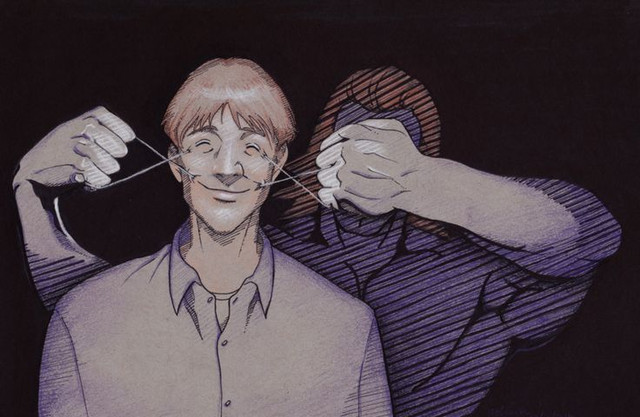
I imagine he could only have felt that his current self was incompatible with the unknown dangers of the world. When even one's own mother cannot distinguish you, are you truly alive? For a nonexistent human, the self can somewhat be preserved by withdrawing from the world. Only interacting through a carefully fabricated image to avert the gaze of others. A postmodern desire to escape definition. A snake shedding its skin. Continually slipping into new environments, deconstructing order wherever he goes. I interpret this as the fear of being fully understood. In return, humanity will lose all sense of importance in the eyes of the monster.
This was all exploited and magnified in 511 where he gained a sort of vain purpose through the manipulative stories he was told. The study intensified his already disturbed mind, turning him into the instigator of chaos and destruction. Through a mysterious, yet magnetic charisma and expedient use of manipulations, Johan spreads his nihilism far and wide. He does not show concern or any sort of care for humans. In this we may see the idea that the opposite of love is not hate, but rather indifference; Creating a strong philosophical dichotomy to our dear protagonist Dr. Tenma. Although he is exposed to many temptations, ultimately never crosses the line of murder.
This embodiment of chaos and destruction is foreshadowed and exemplified in the early reference to Revelations 13:1-4. It highlights the worship of power and authority - something which is well intertwined with the historical context of the story. In the rise of the scientific era, manifesting in disciplines like psychology; many authorities were captivated by ways to subjugate human potential. Monster deals with both the Nazi and Communist legacies in Europe during the 20th century. Bonaparta being connected to both; running the eugenics experiment in Czechoslovakia and later how Johan gained influence in Germany; Alluding to how Johan is worshiped by the Neo-Nazis in the image of power and authority. In light of Bonaparta's experiments, this may illustrate the horseshoe theory of political extremism. This illusive figure of Johan is able to depict the commonalities of disunity in both the right hand (yang) and the left hand (yin) on a political scale.
“and they worshiped the beast, saying “Who is like the beast, and who can fight against it?”” Much of the story revolves around the history Johan represents and Tenma's resolve to take his life. Tenma becomes somewhat more like Johan, but he can't fully reach him. As Schuwald said in his reference to the book of Revelations: "The only thing that can defeat the monster ... is a greater monster, no?" However, violent means are only shown to cause more harm. Thus not resolving the issues of the past and the trauma it has caused. Besides, can Tenma even truly defeat Johan through just means alone? I don't think he can. Battling the monster will only serve to feed its ideology. Ultimately evil may be seen as a self defeating object as it breeds its own destructiveness. When identity disappears; the breakdown of hierarchy ensues and thus also meaning becomes contradictory (ouroboros). We can perhaps see this in how Johan’s shooter - a stranger - saw him as the beast. Johan’s threat to the man's child brought about his own destruction. Or in the way Johan’s own psyche slowly is breaking down.
Rather than taking an eye for an eye, we see themes of forgiveness, mercy and redemption. Hence Anna/Nina forgiving Johan, Grimmer overcoming his trauma and Tenma yet again saving his life. We also see these themes in many minor characters throughout the story. Families reuniting, people who have done harm can change, and those who have been hurt can find a sense of eudaimonia. You may criticize the ending as vague and indeterminate. I also used to feel this way, but I will go more into the ending shortly.
Despite these images of Johan, let's not mistake him for anything other than a human. While he manifested an evil the devil himself found worthy of his power, he was to some extent a product of his environment. He did not process his trauma, rather he created the persona of the monster. This is not excusable by any means, but it shows us he is not supposed to be demonized entirely. Another esoteric benefit of the open ending is the uncharted potential for the future of Johan and the focus on healing the past rather than fighting against it. I think it's important to see Johan in light of what created the monster for this reason.
The ending So let's break down the ending. Johan travelled to Ruhenheim in order to fulfill his philosophy; Orchastrating the perfect suicide in order to prove human equality is only found through death. In sheer defiance of this, Tenma yet again opted to save him. Thus confirming the premise laid out in the beginning of the series. I see the ending as Johan's final interrogation of Tenma. A final trolley problem to see if Tenma truly wishes to pull the lever (saving Johan). Questioning his Kantian standpoint once and for all. Perhaps the scene that troubles me the most is when Mr. Knaup frantically pulls the trigger, in a way relieving Tenma of his decision. Knaup had a simple motive of trying to save his son. Maybe this alludes to the idea that, at the end of the day we cannot remiss our primal human instincts, regardless of the ways we deceive ourselves through muddled philosophies and other complexities of the world. Regardless Tenma does choose to operate on Johan again, solidifying his character.
During their final interaction in the hospital, Johan learns that Tenma knows his real name. The name (personhood/identity) his mother failed to communicate to him. Which is why previously Johan could only cling on to reality through his sister. They are both terrified to be nonexistent, however they have dealt with it through different approaches. Nina refused to face it, ergo her psychological breakdowns and gaps. Johan embraced it. Both of them resisting to being gulped down by the monster. They are in this way defined by their antithetical relationship to their common memory of the past. Nina was able to create a new life as Nina Fortner, while suppressing and disregarding her history. Thus Johan was left on his own to over-association and identity fusion. Homologous for both, I think is the deep-rooted desire for the love of existence/being people.
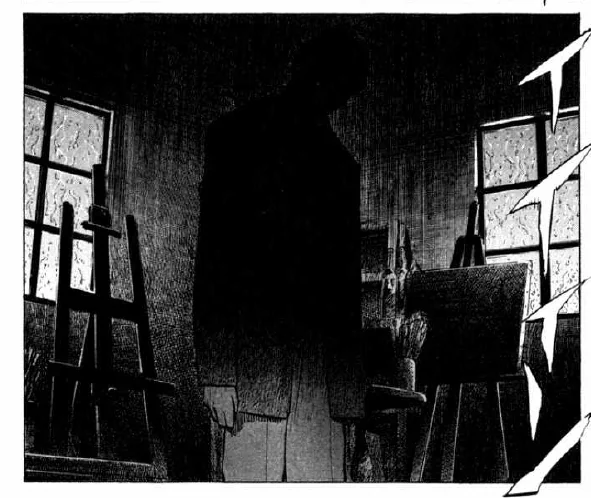
Subsequently we encounter a strange scene where Johan "wakes up", or so Tenma "hallucinates". Quite the jump-scare. I see this as a change in Johan's state of being. Perhaps his acceptance of the past. On the other hand it might have simply been Tenma's hallucination of Johan's image. As Tenma leaves, Johan disappears from the hospital with a gap in the window. Curiously though, we see the distinct proofs Johan had left behind. The imprint of his body in the bed, the crumpled duvet and the blowing wind from the opened window. The proof detective Lunge had been looking for. In a sense, detaching him from the slippery image of the monster. With this in mind, yes I think even Johan can live as a human.
I will admit my interpretation might be overly optimistic. We cannot know for certain. This is what makes it such a powerful ending. After all, the devil is elusive by nature - he is defined by the lack of identity. I think this is what frustrates people about the ending. There is no security. Which is why I regard it as the perfect thematic ending, and Johan as a "perfect" antagonist. Like an elusive mirror for both Tenma and Nina. Pushing them to face the ultimate consequences of their decisions. While Johan barely has screentime, he keeps the narrative intact and intrigues us with the complex question of what the monster entails. An age-old inquiry central to the human experience. Has the mystery now been solved? I think that must be discovered for each person individually.
Nietzsche in the image of Johan The story of Johan is ultimately a tragedy. Certainly he is presented as cool, calm and collected most of the time. The way most good antagonists are. However we see glimpses of his inner struggles and desperation. As if he is constantly trying to convince himself. Which turned out fairly anticlimactic for him in the end. In the same way, people like regarding Nietzsche as a triumphant figure, proclaiming "God is dead!". On the other side of this statement was his deep realizations of the ensuing consequences this would have on the world, and he didn't have a clear-cut answer to this problem. His concept of the Übermensch was a call to overcome this traditional ethos (dogma) and even overcoming oneself. Continuously surpassing your limitations in pursuit of acquiring new values. We do see throughout the show how a more dogmatic deontology which Tenma subscribes to has some very real limitations in real life. Some of which Nietzsche surely would critique as well. I do personally think this concept was an inspiration in the creation of the eugenics experiments of Bonaparta. Much like Johan, Nietzsche was thought to be a lonely man, battling illness, isolation and existentialism. Causing him psychological struggles and anxiety. This is in no way an attempt to undermine one of the greatest minds to have lived. I simply can't help but see the similarities portrayed between them.
The monster study of 1939 - a dark chapter in the history of speech pathology The purpose of the experiment was to study the effects of positive and negative reinforcement on children's speech development. These types of experiments were not unheard of in the 20th century. Deliberately misleading the subjects (children!) and offering them up to the scientific pursuits of progress. A commonality in both is the life long scars suffered by this exploitation. This is taken even further in the fictional 511 kinderheim where the staff fostered a culture of cruelty and violence among the children, forcing them to compete for survival in a hostile environment. The orphans were also taught to distrust everyone, stripping away any sense of attachment or empathy.
The Magnificient Steiner - the "successful" experiment Grimmer was a product of 511. Despite his past, or rather in light of it, he became a journalist. Attempting to uncover and expose the dark underbelly of society, shining light on lies often rooted in exploitation and corrupt regimes. Having suffered from such systems himself, he is both shrewd and diligent in his work. Although these features have helped him in his professional career, he was left completely apathetic even toward his own family. You could say they were successful in creating this super-soldier. Akin to the Übermensch popularized in nazi rhetoric, although misappropriated from its original philosophical context. They tried creating the ultimate rationalist - executing complex tasks to perfection. Which almost came at the cost of his humanity. Grimmer represents the quest for redemption and reconciliation. Despite his unprovoked encounters with evil, his victimhood was not great enough to define him.
The (not so) reasonable detective Heinrich Lunge is a stoic BKA officer, taking pride in solving all his cases. The perfect candidate to solve the yet unsolved mystery of Johan. He is led to believe Johan to be a persona of Tenma due to lack of "evidence" of Johan's very existence. Swayed by the pride in his deductive abilities, he was unable to look beyond this realm of comprehension. Pride can often cause ignorance. In this case, disregarding the possibility for the existence of a truly empty human being. Even to the point where his obsession pulled his family apart. Lunge is one of the more criticized characters for his lack of situational understanding. I think that's fair, although we should remember he doesn't share our omnipresence in the story. Lunge serves as a rational lens from which we can see the mystical, even metaphysical elements Johan represents. Or rather we can see how easily they are disregarded as mere “fantasies” or unrealistic concepts if you don't look at it with a critical lens. Eventually he has an epiphany where he is able to see his own flaws. He recognises his cognitive rigidity and becomes less robotic. He has a great development where he is able to humble himself and take responsibility for his shortcomings.
The story of the nameless monster Central to this series is the story of the nameless monster. A story brought to life by Bonaparta, seemingly mirroring the patterns we see in the series. At least in the beginning. Much like the nameless monster - Johan was born nameless/adopted (no identity). He enters families by adoption (like the monster enters its hosts) and consumes them from within. We also see the same pattern in his manipulations. Ie. how he compels the starving monster within Richard's latent alcoholism to consume him from within. Effectively compelling humans to submit to the sickness of their soul (ie. Astaroth,Asmodeus etc.) (might also be inspired by Faust's Mephistopheles). Johan even quotes the book subconsciously, as if he were possessed by the pattern. Because it doesn't exist, not in the material sense. Johan does not exist independent of the story. He is a nameless monster. Much like the antichrist as the antithesis to logos.
"Myse en abyme", a story within a story; one of my favorite tropes and I have yet to read a story that does it better than Monster. Underpinning and enforcing the themes of the story. Creating a symbolic relationship with a meta narrative that reflects the value of stories themselves. Overall I think this series is one of the greats. Challenging and relaying fundamental truths of the human experience.
For the time being, my favorite series and that likely won't change for a while.
~~~
Disclaimer: This was at the limit of what I am able to put into words. I am wistfully aware of my shortcomings in conveying the ideas in an intelligible manner. I simply had to put thoughts to paper for my own sanity:)
Neither would I like to take credit for most of the ideas put forth. Most of it I have learned from people who know the story better than I do.