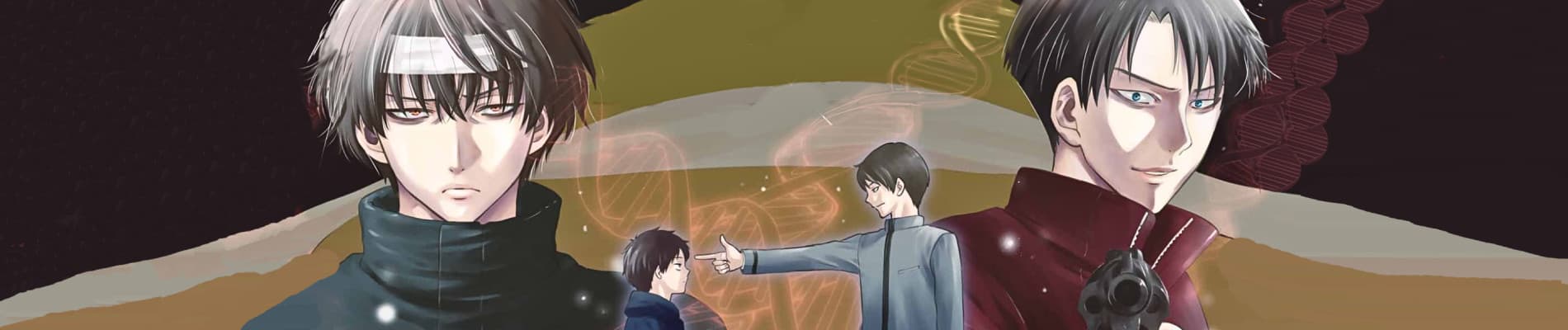
Tomodachi Game
a review by melamuna
a review by melamuna

“the manga is always better”
Manga readers often use this line when an anime adaptation of that manga falls short of expectations. The main reason is usually inconsistencies in animation, failing to match the visuals and detailed nuances of the manga, and key parts or emotional cues are often skipped or not properly executed, leading to disappointment and resentment towards the animation. This often leaves a bad taste for many viewers, including those who only watch anime and haven't experienced the original manga. Since these anime-only viewers are primarily exposed to the story through the adaptation. When an anime fails to capture key elements that made the manga special, it can distort their perception of the story, leaving them with a less fulfilling experience. This disconnect can be frustrating, especially for fans of the manga.
Ever since I started watching anime (Winter 2022), I never really understood that sentiment. After all, adaptations and mediums are meant to be enjoyed, and alterations are always inevitable. When the Tomodachi Game manga aired, I thought it was a pretty interesting high-stakes game anime (and one of the first few that I have seen), but I never really liked it because of the smugness that just never appealed to me and the certain unlikelihood of dragging suspense instead of actually being suspenseful. I finished the anime and never really liked it all that much. But the outcry of manga readers among various forum threads made me curious to read the manga. After all, isn't it just the same story? What could be more different between the manga and anime other than just moving visuals and music?. Once I've managed to sit myself down and read the manga, I've realized that I am so wrong. The manga is clearly better than the anime and by a landslide, but one question lingers in my mind:
What makes the anime inferior to the manga?

The High Stakes Game is one of the more underused and underappreciated themes in Anime and Manga. This is mostly because certain anime adaptations with High Stakes Games left a bad taste in people’s mouths because the intensity of the panels and dialogue in the manga were not properly adapted well in the animated space. This caused the genre to be set aside in favour of more commercially-able genres. However, the high stakes game is one of the most unique themes in storytelling that provides a complex set of games that tests the wits, calculating abilities, inductions and deductions of our characters in a limited and tight space and time. It's a subgenre of the thriller space that provides tense and jaw-dropping moments, as well having that interactiveness with the story where you figure out the puzzles, mysteries, and mechanics alongside the characters to the point where you feel eager to keep on waiting for the next chapter to find out if your deductions are on line with the characters. There’s a few high stakes game mangas out there and I believe Tomodachi Game is one of the best among the rest.
Start off with the great and forward-looking aspects of this manga series, and that is the entire Tomodachi Game system. Most high-stakes game mangas often revolve around the greater-ness of the circumstances, like the instance of world-shattering moments or a plain fight until death. While Tomodachi Game may have those kinds of elements, especially in different arcs, one notable difference it presents that has been unapologetically absent from most shows like these is its inclusion with its psychological torment scenes, or sequences where the inner psyche of players gets challenged even at a thinly stretched thread. The psychological torment wouldn't have worked without it's relevance with its characters, mainly with it's 5 main friends and a couple of side characters along the way, who started off like characters in a horror movie where they're just there for the sake of count, but as you keep reading the manga, each character has its own inner turmoils and motivations that greatly affect the movements of the game and our perception of it's characters without feeling like it's dragging.
Tomodachi Game has some wonderful arcs that are suspenseful that keep you tight-knit every chapter you read, especially with arcs where certain major moments are revealed, especially with games such as the Friends Sin Trial and the Friends Murder Game.
As if the story itself is already tight knit enough, it's also been tightened even more by the existence of Yuuichi Katagiri. His people-centric demeanour that's mixed with sadistic tendencies and the unpredictability of his behaviour in a game that mainly revolves around him has cemented himself as one of the most insane yet captivating characters in manga, for which he carries the series within his grasp.
***
Now, back to the question. What makes the anime inferior to the manga?
After reading the manga after its anime release and continuously doing so in its monthly releases until its final chapter, I can confidently say that Tomodachi Game is one of those mangas that's a victim of a list of poor manga adaptations. Its complex storytelling combined with micro-reactions among characters, well-crafted pace, and properly constructed tone merit this manga to have an anime adaptation with well-experienced staff members and a highly talented director to pull it off. Tomodachi Game, among many bad anime adaptations, deserves a second chance to check its source material and experience the potential, well-realised, brilliantly constructed, and captivating stories firsthand and in their intentional form.
***
If you haven’t read Tomodachi Game yet, I highly recommend it. It can be a bit overwhelming with the amount of text, especially if you're not used to manga with dense dialogue. However, if you watched the anime—whether you liked it or not—and are curious about where the story goes, you won’t regret picking up the manga. Tomodachi Game is one of the best in the high-stakes, mystery-thriller genre, hooking you with its addictive, tightly-woven plot that keeps escalating in intensity with each chapter. ***
21 out of 23 users liked this review
