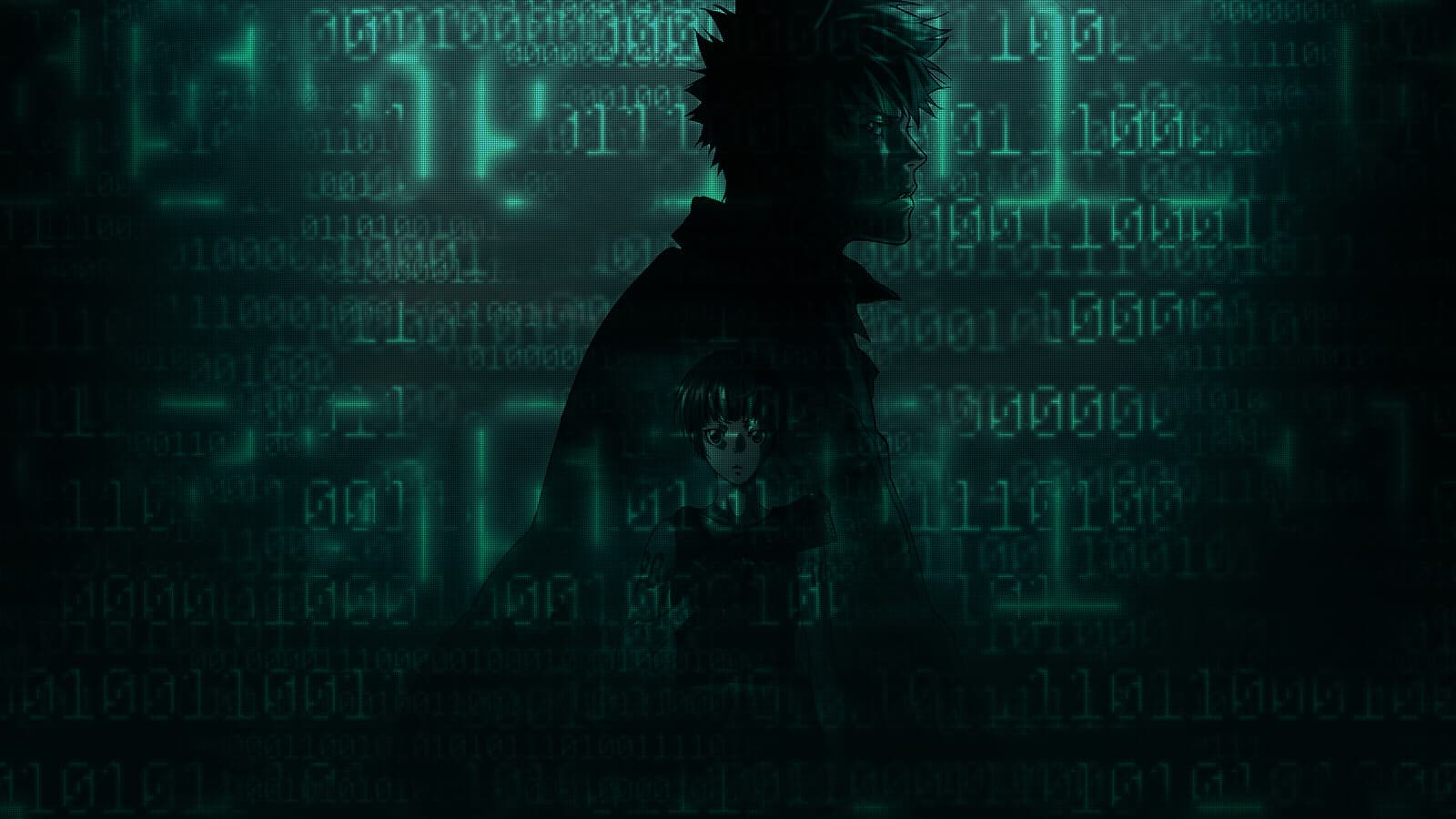
PSYCHO-PASS
a review by Zeichen
a review by Zeichen

To be fairly honest, this may sound rather cliche if not an odd way to begin writing a review but, as a kid back to kindergated, I used to really want becoming a police. And no, not out of stereotype, general consensus, let alone forced by my parents. In-fact, these had nothing to do with my reason. So, why? Justice? Idealism? What are these unrealistic far-fetched ideas? Nope, not even those. I just thought it was 'cool.' As in you will be the one who is going to unravel the unknown, dealing with perplexing mystery, cases, and finding a culprit even when your name is anonymous to others and you won't be credited for your work, and that's all. Yes, it's a bit too atypical for a kid to think in such a realistic view on police - I would make my own walkie talkie using a cardboard paper, along with gears such as arm protector, while using a pistol made of plastic to play this mere childplay's game, as if I were to arrest someone.
Eventually, it turns out my view about them is realistic enough, but not entirely true. However, I have had lost the passion of becoming one, I was a senior high school student which means such time had been gone and I should have moved on from all of these. And if you ask me why I tell you about all of these, well, this original work of an anime tells about police, hence why I consider it natural to tell you the background of me writing all of these, not to mention that while 'police' here seems to be a genre, but it turns out to be the outlier if not gate for any other genre available. Directed by Naoyoshi Shiotani and Katsuyuki Motoshiro, such a partnership creates an Orwellian masterpiece that combines the brutal perspective of gore with terror and the mindfulness of futuristic-scifi with philosophical work as one, with Akira Amano as the character designer, Psycho-Pass had everything to reach its potential. And it did, regardless how many audience who undermine this show as possibly one of the best shows of 2010s. And no, I'm not exaggerating it - they truly nailed every single thing of this season.
And how could that happen? Foods.
To un-analogize it, the fact that people have their own preference. You may consider 'foods' as something that you prefer to consume in terms of media. Hence then, media-consumption may be equated to foods because it's the fact that you have so many choices to pick that it may lead you to choose the 'wrong' one, or you simply pick the one that is too 'extreme' akin to your previous preference when you shouldn't just jump into the hype while trying to thoroughly consider what you want properly. Aall of these were factors coming into play for people who hardly appreciate this masterpiece. However, what went wrong? After all, everything has been set-up perfectly. The execution for each scene was so right, the transition was seamless, as if when you blinked your eye, everything has changed but you didn't really realize it until you noticed that it already moved from one to another. The character insertion was so right, it felt like the timing was staged by the characters themselves, as if the momentum happened to be theirs. It's like watching an orchestra that goes mellifluously, an absolute cinema that offers you perspectives that are nowhere to be seen in many others or, perhaps merely a few.
Character design? Personality? Themes? Don't get me wrong, but if you don't like the way they are made and behave, doesn't necessarily mean those are bad. Psycho-Pass in-fact offers a lot of things that are innovative. The character designs are great, I don't know what more would you want with men and women in-suit, including when each character was well pre-defined by their own identity (e.g. Tsunemori's constant anxiety showed from the way she dressed, always perfect) not to mention that in every single episode, there will always be a new arising conflict, which also forces the butterfly effect to work on developing each of these characters but all of these were hidden by in-the-moment climax. There also was this exact scene that showed why it's an absolute cinema masterclass, whereas the dilemma of moral was in-question, the trigger of stress during the decision-making moment was eventually revealed as the most significant moral issue that human beings have, which made us going back to what Ted Kaczynzki claimed as the "impact of Industry Revolution" a.k.a technology and gadget.
Overall, this show gives us meanings to delve, mystery cases to solve, questions to answer, problems to contemplate, choices to consider. Hence then, I hardly get these people's mindset nowadays - why would they overlook such a masterpiece? Orwellian Dystopia was clearly demonstrated in its perfect inherent details - from the world-building that consists of the oppressive nature of human beings, compelled with the ubiquitous omni-presence of Sibly System, while human beings were 'forced' to be healthy. And if they weren't, they would get belittled by the society, leaving a certain villain questioning whether such a way of living was right to begin with. After all, humans are of art and nature, which means what they truly desire cannot be chained by things such as technology and futuristic industry. Such an in-depth contemplation and complexity of moralistic implication is, once again, what makes Psycho-Pass indifferent in nature, but unique in terms of perspective - it provokes us to question whether relying on something to help us is considered 'humane' as we never know if one day such a system consists of those things will eventually betray us, sooner or later.
So, for anyone who reads this, please watch this absolute masterpiece. No regrets.
Thank you and that's all.
(If you have read this review, fancy for others here: /user/Zeichen/reviews)
43.5 out of 49 users liked this review
