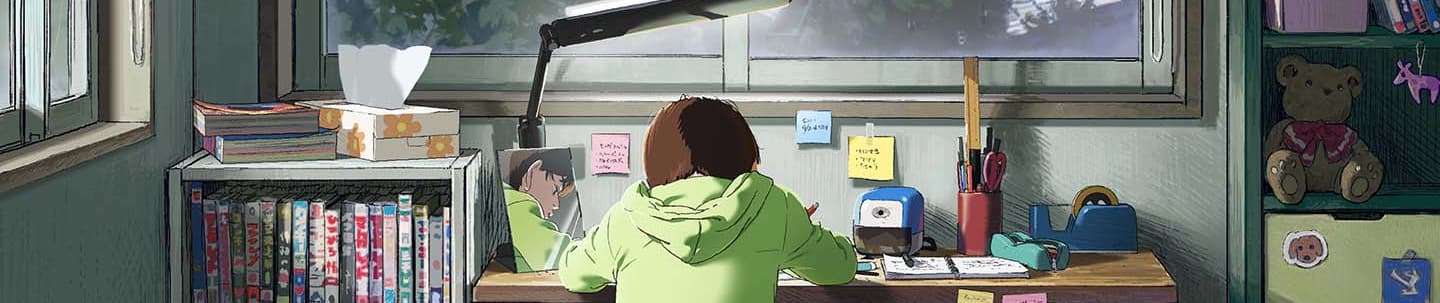
You know those rare pieces of art that just hit you right in the feels? That's exactly what "Look Back" does. This 58 minute film isn't just telling a story – it's practically whispering to every person who's ever picked up a pencil and dared to dream.
What really gets me about this film is how perfectly it captures the pure joy and absolute agony of being an artist. You know those moments when you're just flowing, when the art's coming out exactly how you want it? They nail that feeling. But they also show the flip side – the crippling self-doubt, the endless comparing yourself to others, the fear that you'll never be "good enough." It's all there, raw and real.
The animation itself? Chef's kiss Absolutely gorgeous. There's this one sequence that just perfectly shows how animation can tell a story without a single word of dialogue: After Fujino first meets Kyomoto, we follow her walk home, and holy cow, what a journey. It starts super clean and precise - just like how Fujino sees her own art at the beginning. Then something magical happens: the animation style itself starts to crack. The lines get looser, her walking speed increases, and suddenly she's running with these wild, almost unhinged movements. The character's contours literally break apart, with her skin color spilling outside the lines like a watercolor painting gone rogue.
This sequence is mind-blowing because it's showing us, not telling us, exactly what's happening inside Fujino's head. That first meeting with Kyomoto didn't just shake her confidence - it shattered her entire self-image. As she moves through the scene, the breaking animation mirrors her mental state: her carefully constructed identity as "the best artist" is literally falling apart at the seams. By the time she's running, with those distorted movements and breaking boundaries, we're seeing a pure, raw visualization of an artistic identity crisis. It's like watching someone's entire worldview crumble and start rebuilding itself in real time.
But what really makes "Look Back" special is its heart. It's not just about becoming a better artist; it's about growing as a person. The way it handles themes of inspiration, jealousy, friendship, and loss just sneaks up on you. There's this one scene where the characters are just drawing together in silence, and somehow it says more about human connection than pages of dialogue ever could.
The film totally gets how art can be both a solo journey and this incredible bridge between people. It shows how creating something can be both terrifying and liberating, how it can both isolate you and connect you to others in the deepest possible way.
And can we talk about that ending? (No spoilers, but wow.) It's the kind of ending that makes you want to immediately grab whatever creative tool you have nearby - a pencil, a tablet, anything - and just pour your heart out onto the page.
"Look Back" isn't just a movie about making manga - it's about that universal urge to create, to express, to connect. It's for anyone who's ever stayed up late working on something they love, who's ever felt that mixture of fear and excitement when sharing their work with the world.
I walked away from this film feeling both seen and inspired. It's like the movie reached through the screen, gave me a hug, and whispered "keep creating" in my ear. And really, isn't that what great art is supposed to do?~~~~~~